Chevrolet Has Shelved Its Corvette SUV and EV Plans
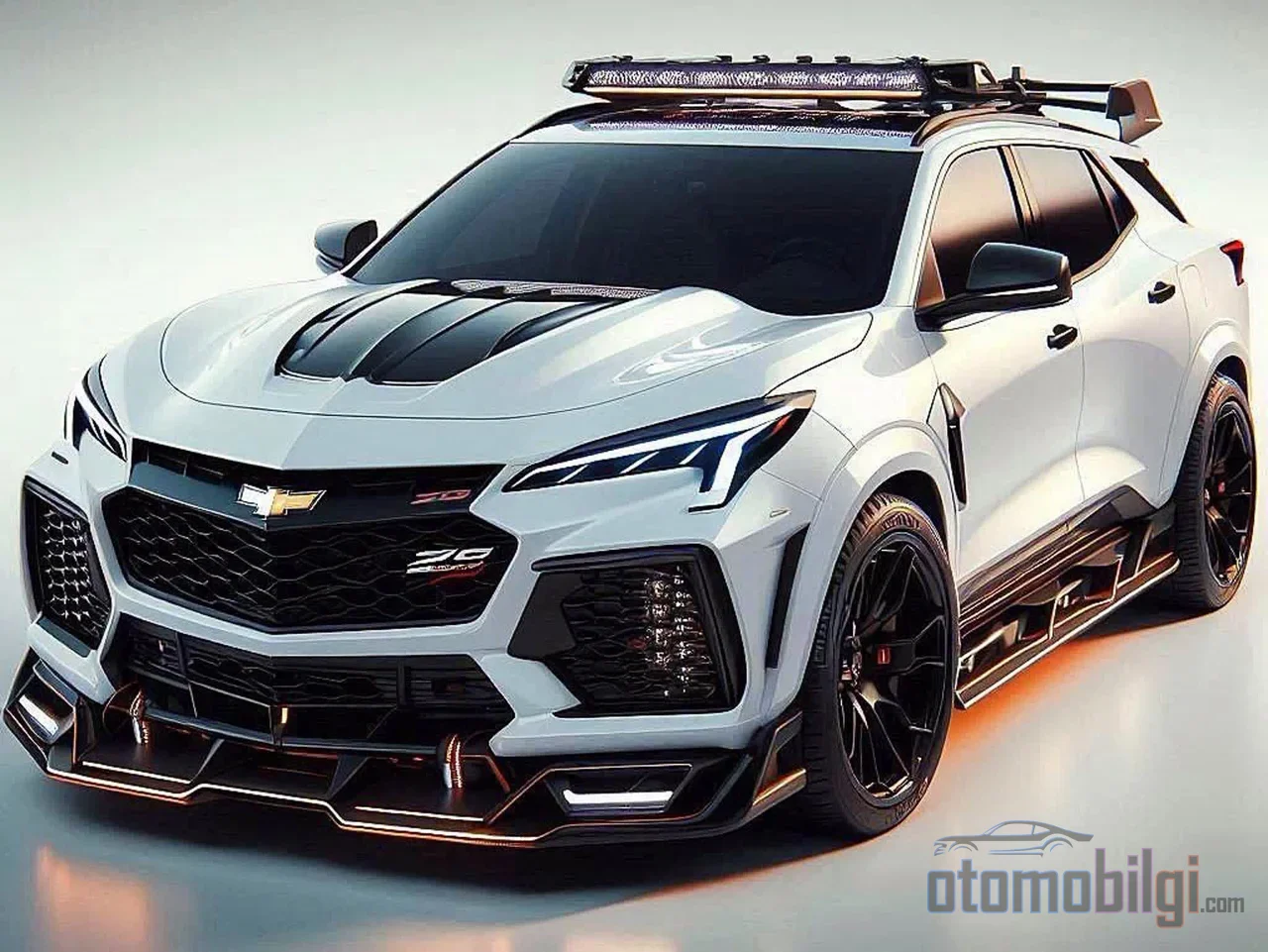
The dream of turning the Corvette into something much bigger than a two-seat sports car appears to have been shelved after a four-year journey. According to a report, General Motors has shelved its plan to expand the Corvette family with SUV, sedan, and fully electric models. First proposed four years ago as a sub-brand vision, this expansion - which included an SUV with the internal codename V224 and a two-door electric with the codename V284 - is now quietly being archived. So what made Chevrolet abandon this plan, which had emerged with great enthusiasm in 2022?
The answer lies not in a single decision; it is hidden in the combination of GM's recent trend of retreating from electrification - which has accelerated over the past two years - with a renewed debate about the Corvette's own identity. The news itself is not yet official - Chevrolet has made no statement on the matter - but the signals point to a return to the path the Porsche 911 has followed for years: a strategy focused on a single model, a single identity.
The shelved projects: What were V224 and V284?
The shelved plan consisted of two main pillars. The first was a Corvette-badged crossover SUV carrying the internal codename V224; the second was a two-door, fully electric Corvette referred to as V284. GM was targeting road launch of these models in the 2025-2026 calendar years; meaning the project was no longer a distant dream, but an initiative with an approaching schedule.
The SUV was expected to arrive initially with a gasoline engine, share the platform of Cadillac's high-performance models, and form the core of a performance sub-brand alongside the electric sedan. The target audience definition was also clear: the performance SUV market, where Porsche's Macan and Cayenne models and BMW's X3 M and X5 M versions play. The entire expanded family was to sit on GM's BEV Prime platform being developed for future upper-segment electric models; the plans also included Ultium architecture, high-density batteries, and 800-volt electrical infrastructure with fast charging support of up to 350 kW.
Highlights
- According to the report, GM shelved the Corvette SUV (V224) and electric (V284) projects; no official statement was made.
- The electric sedan and crossover were planned for release between 2025 and 2026.
- In January 2026, GM announced write-downs of approximately $6 billion in EV losses.
- The idea of a two-door electric Corvette is said to still be alive within GM.
- The 2026 E-Ray with 655 hp and the ZR1X with 1,250 hp remain on sale as hybrids.
The four-year story: How did the Corvette sub-brand come to the agenda?
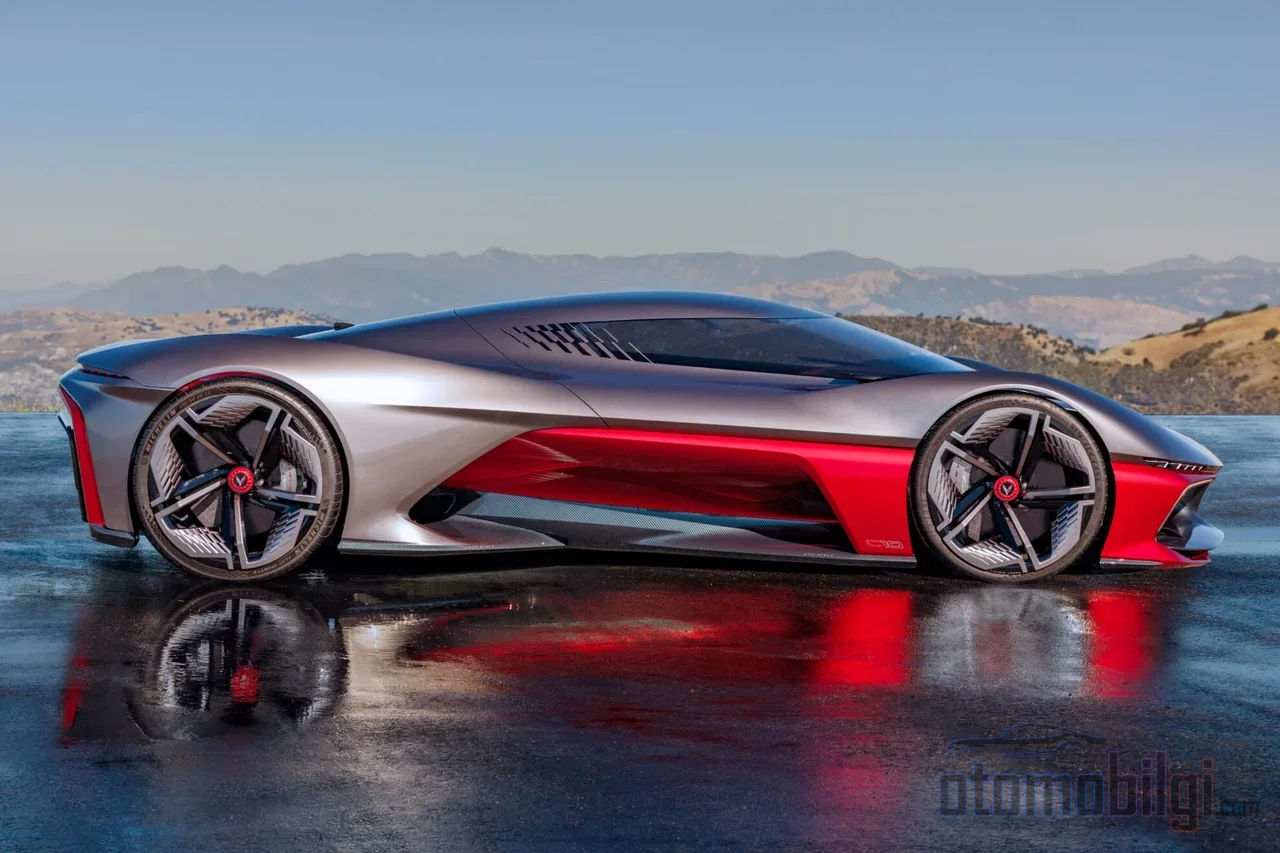
The idea of Corvette expansion is actually not new. The first concrete news emerged in November 2022; at that time, it was said that Chevrolet would establish a performance-oriented electric sub-brand, that this structure would include an SUV and a four-door sedan, and that the Corvette would become the emblem of this sub-brand around 2025. It was a vision that saw the brand not as just a model but as a continuously evolving system - the American version of the pyramid Porsche built starting from the 911 with the Cayenne, Macan, and Taycan.
The logic seemed undeniable: sports car buyers were aging, and the market's weight was shifting toward SUVs and crossovers. An SUV bearing the Corvette badge would carry the brand's loyal audience into budget segments, and the electric sedan would take a slice of the pie Tesla held. For four years, serious engineering effort was devoted within this framework; code names, platform plans, and timelines emerged. Now all of that skeleton, at least in its known form, has been set aside.
The background of the cancellation: GM's retreat from electrification
Reading the decision solely through the lens of the Corvette would be incomplete. GM announced that in January 2026 it would roll back some electric vehicle investments and record a loss of approximately 6 billion dollars. Within the last two years, the company step by step dismantled one of the industry's most aggressive electrification targets; model plans were postponed, and investment priorities were reordered. The shelving of the Corvette expansion is the latest piece of this bigger picture.
There is no official information about the exact cause of the cancellation. However, it is thought that the sales performance of GM's other electric models was likely a factor; the BEV Prime platform, on which the electric Corvette family was to sit, was also directly tied to the company's forward-looking premium EV plans. If EV demand in the main market is not meeting expectations, freezing a niche project with a low probability of short-term revenue is a financially understandable move. The old rule still applies: the models that make money are never shelved.
Is the electric Corvette completely dead?
Dead - at least for now and within the framework of known plans. But not entirely. According to the information reported, the idea of a two-door electric Corvette is still being seriously discussed within GM, even though there is no concrete production program. So what was canceled is not the idea of an electric Corvette; it is the project of growing it as part of a sub-brand, together with an SUV and a sedan. The idea stayed in the drawer, the project remained on the table.
What does the return to the Porsche 911 strategy mean?
The most striking interpretation of the news is that GM is refocusing the Corvette on its classic, two-seat sports car identity. This resembles the path followed by the Porsche 911: as the brand's most recognizable model, the 911 remained in its own form despite all kinds of expansion pressure; models like the Cayenne and Macan grew under the umbrella not of the 911 but of the Porsche brand. Since the Corvette is a model bearing the Chevrolet badge, sub-brand expansion would have carried it to a very different place from the 911, into direct competition with the Porsche brand itself.
The financial logic of this return is not nonexistent. The classic sports car format continues to rank among the vehicles with the lowest depreciation; the 911 and Corvette are mentioned together on that list. Since the C8 generation moved to a mid-engine architecture in 2020, Corvette prices have risen by about $13,800 including delivery fees, and one of the hot topics of debate is that the next generation should not soar to supercar prices. Keeping a single model solid instead of expanding the brand is also a consistent choice in terms of price discipline.
What's in the field: The E-Ray and ZR1X continue not with electric power but with hybrids
Corvette's relationship with electricity never started from scratch anyway; the E-Ray and ZR1X, non-plug-in hybrids, are on sale as two concrete examples that use electricity for performance rather than range. No line was affected by the cancellation news; these two models continue to be the backbone of Chevrolet's performance strategy.
| Model | Power system | Total power | 0-60 mph | Starting price |
|---|---|---|---|---|
| 2026 Corvette E-Ray | 6.2L LT2 V8 + 160 hp front electric motor | 655 hp | 2.5 seconds | $108,600 |
| Corvette ZR1X | Supercharged 5.5L LT7 V8 + 186 hp front electric motor | 1,250 hp | Under 2 seconds | Not announced |
The E-Ray delivers 655 hp from the pairing of the 6.2-liter naturally aspirated LT2 V8 with a 160 hp electric motor added to the front axle, and completes 0-60 mph acceleration in about 2.5 seconds. The ZR1X, meanwhile, combines the twin-turbo LT7 V8 with the front electric motor to reach a total of 1,250 hp and goes beyond the limits with a 0-60 time under 2 seconds. So Chevrolet did not cancel the meeting of performance with electricity; it simply does so within the existing Corvette format, without needing a charging socket.
Is the decision a loss or a gain for Corvette?
Let's give the short answer: according to the report, Chevrolet shelved its plan to expand Corvette with SUV, sedan, and electric models; there is no official statement, but the decision is read as part of a retreat consistent with GM's EV sales that failed to meet demand and the $6 billion loss write-down in January 2026, and is interpreted as the brand focusing on its two-seat sports car identity.
In the long run, only the market will show whether this decision is right. Those who defend the SUV side say the aging sports car audience is already shifting to crossovers and that Corvette would have a strong card there; the opposing view points out that a Corvette SUV would dilute the brand's most valuable asset, and that the strength of the 911's value chain comes from fidelity to its format. GM's choice, apparently, supports the second view.
For someone who has been watching this industry for thirty years, the picture is familiar: every brand falls for the allure of expansion at some point in its life, then returns to its core. Corvette managed to make this return with an on-sale, electric-assisted, and stunning performance family. The brand born from ashes chose to keep its flame this time - and what it won was remaining itself.
Sources
- GM Kills Corvette Expansion Plan, Including SUV & EV
- Chevrolet Corvette SUV: What We Know So Far
- Report: GM cancels plans for electric Corvette sub-brand
- 2026 Corvette E-Ray & ZR1X | Electrified Hypercars
- GM to take $6 billion writedown on EV pullback
- Electric Corvette: GM Confirms It's Coming, Just Not Yet