Could Battery Swap Stations Become Widespread in Cars?
Share This Page
A battery swap station is an infrastructure model that completely eliminates charging wait times by replacing an electric car's empty battery with a full one within minutes; however, until now it has largely survived in China, thanks to the aggressive investments of a single manufacturer. Outside China, the lack of standardization, the massive station costs, and the rapidly closing gap with fast charging leave this model facing serious question marks. So can this model really become widespread in cars?
Highlights
- A swap operation takes on average 3-5 minutes; DC fast charging adds roughly 320 km of range in 15-20 minutes.
- One manufacturer reached a cumulative 100 million battery swaps on February 6, 2026; the single-day record is 146,649 swaps.
- The total cost of a station, including setup and battery stock, can reach up to 700,000 euros.
- Outside China, the number of deployed stations is only 60 out of a global network exceeding 3,800.
- The battery swap infrastructure market is projected to reach $1.88 billion by 2033.
How Does Battery Swapping Work? Why Swap Instead of Waiting to Charge?
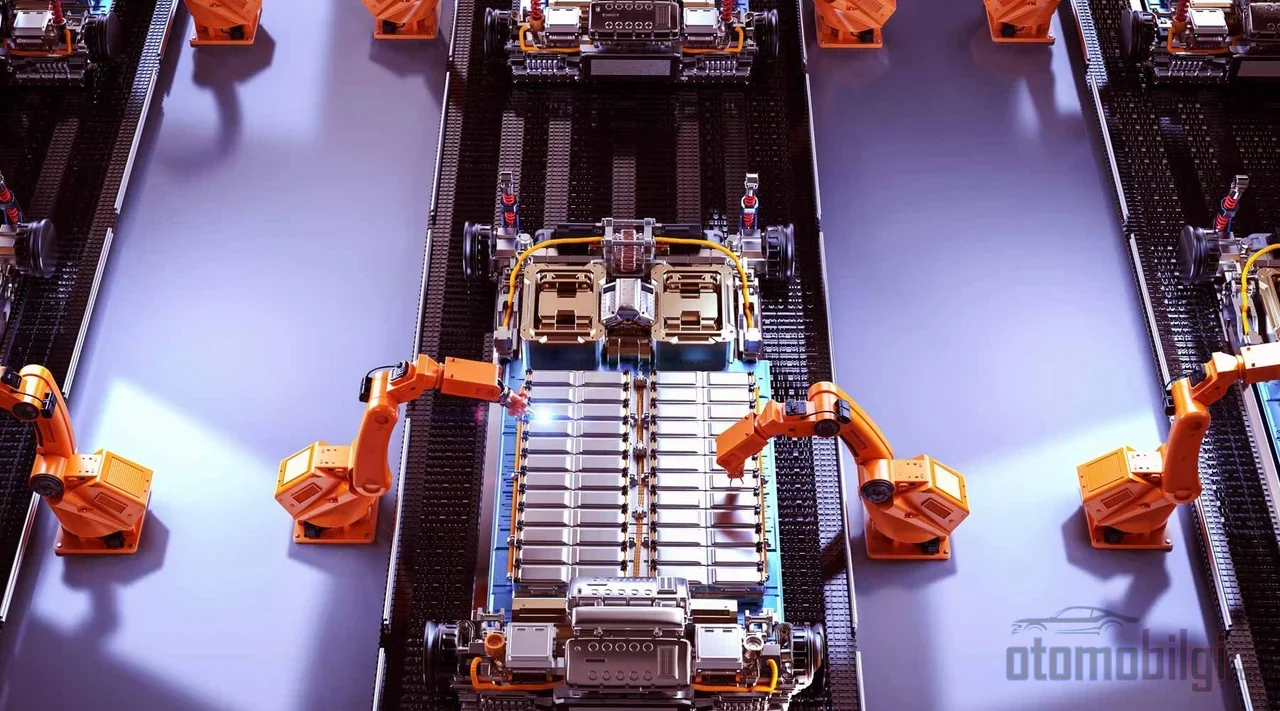
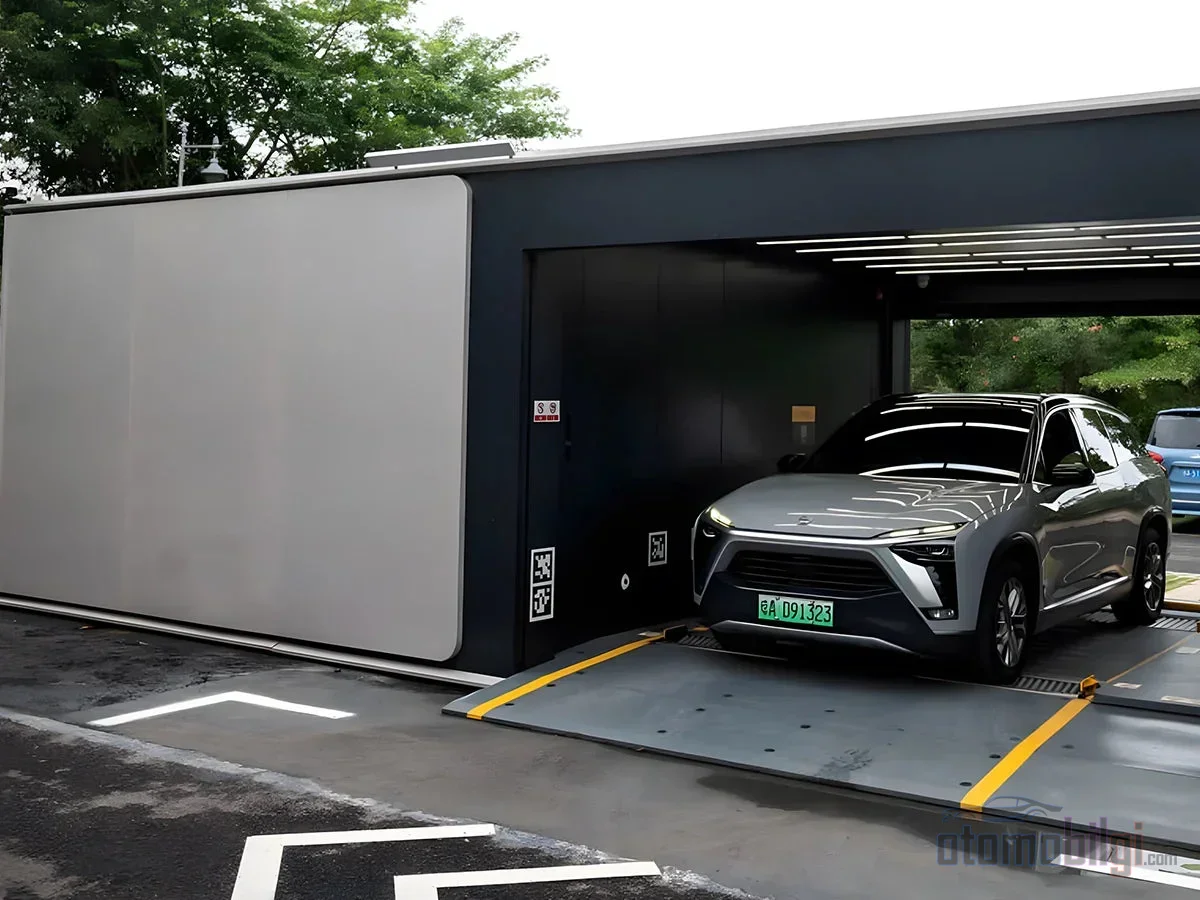
The idea is actually very simple and, honestly, just as appealing: instead of waiting for your phone to charge, you grab a fully charged phone and hand over the old one. The logic is the same in an electric car. You drive the car onto a special platform, the platform rises slightly, automated mechanisms remove the empty battery and install a full one in its place. You don't even have to get out of the car. The emptied battery is charged at the station and waits for the next vehicle.
The goal is to offer an experience comparable to the time spent pulling into a station and filling up a gasoline car. And let's point out that this experience is not a one-time gimmick: with every swap, the health of the battery and the electric drivetrain is also checked. So, to complete the analogy, the stations have been likened to a kind of automatic car wash booth; go in, and minutes later come out spotless (with a full battery). Battery capacities are not fixed either; some networks operate with 75 kWh, 100 kWh, and 150 kWh options, so the same station can also be used for long-range packs.
100 Million Swaps: Do the Numbers Prove We Can't Be Doing Something Wrong?
The advocates of the model have their strongest piece of evidence: the pioneering manufacturer reached its 100 millionth cumulative battery swap on February 6, 2026 and set a record with 146,649 swaps in a single day. There is a scale of usage here that cannot be explained away as a small experiment or a marketing stunt. Nor has the network shrunk - on the contrary, it has grown: the goals include installing at least 1,000 new stations in 2026, beginning the rollout of fifth-generation stations, and expanding the route program to 100 routes. Behind this plan lies financing amounting to $2.6 billion.
But when you look a little more closely at the numbers, the picture becomes clearer. The global network's station count has exceeded 3,800, and only 60 of that massive number are outside China. In other words, even a model hyped this much has never managed to spread beyond its home market. Billions of dollars have been spent, but the thing needed to break out of the map doesn't seem like something money can solve. This brings us to the real question: why?
What Is Preventing Battery Swapping From Spreading Outside China?
This is precisely the model's most sensitive point, and there really are multiple layers. Let's take them one by one.
There is no universal standard, so there are no universal stations
Each manufacturer produces its batteries in different sizes, with different connectors and different management software. Think of it as this car's fuel tank being located and shaped differently in every brand; a single pump won't fit them all. Anyone wanting to set up a universal swap station would need to keep separate robotic stock for dozens of battery types, which is nearly impossible in practice. The view that swapping cannot scale without standardization is almost unanimous in the industry, and some analysts say this can only change if governments force manufacturers. There is actually one interesting step: one of the giant battery manufacturers announced, with a standardization move, two standard battery formats that different brands can use. However, it is not yet clear whether this ecosystem will take hold outside China as well.
Station cost is nothing like a charging pole
An ordinary fast-charging pole fits into a parking space. A swap station, on the other hand, requires a lifting mechanism, a battery storage area, robotic equipment and a much larger construction area. A study conducted in China points to a cost of around 700,000 euros per station, including installation and battery stock; other estimates point to a range of 450,000-600,000 pounds and emphasize that land costs are not included in this. There are hopes that costs could fall with new-generation stations, but the weight of the initial investment doesn't change. If every brand builds its own network, this figure grows exponentially; building shared stations, however, runs into the standardization problem. The vicious circle is exactly here.
Battery ownership and the BaaS issue
In the swapping model, you actually cannot own the vehicle's battery; the battery stays with the manufacturer or the battery supplier, and you are essentially renting it. This is called Battery as a Service. The advantage is this: the upfront vehicle price drops and you don't have to deal with battery health - the station operator takes on that job. Added to this are advantages such as batteries being centrally charged at optimal cycles, faults being caught early, and charging during off-peak hours to lighten the load on the grid. But the downside is no small matter either: on issues such as battery warranty and health monitoring, the driver becomes entirely dependent on the operator. In comparison, the situation is different with the classic charging model; some manufacturers give a 8-year/241,000 km warranty on the battery and drivetrain with a minimum 70% capacity condition, while others offer 6 years/100,000 km for high-voltage batteries. The real question that will determine the model's commercial future is which side wants to bear this burden.
Why Did Tesla Try and Abandon Battery Swapping?
If the idea is so good, why didn't one of the world's largest electric vehicle manufacturers implement it? The answer lies in history. Tesla tried the swapping idea years ago and ultimately chose to invest in its fast-charging network instead; the approach was shelved after being judged as unsuitable for large-scale use. An even more tragicomic example: A French manufacturer joined a venture established for swapping; that venture went bankrupt after about 5 years. Knowing that even the manufacturer that pioneered the model admitted on its own blog that users had to travel long distances for swaps due to the high infrastructure investment shows just how structural the problem is.
That said, there are harsh criticisms too, and I should say they are reasonable: some engineering publications have even described battery swapping as a technical and commercial dead end. History suggests this prediction hasn't been entirely wrong; at least that's how it looks when you look at the map outside China.
Swapping in the Fleet Squeeze: Does It Make Sense for Taxis and Logistics?
Why do you think the model survived in China? Partial answer: fleets. For taxis, delivery and logistics vehicles, waiting minutes on end means direct loss of income. A taxi driver waiting 20 minutes to charge several times a day, and during peak hours no less, disrupts the work schedule. In the swapping model, the vehicle returns to the road without a bottleneck. Academic studies are also positive on this point: swapping can reduce the total battery capacity a fleet needs, improve the environmental balance, and provide effective EV refueling from a 25 m² area with short refueling times. Advanced stations can also serve as energy storage and demand response tools for the grid, and can even have solar panels installed on their roofs.
On the individual user side, however, the picture reverses. The common view is that for individual vehicle owners, fast charging offers better returns in most use scenarios thanks to broader applicability and lower cost. Although the battery swapping infrastructure market is estimated to be 280.8 million in 2025 and 333.6 million dollars in 2026, the weight of this market lies largely on the fleet side and in China.
Is Swapping Running Out of Time as Fast Charging Catches Up?
This is the part that made me think the most. Swapping's biggest trump card was speed, but speed is no longer its monopoly. While 150-250 kW fast chargers add serious range in 15-20 minutes, solid-state batteries promise 80% charge in 5-10 minutes. If this promise is fulfilled, the time gap between the two will have practically closed. At that point, the remaining argument for swapping is taking on battery life concerns. True, but there is another side to the coin: modern battery management systems have largely reduced the degrading effect of fast charging, while the remaining risk is concentrated in specific cases such as lithium plating, which can be seen during fast charging especially with a cold battery.
A think tank's warning matters here too: Chinese industry, which has bet heavily on swapping, could remain insulated from external markets against the possibility of swapping losing its appeal even in its own market as charging times and ranges improve. In other words, if swapping remains stuck as a China-specific solution, versions of vehicles produced in that market that depend on this infrastructure could have low appeal in the global market.
So Does Swapping Still Make Sense?
In my view, the honest answer is this: not for every vehicle type, but definitely in certain scenarios. There is no absolute winner; the solution depends on the vehicle type and the operating pattern. In the fleet and commercial segment, especially in markets with strong government support, swapping could be the dominant model. On the individual user side, fast charging is becoming standardized, getting cheaper, everywhere. Some analysts predict that hybrid approaches supporting both charging and swapping could also emerge; in other words, instead of choosing one over the other, it may be possible to combine the advantages of both worlds.
100 million swaps is not a small number, and it cannot be ignored. But the fact that more than 98% of that same figure is concentrated on a single manufacturer's network in a single country says the model is more a regional solution than a global one. Unless standardization is pushed with serious political will, it looks difficult for swapping to spread for the vast majority of cars outside China in the coming years. In a world where charging keeps getting faster, I think swapping will only hold on in special use cases. What do you think - would you ever hand your car's battery over to a swapping station?
Sources
- NIO Achieves 100 Million Battery Swaps - News
- NIO Power
- Nio aims to add at least 1000 swap stations in 2026
- China's Nio raises US$2.6 billion bet on EV battery swapping
- Insight: Inside China's electric drive for swappable car batteries
- Battery-Swapping Unlikely To Ruffle Fragile U.S., European Chargers
- Beijing's battery swapping bet could isolate China's electric car industry
- EV Battery Swapping: How Is This A Good Idea?
- Battery Swapping vs. Fast Charging: Visions of the Future
- What is battery swapping?
- Top 10: Advantages of Battery Swapping
- Design and optimization of electric vehicle battery swapping stations
- Use of battery swapping for improving environmental performance of EV fleets
- Swap to the future: A comprehensive review
- The Relevance of EV Battery Swapping
- Battery swapping charging infrastructure market
- CATL Advances EV Battery Swap Standardization
- Vehicle Warranty
- A Brief History of Battery Swapping