Is Hydrogen's Real Chance in Heavy Vehicles Rather Than Cars?
Share This Page
Yes, most likely so: The race hydrogen lost in passenger cars still has a chance in heavy trucks and long-distance freight - because there, range, refueling time and payload capacity land exactly on the weakest points of batteries. But that chance is narrowing a little more every year.
Highlights
- Hydrogen trucks offer up to 1,000 km of range on a full tank; some projects have shown 1,500 km and refueling in under 15 minutes.
- The TCO of fuel cell trucks is projected to become competitive between 2030-2032; for that, the hydrogen price needs to fall below $6/kg.
- In 2025 there were only ~35,000 fuel cell trucks worldwide, and 95% of them were in China; by contrast, electric heavy truck sales tripled in one year, reaching 230,000.
- In the US there are more than 3,200 DC fast charging points suitable for heavy vehicles; but only 68 public hydrogen stations for heavy vehicles.
Why Did It Lose in Passenger Cars? A Quick Calculation
First, let's clarify one thing: Hydrogen fuel cell vehicles are fully electric too. Their motors work on the same principle as battery-powered vehicles, and the only thing coming out of their exhausts is water. The difference lies in how the energy enters the vehicle. On one side there is a huge battery charged from a socket, on the other a hydrogen tank filled within minutes. It's like the difference between charging your phone and filling a pot with water - one waits for energy from the wall, the other just turns on the tap.
So if hydrogen refuels so quickly, why couldn't it gain a foothold in passenger cars? Because in a car, refueling time is not really a critical issue. For someone who has a socket installed at home, charging overnight means free convenience. Hydrogen, on the other hand, is both expensive (currently averaging $8-12/kg) and inefficient: Converting electricity into hydrogen and then back into electricity means significant losses compared to charging a battery directly. Moreover, transporting, storing and distributing hydrogen is not easy either. On the passenger car side, battery-powered vehicles therefore won by a wide margin, and this outcome is no longer even debated.
Why Does the Equation Reverse in Heavy Trucks?
Now let's turn to the real question: Why are hydrogen trucks seen as hopeful, unlike what happened with passenger cars? The answer fits in three words: range, weight, refueling. Things that are trivial in a passenger car become life-changing beyond 40 tonnes.
Range and refueling: The driver's real world
Hydrogen trucks can travel up to 1,000 km on a full tank; some projects have demonstrated 1,500 km of range and refueling in under 15 minutes. Battery-powered trucks, meanwhile, typically operate in the 200-500 km band - of course there are exceptions: one manufacturer offers up to 720 km of range in its battery-powered trucks, while a Class 8 electric truck promises up to 500 miles of range. Thanks to the new Megawatt Charging Standard (MCS), heavy trucks can charge from 20–80% in under 30 minutes - but that's still nowhere near hydrogen's 15–20 minute fill-up.
Hydrogen also has another superpower: the cold. A fuel cell can operate at temperatures down to -40 °F, and its range is not seriously affected by temperature-related performance loss. For someone running northern routes in winter, that's no empty detail.
The weight problem: Every kilo steals from cargo
In trucking, what you earn is only as much as the cargo you load onto the truck. This is where batteries hurt: A battery pack of roughly 1.200 kWh needed for a 500-mile range weighs about 10,000 lbs (roughly 4.5 tons), creating a payload loss of 2–4 tons compared to diesel. Hydrogen tanks are lighter per unit of energy - but because hydrogen's volumetric density is low, it requires a far larger storage volume. So hydrogen has no free win either; its loss is simply in a different place.
Hydrogen Trucks vs. Electric Trucks in Numbers
A rough summary table clearly shows where each technology is strong and where it's weak:
| Feature | Hydrogen (FCEV) | Battery (BEV) |
|---|---|---|
| Range | Up to 1,000 km (1,500 km in some projects) | 200–500 km (720 km in the best cases) |
| Refueling/charging | 15–20 minutes | 20–80% in under 30 minutes with MCS |
| Energy cost | ~$8–12/kg of hydrogen | Roughly half the price |
| Weight impact | Tanks are lighter but bulky | ~10,000 lbs of batteries for 500 miles |
| Cold endurance | Down to -40 °F | Range affected considerably more |
| Maintenance | ~20% more expensive than BEV | ~40% savings compared to diesel |
On the maintenance side, the fuel cell stack's lifespan is also critical: Early-generation fuel cells lasted 15,000–20,000 hours, while new models promise more than 30,000 hours. That's a figure that directly determines whether a stack replacement will be needed over the truck's lifetime.
What Are the Fleets Saying? The Promise vs. Reality in the Field
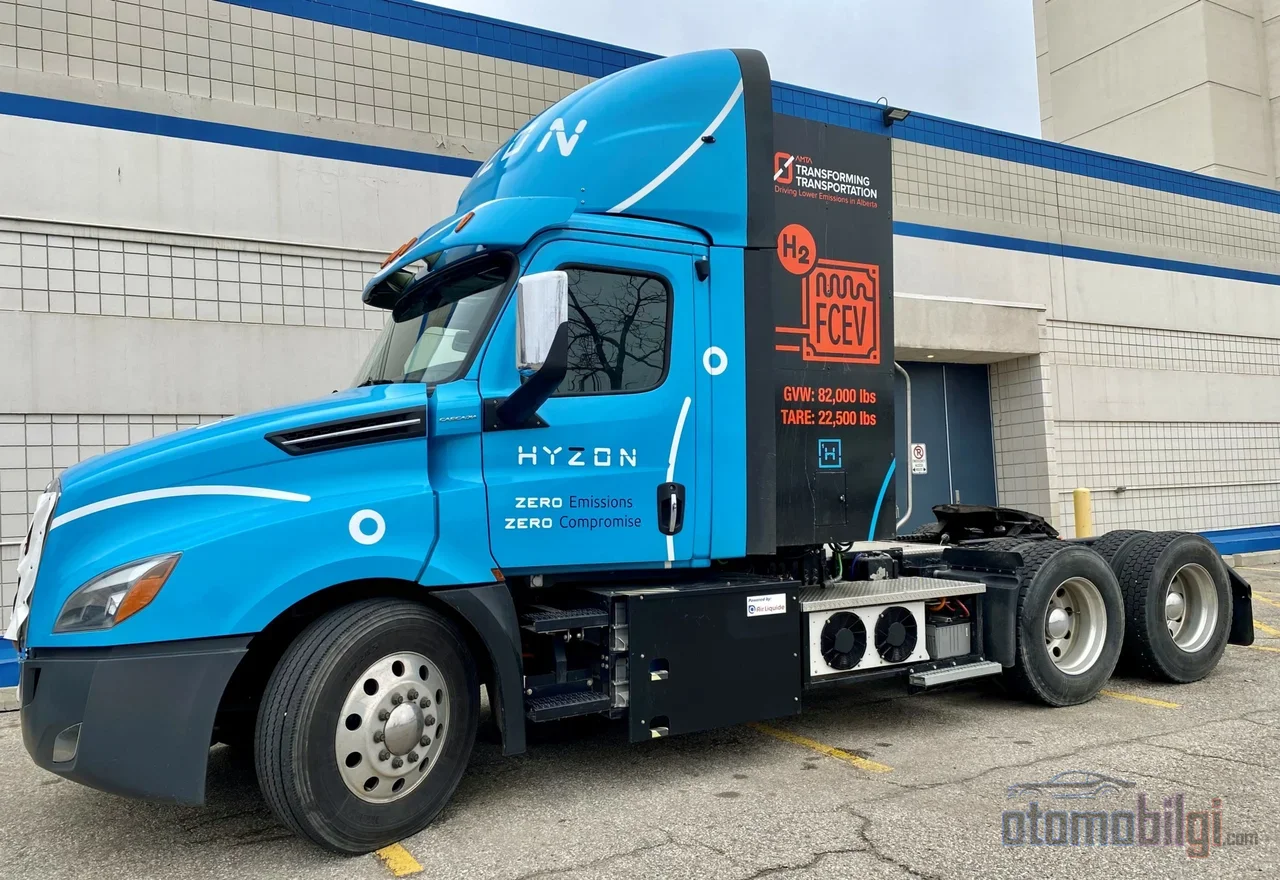
Everything may look great on paper; the real test begins when you load the truck and hit the road. And here the picture is mixed. A major retailer's battery-electric trucks have accumulated a total of 2.5 million miles, shown 98% availability, and operated on regional routes with an average range of 410 miles - meaning it's now clear that battery-electric trucks are no longer prototypes but a real workforce. There's also encouraging data from the hydrogen front: In a pilot program in Canada, a hydrogen truck traveled 580 miles on a single fill-up with a 70,000 lbs load at a temperature of -15 °C. As I said, exactly hydrogen's claimed scenario.
On the other hand, the infrastructure is genuinely brutal. While the US has more than 3,200 DC fast-charging points suitable for heavy vehicles, there are only 68 public heavy-vehicle hydrogen stations - and most of them are in a single state. In Canada, the number of hydrogen trucks on the road is fewer than a dozen, operating only in demonstration projects; the main challenge is infrastructure and affordable hydrogen supply. Although tests in Alberta have shown reasonable success, fuel supply is still a problem. One truck manufacturer has plans to build more than 350 hydrogen stations across the country, and an energy company has signed an agreement to deploy one of the largest commercial hydrogen truck fleets in the US - so the hydrogen front has not given up, but the distance between promise and the field is long.
Are Battery Trucks Closing Hydrogen's Window?
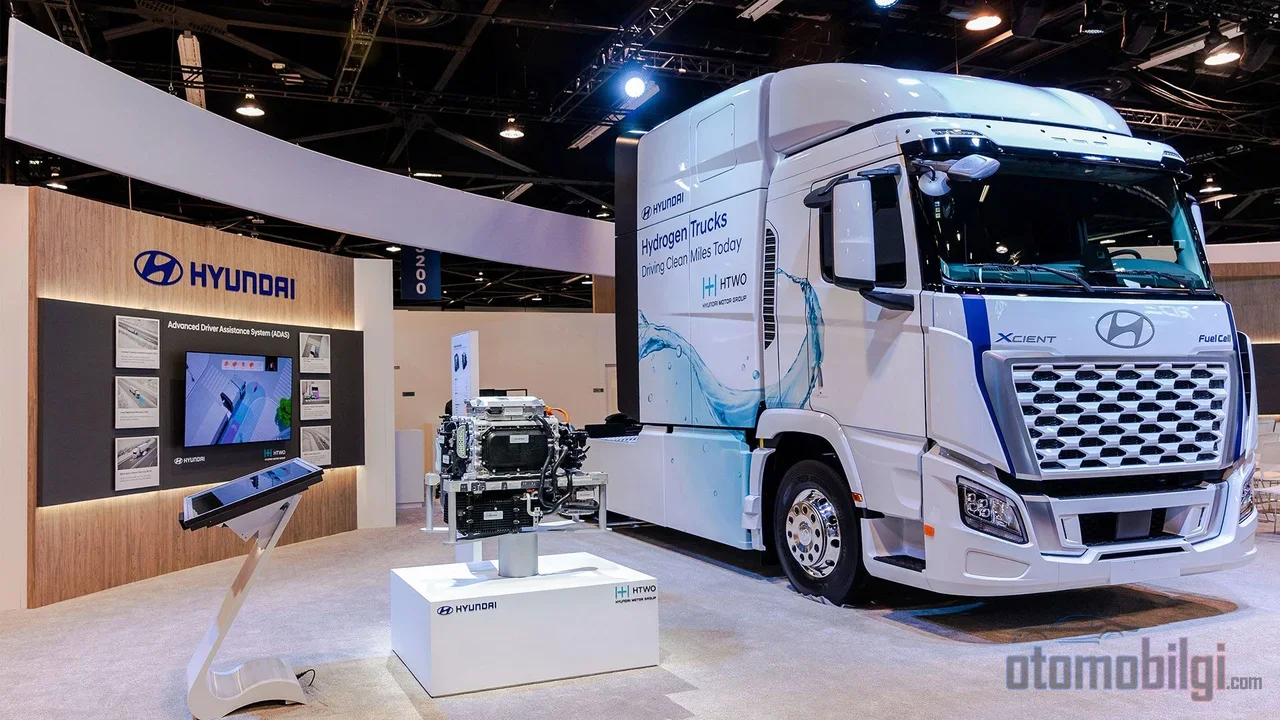
This is the heart of the matter. All of hydrogen's advantages in heavy transport rely on scenarios where batteries are weak. But batteries are rapidly closing their weaknesses. The share of battery-powered truck sales in the heavy vehicle category nearly doubled from the first quarter of 2025 to the first half of 2026, reaching 2.3%. Battery swapping technology, on the other hand, undermines the charging time argument: One manufacturer plans 900 commercial battery swapping stations by the end of 2026, while a swap takes about 5 minutes. Did you read that? Five minutes - faster than even hydrogen's 15-minute fill. China's heavy truck energy strategy also envisions 3,000 charging and battery swapping stations.
Even more interesting are the signals coming from hydrogen's traditional stronghold: An analysis published by a major Chinese energy company emphasizes that medium-heavy load and long-range scenarios are also gradually being occupied by electric heavy trucks, and that hydrogen would need to reinforce its advantages in this area. In other words, even hydrogen's own side is saying the window is narrowing.
Two different theses from two camps
In this debate, my chart has two main camps. The first camp argues the door is closing: Battery technology won the light vehicles, the cost curve is doing the same to trucks, no improvement is seen in hydrogen prices, and 2025 was a painful year for hydrogen transport - storage constrained both cargo space and passenger space, and the refueling infrastructure failed to scale. The opposing camp argues the two technologies will live side by side: Battery trucks are ideal for short and medium distances and urban operations, hydrogen trucks for long distances and heavy loads; moreover, both share the same electric drivetrain, meaning the technological base is common. The head of a Canadian hydrogen association also argues that batteries remain very limited in long-distance applications, while hydrogen has proven pilots. A neutral academic's view stands between the two: Today's battery trucks may not meet long-range requirements, but the new megawatt charging standard could change that equation.
Cost: Hydrogen's Hardest Lesson
Now let's go into the darkest corner: money. Hydrogen currently costs on average $8-12/kg, meaning roughly twice as expensive an energy source as batteries - on a per-mile basis FCEV comes to ~$0.50/mile while BEV is ~$0.30/mile. The US Department of Energy's "Hydrogen Shot" target is to drop to $2 per kilogram by 2028. NACFE's field assessment is clear: Battery trucks already offer a lower total cost of ownership (TCO) on routes under 350 miles; hydrogen can only compete in daily long-distance operations over 450 miles and when the price per kilogram drops below $6. The TCO of fuel cell trucks is projected to approach diesel and battery between 2030-2032 - but that means hydrogen needs both to get cheaper and to build out infrastructure.
On the carbon footprint side, the situation also favors batteries: With an average grid mix, battery trucks emit 70% lower CO2 than diesel. Gray hydrogen produces 10 kg of CO2 per kilogram, while green hydrogen drops below 1 kg - meaning hydrogen's climate record depends on the color of the hydrogen you use.
So, the verdict: Is Hydrogen the Future of Trucks?
The picture I read is this: Hydrogen really does have a sensible niche in heavy transport - daily distances over 180 miles, loads exceeding 24,000 lbs, and intensive operations where the number of refuels per day is critical. In these scenarios, hydrogen's physical advantages are still worth discussing. The EU's heavy vehicle emission rules (a 45% reduction by 2030, 65% by 2035, and 90% by 2040) also provide a strong driving force for both technologies.
But to be honest, for hydrogen to keep this window open it needs to achieve three things at once: make hydrogen cheaper, build out the station network, and prove stack lifespan. Battery trucks won't wait during this time - sales are multiplying, charging infrastructure is growing, and battery swapping is crushing the charging time problem. Hydrogen's real chance may indeed lie in heavy trucks, yes; but that chance applies in a market that requires a little less hydrogen every year. What do you think - is the future of long-haul trucking at the plug or at the pump? Let's talk in the comments!
Sources
- Hydrogen truck vs electric truck | Symbio
- Trends in other EV modes - Global EV Outlook 2026 | IEA
- EV Transition Check 2026 | ICCT
- Hydrogen vs. batteries: Which is winning the race to electrify heavy trucks? | CBC News
- Hydrogen Trucks vs Battery Electric | Fleet Rabbit
- Three potential benefits of hydrogen trucking | CATF
- Green hydrogen: Loaded up and (long-haul) trucking | Atlantic Council
- Hydrogen Trucks: Long-Haul's Future? | NACFE
- Hydrogen Fuel Cell Electric Vehicle 101 | CARB ZEV TruckStop
- TCO of alternative powertrain long-haul trucks | ICCT
- Assessing Total Cost of Driving of Zero-Emission Trucks | NREL
- Electric and fuel cell trucks | Scania
- Hydrogen Trucks Hit 1500km Range with Horizon Fuel Cells
- Hydrogen Fuel Cell Trucks: From Prototype To Reality | ACT News
- Hyroad Announcements
- Why have electric vehicles won out over hydrogen cars? | MIT Climate