Could Hydrogen Engines Be an Alternative to Fuel Cells?
Share This Page
Hydrogen engines are internal combustion engines that burn the fuel directly instead of using it to generate electricity in a fuel cell; because they can leverage existing engine manufacturing knowledge and supply chains, they are seen as a serious alternative for heavy commercial vehicles. But their efficiency is markedly lower than fuel cells, NOx emissions must be brought under control, and refueling stations are still scarce. So the answer is clear: reasonable in some scenarios, still a promise in others.
Highlights
- A fuel cell vehicle can operate nearly twice as efficiently as an engine that burns hydrogen
- Hydrogen's flammability limits are 4-75% by volume; gasoline's is only 1.2-7.6%
- Volvo has begun road testing hydrogen-powered heavy trucks and before 2030 plans a launch
- Cummins announced it can reduce NOx levels to as low as 0.008 g/hp-hr announced that it can reduce them to levels as low as
- Toyota is developing these engines primarily through racing, not for road use
What's the Difference Between Burning Hydrogen and Passing It Through a Fuel Cell?
Think of the gasoline engine we know: instead of gasoline, it injects hydrogen, a spark ignites it, and the hydrogen burns. That's it. A fuel cell is an entirely different thing: it converts chemical energy into electrical energy directly, without combustion, and delivers that electricity to an electric motor. A daily analogy: one person burns wood in a stove to keep warm, while the other gets the same energy from an efficient heat pump. Both get the job done, but the way they use energy is very different.
The most tangible consequence of this difference is efficiency. Peer-reviewed comparisons show that a fuel cell vehicle is nearly twice as efficient as an internal combustion engine vehicle that burns hydrogen directly. When hydrogen is an expensive and scarce fuel, this difference isn't small, it's massive. Think in kilograms: from the same tank, one gets you an extra hundred kilometers, the other doesn't. For anyone on a tight budget and range, that's a serious argument.
On the other hand, the fuel cell has its price: expensive materials like platinum, a complex system, and high cost. The hydrogen engine, meanwhile, is a familiar face. So the comparison is between "efficient but expensive" and "less efficient but familiar and cheap."
The Biggest Trump Card of Hydrogen Engines: Existing Production Infrastructure
Put yourself in an engine manufacturer's shoes. You have two options: build fuel cell technology from scratch, or produce a hydrogen version while preserving your existing engine knowledge, foundries, supply chain, and assembly lines. The latter lowers R&D costs and speeds up time to market. Cummins emphasizes that this approach could achieve greenhouse gas reductions similar to fuel cells at a lower upfront cost.
The second advantage is hidden in the heavy vehicle. Internal combustion engines operate most efficiently under high load; trucks spend almost their entire lives under high load. So the efficiency deficit of H2-ICE stings less in trucks than in urban passenger vehicle use. Also, there is no difference for the truck driver: the tank empties, you refuel in a few minutes, and you're on your way. Hydrogen's fast refueling time genuinely pays off here.
Hydrogen also has a technical character: its ignition limits are incredibly wide. It can ignite in any mixture between 4% and 75% by volume, whereas gasoline only burns in the 1.2-7.6% band. A wide ignition range means flexible combustion strategies that adapt to varying loads. For engine engineers, this is something like a gift package.
Weak Point 1: Efficiency Loss and Where the Energy Goes
In a fuel cell, most of hydrogen's energy is converted directly into electricity. In a combustion engine, however, a significant portion of the same energy is lost as heat; you pay the price of thermal losses, friction, and the exhaust. The fact that a fuel cell vehicle is twice as efficient means you get half the range with the same amount of hydrogen. Since tank volume is already a problem with hydrogen (gas takes up space even when compressed), the range math tips in favor of the fuel cell.
That's why the "but engines are cheaper" argument needs to be calculated over the fuel's lifetime to see if it has any real substance. Cheap engine + expensive fuel consumption, or expensive system + low fuel consumption? This question turns daily in trucking companies' ledgers, and the answer hasn't fully settled yet.
Weak Point 2: A "Clean" Engine But It Produces NOx
When hydrogen burns, no carbon dioxide is released; this is H2-ICE's biggest environmental argument. But the nitrogen in the air falls in love with oxygen at high temperatures, and nitrogen oxides (NOx) form. Especially when a stoichiometric mixture, i.e. one perfectly balanced with air, is burned, the combustion temperature soars and NOx production becomes serious. At low lambda values too, the engine can emit high NOx; that's why accurate prediction and control of emissions is critical.
The good news: the problem is manageable. Cummins announced that it has reduced NOx to the level of 0.008 g/hp-hour, which remains four times below the EPA's 2027 requirements, and that CO2 dropped by 99.7%. Cooled exhaust gas recirculation and advanced aftertreatment systems make these figures possible. The bad news is the existence of criticism: on technology forums, objections are raised that these engines may not be able to deliver diesel-equivalent torque or comply with tightening NOx limits; suppliers were even among those openly voicing this cautious view.
Weak Point 3: Fuel Stations Are Still Few
The most beautiful engine in the world turns into a coffin if you don't have the fuel. Volvo Group itself says that hydrogen mobility will only become commercially viable when vehicles, fuel supply, and refueling infrastructure scale up together. In other words, even some of the companies that produce the engines admit that the infrastructure problem has not been solved.
The hopeful side is cost: the cost of producing hydrogen from renewable electricity is estimated to fall by up to 30% by 2030. Players such as Volvo, Daimler Truck, Toyota, Bosch and Air Liquide have announced coordinated plans covering the entire hydrogen value chain and are asking the EU for financing synchronized with the grids. So the industry has a plan for the problem; but a plan and a fueled-up hydrogen station are not the same thing.
What Are Manufacturers Doing? Where Toyota, BMW, Volvo and Cummins Stand

There is real movement in the field - you don't need to be an optimist to say so:
- Toyota is advancing two hydrogen engine technologies in parallel in the Super Taikyu racing series and has announced its goal of commercializing hydrogen combustion engines in 2026 and increasing range by 20%. In September 2026, a hydrogen combustion hybrid (EREV) patent also surfaced; according to secondary sources, production could begin in 2027 with a few hundred vehicles per month and scale to 400,000 units annually by 2028. But note: Toyota is developing these engines primarily through racing, not for road use. And when it comes to the real road-going hydrogen vehicle, the fuel-cell Mirai still seems to be the answer.
- BMW has added two 40-ton and one 18-ton hydrogen-powered trucks to its logistics fleet; its Regensburg plant will use hydrogen tractor-trailers and forklifts from 2026 onward. BMW has also ordered two fuel-cell trucks for the same route; they will operate on the Leipzig–Landsberg–Nuremberg corridor. So BMW, too, is walking both paths.
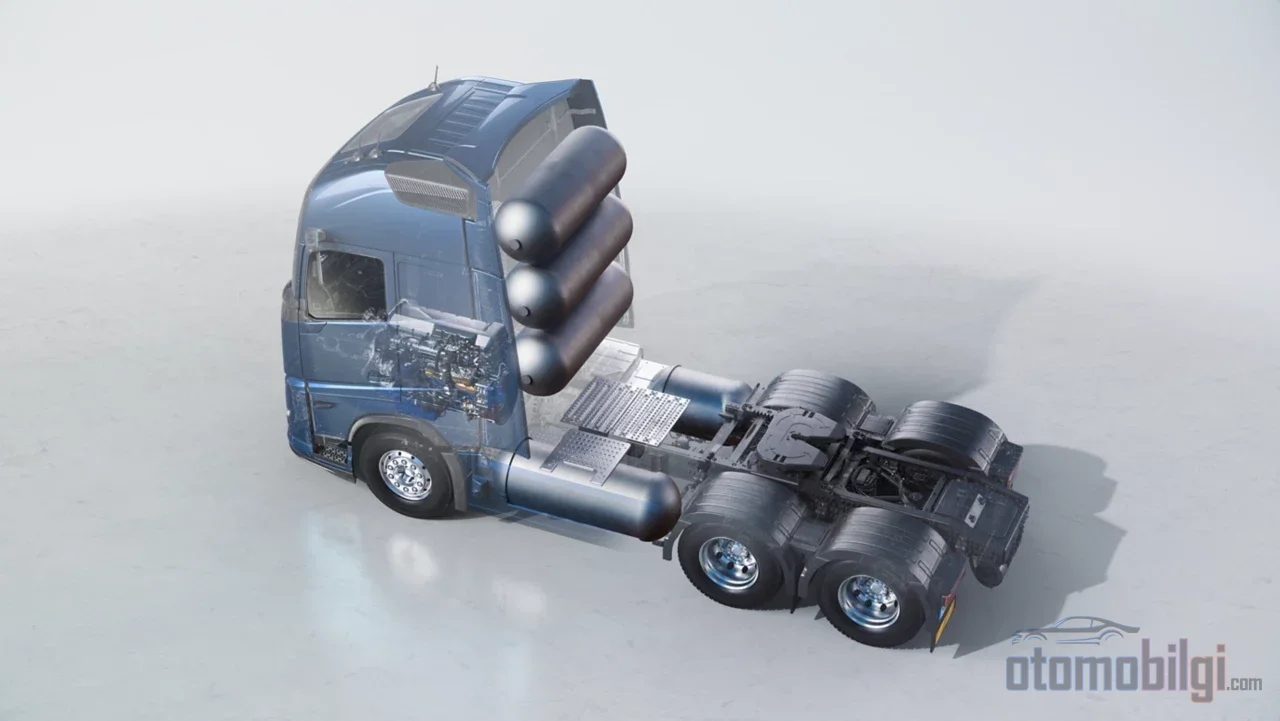
- Volvo has begun road testing heavy trucks with hydrogen combustion engines and plans a launch before 2030. At the same time, it is also developing fuel-cell trucks through the cellcentric joint venture. It isn't putting all its eggs in one basket.
- Cummins 15L introduced its hydrogen engine in 2022; X15N the X15H is expected for 2027. The 6.7L hydrogen engine is based on a proven spark-ignition platform and promises ultra-low NOx.
The common pattern is clear: the big players are funding both hydrogen paths. No one is sacrificing one for the other, because no one knows which one will win.
Where Does It Make Sense: Passenger Cars or Trucks?
Let me put everything I've described so far into a table; seeing the two powertrains side by side against the same criteria makes everything clear:
| Criterion | Hydrogen Combustion Engine | Fuel Cell (FCEV) |
|---|---|---|
| Efficiency | Low; roughly half that of a fuel cell | High; chemical energy is converted directly into electricity |
| Zero emissions | No; NOx is produced and requires treatment | Yes; only water from the exhaust |
| Cost and production | Low upfront cost, existing engine infrastructure | Expensive system, precious materials such as platinum |
| Best-fit scenario | Heavy commercial vehicles operating under high loads | Road use focused on range and efficiency |
| Refueling | Fast, close to gasoline/diesel habits | Fast; both depend on infrastructure |
The general consensus in the industry also aligns with what the picture shows: heavy-duty vehicles are the most sensible scenario; in passenger cars, fuel-cell FCEVs maintain their dominance. Why is the hydrogen engine weak in the urban compact class? Because city driving means low loads and stop-and-go traffic; you never reach the engine's most efficient operating zone. A truck, on the other hand, lives on the highway at a constant high load; that's where the engine is at its best.
Promise or Reality? Here's the Fine Line
The promise side is real: existing engine manufacturing know-how and supply chain, low upfront costs, high load efficiency in heavy-duty vehicles, and fast refueling are tangible advantages. These are not marketing talk, they are factory facts. Cummins, Volvo, and BMW's truck programs show these advantages being tested in the field.
The reality side is also harsh: roughly half the efficiency compared to fuel cells, the NOx problem and mandatory aftertreatment systems, a fuel infrastructure that still hasn't scaled, Toyota's racing-focused development instead of road use, and 2026 commercialization targets for passenger vehicles that have yet to be verified with a concrete product. Market figures are also watery: different reports cite magnitudes that differ severalfold for the same market, because even the way they define the market is different. Rather than wearing the numbers like a necklace, it's healthier to watch actual product launches year by year.
My assessment is this: H2-ICE is on its way to becoming a real player not in passenger cars, but in heavy commercial vehicles. If you manage a truck fleet, it's wise to keep an eye on hydrogen-powered trucks. If you're waiting to buy your next car because it will have a hydrogen engine, there's no point in waiting right now; even Toyota is still putting the fuel-cell Mirai in its showroom. Is the hydrogen engine a "transitional technology" or a permanent alternative? The answer changes depending on which vehicle class you're talking about - and the most honest answer today is yes for truck drivers, not yet for sedan buyers.
Sources
- Hydrogen-Powered Vehicles: Comparing the Powertrain Efficiency and Sustainability (Durkin et al., 2024)
- Hydrogen fuel cells and combustion engines - Volvo Group
- Powerful and fuel-efficient – meet Volvo's future hydrogen truck
- BMW Group Logistics tests Hydrogen Trucks
- Pushing Hydrogen Engine Technology to New Heights - Toyota Global Newsroom
- Toyota unveils new technology that will change the future of cars
- The 2026 Toyota Mirai - Toyota Pressroom
- Toyota Hydrogen Combustion Hybrid Patent
- The role of hydrogen engines in environmental sustainability - Cummins
- Cummins helps found alliance for hydrogen technologies
- Hydrogen internal combustion engines and hydrogen fuel cells - Cummins
- Benefits of hydrogen engines in transportation - Cummins
- Cummins Debuts 15L Hydrogen Engine - Trucking Info
- Module 3: Hydrogen Use in Internal Combustion Engines - U.S. DOE
- Prediction of NOx emissions for hydrogen combustion (Barış et al., 2024)
- Hydrogen Application as a Fuel in Internal Combustion Engines (Falfari et al., 2023)
- Hydrogen combustion engines - Hy2Gen
- The Future of Hydrogen - IEA
- Hydrogen ICE and technology-neutral transport policy - Engine Technology Forum