How Are LFP Batteries Transforming the Affordable Electric Car?
Share This Page
LFP batteries (lithium-iron-phosphate), thanks to their low cost, long cycle life, and high thermal safety, today make up more than half of the global electric vehicle market - a battery chemistry that has effectively become established in mass production. The side that has become reality is price and lifespan; the marketing side consists of claims of high range and flawless cold weather performance. In this article, we clearly separate the two.
Highlights
- LFP packs average $81/kWh; NMC packs are at $128/kWh level.
- LFP cells with 3,000-6,000+ cycles offer more than twice the typical lifespan of NMC.
- Range loss below zero can exceed 30%; at -20°C capacity drops to roughly 60%.
- 98% of global LFP cathode production capacity is concentrated in a single country.
- GM, while part of the camp switching to LFP, has also signaled it may abandon it in the future.
Why Exactly Did LFP Spread So Fast?
The answer is one word: money. The expensive part of an electric car is the battery, and the expensive part of the battery is the cathode. LFP uses iron and phosphate in the cathode instead of nickel and cobalt; in other words, cheap and abundant metals you could even find in electronics. The result? LFP packs are significantly cheaper than NMC on a global weighted average, and the gap widens further at the cell level. Some analyses show that switching to LFP carries a potential saving of thousands of dollars per vehicle. This is the main engine behind the falling prices of the cheapest EVs.
The second driving force is supply. Nickel and cobalt prices are both high and volatile; turning to iron-phosphate instead significantly reduces supply risk for manufacturers. That's exactly what stands out in Tesla, BYD, and Ford's switch to LFP: safety, price, and supply. But let's be honest, the first two are crushed by price.
The Lifespan Story Is No Exaggeration
Now let's move on to the part I like. LFP cells easily exceed 3,000-6,000 full cycles ; NMC typically stays in the 1,000-3,000 cycle band. Let's translate this into daily life: even if you charged and depleted it every day, an LFP battery would keep working quietly for years. Also, LFP's thermal stability is better than nickel-based chemistries; so while the absolute safety claims marketed as "it never catches fire" are an exaggeration, it's true that LFP behaves chemically calmer in hot weather and bad scenarios. As a bonus, Tesla recommends keeping the charge limit at 100% even in daily use for its LFP-equipped vehicles; the "stop at 80%" rule we're used to with NMC doesn't apply here.
Weak Points: Range, Cold, and Fast Charging
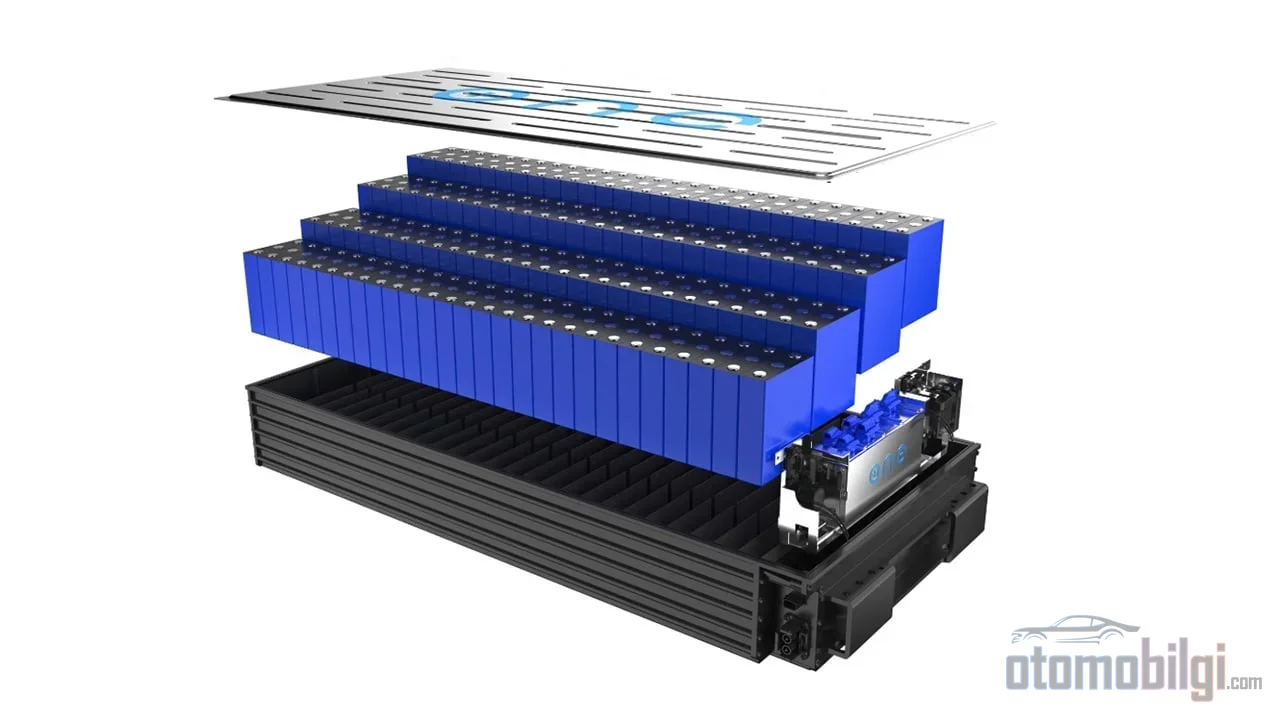
Now let's get to where LFP gets hit. Energy density is lower than NMC, meaning it stores less energy at the same weight. A simple analogy: if NMC is a sports drink can, LFP is a big but heavy water jug. The vehicle gets heavier, energy per kilogram is lower. That's why LFP was traditionally used in lower-range models; it's still rare in vehicles with over 300-400 miles of range.
Cold weather, however, is LFP's weakest exam. At sub-zero temperatures, Range loss of more than can be observed and at -20°C battery capacity is measured to drop to only around 60%. Charging speed is also affected by the cold; LFP cells are more sensitive than NMC in cold charging and, due to their chemistry, have natural limits when fast charging. Social media circulates claims that "LFP is better in the cold," but technical measurements say exactly the opposite; perception and data clash here.
There is also a rarely discussed technical detail: LFP's very flat voltage curve makes it difficult to accurately estimate the state of charge (SOC) and increases the risk of cell imbalance. In other words, the battery percentage can sometimes play little tricks on you.
How Much of the Promise Is Real, How Much Is Marketing?
Time for the distinction I promised. The parts of the "LFP as the promise of a cheaper electric car" that have become reality:
- Price: Real. When LFP packs are measured down to the pixel, they are roughly 30% below NMC, and this difference is reflected in the sticker price.
- Lifespan: Real. Cycle counts are not marketing, they are laboratory data.
- Safety: Partly real. Thermal stability is better; the "never catches fire" part is marketing.
- Ideal for every segment: Marketing. NMC is still more comfortable for long range and harsh winter conditions.
There is also a geographic limit to the "cheap EV" promise: 98% of global LFP cathode production capacity 98% is concentrated in a single country. Most of the battery cost reduction is based on this scale and supply chain dominance. Ford, GM, LG and others' efforts to establish non-Chinese cathode production are still in their infancy. So cheapness is not a blessing evenly distributed around the world.
| Feature | LFP | NMC |
|---|---|---|
| Average pack price | $81/kWh | $128/kWh |
| Cycle life | 3,000-6,000+ | 1,000-3,000 |
| Energy density | Low | High |
| Cold weather performance | Poor | Better |
| Daily 100% charging | Recommended | Not recommended |
| Thermal stability | High | Relatively low |
Which Vehicles Have It Standard As of 2026?
Now let's get to the tangible part. Most new budget EVs launched in 2026 come with LFP by default. Roughly speaking, here are the models where you will see it:
- BYD family: Atto 2, Atto 3, Dolphin, Seal, Seal U, Sealion 7 (Blade-based; typical range band 400-570 km WLTP)
- Europe's budget class: Citroen e-C3 family, Fiat Grande Panda, Opel Frontera
- MG 4, ZS EV and S5; Tesla Model 3 certain production runs and the Model Y standard version
- Ford Mustang Mach-E SR (after 2024); Kia EV5's China-made examples, XPeng G6/G9, Leapmotor, Smart #1 base, Mazda 6e base, Suzuki eVitara, Toyota Urban Cruiser, Geely EX5
But the picture is not bright for everyone. GM, started LFP cell production in Tennessee in June 2026 and among its plans is using LFP in five of seven models; nevertheless, company management signaled that LFP could be abandoned in future EVs. While the industry is flocking to LFP, a giant's reverse signal shows that the "LFP will conquer every segment" narrative is not guaranteed. Tesla, meanwhile, is moving in the opposite direction; LFP is also seen to be offered in some pack options with long-range goals.
New-Generation LFP: Are the Range and Cold Claims Now Realistic?
The most interesting move against LFP's classic weaknesses comes from cell design. CATL, introduced Shenxing, the world's first 4C ultra-fast-charging LFP battery, in 2023: a claim of over 700 km of range and 400 km of charge in 10 minutes. Its successor, Shenxing Pro, was launched in Europe at the end of 2025 and promises cold-weather resilience, over 800 km of range and 478 km of charge in 10 minutes. The Shenxing Superfast version is being talked about with 650 km WLTP range and peak charging power of up to 1.3 MW. These are manufacturer claims; how they hold up in the cold in real-world conditions will become clear in the long run.
On the Chinese front, Geely is preparing a short-blade LFP battery reaching 192 Wh/kg energy density for use in its own EVs. Svolt has also started production of its short-blade battery with 188 Wh/kg density, 5C charging and a cycle life of 3,500; these cells will appear in Citroen, Opel and Peugeot vehicles. LG will supply LFP batteries to the Renault Group's electric division; Korean manufacturers are converting their battery lines in the USA to LFP, and some cathode producers that remained on the nickel side are targeting 2026 for the switch to LFP. Nissan also plans to lower EV prices with cheaper LFP batteries and offer these vehicles to developing markets from 2026 onward.
In short: the new generation of LFP seems to genuinely close the range and fast-charging weakness. However, this does not mean LFP has now beaten NMC under every condition; it means the chemistry has pushed its limits by increasing capacity. Its behavior in harsh winters, together with the vehicle's heating strategy and charging infrastructure, remains a significant variable. Forecasts point in this direction: industry analysts expect a general shift from nickel-based chemistries to LFP by 2036, and it is estimated that more than half of EVs to be delivered in 2027 will be LFP-based.
What Should You Know as a Buyer? Frequently Asked Questions
- How do I know if my car has LFP? In a Tesla, the presence of a 100% charge limit option or the 7th character of the VIN being "F" is a sign; in a Mach-E, the 8th digit of the VIN being 4 or 5 indicates it.
- Can I charge to 100% every day? With LFP, yes; in fact, a full charge at least once a week is recommended.
- How much range do I lose in the cold? Losses above 30% are possible below freezing; at -20°C capacity drops to around 60%.
- Can it handle long trips? With the new generation of LFP, examples over 500 km WLTP exist; but planning according to winter conditions is essential.
- How long does the battery last? Sources cite a range of 3,000-6,000+ cycles; meaning it will most likely outlast the car itself.
Conclusion: The Cheapness Is Real, No Candy-Coating
LFP's promise, stripped to the bone: cheaper packs, nearly double the lifespan, high thermal safety, and the convenience of daily 100% charging. These aren't marketing claims but measurable facts, and they have significantly pulled down the price floor of electric vehicles. On the other hand, the "battery that overcomes everything" narrative still sits on the marketing shelves: energy density is low, cold weather is a serious test, and the cheapness on the production side leans on the dominance of a single geography. In my view, the summary is this: for city and mid-range users, LFP is the most sensible choice today; if you're a long-range enthusiast or live in the harsh winters of the north, take a second look at those cold-weather charts before deciding. Don't you think the "cheap and durable" combination is smarter in the long run than "light and expensive"?
Sources
- Electric vehicle batteries - Global EV Outlook 2026
- New Record Lows for Battery Prices (BloombergNEF)
- EXCLUSIVE: GM may ditch LFP batteries for future EVs (Reuters)
- Ford begins building low-cost LFP batteries for its $30K EV pickup (Electrek)
- Which Cars Have LFP Batteries?
- LFP Batteries: Why Top EV Makers Choose Cheaper Tech
- LFP vs NMC batteries: Complete fleet owner's guide
- NMC vs LFP: safety and performance in operation
- LFP vs NMC vs Solid-State: EV Battery Types (2026)
- LFP Battery: What It Is & Which EVs Use It in 2026
- Understanding battery degradation: how LFP cells age over time
- Battery chemistries in EVs shifting to lower-cost LFP (Automotive News)