Are Modules Dead? The Internal Structure of EV Batteries from Cell to Pack
Share This Page
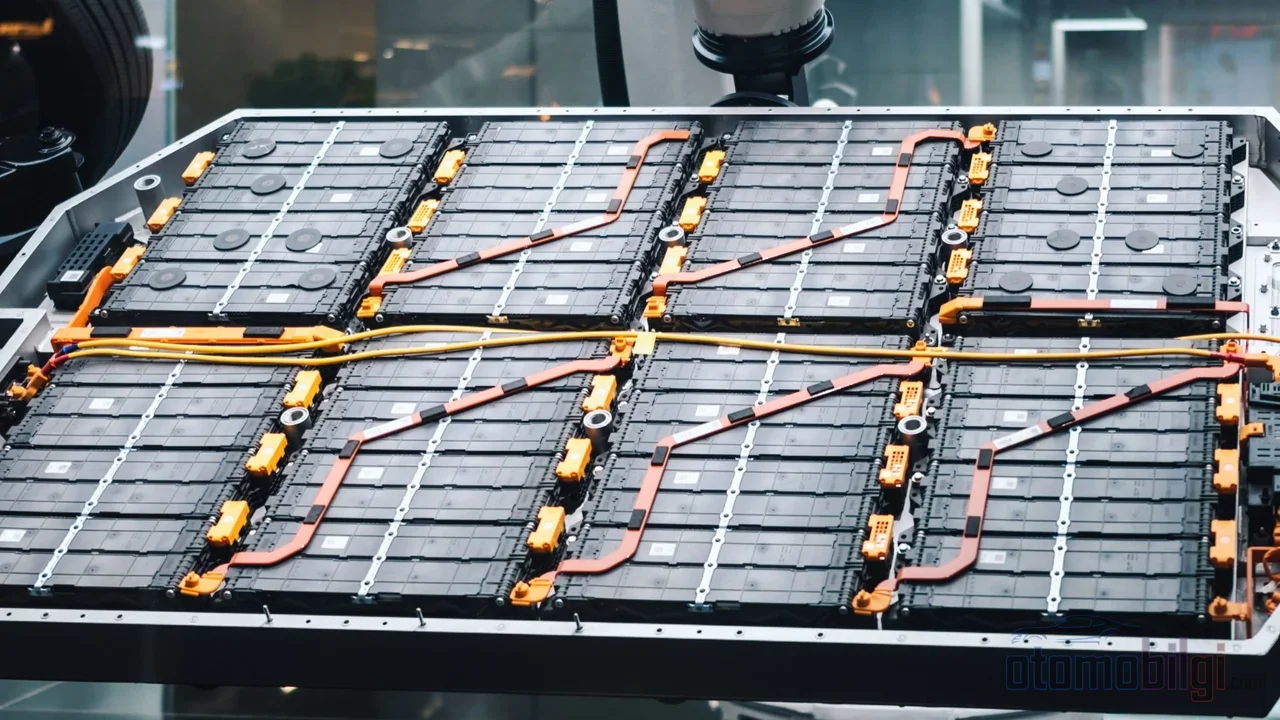
Yes, modules are on their way out in electric vehicle batteries: The transition from the cell–module–pack architecture to cell-to-pack (CTP) design skips the intermediate module layer, delivering an increase in volume utilization of up to 15-50%, a reduction of up to 40% in part count , and an improvement of 10-15% in energy density . In return, individual cell repair becomes practically impossible, while the cooling and safety burden falls on the pack itself. This page explains, with numbers, the internal structure of both architectures, their trade-offs, and exactly what manufacturers are doing.
Highlights
- An EV pack 400-800 V requires voltage while a single cell delivers only 3-4 V .
- The battery accounts for approximately 30% of an electric vehicle's total cost.
- CATL Qilin (CTP 3.0): in ternary systems 255 Wh/kg, in LFP 160 Wh/kg, 72% volume utilization.
- The Tesla 4680 cell generates approximately 2.3 times more heat per unit volume than the Blade cell at 1C.
- In CTP, cells are bonded, so individual cell replacement is practically impossible; in case of failure, the entire pack is replaced.
Cell, Module, Pack: What Exactly Each of the Three Layers Does
Let's clarify the layers to keep the conversation on the same terms. The cell is the unit that stores chemical energy; it is produced in three main formats: prismatic, pouch, and cylindrical. Cell manufacturing is predominantly a chemical process. The module is a group of cells connected in series or parallel: it comes with busbars, a BMS layer, thermal management components, mechanical housing, and insulation materials. Cells are sorted by capacity, voltage, and internal resistance before being assembled into modules; connections are made by laser welding, ultrasonic welding, or busbars. The pack is the complete system in which these modules (or, in CTP, the cells directly) are integrated with cooling, protection, and the BMS.
The math is simple but the scale is large: a cell typically delivers 3-4 V, while an electric vehicle requires 400-800 V. Hundreds of cells must be connected in series and thousands of cells must be coordinated. The module layer was the way of breaking this complexity into manageable parts. The question CTP asks is precisely this: is this intermediate layer really necessary?
How Does Cell Format Determine the Pack's Fate?
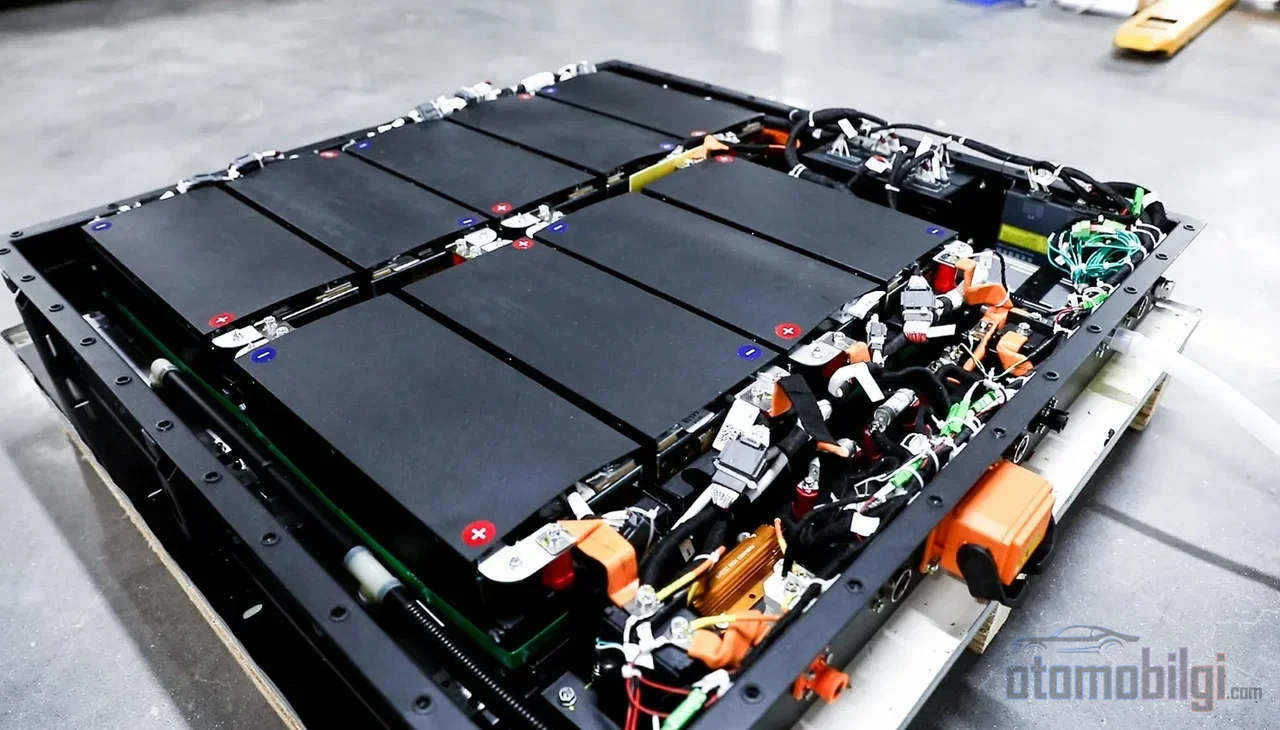
Pack architecture cannot be considered independently of cell format. Prismatic cells are generally larger than cylindrical ones; fewer cells are needed for the same energy, and assembly is simplified. Their sturdy metal housings enhance mechanical safety, but their flat surfaces and rigid bodies make cooling difficult. Pouch cells, since they lack a hard casing, offer high energy density at the cell level and good heat dissipation; in return, swelling risks are higher. Cylindrical cells, with their standardized manufacturing and mechanical strength, are the classic solution for high-performance applications.
| Format | Strength | Weakness | Typical use |
|---|---|---|---|
| Prismatic | Mechanical safety, fewer cells | Difficult to cool | Energy-focused packs |
| Pouch | High cell density, good heat dissipation | Swelling risk | Designs prioritizing lightness |
| Cylindrical | Durability, mature production | Too many cells, complex assembly | High performance |
This format difference is also the basis of today's most talked-about comparison: BYD Blade is a large prismatic LFP cell, while Tesla's 4680 is a cylindrical NMC811 cell. Two utterly different engineering answers to the same problem.
What Exactly Does CTP Change, and How Big Is the Gain?
CTP (Cell-to-Pack) is the integration of cells directly into the pack by skipping the module intermediate layer. The logic is its own: the walls, covers, and busbar layers of module boxes take up volume that stores no energy. When you fill that volume with cells, you gain both energy and simplified production. The figures are ambitious: a 15-50% increase in volume utilization rate depending on cell design, up to a 40% reduction in part count, a 10-15% improvement in energy density, and production efficiency increase targets of up to 50%. Since the battery accounts for roughly 30% of a vehicle's cost, these rates are directly reflected in the vehicle price.
Qilin: Today's Ceiling for CTP
CATL's CTP 3.0, announced as Qilin battery, delivers in ternary systems 255 Wh/kg, and in LFP systems 160 Wh/kg energy density. The design was introduced with 72% volume utilization efficiency; in the first CTP generation this rate started at 55%. Series production began in 2023 and the trend is still upward: the third-generation Qilin introduced in April 2026 came with 3000 kW output, 10C continuous / 15C peak charging rate, over 1000 km range and a "condensed matter" battery with 350 Wh/kg density. The removal of the module is the main lever of this momentum.
Tesla 4680 and BYD Blade: Two Paths to the Same Goal
Both manufacturers are going module-less, but their cell choices are opposites. BYD's blade cells are up to 2.5 meters long, thin prismatic LFP blocks extending across the full width of the pack; they are arranged in a honeycomb-like pattern and provide the pack with both structural strength and a broad heat dissipation surface. LFP chemistry stands out in efficiency and thermal simplicity. Tesla, with its 4680 cylindrical cell, targets NMC811's high energy density and the low resistance of the tabless electrode design.
Teardown comparisons clarify the picture: the 4680 generates approximately 2.3 times more heat per unit volume than the blade cell at 1C. This forces Tesla to embed a more advanced cooling architecture inside the pack. In other words, high density is not free; it is paid for from the thermal management budget. LG Energy Solution's move toward series production of CTP in pouch format also shows that going module-less is not a trend tied to a single cell format.
Cooling and Structural Battery: The Module Is Gone, Where Did the Work Move To?
In a modular design, part of thermal management is solved at the module level. In CTP, this layer is absent; the cells are connected directly to the cooling plate with thermally conductive adhesives. This means thermally conductive resins, thermally conductive yet insulating adhesives, and custom cooling plates with large surface areas. On the production line, sealing is also a serious engineering matter: in a modular design each module has its own sealed cover, whereas in CTP a single pack cover carries all the sealing. A single point of failure means much larger consequences.
The next step is embedding the cells into the chassis: cell-to-chassis (CTC) and cell-to-body (CTB) architectures, where the battery ceases to be a load carried by the chassis in a collision and becomes a primary structural member of the vehicle. This radically changes rigidity and crash behavior; bonding the cells directly to the cooling plate, the chassis, or the vehicle floor also provides advantages in thermal management. The transition from a "skateboard box" to a structural backbone is literally turning the battery into the vehicle's skeleton.
Repairability: The Price of the Gain
This is where CTP is most controversial. In a modular design, a faulty module can be replaced without disassembling the pack; the fault is isolated and maintenance is easy. In CTP, since the cells are bonded to the pack, replacing individual cells after production is practically impossible. Any cell failure may require the entire pack to be replaced and disposed of. This is a chain problem extending from warranty costs to the second-life market.
- Safety: The loss of module side walls reduces structural support; cell expansion forces are countered with straps and end panels.
- Propagation risk: A single sealing layer and direct cell-to-housing contact increase the risk of thermal runaway and thermal propagation in accidents.
- Hidden damage: Even if the chassis remains undamaged, collision impact can harm the cells, interfaces, or intra-cell structures.
- Recycling: The use of large-scale adhesives and foam fillers instead of screw connections is the biggest obstacle to improving recycling rates in CTP systems.
There is also a balancing view: when a cell fails prematurely in a modular pack, cell-to-cell interactions affect lifespan, which is why cell replacement strategies are a separate research topic in the scientific literature. So the honest answer to the question "is the module dead?" is this: in energy-focused passenger vehicles, CTP is effectively becoming the standard, but in applications where maintenance and service are critical, the modular architecture still makes sense. There is no single clear preference among OEMs; CTP and CTC will coexist for the foreseeable future.
Conclusion: Is the Module Dead, or Has It Been Simplified?
The module lost its function as a universal intermediate layer; but this is not a funeral, it is a story of destruction and redistribution. The mechanical strength carried by the module was dispersed into the pack housing, thermal management into cooling plates and adhesive chemistry, and the safety function into chassis integration. The Qilin's journey of volume utilization stretching from 72% to 55%, with densities climbing to 350 Wh/kg, proves the gain is real. The bill, however, sits on the desks of service workshops and recycling facilities: cells are now less separable from the pack, harder to disassemble, and more integrated. From an engineering standpoint the picture is clear - energy density and cost were gained, while repairability remained the weakest link in the design decisions.
Sources
- Battery Cell, Module or Pack. What's the difference?
- Battery Module Design: Structure, Assembly & Applications
- CTP Process (Cell-to-Pack): How It's Revolutionizing EV Battery Design
- CATL launches CTP 3.0 battery "Qilin"
- Innovative Technology - CATL
- CATL unveils 3rd-gen Qilin with 3000kW output and condensed matter battery at 350Wh/kg
- Contrasting a BYD Blade prismatic cell and Tesla 4680 cylindrical cell
- Tesla 4680 Battery Vs BYD Blade
- A review of cell-to-body (CTB) battery-structure integration
- Cell-to-Chassis Architecture in EVs
- Cell-to-pack batteries
- Cell Replacement Strategies for Lithium Ion Battery Packs
- Improving recycling rates for cell-to-pack battery systems
- Challenges and Solutions in Cell-to-Pack Battery Assembly
- Prismatic Cells vs. Cylindrical Cells
- Prismatic vs Pouch vs Cylindrical