How Will Sodium-Ion Batteries Make Electric Cars Cheaper?
Share This Page
Sodium-ion batteries are a real technology with the potential to make electric cars cheaper: thanks to abundant sodium, they avoid expensive metals, and they perform far better than lithium in cold weather. But since their energy density is about 30% lower, they are not replacing lithium; while lithium stays ahead in long-range vehicles, sodium-ion can pull prices down in short-range and city cars.
Highlights
- February 2026: The first mass-produced passenger EV sold with a sodium-ion pack was introduced; series cell production is targeting the end of 2026.
- At −30°C, the discharge power of a sodium-ion cell is nearly three times that of an equivalent LFP cell.
- Energy density: 175 Wh/kg in a mass-production sodium cell; premium lithium is at 250–300 Wh/kg.
- GM rejected sodium-ion for EVs in the short-to-medium term; it is steering it toward stationary storage.
- Mercedes-AMG's cell with a silicon-content anode reaches 298 Wh/kg.
Let's be honest: in recent years we've seen the "revolution that will replace lithium!" headline so many times that we now struggle to tell which battery promise will actually hold up. Solid-state keeps saying "three years away" every year, silicon anodes are no flash in the pan, and once sodium-ion enters the mix, things get completely muddled. In this article, I'll try to separate the hype from reality. Ready? Then let's get started!
What Exactly Is a Sodium-Ion Battery?
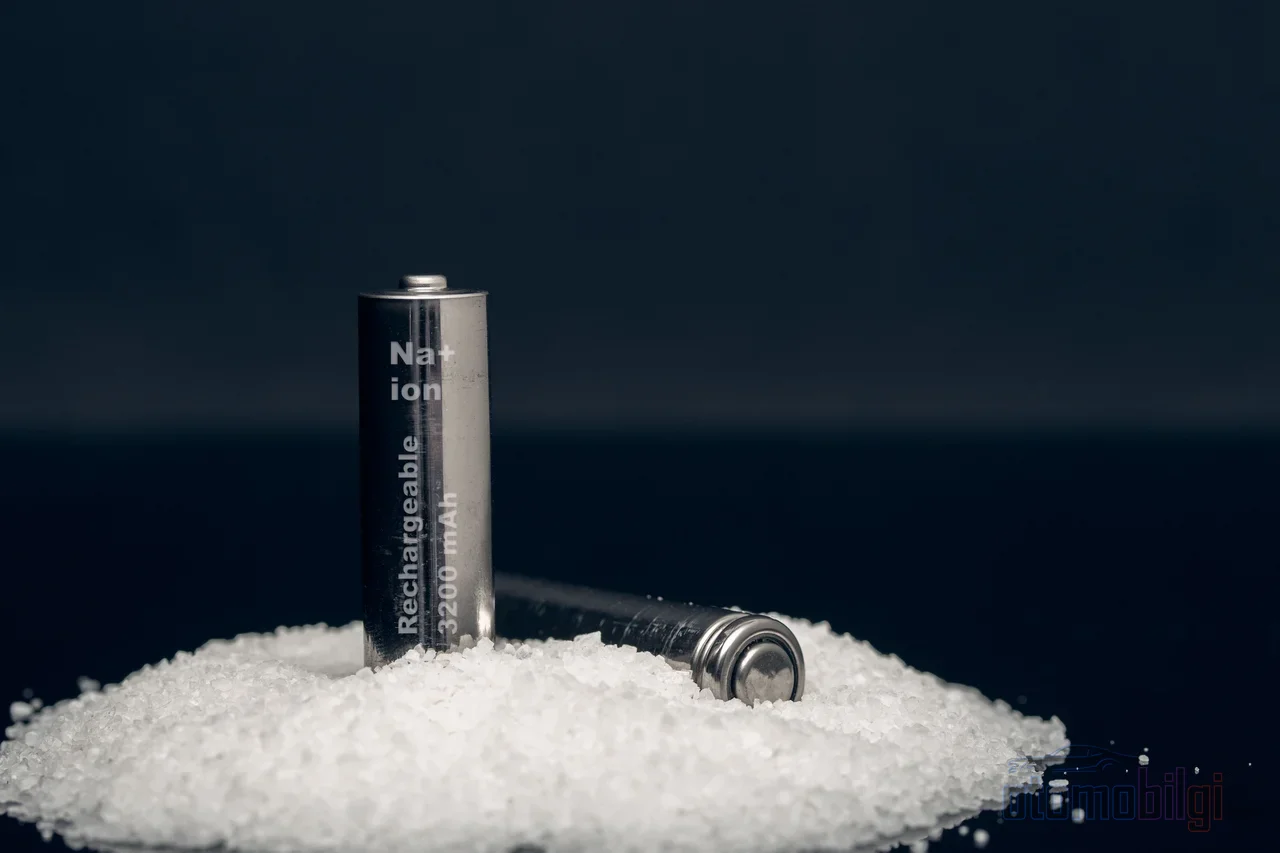
It sounds complicated, but it's actually a very simple idea: you know how in normal lithium-ion cells there are ions shuttling back and forth between the seats? Well, in a sodium-ion battery, those travelers are sodium ions instead of lithium ions. In other words, you're making the soup from a different ingredient, but the soup is still the same soup. So why do they do it? The answer: salt.
Sodium is more than 500 times more abundant than lithium as an element. It's even present in seawater and sits in plenty in salt deposits. Unlike lithium, it doesn't get stuck in a controlled refining bottleneck. Sodium-ion chemistry can also avoid expensive metals like cobalt and nickel. So the formula for cheapness is clear: abundant raw material + no expensive metals. Some assessments point to the $60/kWh threshold as the cost zone where sodium-ion is strong; cost parity with lithium is expected by 2027.
So What's the Catch? Here's the Dark Side
The sodium ion is larger than lithium and roughly three times heavier. Think of it this way: you have to fit it into the same bag, but the ball you're stuffing in has grown three times in size. The result? Less energy at the same weight. The energy density of sodium-ion cells is about 30% lower compared to lithium. That means either a heavier pack or a shorter range. In the car world, neither is a particularly popular word.
| Cell Type | Energy Density | Status |
|---|---|---|
| First-generation sodium-ion (2021) | ~160 Wh/kg | In series production |
| Second-generation sodium-ion | 175 Wh/kg | In mass production |
| LFP | 160–200 Wh/kg | Widespread |
| Premium lithium chemistries | 250–300 Wh/kg | Widespread |
| Next-generation sodium target | Above 200 Wh/kg | In development |
Looking at the table, the picture actually becomes clear: second-generation sodium-ion has caught up with LFP, but premium lithium is still in a completely different league. Think of someone ice skating in winter: sodium handles the cold very well, but over long distances lithium is still the captain.
Does Sodium-Ion Really Crush Lithium in Cold Weather?
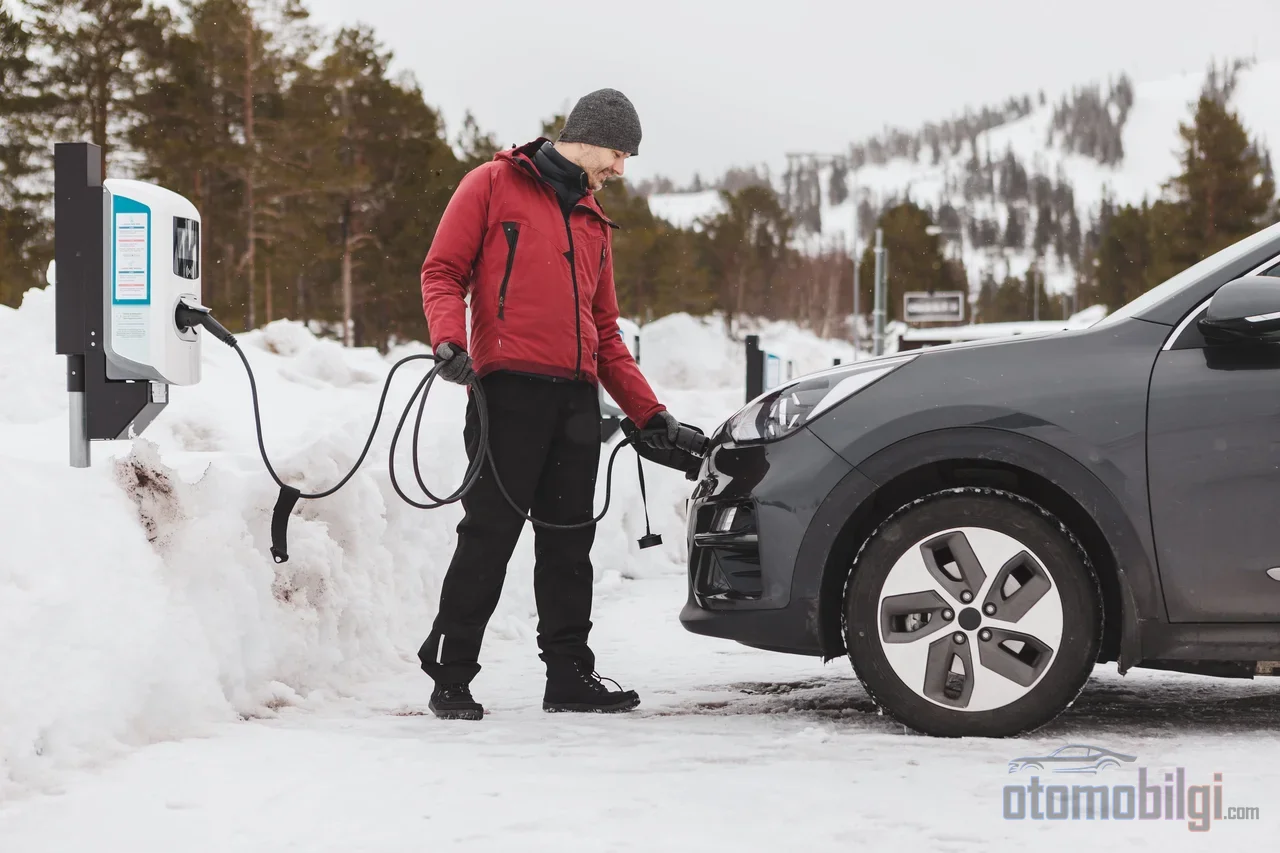
The answer to this section is clear: yes, it seriously crushes it. Lithium-ion's inability to charge in winter is the problem EV owners encounter most on snowy nights. With sodium-ion, the picture is completely different. Let's look at the official data of the new-generation cells targeting mass production:
- At −30°C, the discharge power is nearly three times
- that of an equivalent LFP cell; at −40°C, ~90% of capacity is retained
- It can take a charge even while completely frozen
- The pack operates between −40°C and +70°C
There is a similar picture on the charging speed side: at −20°C, a sodium-ion cell can reach 80% capacity in about 18 minutes ; its lithium equivalent stays above 30 minutes under the same conditions. Some manufacturers report 85% capacity retention at −30°C. If I had to make an analogy: lithium is me struggling to get out of bed on a winter morning, while sodium is a polar bear starting the day by swimming in ice. If you live in a northern country, this difference alone could be a reason to buy.
Promise or Reality? 2026's Concrete Report Card
The theory is nice, but what we asked is this: is this technology actually on the roads? As of 2026, the report card is mixed but not empty. In February 2026, battery giant CATL and Changan unveiled the Changan Nevo A06, the world's first mass-production passenger EV to be sold with a sodium-ion pack; mass production of the cells is expected to be completed by the end of 2026, and the vehicle will reach the market by mid-2026. CATL expects the first sodium-ion batteries to enter passenger vehicles in the second quarter of 2026. On the light commercial side, JAC models have completed winter testing and are entering mass production in July.
Activity is intense on the China front: BYD's third-generation sodium cells claim more than 10,000 charge cycles ; the Seagull model is expected to use a sodium-lithium mix, and a 30 GWh sodium-ion plant is being built, aimed mostly at micro EVs and scooters. The scooter side has already begun: Yadea launched four sodium-ion scooter models in early 2025. So sodium-ion is no longer a presentation slide; it is a reality that has entered the factory line.
But there is another side to the coin. In June 2026, GM announced it would develop sodium-ion cells - not under the hood, but for stationary energy storage. The company's vice president of batteries, Kurt Kelty, put it very clearly:
In the short and medium term, there will be no sodium-ion EVs; energy density is too low.
GM is not settling for that: it cites low lifecycle cost even compared to LFP over a 20-25 year lifespan, excellent low-temperature tolerance, and independence in raw material supply as the main reasons for stationary storage; on the EV side, it is prioritizing the LMR chemistry, which will go into volume production in 2028. In other words, one of the world's largest manufacturers is saying "not in EVs, but in the power grid." That doesn't mean the technology is fake - it shows it is being used in the right place, not the wrong place. Over long ranges, lithium's energy density advantage will continue; sodium will shift toward cheap, cold-climate, and urban vehicles.
It's also worth honestly adding: it's not yet clear whether the handful of handmade sodium-battery cars sold in China will leave a mark on the market. Moreover, even the forecasts that the sodium-ion EV battery market, which stands at $0.9 billion in 2026, will reach $2.4 billion by 2036 vary considerably from source to source - meaning not everyone believes it, or rather, not everyone agrees on how much it will grow.
Silicon Anode: The Quiet but Most Realistic Promise
Sodium-ion may sound more exotic, but in my view the most realistic move of 2026 is the silicon anode. The logic is this: the anode's job is to "host" lithium during charging. While graphite offers 372 mAh/g capacity, silicon can theoretically go up to 4200 mAh/g. More than ten times the capacity! But of course it doesn't come free: pure silicon swells by about 300% while charging - meaning it expands like a small sponge and cracks the anode. It's the kind of problem you'd have with your phone not fitting in its case on your bed, but at the atomic level.
So How Are They Solving It?
The current answer is simple but clever: instead of pure silicon, they use a silicon-graphite blend . Silicon pulls the capacity up, graphite absorbs the swelling. The great advantage of this approach is that it can be integrated into existing battery designs without requiring a new platform. A "let's add salt to the existing soup" strategy instead of the "let's rebuild everything" approach of sodium-ion.
And the results speak for themselves: the Mercedes-AMG GT 4-Door Coupé (AMG.EA platform) reaches 298 Wh/kg at cell level using a silicon-content anode with an NCMA cathode; with 600 kW charging power, the transition from 10% to 80% takes about 11 minutes. Production starts in Sindelfingen in the summer of 2026. Meanwhile, the supply side is heating up: Sila promises up to 20% more range while scaling up US production for manufacturers like Mercedes and Panasonic; as Sila and Group14 move to volume production in the US, LeydenJar from the Netherlands and NorcSi from Germany are also ramping up production in 2026. So the silicon anode, unlike solid state, has already crossed the laboratory walls.
Solid State and Other Promises Before the Storm
Let's not forget solid state batteries. In August 2025, the Mercedes-Benz EQS drove from Stuttgart to Malmö on a single charge with Factorial's lithium-metal solid state cells: 1205 km gone; the pack carries about 25% more usable energy than a standard battery. A late-decade target is being mentioned for mass production. There are also solid-state cells that can retain 90% of their capacity after 5,000 cycles; Chinese Ganfeng has already started small-scale production of 500 Wh/kg cells.
But let's also show the hype side of the face. The claims of the Verge TS Pro motorcycle (400 Wh/kg, five-minute charging, 100,000 cycles) had become a subject of mockery among battery scientists; a rival CEO openly said "there is no such battery". The interesting part: in March 2026, a reputable laboratory verified the 100 kW in five minutes performance on the actual bike. So it's technically possible - but this is a low-volume motorcycle. A warranty can be given, but the story of the millions of mass-produced passenger EVs is a completely different matter. Seeing the difference is important.
On the Tesla side, we encounter a similar reality: it was confirmed that 4680 cell production started with the fully dry electrode process, but Elon Musk in May 2026 rejected the rumor that "costs will be halved"; he said the process would significantly reduce cathode cost but that this would not apply to the entire pack. We see it, don't we: there is always a small asterisk behind every promise.
So Will EVs Actually Get Cheaper?
Let's return to the core of the matter: money. BloombergNEF's 2025 survey shows that the average lithium-ion pack price fell by 8% to a record level of 108 $/kWh- 93% cheaper than in 2010. Fully electric vehicle packs have dropped to 99 $/kWh; while in China the average is 84 $/kWh, Europe is about 56% more expensive. So the base price is already constantly falling, and sodium-ion is a trump card that could accelerate this decline.
My reading is this: sodium-ion is not bringing us a "golden soup of everything," it's bringing the era of putting the right battery in the right vehicle. For someone who drives short distances in a cold climate, cold-resistant, cheap sodium-ion is a great option. For someone who loves long trips, lithium and silicon-anode premium cells will continue to point the way. So the price reduction is coming, but not in the same way for everyone.
So what about you? Is range, cold-weather performance, or price the most critical criterion for you? I'm excitedly watching sodium-ion enter city cars to bring prices down - because a cheap and cold-resistant EV is exactly what many people need. I'm waiting for your opinion in the comments!
Sources
- CATL and CHANGAN Launch World's First Mass-Production Sodium-Ion EV
- GM to Develop Sodium-Ion Battery Cells-for Energy Storage, Not EVs (Car and Driver)
- New Battery Technologies 2026 Are Changing The Industry (Eleport)
- Could sodium-ion batteries ease the EV battery supply challenge? (EV Infrastructure News)
- What's next for EV batteries in 2026 (MIT Technology Review)
- EV battery leader CATL set to launch first sodium-ion batteries in passenger cars (Electrek)
- CATL expects to begin fitting sodium-ion batteries in passenger cars in Q2 (CnEVPost)
- Sodium vs Lithium: BAIC and CATL Lead the Sodium Era (Latam Mobility)
- Sodium-ion vs. Lithium-ion Battery (GEP)
- Sodium-Ion Battery vs. Lithium-Ion Battery (Laserax)
- Sodium ion vs Lithium ion EV batteries (Eleport)
- Sodium Ion Battery Cold Weather Performance (Zvepow)
- Sodium-Ion Battery vs. LFP: Which is Best? (EcoFlow)
- Sodium-Ion Batteries: The Hype vs. Reality (Battle Born Batteries)
- EV Silicon Anode Technology Landscape 2026 (PatSnap)
- Solid-State Batteries for Electric Vehicles (ASME)
- Sodium-Ion EV Battery Market (Future Market Insights)
- Sodium-Ion Batteries 2026: The $60/kWh Cost Frontier (Energy-Solutions)