Do Silicon-Anode Batteries Really Reduce Charging Time?
Share This Page
Short answer: Yes, but only under laboratory conditions and not yet in every cell. A silicon anode is a battery architecture that uses silicon instead of graphite; it has the potential to multiply capacity and shorten charging time. Today, with fast-charging protocols, a 0-80% charge can drop below 20 minutes, but these results cannot be directly applied to commercial cells. So the promise is real, but the road to getting there is full of swelling, lifespan, and manufacturing problems.
Highlights
- Silicon can store roughly 10 times more lithium ions than graphite per unit of mass
- In the laboratory, a 0-80% charge was completed in 20.5 minutes; but this has not yet been proven at industrial density
- Silicon expands to more than 3 times its volume as it absorbs lithium, wearing the battery down
- In today's manufacturing, only 10-20% of the electrode is silicon
- Industry forecast for pure silicon: widespread commercialization within 3-5 years
A question for you: Would you like to be able to charge your electric car before finishing your coffee? I would, and honestly, we all would. And right in the middle of that dream is the silicon anode. The anode, one of the two ends of the battery, is these days almost always graphite, a type of carbon. Silicon is its ambitious heir. So can this heir actually take the throne? Let's separate the promises from the realities.
What exactly does a silicon anode change in a battery?
Let's start from the basics, because the difference here is truly striking. Graphite can store only 1 lithium ion for every 6 carbon atoms. Silicon, on the other hand, holds 4.4 lithium ions per atom. On a mass basis, that means roughly 10 times the storage capacity of graphite. Silicon's theoretical capacity reaches up to 3600 mAh per gram-hour at room temperature, while graphite's theoretical value lags far behind.
What does this have to do with charging time, then? Think of it this way: When a battery's storage capacity increases, you can achieve the same range with a smaller and more efficient pack. Moreover, research shows that silicon electrodes can be charged twice as fast as graphite under certain conditions. So capacity gains and fast charging appear to be two sides of the same coin. But you should also see the other side of the coin.
The swelling problem: A battery that eats itself
Here is where the bad news begins. As silicon absorbs lithium ions, it expands to more than 3 times its original volume; one measurement puts this expansion at +280%. Let me give you an analogy: Imagine that the slice of bread you put in the toaster tripled in size and then shrank with every heating-cooling cycle. After a few rounds, what remains of that bread? Crumbs. And silicon particles break apart in exactly the same way.
This mechanical wear has cascading consequences. The fragmented particles cause the protective layer (SEI layer) formed on the anode's surface to be continuously re-formed, and each renewal consumes part of the battery's lithium stock. The result: a serious loss in cycle life. This is why volume expansion is identified as the number one obstacle to the commercialization of the silicon anode.
How realistic is the fast-charging promise? What does the 20-minute result tell us?
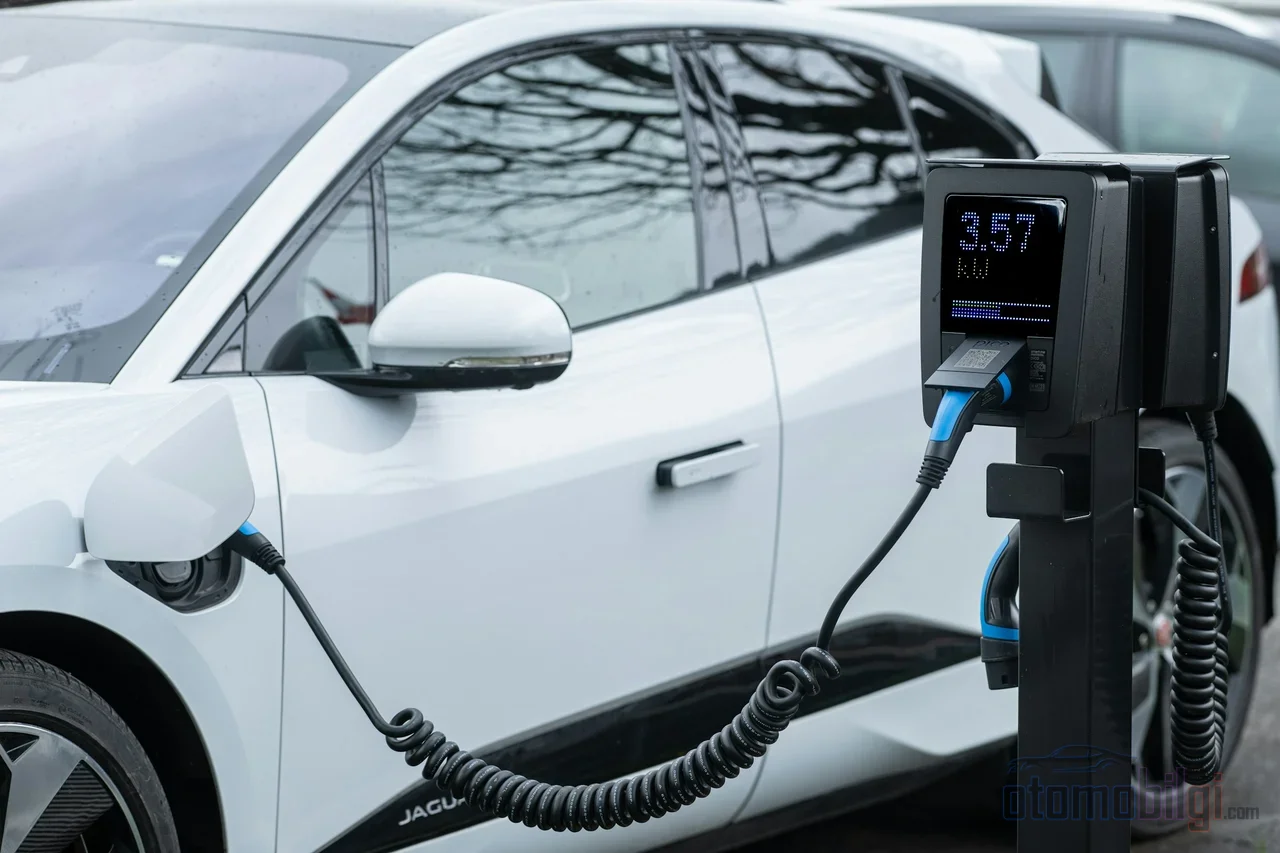
A study published in 2025 delivered results that made battery enthusiasts like me light up. Researchers designed an anode made of silicon nanoparticles and carbon nanotubes, along with a smart fast-charging protocol that prevents lithium plating. The results: 10-80% charge in 14.5 minutes, 0-80% charge in 20.5 minutes was completed. What's more, after 500 fast-charge cycles, the cell still retained roughly 55% of its capacity.
But wait, because the devil is in the details. The capacity density of these experimental cells was still below industrial acceptance levels. When you try to increase the coating thickness to reach the density of a real electric vehicle cell, those brilliant charging times can degrade. And then there's the temperature issue: at 5 degrees, the 0-80% charging time shoots up to 90 minutes. This is exactly where those who want to fast-charge in winter will frown.
- Lab result: 0-80% charge in 20.5 minutes, at room temperature
- Capacity retention after 500 fast charges: roughly 55%
- At 50 degrees, rapid capacity loss and serious anode cracking after 300 cycles
- Areal capacity: below the industrial target (~3 mAh/cm²), at ~2.05 mAh/cm²
So the honest answer to that question is this: silicon anodes can indeed reduce charging time, but the 20-minute results we see today come from thin, experimental electrodes. Replicating the same performance in a real EV cell has not yet been proven.
So what are manufacturers using today? Why isn't there 100% silicon?
This is one of the biggest misconceptions I've come across: "A silicon-anode battery came out, so is pure silicon being used now?" No. The approach used in production today is to mix a measured amount of silicon into graphite. The commercially meaningful formula is this: silicon nanoparticles amounting to 10-20% of the electrode weight provide a 20-40% capacity increase compared to pure graphite and enable charging in under 30 minutes. So the bowl is not entirely silicon; it's a graphite-heavy blend. Think of it like adding a bit of milk to your coffee; you preserve the character of the flavor without turning it entirely into milk.
The pure silicon goal is not a complete fantasy, though. At the end of 2024, a cell with a 100% silicon anode was introduced, and industry analysts expect anodes with 30-100% silicon to be heavily commercialized within 3-5 years. There's also the smartphone front: silicon-carbon anodes have significantly increased the capacity of phone batteries. But the same price is being paid here too: large volume expansion and poor rate performance.
| Anode type | Capacity effect | Main problem |
|---|---|---|
| Pure graphite | Reference (today's standard) | Capacity ceiling, 1 lithium per 6 carbon atoms |
| Graphite + 10-20% silicon | 20-40% increase, charging in under 30 minutes | Measured swelling, still present |
| 100% silicon | About 10 times the storage of graphite | More than 3x volume expansion, short lifespan |
The big players in the field: who is doing what?
Now let's move on to my favorite part of the job: who is producing what, and when? Because the activity in the sector is truly tangible. A few examples:
- Panasonic has begun pilot production of silicon anode cells for automotive customers; the goals are increased capacity and shorter charging times.
- General Motors regards silicon anodes as the next big leap after solid-state batteries. Yes, there is even a contender for the solid-state throne.
- Honda became a strategic investor (in 2026) in a UK-based silicon-carbon anode manufacturer.
- Mercedes-AMG, in the new platform of the GT 4-Door Coupé, has pushed cell density to the 298 Wh/kg level by using a silicon-containing anode together with an NCMA cathode.
- On the materials side, POSCO Future M announced that it has developed mass production technology for silicon anodes, identifying volume expansion as the primary obstacle to commercialization.
The scaling companies are also in full swing: NanoGraf, NEO Battery Materials and Nexeon are transitioning from pilot production to large-scale commercial manufacturing. Names like Sila Nanotechnologies, Amprius and Group14 are also among the rising stars of the sector. Market projections are dizzying but just as scattered: a market of roughly 0.5-0.9 billion dollars in 2026 is expected to grow to 12-26 billion dollars by 2034-2035. The reason for this wide gap between figures is simple: each report defines the market differently and calculates growth rates with assumptions ranging from 32% to 49%. So the size of this market is up in the air for now, but its direction is clear.
The promise-versus-reality balance: What are the lasting limitations?
Now we come to the most critical section, because when evaluating a technology, it is not our job to look only at the shiny results. Let us lay out the obstacles standing before the silicon anode, plain and simple.
The calendar life crisis
A high-profile study published in early 2026 revealed an annoying truth: despite architectural advances, the calendar life of silicon-containing cells, that is, how fast they age even when not in use, remained noticeably shorter than that of graphite cells; measurements came in at around 2 years level. Battery degradation even when your car sits in the garage is a serious red flag for the automotive world. We all know that cars are not replaced every 2 years like phones.
The power-energy trade-off
Silicon's natural electrical conductivity is low and its electrochemistry is diffusion-limited. Let me translate: silicon delivers its full potential only at slow charge/discharge rates. Fast charging, meanwhile, is achieved only with special architectures such as 3D, porous or nanowire designs. There is also an interesting historical detail: a 2014 study by a national laboratory within a partnership showed that silicon anodes could deliver power quickly but absorbed it much more slowly. Much progress has been made since that day, but the spirit of this trade-off still lingers.
The production and cost barrier
Silicon is actually one of the most abundant elements on Earth. So there is no raw material problem. The real issue is producing it at scale, consistently, and at an acceptable cost. Five separate degradation pathways (including mechanical structural degradation of the active material) are briefly limiting cycle life, while electrolyte additives show promise in extending life by improving SEI formation. In short, the solution lies not only in the anode but also in the other components of the cell.
Optimists or cautious voices? The two sides of the debate
The optimists say this: Silicon offers 10 times the capacity of graphite, and this could allow electric vehicles to get 50% more range with a 5-10 minute charge. The market could grow to tens of billions of dollars. These are impressive claims, admittedly.
The cautious voices, meanwhile, point out two things. First, the calendar life problem has not yet been solved, and the academic literature has repeatedly confirmed weak cycle life. Second, and in my view most importantly: Some of the charging speed claims are based on thin electrodes that carry tens of times less active material than real electric vehicle cells. In other words, there is still a bridge to be built between the laboratory scenario and the reality of the parking lot. My reading is this: The silicon anode is not a savior, but it is not a complete disappointment either. The 20-40% capacity advantage over graphite is already here today; 100% silicon requires a few more years of patience.
What will consumers actually see in the coming years?
Let me promise to explain without exaggeration. What we will see in the near term is not pure silicon, but silicon blended with graphite-carbon. These blends have already appeared in smartphones, and in electric vehicles they are starting with performance-focused models like Mercedes-AMG and spreading from there. Panasonic's pilot production and Honda's supply chain investment show that this transition is working like a jet engine. So within a few years, the batteries of your phone and some electric vehicles will be 20-40% denser and charge faster than today's; but this will not mean a full charge in 10 minutes.
For 100% silicon, industry sources point to a 3-5 year window. Will this window become reality? Yes, if the calendar life problem is solved. If not, pure silicon stays in the "coming soon" box for a few more years. For my part, I have put my money on silicon-carbon blends; a patient, gradual, and provable path is the way to go.
So what do you say: for a 20-minute charge, would you accept a somewhat shorter battery life, or would you put reliability above everything else? Let's discuss in the comments, because many more pages of this debate are yet to be written.
Sources
- Fast Charging of Silicon Anode-Based Lithium-Ion Batteries at the Pouch Cell Level (Thapa & Gao, J. Electrochem. Soc., 2025)
- A comprehensive review of silicon anodes for high-energy lithium-ion batteries (Feyzi et al., 2024)
- Silicon-Anode Batteries: More Energy, More Risk? (Exponent, 2024)
- Nature Energy - Zhang et al., 2026
- Degradation Pathways of Silicon-Based Anodes (Choi et al., Adv. Energy Mater.)
- Confronting Issues of the Practical Implementation of Si Anodes (Chae et al., Joule, 2017)
- POSCO Future M secures mass-production technology for silicon anode materials
- Sionic Energy Unveils 100-Percent Silicon Anode Battery (IEEE Spectrum, 2024)
- How the transition from graphite to silicon-anode batteries will revolutionize the EV industry (Charged EVs, 2025)
- Forget Solid-State. This EV Battery Breakthrough Is... (InsideEVs)
- Honda Pursues New Blended Silicon-Carbon EV Batteries (CleanTechnica, 2026)
- New Battery Technologies 2026 (Eleport)
- Types of Anode Materials Infographic (LG Energy Solution)
- Relationship between Silicon Percentage in Graphite Anode (Gautam et al., ACS Appl. Mater. Interfaces, 2024)
- The Secret Behind Increasing Mobile Phone Battery Capacity (Neware, 2025)
- Are Silicon-Anode Batteries the Next Big Leap for Electric Vehicles? (Suzuki Battery, 2026)
- Fast Charging Silicon Based Anode (PatSnap Eureka, 2026)
- Silicon Anode Battery Market (Precedence Research)
- Silicon Anode Battery Market (SNS Insider, 2026)
- Silicon Anode Battery Market (Fortune Business Insights)
- Understanding Why Silicon Anodes of Lithium-Ion Batteries Are Fast Discharge, Slow (ORNL, 2014)