Can Electric Roads Solve Vehicle Charging on the Go?
Share This Page
Electric roads are charging infrastructure embedded in roads that charges the vehicle's battery while driving, and the short answer is this: the technology really works, but as of today, its permanent, large-scale implementation worldwide is still very limited - part of the promise is on the way, and a large part is still under the pilot projector. Imagine: your car isn't stuck at a charging station, the road gives you energy itself. Just like leaving your phone on a charging pad - but you're traveling on that pad at 90 km/h. When I first heard this idea, I also said "wait, this can't be that good." So let's take a look together: how do these roads work, who is building them, what do they cost, and most importantly - will they really become widespread?
Highlights
- In Sweden, between Stockholm and Arlanda, a 21 km electric road opened; vehicles charge while driving.
- The first publicly accessible wireless charging road in the USA is in Detroit, a quarter mile (~400 m) long.
- The cost of electric roads today is roughly 2 million dollars per mile.
- Electric road systems can shrink truck batteries by 41-75% depending on the scenario.
How Does a Road Charge? There Are Two Different Methods
There are two main technologies, and both answer the same question: how is energy transferred to the vehicle while it's moving?
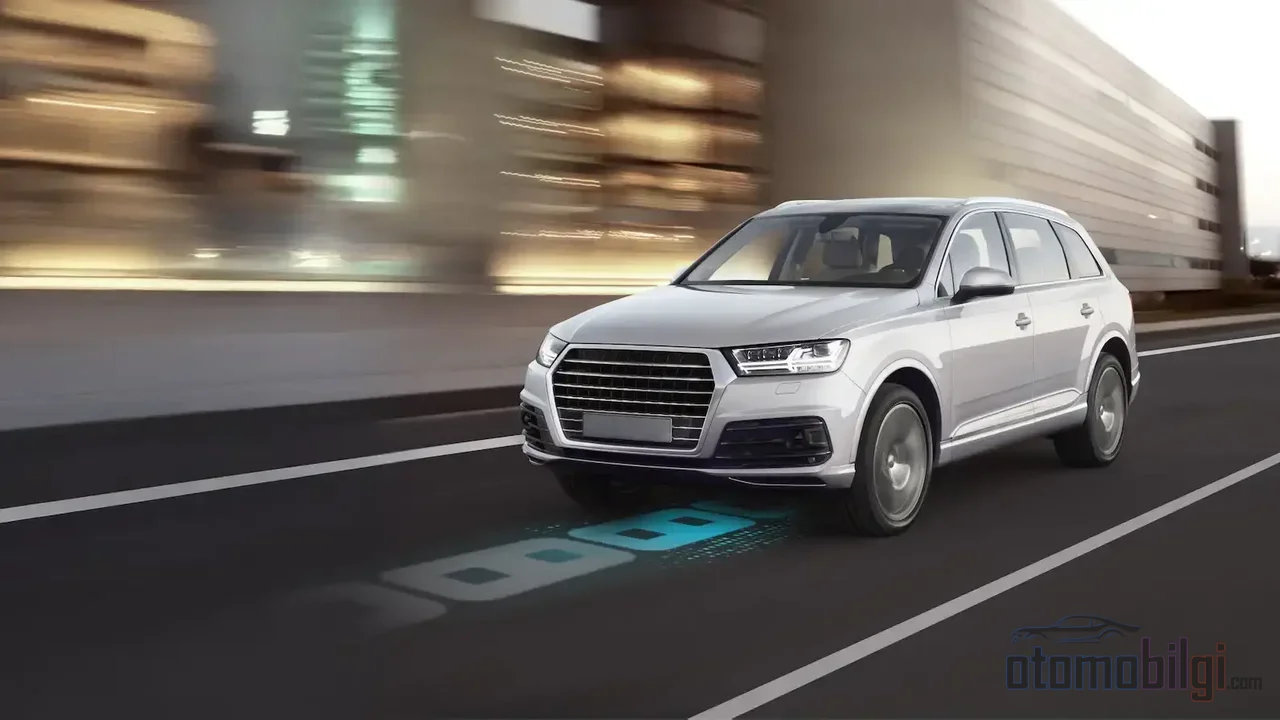
Inductive charging: wireless magic
Coils embedded in the road send energy via high-frequency inverters to a receiver under the vehicle - a giant version of a classic wireless charging pad. No contact, no cables, no cooling system worries. But this beauty comes at a price: some of the energy is lost in the air. Compared to wired charging, it takes longer to get the same power; in a test conducted in 2018, wireless charging required 15% more time than wired charging at the same power. What's more, the system is extremely sensitive to alignment - even a 3 cm shift can significantly reduce power transfer. If your car isn't sitting perfectly on top of the coil, charging efficiency drops badly.
The system isn't mature enough: in the 2023 trials in France, induction coils exceeded 100 °C, and a risk of thermal damage to the road was detected under normal operating conditions. In other words, on a hot summer day, the coil under trucks passing over the road can heat up - it's not like an engine warming up, it's a serious engineering problem. The good side: research is progressing. A team optimizing with machine learning managed to raise the energy transfer efficiency from 65% to 86.7%; and it works even when the device isn't perfectly aligned with the coil. Today, the common frequency is around 85 kHz, and some systems can reach over 300 kW of power.
Conductive charging: the rail in the road
The second method is an older approach but more efficient: a rail embedded in the road surface and a contactor extending from the underside of the vehicle to this rail. Thinking at street level, it's the asphalt version of the overhead line logic that powers trains. In a conductive system, there are no losses like in wireless transfer; most of the energy reaches the vehicle. The appeal of inductive is comfort, the appeal of conductive is efficiency and cost.
| Feature | Inductive (wireless) | Conductive (rail) |
|---|---|---|
| Contact | None, electromagnetic induction | Yes, rail embedded in road |
| Efficiency | Lower, results in energy loss | Preserves most of the energy |
| Sensitivity to alignment | A 3 cm offset reduces efficiency | Requires contact with the rail |
| Cost | Advanced technology, more expensive | Generally cheaper |
| Example projects | Detroit, Gotland | eRoadArlanda |
Who Has Done What Around the World, and Where Are We Now?
Sweden: a step ahead
Sweden is the current champion of this field. A 21 km electric road has opened between Stockholm and Arlanda Airport; commercial and private vehicles charge their batteries while driving on it. Interestingly, the first 2 km test section of the same project was completed back in 2018 - meaning it took about 8 years to move from testing to permanent infrastructure. The technology doesn't shout; it walks slowly. The Swedish Transport Administration is running this as a national program; the country projects a cost of SEK 30-40 billion (approximately 2.9-3.8 billion dollars) for around 2,000 km of electric roads. In addition, on the island of Gotland, Electreon has developed a 1.6 km electric road for trucks and buses; there is also a demo of a long-distance truck charging while driving.
USA: short segments and bold plans
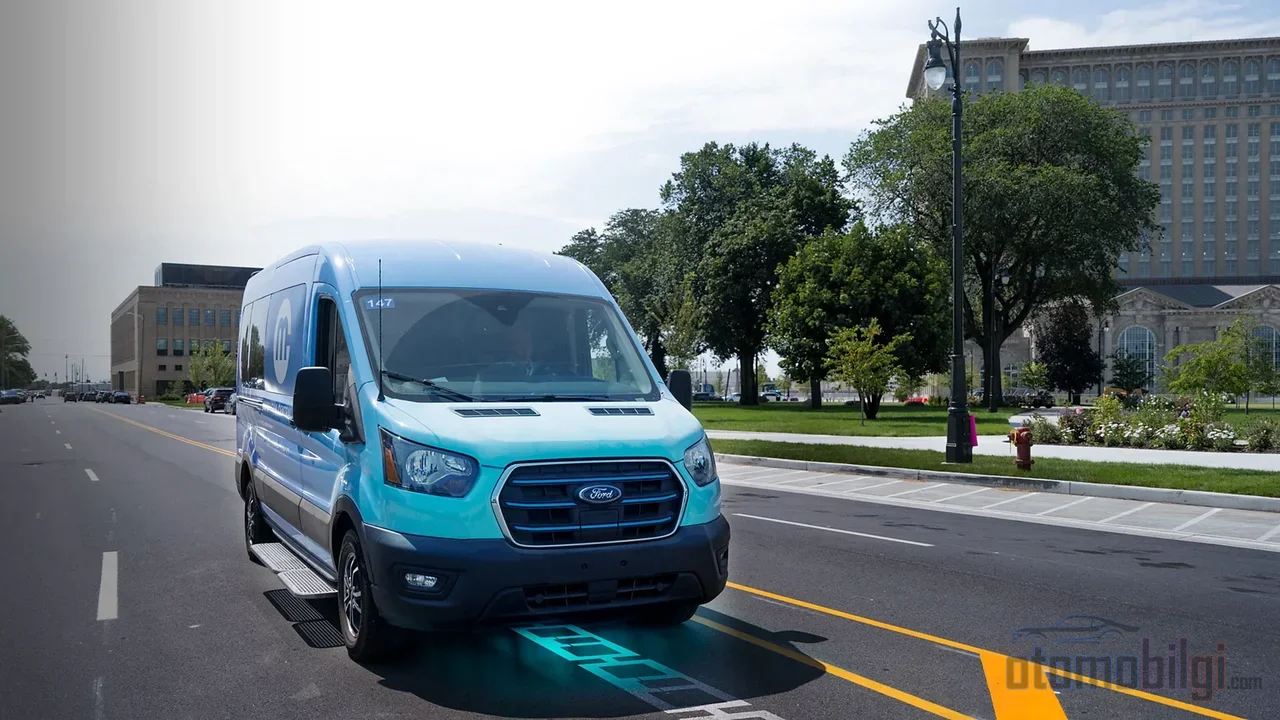
On the American side, a quarter-mile (about 400 m) segment on 14th Street in Detroit's Corktown neighborhood opened in November 2023 - the first publicly accessible wireless charging road in the US. The Michigan Department of Transportation and the city of Detroit partnered with Electreon, and the project received $1.9 million in partial funding. The goal is to extend it to a mile within a few years. The Florida front is also on the move: the first segment of a new expressway project near Orlando will feature wireless charging technology embedded in the road along a 1.6-mile stretch; construction begins in 2026. Meanwhile, Oak Ridge National Laboratory licensed its DWPT technology (4 kV voltage, 750 A current, around 85 kHz frequency) to Brooklyn-based HEVO; Honda also reached an agreement with Taisei and Taisei Rotec to develop an inductive charging system for use while driving. So there's a lot cooking in the background.
Europe's big plans
France plans 8,850 km of electric roads by 2035 - overhead lines, rails, or induction, everything is on the table. On the German side, there are also studies proposing 4,000 km of overhead line or inductive infrastructure on the autobahn. In Norway's city of Trondheim, a system is operating near a bus depot that uses inductive charging while stopped or moving slowly. In Israel, in Tel Aviv, there is a "Charging-as-a-Service" partnership worth approximately 9.4 million dollars for the Dan Bus Company's fleet of 200 buses, with a monthly subscription of around 800-1,000 dollars. But let's be honest: most of these are still at the planning or tender stage. Do we see permanent, large-scale implementation today? From start to finish, mainly Sweden's 21 km.
The Money Question: How Much Do These Roads Cost?
The Detroit project costs about $2 million per mile. Electreon's vice president Stefan Tongur predicts that as the technology matures, this could drop to about $1.2 million per mile, and the receiver cost per vehicle could fall to about $1,000. Nice, but the math is daunting: covering entire cities or highways at such a cost would be astronomical. That's why the crucial point of the debate is this - you don't have to electrify every road. This is also the approach Tongur suggests: target strategic points that have business models. Buses on fixed routes, truck corridors between ports and warehouses, transit lines. In short: electric roads should be built not everywhere, but in the right places.
There's also the vehicle side: to benefit from this road, your vehicle needs a special receiver. In the US, the only model currently coming with a factory-installed wireless charging receiver is BMW's 530e hybrid sedan. In other words, even if the infrastructure exists, that's about the extent of the equipped vehicles that could use it. Consumer-side demand, however, is encouraging: in a US survey of 1,000 people, 81 percent of EV owners or prospective buyers said they were highly interested in wireless charging vehicles. There's demand, but no hardware and roads - that famous chicken-and-egg cycle.
The Real Promise: Shrinking Giant Batteries in Heavy Transport
In my view, the most impressive promise of electric roads isn't the personal car, it's trucks. Why? Because a long-haul truck that can charge its battery while on the road doesn't have to carry hundreds of kilos of cells on its back. A UK-based study (de Saxe et al., 2023) revealed that electric road systems could shrink truck batteries by 41 percent, 62 percent and 75 percent respectively across three scenarios - the "Light", "Medium" and "Heavy" scenarios based on distance (2,750 / 5,500 / 8,500 km coverage). Shrinking the battery doesn't just mean less weight: the vehicle's upfront cost drops, and the total cost of ownership can become up to 9 percent cheaper compared to the baseline. A 2025 study compiled by Fraunhofer also reports that battery-electric trucks using electric roads surpass diesel in both emissions and cost, being the lowest-cost option.
But not everyone is convinced. Ashley Nunes of Harvard Law School argues that while wireless charging may look good on the road, logistics and costs can make it impractical; still, he acknowledges it could be meaningful in the fixed-route medium/heavy truck segment. Similar caution circulates everywhere: no matter how brilliant the system, paving an entire highway is a whole different matter.
Scalability: Can the Road Itself Become a Power Plant?
At this point I think the picture is clear: the technology works, examples are growing, but the growth rate is considerably slower than the targets. There are also legal moves in the US - on one hand a federal wireless charging grant program proposal (Wireless Electric Vehicle Charging Grant Program Act), and on the other initiatives like Illinois SB1805 requiring a dynamic wireless charging pilot for transportation projects of 20+ lane-miles. So the policy side has started pushing the button too. Even so, the concrete picture as of 2026 is this: one pilot in the US has moved to the construction phase, Europe's big plans are still just plans, and permanent-scale deployment exists in only one instance (21 km).
The industry side doesn't satisfy everyone who's interested either. Toyota, together with Denso, has formed a partnership with Electreon; BMW and Ford are on the WiTricity side, Stellantis with Hevo Power. Tesla, meanwhile, bought Wiferion and then sold it - meaning the major players are not all on the same side. The automotive world says "yes, but" to this technology; no definite path has been set. Additionally, a systematic academic review from 2026 comparing the efficiency and thermal behavior of both inductive and conductive electric roads was published - proof that the field is still actively debated.
Promise or Reality? My Conclusions
My honest answer is this: electric roads are currently in a "brilliant idea + early stage" combination. Does it work? Yes. Is it enough for everyone? Not yet. The right deployment scenario is clear: fixed-route buses, port and logistics corridors, and long-haul trucking lines. In these areas, the promise of shrinking the battery is backed by numbers; truck batteries shrinking by up to 75 percent makes electric road systems a serious candidate for heavy transport. Bus routes are also a perfectly logical starting point for urban transportation.
On the individual driver side, some patience is needed. Developments such as receiver costs falling to 1,000 dollars, per-mile cost dropping to 1.2 million dollars, and efficiency climbing to 86 percent are steps in the right direction, but the road itself hasn't yet become an energy source - there are only small and expensive test sections. Isn't it strange? It's exciting to think that we'll live in a world where your car charges while driving on the highway; but the road to that world looks longer than expected. For now, the smartest move is not to lose sight of this technology: it looks like one of the opportunities most likely to take off in heavy transport.
Sources
- Wireless charging: The roads where electric vehicles never need to plug in - BBC Future
- Dynamic Wireless Charging For Electric Vehicles - GreenLancer
- Inductive charging - Wikipedia
- Sweden opens electric road that recharges vehicles in motion - ArchDaily
- Florida to trial wireless EV charging highway - EV Infrastructure News
- An electric road system or big batteries: Implications for UK HGVs (de Saxe et al., 2023) - ScienceDirect
- Electric truck batteries: The bigger, the better? - ICCT
- The State of Electric Road Systems - Fraunhofer PUBLICA
- Conductive charging - Schunk Transit Systems
- Honda tests dynamic wireless charging while driving - electrive
- A review of electrified roads utilising inductive power transfer - Taylor & Francis
- IL SB1805 - BillTrack50