Can Synthetic Fuel Really Be Used in Today's Gasoline Cars?
Share This Page
Yes, synthetic fuel (e-fuel) can theoretically be used in today's gasoline cars without any engine modifications; because synthetic gasoline produced to specification is a "drop-in" fuel that mimics the same chemical structure as fossil gasoline. But on the practical side there are two major obstacles: a price starting at around 5 euros per liter and production that worldwide is still only at an experimental scale. So, can you fill your tank with it? Technically, yes. Can you find it at the pump down the street? For now, no.
Highlights
- Synthetic gasoline can be used without any engine or fuel system modifications when it meets the gasoline specification EN 228 standards.
- Producing one liter of e-fuel requires roughly 25 kWh of electricity even under ideal conditions; while the fuel itself carries only 10 kWh of energy.
- The world's first operational e-fuel plant is Haru Oni in Chile: with a capacity of only 130,000 liters per year.
- The EU grants a theoretical exception for new internal combustion vehicles that run exclusively on e-fuel after 2035.
- NOx emissions remain at levels similar to fossil gasoline; the gain is the absence of sulfur and aromatics.
What Exactly Is Synthetic Fuel?
Let's get the basics straight first, because the terms e-fuel and synthetic fuel are often confused. Electrofuel, or e-fuel, combines two ingredients: captured CO₂ and hydrogen produced through electrolysis. You split water using renewable energy to obtain hydrogen, combine it with carbon dioxide captured from the air or from industrial processes, and with the help of a catalyst convert it into hydrocarbons under high temperature and pressure. By tweaking the process slightly, it is possible to mimic gasoline, diesel, or even kerosene.
Sounds like magic, doesn't it? You capture carbon dioxide floating freely in the air and turn it into the fuel you put in your car; when you burn it, the CO₂ goes back into the air, but that carbon originally came from the air in the first place. The loop is closed, the math is neutral. At least, that's what the theory says. To put it in perspective, it's a bit like tossing your laundry back in the washing machine and wearing it again: the towel is always the same towel; you're just cleaning the dirt off it. But the electricity you run that machine on must also be clean, otherwise the loop gets dirty. Climate neutrality depends entirely on the electricity coming from renewable sources; feeding this process on a fossil-fueled grid turns it into a far more inefficient way of using fossil fuel.
Does It Harm Your Engine? The Technical Compatibility Question
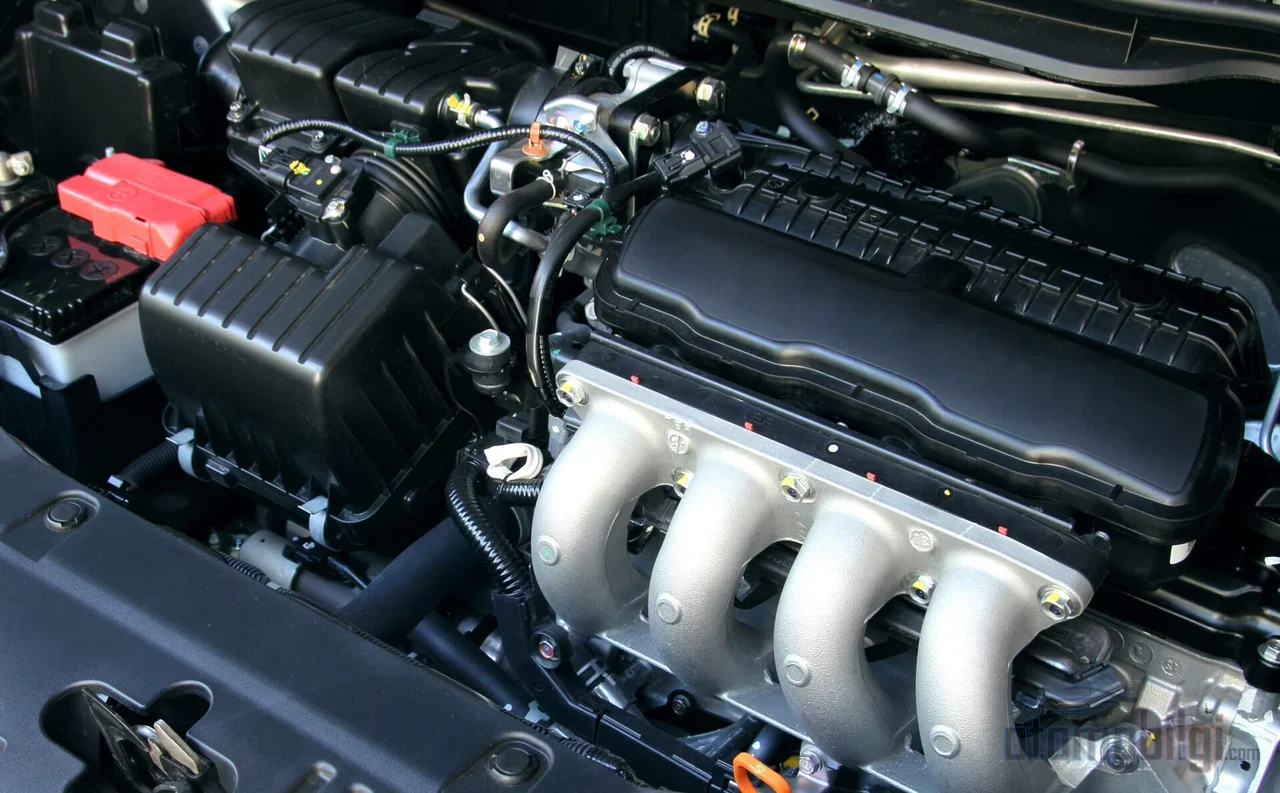
This is probably the question you're most curious about: can the car in your garage drink it? The news here is good. Companies producing synthetic gasoline to meet the EN 228 standard and international equivalent specifications state that it is a "drop-in" fuel; meaning that no changes are required to storage, distribution infrastructure, fuel systems, or engines. It can even be blended with fossil gasoline. It is also said to burn more cleanly because it contains no impurities such as aromatics; which theoretically means less residue inside the engine.
There is no bad news on the performance side either. A 2026 peer-reviewed study showed that e-fuel maintains combustion stability and engine performance comparable to gasoline under most conditions. Manufacturers also confirm that modern gasoline and diesel engines can tolerate small e-fuel blends without any modifications. When it comes to classic gasoline nightmares like knocking, the same rules as standard gasoline apply: as long as the octane value complies with the standards, the engine's behavior does not change. Notice that there is a gap here: no concrete number for the octane rating is circulating yet, because the fuel has not yet become a mass product.
What About Gaskets, Fuel Lines, and Rubber Hoses?
This was the part I was most curious about, because things get complicated in the world of ethanol. Ethanol blends can soften old rubber fuel lines; which is why older vehicles are being switched to Viton or PTFE-coated lines. In O-ring tests, FVMQ-type elastomers showed the best compatibility. So what do these data say about synthetic gasoline? This is where I need to be honest: there is no direct data yet on the effect of fully synthetic gasoline on gaskets. These findings apply to ethanol.
If we reason it out, the distinguishing property of synthetic gasoline from EN 228 gasoline, chemically speaking, is the absence of impurities such as aromatics; meaning it is not expected to do anything more aggressive to gaskets than standard gasoline does. But "not expected" is not the same as "measured." Especially when it comes to classic cars with rubber fuel lines, it is essential to be a bit cautious until large-scale independent field data emerges. Meanwhile, the lack of verification in the literature stems from the fuel not yet having moved beyond laboratory and pilot scale; there is nothing car owners can do, other than knowing that the pool of evidence behind the claim is still shallow.
The Price of the Promise: How Much Does a Liter of E-Fuel Cost?
If you say the technical side is fine, we move on to the wallet side, and that is where things hurt. In demo facilities, price projections of 5 euros per liter and above are being discussed. For comparison: In Europe, the crude oil component of diesel averages around 0.47 euros per liter. So synthetic fuel starts at nearly ten times the price of fossil fuel. The first time you see it at the pump you laugh at the heat of the moment; at second glance, you cry.
So why is this price so sky-high? The answer lies in the energy accounting. Producing one liter of e-fuel requires approximately 25 kWh of electricity even in an ideal, maximum-efficiency setup; while that fuel contains only 10 kWh of energy. You get back less than half. Think of it this way: to be able to draw 10 liras from an energy safe, you have to put 25 liras into it. In an electric vehicle, however, the electricity goes directly to the motor; e-fuel adds hydrogen and synthesis steps, and every step loses energy. That's exactly why those who argue that e-fuel cannot be an alternative to EVs in cars point to this efficiency gap.
There is only one condition for the price to fall: scale. It's said that costs fall with scale, and it's even reported that the first facilities to produce more than 500 million liters per year have been announced. But they haven't been built yet. Market analysis firms forecast that the global e-fuel market will reach $15.73 billion in 2026 and $154.93 billion in 2034; I suppose I don't need to say that these should be taken with a grain of salt - forecasting firms' long-term projections are always rosy.
The Haru Oni Plant in Chile: Where's the Promise, Where's the Reality?
Now we come to the most interesting part of the story: an actual facility. Haru Oni, a joint venture of Porsche and HIF Global, is located in the city of Punta Arenas, Chile, and is the world's first operating e-fuel plant. The pilot plant began production in December 2022, its first batch was sent to Porsche for testing, and in May 2025 HIF, Porsche, and Shell signed a supply agreement for the e-fuel produced by the plant. It also makes sense that it was built in a region where wind energy is abundant and cheap; because the entire economics of e-fuel rests on cheap renewable electricity.
Now let's look at the numbers, because this is exactly where promise and reality diverge:
| Measurement | Value |
|---|---|
| Maximum annual production capacity | 130,000 liters |
| Total investment | $78 million |
| Facility area | 3.7 hectares |
| 2023 figures for production expected by 2026 | 55 million liters |
Stop, read that again: annual capacity is 130,000 liters. That could be less than a single gas station sells in a week. In contrast, it was written in 2023 that 55 million liters were expected to be produced at the plant by 2026; it was projected to increase tenfold within two years. Yet HIF's website contained the statement "mass production is expected from 2026 onwards"; when questions came in, that sentence was quietly removed. As of 2025, there is no concrete sign of giant e-fuel factories. This is not the scenario of oil history, but the classic scenario of new energy promises: drawing the plan is easy, building the factory is hard. In other words, the stories about e-fuel's golden age still live in presentation files, not in steel and concrete.
Do Emission Laws Open the Door?
The legal side is peculiar, because the EU both closed the door and left a tiny window ajar. The Union banned the sale of new gasoline and diesel cars from 2035 in 2022. Thanks to the exemption Germany secured in March 2023, the sale after 2035 of new internal combustion vehicles running on e-fuel that achieves 100% CO2 reduction is theoretically possible. In the same period, the European Commission had also prepared a draft allowing only internal combustion vehicles that run exclusively on e-fuel.
I use the phrase "theoretically" deliberately, because to pass that door, the car being sold only needs to run on e-fuel; but there is not enough e-fuel supply to produce such a car. So the legal door is open, but the road in front of it is a shambles: the supply side is not at a scale that would support this regulation. Meanwhile, despite some rumors you may have heard, there is no confirmation from official sources of the ban being reversed or softened; the current status of the regulation needs to be followed through the Commission's own statements.
Fuel-Neutral It Is Not: The Real Picture on Emissions
Let's clear up a common misconception as well. The statement "synthetic fuel is clean" is not true at the point it leaves the pump. On the carbon side, the situation depends on how closed the cycle is; but what comes out of the exhaust is another story. According to critics, a vehicle running on e-petrol emits toxic NOx as high as standard E10 gasoline. So in terms of nitrogen oxides, the gain is close to zero.
So where is the gain? In the absence of sulfur and aromatic hydrocarbons. Since these two arch-enemies are eliminated, local air quality can improve; but synthetic fuels still emit carbon monoxide and nitrogen oxides. In short, the exhaust is not a magical filter, just the same exhaust polluting a little less. Since the fuel itself demands enormous energy at the production stage, the assessment that it is "inefficient, expensive, and polluting" is not entirely unfair. A similar picture applies to the electric vehicle question: in terms of efficiency, e-fuel is no substitute for EVs. Thinking of e-fuel as life support extended to classic cars is far more realistic than thinking of it as the backbone of mass transportation.
Conclusion: Can We Put It in the Tank Today?
Let's wrap up. Can synthetic fuel be used in today's gasoline cars? In terms of the engine, injectors, gaskets, and tank, yes; when produced to standard, it can be put into the tank without requiring engine modifications and can be blended with fossil gasoline. But since it is produced using the 25 kWh of electricity it requires, with prices starting at 5 euros per liter, experimental capacities of 130,000 liters per year, and NOx emissions remaining at the same level as fossil gasoline, this fuel's reality today is not a piston, but still a prototype.
My take is this: e-fuel is an exciting insurance policy for classic cars, motorsport, and sectors that cannot live without electricity-free options; but the promise of "I'll love gasoline cars in 2035 and won't worry about it" is, for now, on paper. The fact that the facility in Chile is producing 130,000 liters instead of the promised 55 million liters sums everything up. I have a question for you: if that price dropped to 2 euros, would you put synthetic gasoline in your car's tank in your garage? I think the answer for most of us is yes; the real question is when that price will arrive. For now, the answer lies not at the end of the pump, but in the pace of development of wind farms and electrolyzers.
Sources
- Renewable gasoline – a sustainable drop-in fuel
- What are e-fuels and synthetic fuels?
- E-fuel: The Synthetic Fuel for a Sustainable Future
- eFuels pilot plant in Chile officially opened – Porsche Newsroom
- eFuel for thought – Porsche Newsroom
- HIF Haru Oni – HIF Global
- HIF, Porsche AG, and Shell Sign e-Fuels Supply Agreement for Haru Oni facility
- Costs & Outlook – eFuel Alliance
- From well to pump: how fuel prices are formed – ECB
- E-fuel Market Size & Forecast
- EU drafts plan to allow e-fuel combustion engine cars – Reuters
- Why e-fuels are not the solution for cars – Transport & Environment
- Comparative analysis of combustion and emission (Kim, 2026) – ScienceDirect
- Priming the E-Pump: Explaining E-Fuels
- E-Fuels and Everyday Drivers (2025)
- Research on the Material Compatibility of Elastomer Sealing (Müller, 2022)
- How e-fuel could extend the life of ICE vehicles – Automotive News
- What's up with the Production of E-Fuels in Chile?