Why Did the Steam Car's End Come So Suddenly?
Share This Page
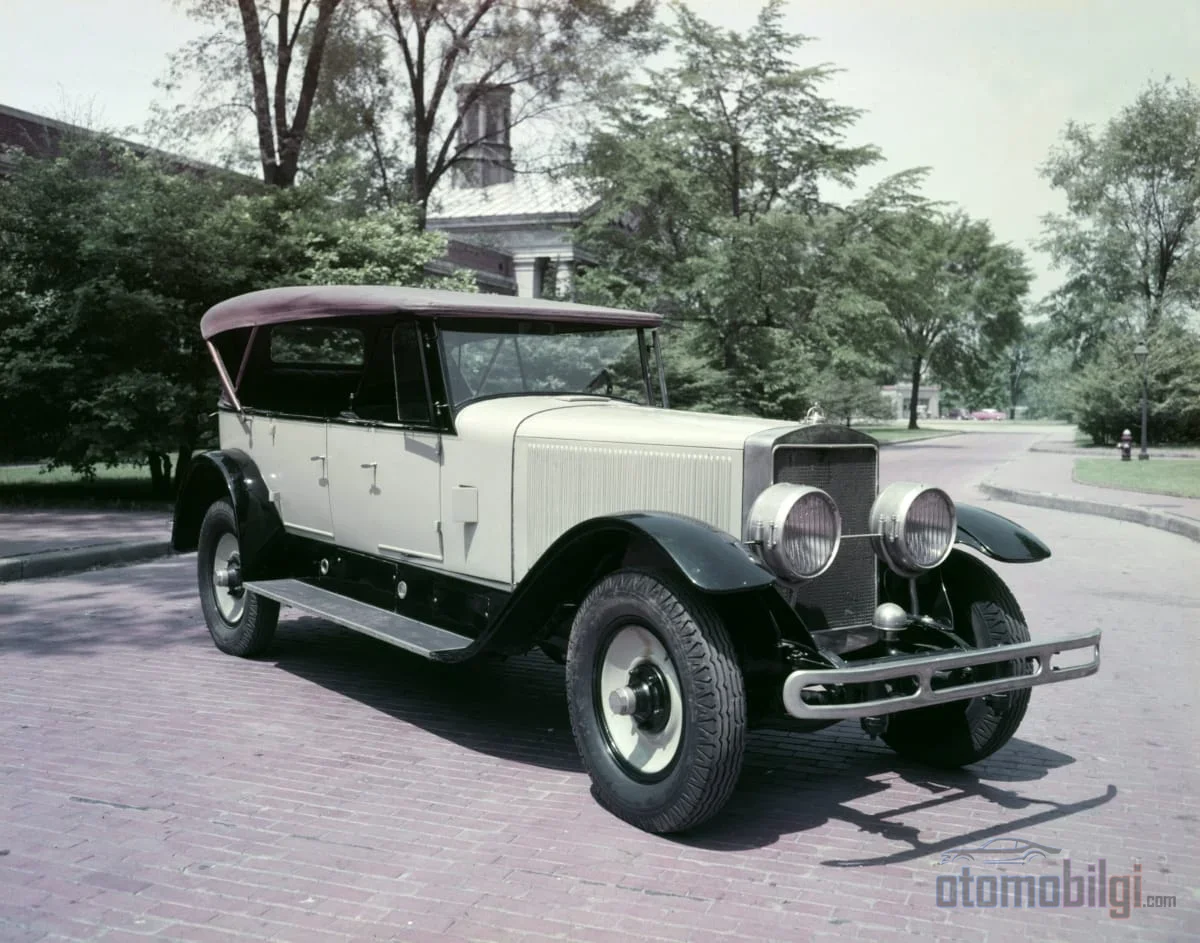
The end of the steam car came suddenly, and in fact at the very moment its technology was at its brightest. In the early 1930s, steam vehicles were fast, quiet, and could set off in 30 seconds with an electric starter; the Doble, famous for its final models, Doble was the very symbol of this peak. But when the Great Depression, the rise of cheap gasoline cars, and the efficiency of the diesel engine came together, steam ceased to be economical overnight. So what exactly happened that caused this magnificent technology to be buried in history while it still seemed unsurpassed? Let us explain.
Highlights
- Doble Model E, 750 psi (52 bar) pressure and 400 °C temperature used a monotube boiler producing steam.
- Even in cold weather in 30 seconds it could get moving; most steam cars of its era required waiting 10-20 minutes for steam pressure.
- Between 1922-1925 only 24 units of the Model E were produced; its price was around $8,800-11,200 .
- Doble closed in 1931; the total number of Dobles produced remained below 50 .
- In 1957, Ford designed the Nucleon concept with a nuclear reactor, but the vehicle was never built.
Doble: The Technological Peak of the Steam Car
Abner Doble's story alone is worthy of a film. Abner, during his high school years, between 1906 and 1909, built his first steam car from scrap components with the help of his brothers. Sounds absurd, doesn't it? A high school student builds a steam-powered automobile in the garage, and years later this name becomes the final and most mature word of the steam car. Production under the Doble name began in 1909 and continued until 1931.
What set the Doble apart from its contemporaries? In short: it required no patience. Think of old steam cars; you light the boiler, then wait 10-20 minutes for pressure to build, and only then can you set off. The Doble, however, came with a key ignition, requiring no manual boiler firing at all. It featured a flash boiler design - a boiler heated instantly - using a venturi that ignited kerosene with a spark plug and forced air with an electric fan; on top of that sat an electromechanical automatic boiler control with a quartz rod. You would turn the ignition like a modern car and set off before even sipping your coffee.
Model E: The Classic Doble in Numbers
Produced between 1922 and 1925, the Model E is considered Doble's classic model. Its American-type monotube boiler produced steam at 750 psi (52 bar) pressure and 750 °F (400 °C) temperature. Inside the boiler was a total of 175 meters of cold-drawn steel tubing, and the boiler was manufactured to withstand 7,000 psi (480 bar) in water testing. Consider this: these tubes, heated in seconds, were exposed to pressures many times that of a motorcycle tire. Combined with the 4-cylinder Woolf compound engine and Stephenson valve gear, the result was a machine that was both powerful and incredibly smooth-running.
| Feature | Doble Model E |
|---|---|
| Production years | 1922-1925 |
| Units produced | 24 |
| Price (1923) | $8,800-11,200 |
| Steam pressure | 750 psi (52 bar) |
| Steam temperature | 750 °F (400 °C) |
| Axle distance | 142 inches (3,600 mm) |
| Weight | Over 5,000 pounds |
Let's put the price in the table into context: it corresponds to roughly $134,000-170,000 in 2020 money. In other words, the Doble was a true luxury product, like a Rolls-Royce. What did you get in return? The 1924 Series E, with its 24-gallon water tank, could travel 1,500 miles (about 2,400 km) on a single fill. Even in freezing weather it could move off in 30 seconds, it could exceed 90 mph (140 km/h), and at 70 mph it ran at around 900 rpm almost vibration-free and silent. Since it carried no clutch, transmission, distributor or ignition points, the risk of failure for all these parts was eliminated from the start. The biggest safety problem of vehicles of that era was the brakes anyway; the Doble's braking was also flawed, but this was common to all automobiles of the period.
Howard Hughes and Beyond 132 mph
The Doble's performance was proven not just in brochures but in real life as well. A 1925 Doble owned by billionaire Howard Hughes left behind the 1930 Model J Duesenberg by accelerating from 0 to 75 mph in 5 seconds. Did you hear that? A steam car beat one of the most monstrous gasoline cars of its era. Hughes reached a speed of 132.5 mph with the car. The owners' list included exotic names like the Maharajah of Bharatpur alongside Hughes; Hughes's E-20 today sits in Jay Leno's collection. Fuel consumption was not bad either: the Doble, which generally ran on kerosene, was competitive with the automobiles of its day in this respect.
Why Did the Steam Car Suddenly Die?
Here is the heart of the problem. Nothing exploded while the technology was at its peak, no factory burned down, no machine broke. The collapse of steam is an economic and commercial story. The Smithsonian museum's assessment is clear: steam cars were fast and powerful but less safe than internal combustion vehicles and difficult to use. Throughout the 1920s, both steam and electric cars disappeared from the market; the gasoline car had become far more practical for everyone. Locomobile and White switched to internal combustion, while Stanley closed in 1924.
Looking specifically at the Doble, two fundamental problems stand out. The first is price: with its luxury-product-level expensiveness, the car could never approach the mass market. The second is Abner Doble himself: he constantly changed his designs. This was a habit that was passionate from an engineering standpoint but a nightmare from a production standpoint. If every model is different, there can be no series production, and without series production, costs do not come down. The company closed in 1931, and fewer than 50 Dobles had been produced. The best car of steam had failed to sell even in steam's best years.
The diesel side was not standing idle either. Diesel engines, especially on the railways, showed what they could do: diesel locomotives were faster than steam ones, could run longer, and were far more fuel-efficient. The same wind was blowing in the automobile world; cheap and efficient internal combustion engines had gained a crushing economic advantage over steam's water and fuel needs. I can almost hear an objection: we said Doble's fuel consumption was competitive, and that is true. But Doble's number was 24. The competitor was Ford, selling in the hundreds of thousands. Doble's one-by-one handcrafted mastery was a duel against the economics of the assembly line, and the outcome of the duel was clear from the start.
In 1937, Abner Doble argued in an automotive magazine that new steam cars would have to be perfect enough to compete with the gasoline vehicles of the day, and that with good management and enough money this was still possible. Perhaps he was right; but that money and that management never came together. What came after the Doble brothers is also interesting: Abner went to New Zealand in 1930 and worked on steam buses in Auckland, then between 1931 and 1935 produced shunting locomotives and rail vehicles with Sentinel Waggon Works in England. Warren worked for Henschel in Germany in 1932-33. The Besler brothers acquired most of Doble's facilities and patents; they even converted a Travel Air 2000 biplane to a steam engine and successfully flew it in Oakland on April 12, 1933. Steam escaped from land to the air, but its place in the automobile was over.
What Really Killed Steam: Economics or Technology?
Let's be honest here: there is no single culprit in the question of why steam died. The strongest explanation says this: steam cars disappeared because gasoline vehicles became far more practical. Steam vehicles had low fuel efficiency and high water and fuel requirements; instead of turning the key and going, one had to wait for pressure, and in the fast-paced modern market that was a luxury. In contrast, the finest examples like the Doble could compete with their era in terms of efficiency and clean running. So the picture is not black and white: steam's theoretical ceiling was high, but the cars that reached that ceiling were very expensive and very few. The masses chose the cheap and easy gasoline car; the market buried engineering romanticism.
On the England side, legislation also played a part, but early on: from the 1860s onward, the Locomotive Acts in the United Kingdom imposed harsh rules restricting the development of steam road vehicles. Taxable horsepower, meanwhile, was one of the oldest calculation systems for car taxation and made engine size a determining factor in pricing. So for steam, England was an even narrower corridor than America.
The Nuclear Reactor Car: The Steam Dream of the 1950s
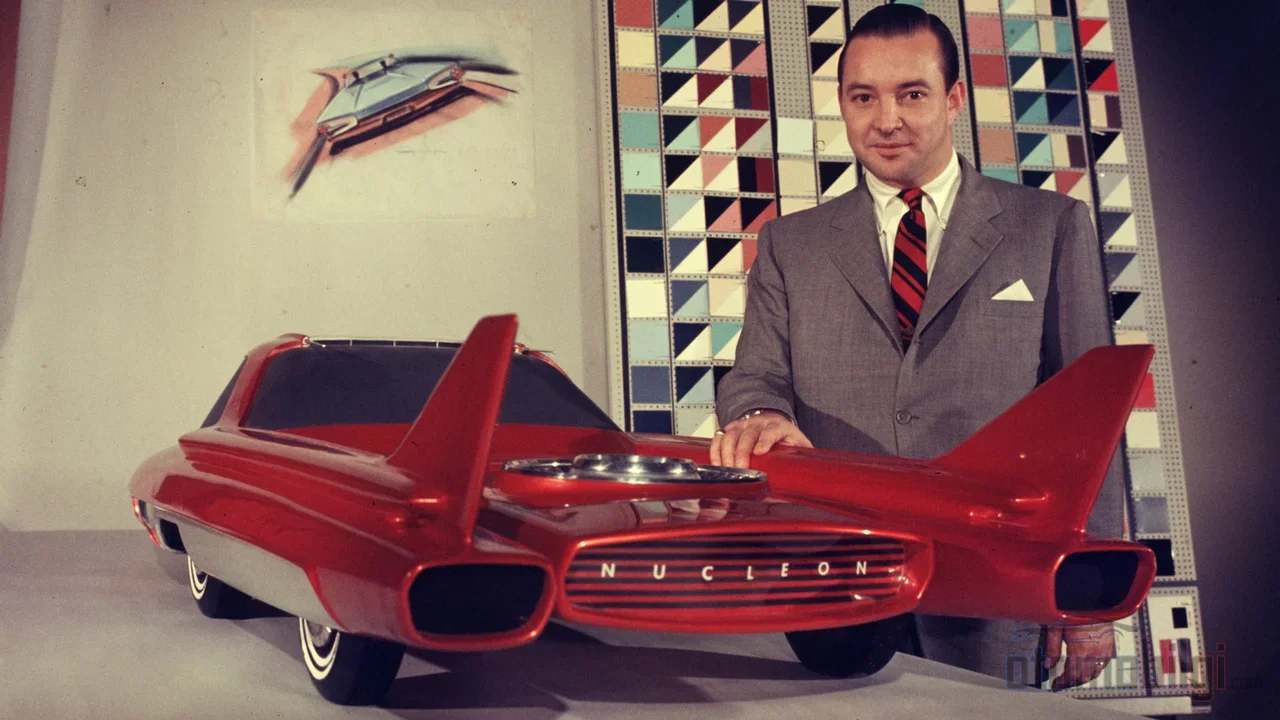
Steam's story did not end in 1931; it merely went to sleep. In the atomic-age optimism of the 1950s, a few manufacturers thought the unthinkable: what if we powered the car with steam from a nuclear reactor? Ford turned this fantasy into something tangible in 1957. Nucleon concept, was designing a steam engine that used uranium fission to heat a steam generator, converting stored water into high-pressure steam. The reactor was at the rear, the seating layout at the front, and the design looked exactly like a science fiction magazine cover. But the vehicle was never built; no one would presumably accept sharing radiation with neighbors parked nearby.
What is truly interesting is that steam resurfaced once again in the 1960s. This time the enemy was exhaust pollution: steam vehicles neither left exhaust waste as dirty as gasoline vehicles nor gave that early fear of tipping over. Even Henry Kaiser had his 1953 Kaiser Manhattan converted to steam by Besler. GM produced two experimental steam vehicles in 1969: the Chevelle-based SE 124 carried a Besler-built 50 bhp steam engine based on the 1920 Doble patents; while the Pontiac Grand Prix-based SE 101 was more ambitious. In the Paxton Phoenix project, the Doble Ultimax steam unit was designed for 2,000 psi / 1,200 °F, operated at ~1,560 psi / 900 °F, and produced 120 bhp continuous and 155 bhp peak power; the project was canceled in 1954. The government and GM invested money in these attempts, but the result was brutal: steam was clean, yes, but it was a fuel monster. The project could not be completed, and steam settled into the margins of automotive history, into collectors' garages and into the hands of enthusiasts like Jay Leno.
The Legacy of Steam: What Remains Today?
We can summarize the end of the steam automobile like this: the technology reached its peak with the Doble Model E at the very moment the entire market rejected it. When the Great Depression, the economics of mass production, and the efficiency surge of diesel and gasoline cars combined, the door closed on steam. But its legacy is not ridiculous, it is impressive: a boiler that starts moving in 30 seconds in the cold, with no clutch and no gearbox, a transmission that never shudders... These are fine engineering even by today's standards. Who knows, maybe someday when you lean next to a Doble in a museum and imagine its ignition turned on, you will say that steam was simply an idea that arrived too early. If it were you, which would you have chosen in 1924: a steam-powered Doble that fires up in 30 seconds, or a Ford that starts with a hand crank smacking your arm?
Sources
- Doble steam car
- Steam car - Wikipedia
- The Story of the 1925 Doble Howard Hughes Steam Car
- 1925 Doble E-20 Steam Car - Jay Leno's Garage
- Doble Steam Car
- Technological Choices | National Museum of American History
- We used to have steam cars. What happened to them?
- Why You Don't See Steam Locomotives Anymore
- The Last Steam Powered Car
- Ford Nucleon - Wikipedia
- Ford Nucleon: A Concept Car for a Nuclear-Powered Future
- Steam-Powered Cars Were Seriously Considered to Combat Smog in the 1960s
- The Forgotten Story of Steam-Powered Cars
- Abner Doble and Doble Steam Cars