From the First Speeding Ticket to the Campaign Tour: The Social Pioneers of the Automobile
Share This Page
The automobile's entry into society is not just a story of technology; it is also the story of a series of social firsts. The world's first speeding fine was issued to Walter Arnold in England on January 28, 1896; the first driver arrested for speeding in the US was Jacob German in New York in May 1899; and the first motorized police vehicle entered service that same year, in 1899, in the city of Akron, Ohio. These three events are milestones that individually show how the automobile settled into the streets and transformed city life.
Highlights
- First speeding fine: January 28, 1896, Walter Arnold, 1 shilling
- Mandatory flagman rule for automobiles was abolished in 1896
- America's first speeding arrest: Jacob German, Lexington Avenue, May 1899
- First motorized police vehicle: Akron, 1899, priced at 2,400 dollars
- First US president to ride in an automobile: McKinley, July 13, 1901
Imagine this: you are walking down the street one day, and you catch up with a vehicle moving at 3 kilometers per hour, with a man walking ahead of it waving a red flag. Sounds funny, right? But that is exactly what the streets were like in the 1890s. The automobile was only just becoming part of everyday life, and every new car was opening the door to a first for society: the first fine, the first arrest, the first police vehicle, even the first motorized vehicle to enter politics. I was genuinely excited while reading about these three firsts, because each one is the birth moment of things we now consider ordinary. Come on, let's travel back 130 years.
How was the world's first speeding fine issued to Walter Arnold?
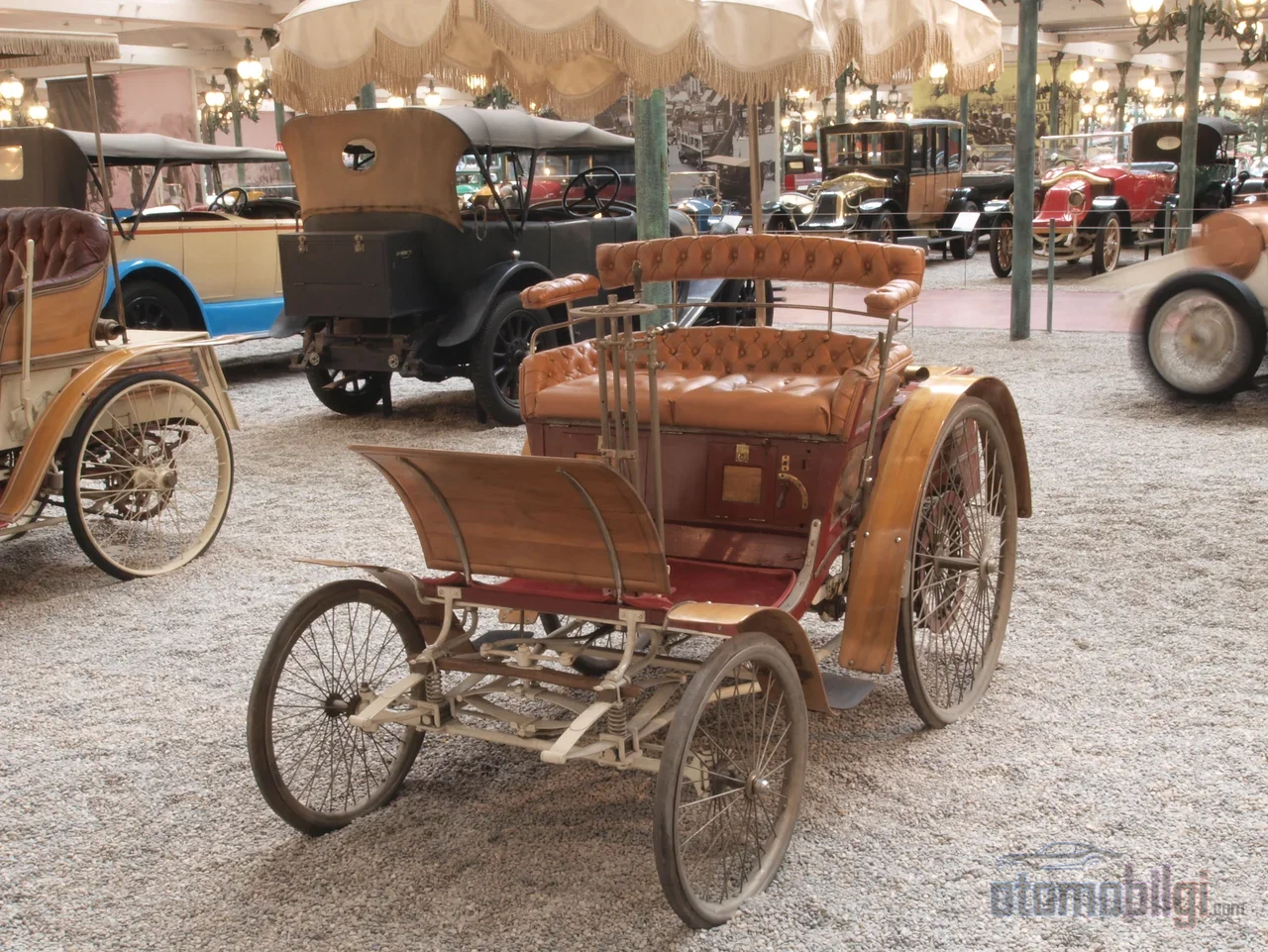
January 28, 1896. Location: Paddock Wood in Kent, England. Our hero Walter Arnold - and this man was no ordinary driver, he was one of the first automobile dealers and manufacturers in London. He produced Benz automobiles under license and Arnold Motor Carriage sold them under the name; only 12 were produced in total. So we could call him a pioneer in the early days of the business.
So what was his offense? Although the speed limit was 2 mph, which is 3 kilometers per hour, he was traveling at 8 mph . What's more, the rule at the time also required an attendant walking ahead of the automobile waving a flag - and Arnold had no flagman. A police officer chased him on his bicycle and caught him after following him for a full 5 miles . The result: 1 shilling fine plus court costs. Thus Arnold went down in history as the first driver to receive a speeding fine.
Let me tell you how absurd this limit is by today's standards: a vehicle traveling at 3 km/h is slower than a comfortably walking person! Even the bicycles passing in front of us after school today exceed this limit many times over. This is where the automobile's journey was at its very beginning, and the rules were still being written with regulations left over from the horse-drawn carriage era.
The end of the flag requirement and a celebratory race
The good news is that Arnold's fine coincided with the end of an era. The new law passed that same year raised the speed limit to 14 mph and completely eliminated that annoying flag requirement. (Some records list the new limit as 12 mph; both figures are a debated detail among historians.) The London-Brighton race, organized to celebrate this freedom, took the name Emancipation Run, meaning the Freedom Run. And do you know the best part? That race still takes place today: the Veteran Car Run, which only vehicles built before 1905 can enter, is the oldest continuously running automobile race. So that small fine in 1896 also planted the seed of a tradition that has endured for 130 years.
Why did the first speeding arrest in the USA happen on Lexington Avenue?
Now let's turn the atlas the other way and head to New York. May 1899. The newspapers came out that day with a headline like this: the first person said to have gone to jail for driving fast. And this was indeed the first known automobile speeding arrest.
The arrested man was Jacob German; he was a taxi driver working for the Electric Vehicle Company - yes, an electric taxi, in 1899! German was traveling at twice the 12 mph citywide limit on Lexington Avenue. The unit that caught him was an interesting one: the police Bicycle Squad. An officer named Roundsman Scheussler chased German on a bicycle, and when the taxi driver stopped in traffic on 23rd Street, he was arrested. German was taken to the police station on East 22nd Street. So the world's first speeding arrest began with a chase where a police bicycle stood in for a motorcycle - it sounds like a western movie, but it actually happened.
So how was speed measured? There was no radar, of course. The officers used a simple physics formula: distance equals speed times time. They knew a Manhattan block was 265 feet; they recorded how many seconds the driver took to pass that block and calculated their speed from ready-made tables. In rural areas, the distance between telephone booths was used as a reference by the police. So an officer with a stopwatch can be considered the grandfather of today's speed cameras.
Before and after German: other first cases
German was not alone; there are other firsts surrounding his story. The first driver arrested for speeding actually appeared three years before him: on May 31, 1896, Henry Wells lost control in a race and hit a cyclist, and was arrested for dangerous driving - this was the first arrest for dangerous driving, not for speeding. There is also a nice detail from 1904: Mayor McClellan's chauffeur Marcus Seller was caught driving at 18 mph and paid a 10 dollar fine. Seeing that even the mayor's chauffeur was not exempt seems like an early proof that the law stands above everyone.
It should also be added: the resistance to automobiles had a real reason. New cars scared the horses on the streets, and runaway horses created chaos. Many police officers were injured, or even lost their lives, trying to stop runaway horses. A Rochester judge even ruled for compensation for damage a motorist caused to a horse owner. So the early traffic safety debate was not just about speed; it was two eras of transportation colliding on the same street.
How did the first motorized police vehicle emerge in Akron?
Now for my favorite: the world's first motorized police vehicle. The year is 1899, the place is Akron, Ohio. This city's police department went down in history by purchasing a motorized wagon from the Collins Buggy Company - the vehicle cost the city $2,400 It had both a stretcher and a prisoner's compartment. So it was an ambulance + police station combination in a single vehicle; we wouldn't be exaggerating to call it the ancestor of multifunctional vehicles.
Let me tell you my favorite detail: this vehicle was electric! It ran on two 4 hp electric motors. Akron electrician Charles H. Loomis is known as the person who built the country's first electric patrol wagon. Today, when we talk about electric police vehicles as modernity, it is very delightful to remember that the first examples were electric in 1899. The history of police vehicles that started with electricity, continued with gasoline, and is now returning to electricity again - a full circle!
The Akron Police Department is considered the first department to use a horseless, that is, motorized police vehicle. So what was the first task of this proud vehicle? An extraordinary crime? No. According to legend, its first task was to pick up a drunk man. History's first police car, on its very first shift, helped carry someone home. I think this is a sweet example of how technology often serves the most ordinary human tasks first.
When did the automobile enter politics?
The automobile met not only the police and the courts early on, but also politics. On July 13, 1901, William McKinley became the first US president to ride in an automobile at a public event in New Hampshire. Shortly after, in August 1902, something like a presidential convoy was mentioned for the first time. The seeds of every passing convoy, every campaign bus today, were sown in those days.
The passion for automobiles in the presidential palace reached another peak: the William Howard Taft era is remembered as the first motorized presidential era. Taft had become a fan of the White Steam Car brand during his years at the War Department - note, a steam-powered vehicle! So before gasoline cars became the standard, the favorite technology of the highest-ranking politician was pre-gasoline technology. I think this is precisely one of the details that best illustrates the automobile's steam-to-gasoline transition.
On the campaign front, the automobile became part of election innovations from the early 1900s onward; candidates began trying to attend rallies and voter tours by car. Although the exact first campaign date remains debated, by the first quarter of the 20th century the automobile was already the stage prop of politics. The idea of a presidential candidate waving from atop a car is considered the ancestor of those big platform vehicles that are an election cliche today.
What was the bigger picture behind these firsts?
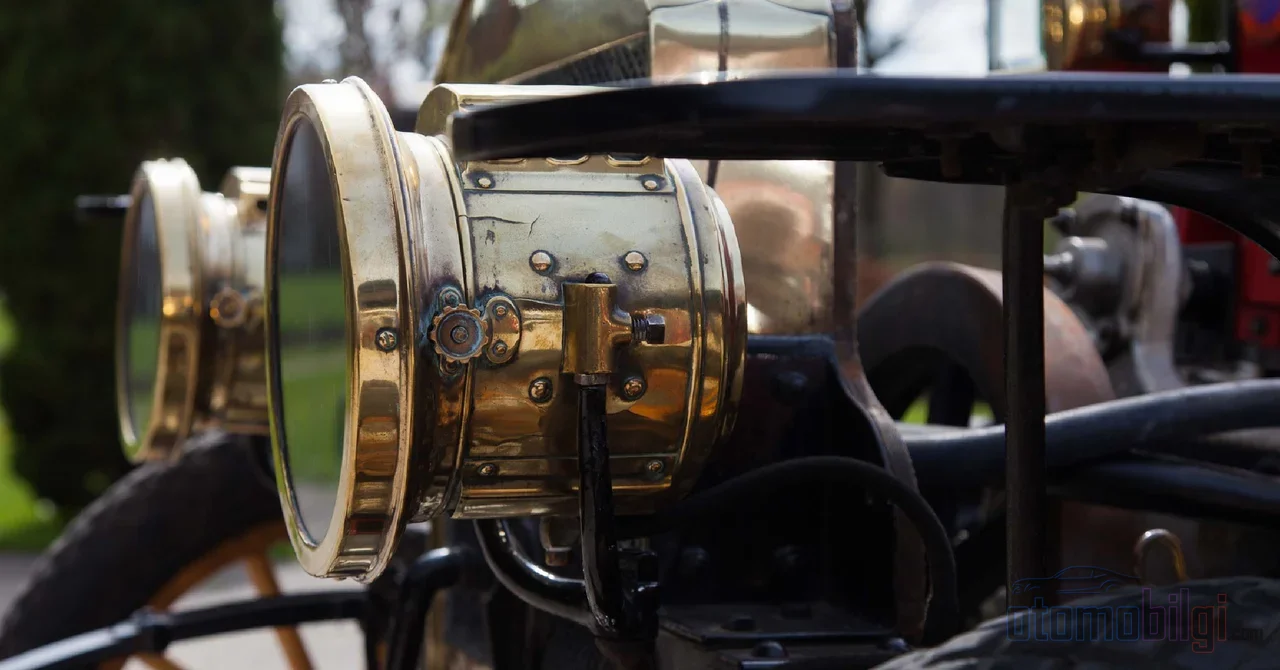
Putting these three firsts together, the picture becomes clear: the late 1890s and early 1900s were a transitional period when the automobile turned from a toy into infrastructure. Karl Benz had developed the Benz Patent Motorwagen, the first practical automobile and first mass-produced vehicle, in 1885/1886. But the stars of that era were not always gasoline-powered: steam vehicles like the Stanley Steamer were sold between 1896-1924 and outsold all gasoline cars between 1899-1905; in 1906 a steam vehicle 127 mph even reached a speed of. In 1900, steam vehicles were ahead of gasoline ones in the US. Gasoline vehicles took the lead around 1905; the reason was simple - they were easier to use and could go farther. Just as we are now switching back from gasoline to electricity, history saw the same kind of technology race. The past truly repeats itself.
After the automobile seeped into city life, nothing returned to how it was. Gathering on the street suddenly stopped being safe; home architecture, garages and the urban fabric were reshaped. The debut of the Model T in 1908 made things mass-scale: in 1910 the US had 5 passenger cars per thousand people, while by 1930 that ratio dropped to 187. In other words, within a single generation the automobile went from a rare curiosity to an ordinary possession. Speeding fines, arrests and police vehicles were the very first footsteps of this transformation - society was both fascinated by the new machine and trying to tame it with rules.
| First | Year | Place | Key detail |
|---|---|---|---|
| First speeding fine | 1896 | Kent, England | Walter Arnold, 1 shilling |
| First dangerous driving arrest | 1896 | USA | Henry Wells, accident during a race |
| First speeding arrest | 1899 | New York | Jacob German, Lexington Avenue |
| First motorized police vehicle | 1899 | Akron, Ohio | Electric, $2,400 |
| First president to ride in a car | 1901 | New Hampshire | William McKinley |
Why are these 130-year-old firsts still important today?
I think the best of these stories is this: the line running from Walter Arnold's 1 shilling fine to radar cameras, from the bicycle chasing Jacob German to today's patrol cars, from Akron's electric wagon to once again electric police vehicles, shows that the relationship between the automobile and society is an endless negotiation. Every new technology frightens people at first, then gets tied down with rules, and then becomes such a natural part of daily life that we don't even remember its beginning. Do you think that 130 years from now, people will read about today's firsts with the same curiosity? I believe they will - because history, no matter how much it speeds up, is always written with these kinds of small firsts.
Sources
- January 28, 1896 - The first speeding ticket - This Day In Automotive History
- History Hits: The First Speeding Ticket - The Speed Trap
- The First Enforcement of Automobile Traffic Laws by the NYPD
- Akron Police Department - Wikipedia
- The First Police Car - Bruce Goldfarb
- First police car ever used was in Akron, OH, in 1899 - The Vintage News
- Worlds First Police car's Amp meter - DJDLabs
- 08-22-1902 Presidential Motorcade - Mystic Stamp
- The Life and Presidency of William Howard Taft - White House Historical Association
- Campaign Innovations 1900-1928 - Roosevelt House, Hunter College
- History of the automobile - Wikipedia
- Early Cars: Fact Sheet - Smithsonian Institution
- America at the Turn of the Century - Library of Congress
- The Automobile Shapes The City - Martin V. Melosi, University of Michigan