The First Car Wasn't Gasoline-Powered, It Ran on Hydrogen
Share This Page
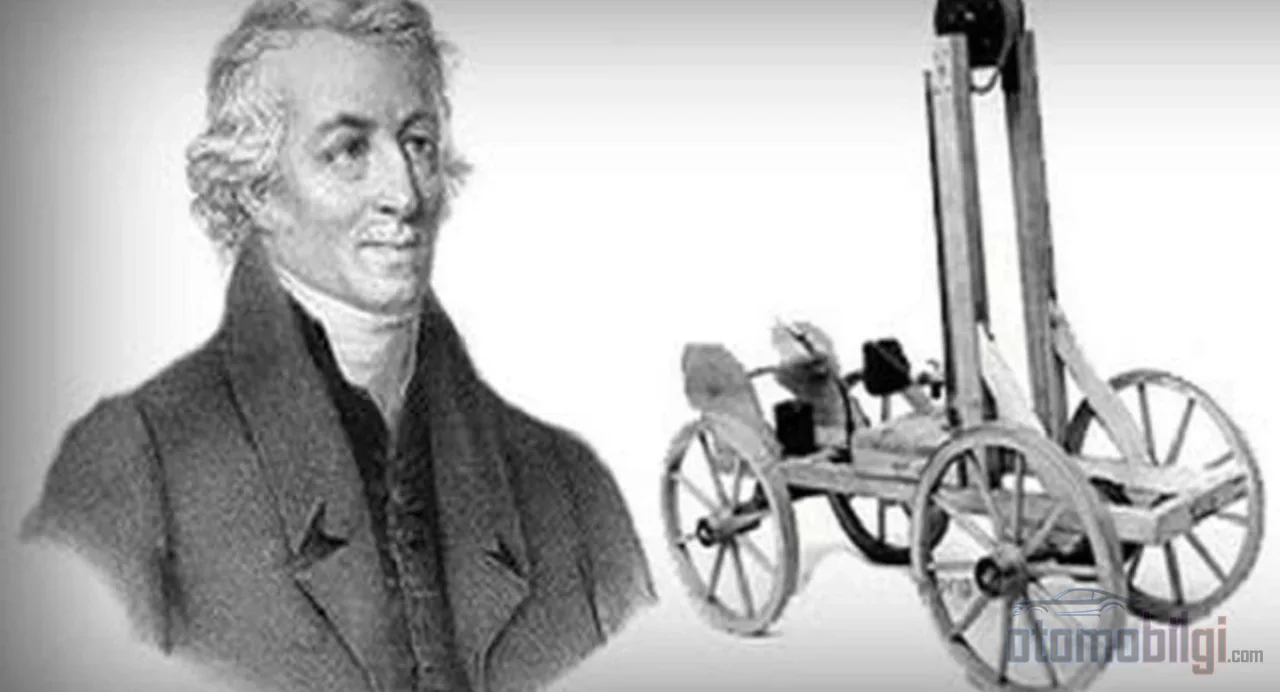
If you think the first fuel of the automobile was gasoline, you are actually mistaken: history's first internal combustion engine 1806 ran on a hydrogen-oxygen mixture. In other words, the precursor of the gasoline car was the very technology we today hail as the hydrogen car. This story, stretching from the Swiss inventor François Isaac de Rivaz to Samuel Brown, and from Étienne Lenoir to Karl Benz, is one of the least known but most surprising chapters of automotive history.
Highlights
- The first internal combustion engine 1806 ran on hydrogen; the patent was obtained on January 30, 1807 was granted
- Samuel Brown, May 27, 1826 climbed Shooter's Hill with his gas-powered vehicle
- Étienne Lenoir's Hippomobile, powered by hydrogen produced through electrolysis, went from Paris to Joinville-le-Pont(1863)
- The Benz Patent-Motorwagen was only patented on January 29, 1886- that is, about 80 years later
When and on what did the internal combustion engine first run?
The answer is clear: 1806 and on a hydrogen-oxygen mixture. That year, the Paris-born Swiss artillery officer François Isaac de Rivaz began experimenting with an engine that pushed a piston by igniting an explosive fuel mixture inside a cylinder. That was exactly the core of the working principle of the engines we use today - burn the fuel in the cylinder, push the piston. Moreover, de Rivaz's engine even had electric ignition with a spark, meaning the two fundamental features of the modern gasoline engine were already present in this first design.
Where did the idea come from? From his military service. As an artillery officer, he was very familiar with explosives, and this experience led him to a strange but brilliant question: Instead of steam, couldn't a piston be pushed by a direct explosion? 1804 he began explosion experiments inside a cylinder and soon produced a working engine.
How did de Rivaz's hydrogen car work?
Now this is where things get really fun. The engine ran on a hydrogen-oxygen mixture ignited in the cylinder. The compressed hydrogen was stored in a balloon, while the oxygen was supplied through a separate air intake. Ignition? An electric spark was struck by pressing a button from outside - with a Voltaic pile. So the driver triggered every power stroke with his own hand. The engine had no timing mechanism; both fuel intake and ignition were entirely manual. Now imagine: driving a car by pressing a button for every piston stroke. Gym + chauffeur service in one, but technically a real internal combustion engine.
The power transmission was completely different too. The explosion pushed the piston upward in a vertical cylinder, and then as the heavy piston descended under its own weight, a pawl system, through a pulley-wheel-and-rope arrangement, turned the car's front wheels. It sounds strange, but it worked.
January 30, 1807 in Paris patent number 731 was granted; the patent office of the Swiss canton of Valais also confirmed it. That same year, de Rivaz placed his experimental engine in a vehicle and managed to travel a short distance - the first vehicle to travel by internal combustion engine was officially on the roads.
The giant of 1813: the grand char mécanique
De Rivaz didn't stop, and in 1813' made a much larger vehicle: 6 meters long, with 2 meter diameter wheels, weighing approximately 1 ton . Its cylinder was 1.5 meters, piston stroke 97 cm . The fuel mixture consisted of approximately 2 liters of coal gas with 10-12 liters of air. With every piston stroke the vehicle advanced 4-6 meters.
Its performance? In the Swiss city of Vevey, this giant vehicle, on a road with a ~9% incline, 300 kg of stone and wood cargo plus four people, carried it 26 meters forward - at a speed of 3 km/h . Let's not call it fast, but it was a vehicle that carried loads and moved under its own power, and that was an achievement even back then.
Unfortunately, not everyone was convinced. The French Academy of Sciences maintained the view that the internal combustion engine would never reach the performance of the steam engine. Looking back today, how wrong that prediction turned out to be, right?
So the first? The Pyreolophore question
To be honest, the title of "first internal combustion engine" is still debated. The French brothers Nicéphore and Claude Niépce developed their engine called the Pyreolophore, which propelled a boat with a water jet reaction, in 1807 and received a patent on 20 July 1807 . De Rivaz's patent, however, is dated 30 January 1807 - that is, a few months earlier. Since both designs operated by different methods, the question of "which one was really first" is a matter that can change depending on the definition. But the first engine to travel on a road with a vehicle was definitely de Rivaz's.
Samuel Brown and the Shooter's Hill climb (1826)
The English engineer Samuel Brown developed the first gas engine that undoubtedly did real work and was mechanically successful, between 1825-1835. His peak moment came on 27 May 1826
: Brown connected his engine to a vehicle and climbed Shooter's Hill in southeast London. A hill is the most brutal test for a motor vehicle; this climb ended to the satisfaction of a large number of spectators. The engine's specs are also impressive: 4 hp of power, 2 cylinders, atmospheric gas operation, and a volume of 89 liters. Yes, 89 liters - we're not even talking about the displacement of today's engines. Let's note: although Brown stood out with this vehicle test, it is known that the gas-vacuum engine was later run on coal gas instead of hydrogen in another project and used for pumping purposes. It is also said that Brown adapted an old Newcomen steam engine to burn gas - so the connection between the hydrogen pioneers and the steam age is visible here too.
Lenoir's Hippomobile: touring Paris on hydrogen
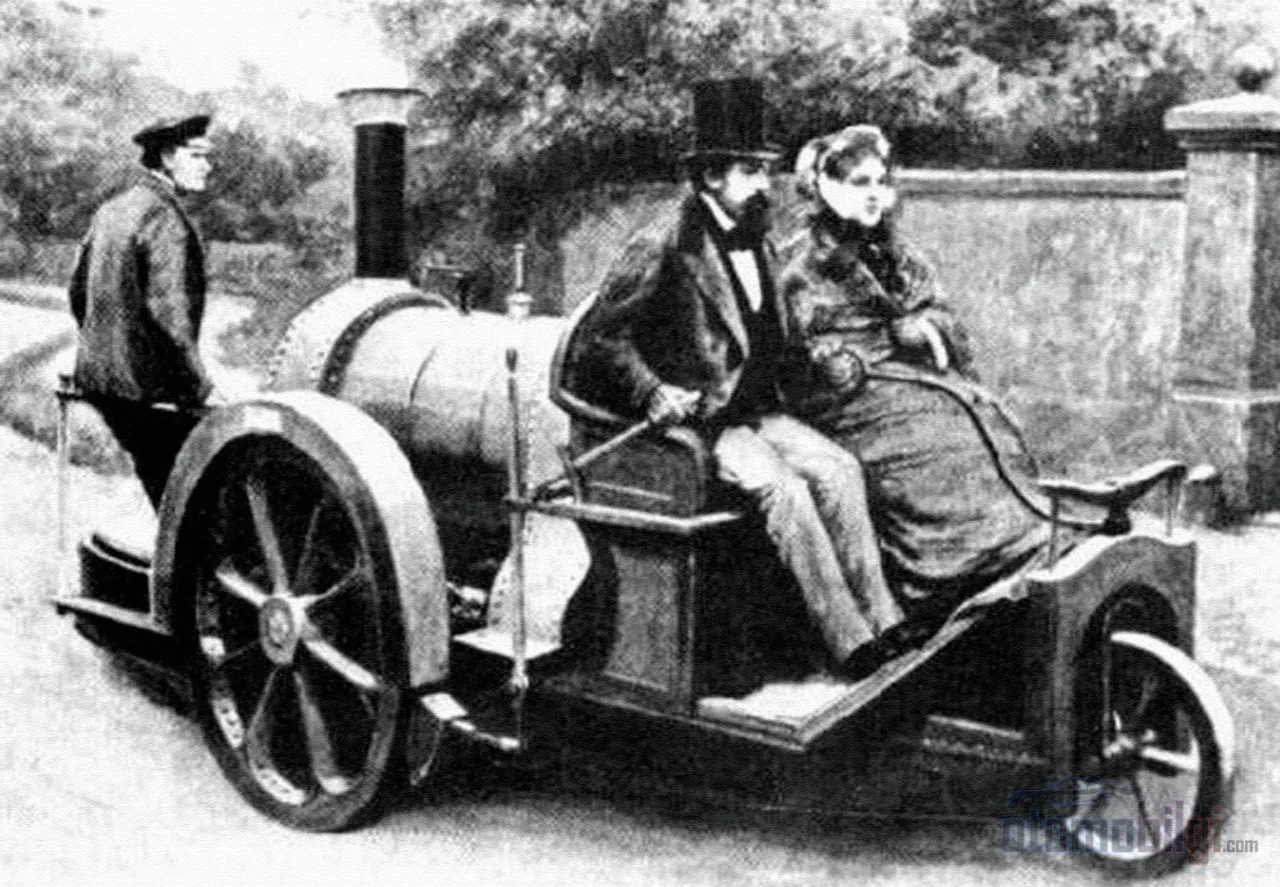
Now comes perhaps the most colorful figure of the story: the Belgian-born engineer Jean-Joseph-Étienne Lenoir. In 1860 he received a patent from the Conservatoire National des Arts et Métiers in Paris for an air engine expanding with gas combustion. In 1863, he built the three-wheeled
And here is hydrogen again: The Hippomobile had a single-cylinder engine running on hydrogen produced by separating water through electrolysis. The engine operated on natural cycles. In other words, Lenoir was splitting his own water into electricity and producing his own fuel. The idea known today as green hydrogen was already rolling through the streets of Paris in 1863.
In September 1863, Lenoir made a journey of about 10 kilometers from his workshop on Rue de la Roquette. Later, he traveled a round trip from Paris to Joinville-le-Pont of 11 km each way took about 90 minutes and the top speed was around ~9 km/h . Another account gives the distance as 11 miles and the time as 3 hours; the difference probably stems from route and measurement variations, but the conclusion doesn't change: the vehicle was slower than an average walking pace. Still, the wheels were turning, and the engine was doing it with its own fuel. Years later, Lenoir recounted that he used his engine to run a farm cart between Joinville-le-Pont many times. He also adapted his engine to various gases such as coal gas, and approximately 350-400 Lenoir gas engines were produced and sold - meaning there was genuine commercial success for the first time as well.
Pioneers side by side: who, when, with what?
| Pioneer | Year | Fuel | Notable achievement |
|---|---|---|---|
| François Isaac de Rivaz | 1806-1807 | Hydrogen-oxygen mixture | First internal combustion engine, first patent, first vehicle journey |
| Samuel Brown | 1826 | Gas | The Shooter's Hill climb |
| Étienne Lenoir | 1863 | Hydrogen produced by electrolysis | Paris-Joinville-le-Pont journey, series engine production |
| Karl Benz | 1885-1886 | Gasoline | The patent that started the modern automobile era |
How did Karl Benz build upon the hydrogen legacy?
So after hydrogen had traveled 80 years, how did gasoline become king? The answer consists of several parts. First, the groundwork had to be laid: In 1876 Nikola Otto, inspired by the limitations of steam engines, developed the first successful four-stroke internal combustion engine. The engine Lenoir invented between 1858-1860 and patented in 1860, double-acting with electric spark ignition, was also a critical link in this chain.
Thanks to the commercial success of his engines, Benz was able to devote more time to his dream of a lightweight gasoline-powered car. The result: on January 29, 1886, in Mannheim, the patent for the three-wheeled Benz Patent-Motorwagen - in the file it is listed as a vehicle powered by a gas engine. With both Benz and Gottlieb Daimler producing highly successful and practical gasoline vehicles, the modern automobile era began; that is why Benz is generally considered the inventor of the automobile.
But let's not forget: even Mercedes-Benz's own history page separately counts pioneers such as Rivaz, Lenoir and the Austrian Siegfried Marcus, noting that some of them remained only on paper and that some were small vehicles unable to carry people. Benz's superiority came from the impracticality of hydrogen designs and from Otto-cycle gasoline vehicles dominating the commercial field. Another technical reason: most early engines, like the steam engine, operated on the atmospheric principle - meaning the explosion did not directly produce propulsion, but created a vacuum that pulled the piston down. The arrangement Benz introduced was more efficient.
Gasoline's crowning also did not happen overnight. Gasoline only began to be seen as a valuable fuel with the invention of the automobile in 1892. Between 1900 and 1910 , the invention of the spray carburetor opened the way for unrefined gasoline to be used in vehicles. And by 1920, there were 9 million gasoline vehicles on the roads. Hydrogen's 80-year advantage had been lost to gasoline.
Is hydrogen making a comeback today?
The nice thing is this: the story is not over. The hydrogen internal combustion engine is still being developed today, and many sources agree that the credit for its invention belongs to de Rivaz. The British construction equipment giant JCB says it is the first construction equipment company to develop a fully functional hydrogen-powered combustion engine, and announces that it has performed more than 50,000 hours of testing in a project worth 100 million pounds with 150 engineers.
There is movement on the fuel cell side as well. The modern hydrogen vehicle market is worth 8.31 billion dollars as of 2025 , with annual growth of ~20% forecast for the next five years. Models such as the Toyota Mirai, Hyundai Nexo and Honda FCX Clarity were sold in select markets; fuel cell costs have also dropped 80% since 2002. So de Rivaz's 1806 idea is back on the table two centuries later - this time with much more serious budgets.
The gasoline engine's roots go back to hydrogen: the final word
Next time someone at a car chat says the automobile was born on gasoline, you now have another card up your sleeve: the automobile's engine was born on hydrogen, and only moved to gasoline decades later. De Rivaz's creation, born out of his artillery experience - that buttoned, balloon-wheeled, heavy-piston contraption - was a weak but real idea; Brown drove it up a hill, Lenoir paraded it through the streets of Paris, and Benz turned it into an industry with gasoline. History sometimes does laps - and this lap may well end right where it began. Which do you find more interesting: a story that started with hydrogen veering off into gasoline, or its return to hydrogen once again?