Why Are City Buses Ahead of Cars in Electrification?
Share This Page
City buses are leading the way in battery electrification, ahead of cars; because they have fixed routes, predictable daily distances, and centralized charging depots. Let me explain with an analogy: A car sets off on a completely different road every day, changing its destination according to your plans; a bus, on the other hand, boards the same line every morning and returns to the same depot in the evening. For electric technology, the latter is a much easier assignment. On this page, we examine this invisible leadership by placing promises and realities side by side.
Highlights
- More than 90% of the world's electric buses, totaling approximately 700,000 vehicles, are in China.
- Electric buses made up more than 12% of new bus sales in 2025; the share is even higher among city buses.
- In the EU, the electric bus share rose from below 2% in 2018 to 19% in 2024.
- Fuel costs are about 2.5 times cheaper with electricity than with diesel; over a 10-12 year lifespan, savings can reach ~$400,000 per bus.
- In 2017, Shenzhen became the first city to fully electrify its fleet of 16,000 buses.
Why Are Buses Ahead of Cars in Electrification?
Think about it: A car buyer almost never uses the same route. To work today, to a vacation resort tomorrow, to relatives on the weekend. The biggest nightmare of the electric car is precisely this uncertainty; this is where the thing called range anxiety comes from. The bus's world, however, is exactly the opposite: a fixed line, stops that repeat throughout the day, and a central depot it regularly returns to at the end of the day. An average city bus travels about 193 km per day, and modern batteries comfortably cover this on a single charge.
On top of that, there is operational simplicity. City buses carry people, unlike cargo trucks; the load is light. Switching from a diesel bus to an electric one frees up space for components like the radiator, improving aerodynamics, and the disappearance of engine noise smooths out the ride. This translates directly into positive gains for range and battery efficiency. As for charging, every bus returns to the same depot every night; installing a charging unit at a single point is a far simpler engineering problem than spreading charging points across thousands of homes.
The result? Almost all city buses sold in China are now electric. In 2016, the Netherlands announced the world's most ambitious calendar, targeting all new bus sales to be zero-emission by 2025. Chile's capital, Santiago, has the largest electric bus fleet outside China, with more than a third of its fleet electrified. With a target of 50,000 electric buses by 2027, India is driving prices down through bulk purchases. Though overlooked, the real revolution is happening on ticketed routes.
How Big Is the Market, and Where Is It Heading?
The numbers are impressive, but you also need to know how to read them. In 2025, the global electric bus market measured approximately $54.1 billion; there is an expectation of $64.6 billion for 2026. On the other hand, different analysis organizations give seriously different figures for the same year, such as 28.77 or 35.75 billion dollars. This is not a contradiction, but a methodological difference: Some count only vehicle sales, while others also include charging infrastructure and service revenues. The only thing they share is the direction of the trend: upward.
On the European side, progress is tangible. In the EU, the share of electric buses was below 2% in 2018 but settled at 19% in 2024, and the EU has announced a target of reducing city bus emissions by 90% by 2030. But there is another side to the coin: In China, the share of electric buses in the total bus market has plateaued at around half since 2017. The reason is interesting - city buses have been electrified, but in intercity buses that are not electrified (the long-distance coach segment), the electric share is still only 6%. The shrinking of the total bus market and post-COVID budget cuts are also slowing things down.
Total Cost of Ownership: Is an Electric Bus Really Cheaper Than Diesel?
This is where the most critical test between promise and reality lies. If you look at the purchase price, the electric bus is disheartening: According to 2015 data, while a typical 12-meter diesel bus cost about 445,000 dollars, a similar electric bus sold for 770,000 dollars. In Santiago, the initial cost per bus is still around 300,000 dollars. On top of that, add the charging infrastructure: an average of 10,000-30,000 dollars per vehicle.
But the operations side flips the story. Running on electricity is about 2.5 times cheaper than diesel, and electricity prices are generally more stable. In fuel economy comparisons, electric buses show five times the efficiency of diesel on equivalent routes. Since an electric motor has few moving parts, maintenance does not strain your pocket either. Over a typical 10-12 year lifespan, compared to diesel, an operational saving of ~400,000 dollars per bus can be calculated; In Shenzhen, with urban subsidies, electric buses became 36% cheaper than diesel in lifetime cost.
Is Cheapness Guaranteed for Every Fleet?
No, and honestly, the most surprising finding while seeking an answer to this question is exactly this. A 2025 peer-reviewed study shows that when energy consumption is assumed to be low, the TCO of electric buses can surpass diesel in some cases, but average costs can be about 1% higher. Another Europe-focused peer-reviewed analysis emphasizes that the initial investment constitutes an average of ~49% of the electric bus's total cost, while in diesel this rate remains at ~26%. So the electric bus surpasses diesel with the right electricity tariff, the right route, and a sufficient lifespan; but this is not an automatic victory - every fleet needs to calculate with its own figures. The economics of the electric bus are won or lost depending on the route and the tariff.
Charging Strategies: At the Depot Overnight, or at the Stop?
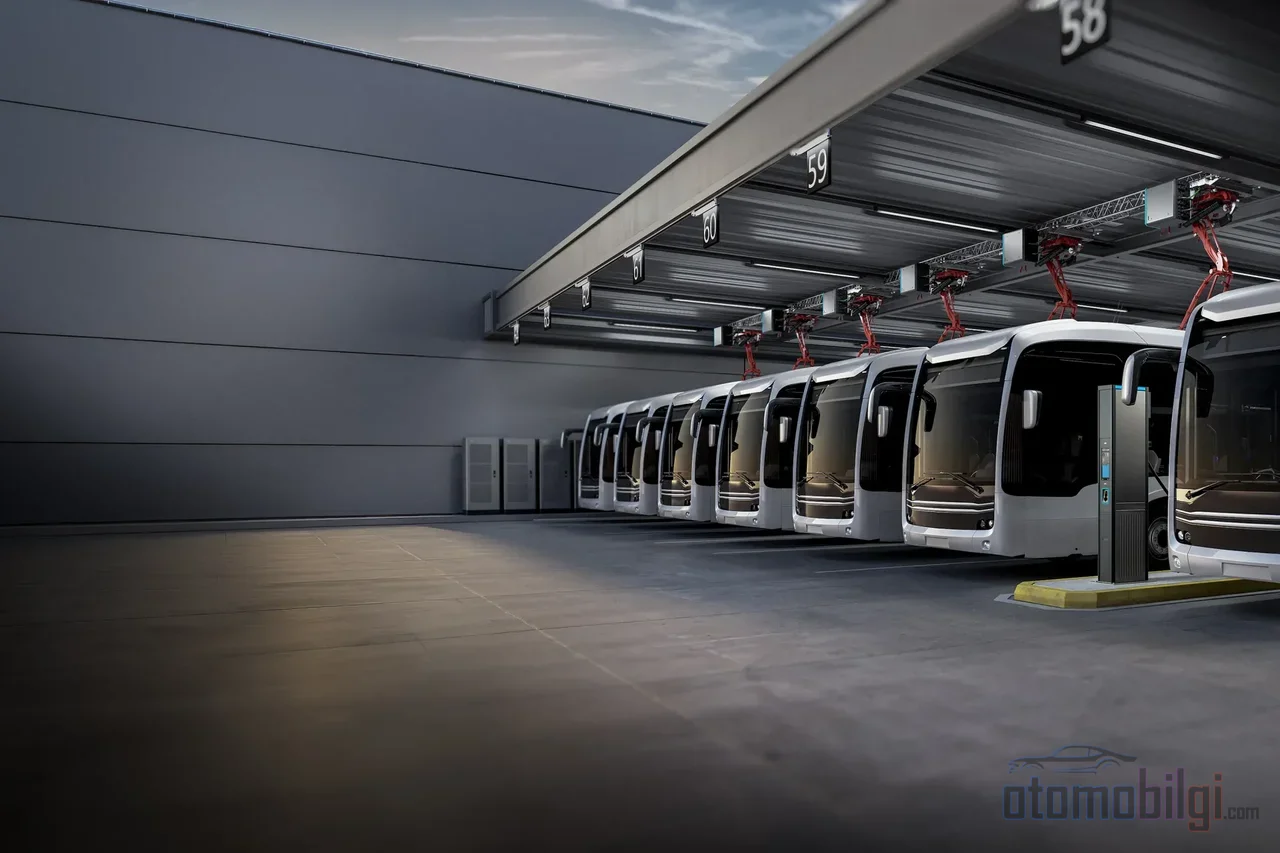
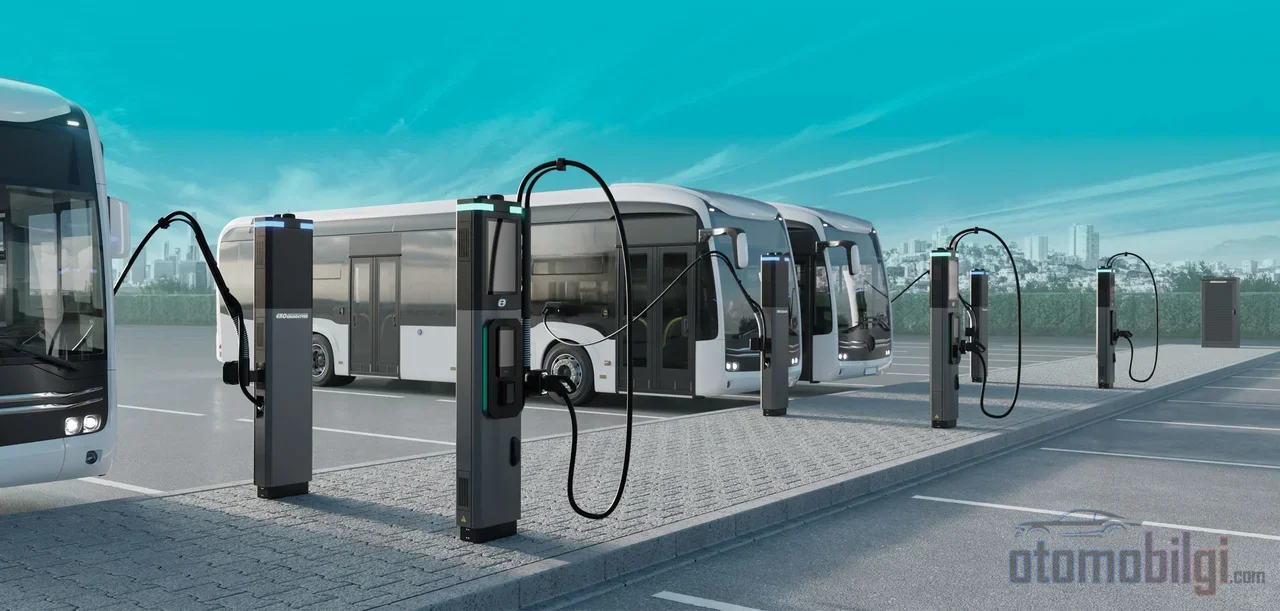
The most common method is quite logical: Slow charging at night while buses are in the depot. Depot chargers rated at 50-80 kW can fully fill even 300 kWh batteries during an 8-10 hour overnight wait. You can compare this to plugging your phone in at night; nobody expects a phone to charge in 10 minutes because there is plenty of time anyway. Long-range battery electric buses carry batteries between 250-660 kWh and are designed to be charged once or twice a day.
The second method is opportunistic charging: 5-20 minute fast charging at selected stops along the route with units rated at 165-600 kW. The Netherlands combined this approach with inter-stop fast charging systems and dynamic schedule modeling. Fast charging adds flexibility, but it is not free: It leads to faster wear on the battery and components. Some Chinese cities have gone a step further and made their depot charging infrastructure shareable with electric cars during idle nighttime hours; academic studies also recommend opening depot chargers to the public. So bus depots could become the neighborhood's hidden charging hub in the future.
Is Range Anxiety a Problem in Urban Use?
It could have been, but urban operation neutralizes it. Modern electric buses offer a range of 320-560 km per charge in typical city conditions, and that covers more than 80% of transit routes. Industry data also says this: Lithium-ion batteries deliver a range of around 240 km under most conditions, but this figure drops significantly in hilly cities or in the summer heat when the air conditioning steps in. Compared to a diesel bus's average range of over 1,100 km, the distance is still substantial.
Two real-world examples clarify the issue. The range on a single charge of the MTA's articulated electric bus in New York is estimated at around 240 km; on long routes this can fall short. Some buses have also reported performance complaints such as the battery running out well before the announced range, struggling at startup, and difficulty climbing hills. So as a rule, range limitations are not a problem, but there are exceptions: articulated vehicles, very long routes, and challenging terrain. The fixed route structure of city buses solves the problem by eliminating most of these exceptions in advance.
Is Hydrogen a Rival, or Has the Battery Already Won?
The discussion would be incomplete if I skipped this. Advocates of hydrogen fuel cell buses list the points where they are right: A range of about 450 km, longer operating hours, an advantage in storing surplus renewable energy, and terrain-climate flexibility. Appealing on paper, I admit.
But in the field the picture is completely different. While electric buses are measured in the hundreds of thousands worldwide, the largest known hydrogen bus fleet is only 35 vehicles. The view that battery buses have comprehensively won this race is becoming increasingly widespread in the public transport community; the efficiency claims on the hydrogen side are also being seriously questioned. I think this recalls the classic lesson of technology debates: The winner is not the most elegant theory, but the application that scales fastest. Which side are you on? Let's talk in the comments!
Does It Really Benefit the Environment?
The short answer: yes, and there is little debate about it. Exhaust pipe emissions are zero, and noise is noticeably lower. Diesel exhaust is a known carcinogen; children and the elderly who use public transport are at the very front of the risk line. Over the bus's lifetime, it saves 85% less petroleum compared to diesel, and CO2 emissions drop by 20-35%. Thousands of buses charging silently at night in a crowded city, leaving nothing instead of diesel smoke in the morning traffic - in my view, this is the most visible and most humane gain of electrification.
When Will the Technology Maturing in Buses Leap to Cars?
Actually, part of the leap has already happened. Lithium-ion battery prices have fallen 80% since 2010; the economies-of-scale effect of high-volume fleet orders like buses in this decline is undeniable. Buses essentially serve as a giant open-air test laboratory for the electrification of heavy vehicles - the pioneer of this segment, which accounts for 25% of transport emissions.
The upcoming leak candidates are also clear. V2G (the vehicle selling energy back to the grid) and bidirectional charging share the same core technology in both fleet vehicles and cars; systems proven at scale in bus fleets arrive in electric car owners' garages in a more mature form. Wireless (inductive) charging has shown potential in buses to shrink the battery and reduce costs; road-charging track technologies are also being developed for the world of cars and trucks. There is also the TCO discipline: This accounting method, which fleet managers have kept number by number for years, is now normalizing for car buyers to think about total cost of ownership as well.
Of course, technology transfer is not a one-way pipeline, and it is full of timeline promises. But the advantage of the bus side is this: They back their promises with real operational data. The city bus is the silent giant of the electric vehicle world; next time you wait at the bus stop, I suggest you take another look at that whisper-quiet vehicle passing by. Perhaps you will be testing the future of car technology on route 12 right now.
Sources
- These Countries Are Electrifying their Bus Fleets the Fastest
- Trends in other EV modes – Global EV Outlook 2026 (IEA)
- Fact Sheet | Battery Electric Buses: Benefits Outweigh Costs (EESI)
- Electric Bus Basics – U.S. Department of Transportation EV Toolkit
- Evaluating costs and operations of public bus fleet electrification (Nature npj, Sistig et al. 2025)
- Total Cost of Ownership of Electric Buses in Europe (MDPI, Ghotge 2025)
- Real-world performance of battery electric buses (Zhou et al. 2016, Energy)
- Utilizing electric bus depots for public Charging (Jia 2024, Transportation Research Part D)
- Electric Buses in Cities (BloombergNEF/C40, 2018)
- Left Behind by Electrification: Evaluating MTA Bus Routes (StoryMap)
- Navigating charging strategies for electric buses and trucks (Heliox)
- Electric Bus Charging Strategy: Depot Planning Guide (buscmms, 2026)
- Electric Buses Are Too Expensive – Debunked with 2026 (buscmms)
- Electric Bus Range Anxiety: Real-World Range & Route Planning (buscmms, 2026)
- Total Cost of Ownership: Determining if Electric Buses are Right for your District (First Student)
- Hydrogen vs. Battery Buses: A European Transit Reality Check (Hacker News discussion)
- Battery Electric vs. Hydrogen Fuel Cell Buses (Transfinder)
- The case for fuel cell buses – myths and reality (Ballard)
- Advantage and feasibility of wireless charging electric bus (Qiu et al., Energy Proceedings)
- Vehicle-to-Grid (V2G): Everything you need to know (Virta)
- Electric Bus Market Size & Share, Forecast 2035 (Global Market Insights)
- Electric Bus Market Size (Mordor Intelligence)
- Electrifying Cars, Buses, and Trains (Green Energy Consumers Alliance)