Are Range-Extender EVs a Truly Viable Middle Ground?
Share This Page
An extended-range electric vehicle (EREV) is a hybrid architecture in which the wheels are turned solely by the electric motor, while a small gasoline engine works only as a generator, charging the battery. In other words, the gasoline engine can never drive the wheels; it only generates electricity. In markets where the charging infrastructure has not yet taken hold, this architecture has been on the rise again since 2024 as an appealing intermediate solution for buyers who cannot fully trust pure electric vehicles - but is it really the formula of the future, or just a temporary bridge? That is the question this article explores.
Highlights
- The first mass-produced EREV 2011 Chevrolet Volt; production February 2019 was discontinued.
- In China, EREV sales reached 1.18 million units in 2024 , but began to decline from mid-2025 onwards.
- Ram 1500 Ramcharger: 92 kWh battery, 3.6-liter V6 generator, a total range target of about 1,110 km .
- Mazda MX-30 R-EV, despite its 830 cc rotary engine, was withdrawn from production in 2026.
- In the US, between 2026 and 2029 16 EREV models are expected.
What Exactly Is an Extended-Range Vehicle and How Does It Differ from a PHEV?
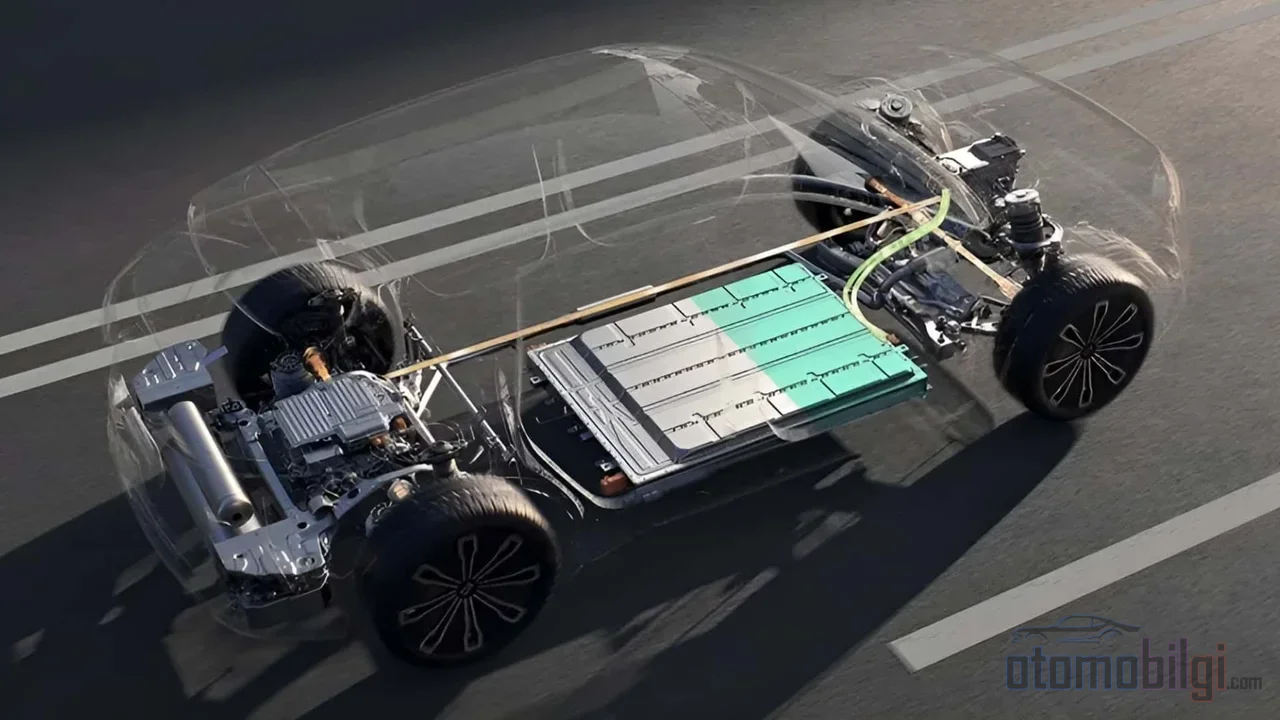
The easiest way to think of an EREV is this: you carry a tiny powerbank that constantly charges your smartphone when its battery runs out. In the car, that powerbank is a small engine that generates electricity from gasoline in the tank. The only path to the wheels is the electric motor; the gasoline engine has no mechanical connection to the wheels whatsoever. That is why the car feels electric in every condition - silent, torquey, with no gear problems.
So why isn't every plug-in hybrid (PHEV) considered an EREV? Because in PHEVs, the combustion engine can, if desired, drive the wheels directly. The classic examples of this distinction are also interesting: Chevrolet Volt is not considered a truly pure EREV because under certain speed and load conditions the engine can be connected to the wheels; Mitsubishi Outlander PHEV is similarly separated from the category. And there is also a fake sibling: Nissan e-Power uses the same series hybrid architecture but cannot be plugged in, so since it cannot be charged externally it is not an EREV but falls into the conventional hybrid class.
My favorite aspect of this architecture is this: since the motor serving as the generator does not have to drive the wheels, it can be sized according to the average power requirement and can run at a constant, most efficient rpm. It does not stop-and-go in traffic; it generates electricity at a steady pace. That is why the engines can be surprisingly small: BMW i3 REx has a 647 cc motorcycle engine, Mazda MX-30 R-EV has an 830 cc rotary (Wankel) engine. There are exceptions, too - Ram 1500 Ramcharger uses a 3.6-liter V6, Fisker Karma was built with a 2.4-liter GM engine.
The Lesson of the First Attempts: What Did the Volt and i3 REx Teach Us?
History did not make things easy for those who first tried this idea. Chevrolet Volt It launched in 2011 as the first mass-produced EREV; it was superbly engineered, but GM halted production in February 2019. Annual sales falling below 21,000, losses per vehicle, and the expiration of the federal tax credit were the main reasons. Former GM vice chairman Bob Lutz is known to have described this car as a financial loss - technological brilliance and commercial success do not always move along the same line.
The story of the BMW i3 REx is even more instructive. It was sold in the US as a $3,850 option; it kicked in when the battery charge dropped to 6% and extended the range from roughly 130-160 km to 240-300 km. But BMW always kept it as the second plan: the car's real job was to get you to the next charging point, nothing more. The result? As of 2016, this system was in regular use in less than 5% of i3s. When a larger-battery version came out in Europe, the REx was dropped in October 2018; its share had fallen from around 50% in 2015 to 25% in 2018. BMW's e-mobility manager Jan Freimann explained that the expansion of fast-charging networks and increasing battery density had made this concept unnecessary, and that the range extender had no future in the brand's strategy. A harsh statement, but looking at the data of the day, it was justified.
The China Experience: Boom, Peak and Emerging Stall
The real commercial triumph of this architecture happened in China. Li Auto, in 2019 with the Li One , launched the segment; AITO and Leapmotor also joined the stage. In 2024, 1.18 million EREVs were sold in the Chinese market alone. Li Auto's L-series SUVs had sold more than 1 million units in total by 2025. In a vast country where charging stations are sparse, a car that could commute on electricity every day and switch to gasoline on long holidays seemed like a perfect compromise.
But there is another side to the coin: from mid-2025 onward, EREV sales in China declined year-over-year for several months in a row. The reason is simple - the competitors got better. New full-electric vehicles with an average 500 km CLTC range, some exceeding 600-700 km, and the massive charging network that reached 12.82 million units by the end of 2024 (a 49.1% increase) rapidly eroded range anxiety. The greatest enemy of a bridge technology is the two shores drawing closer to each other.
The Western Rebirth of 2026: Who, and When Are They Coming?
So if the concept died, why is everyone talking about it again? Because a segment of the market in the West is still not ready for full electric. Especially large pickup and SUV buyers are resisting due to towing range and charging infrastructure concerns. Stellantis, Scout Motors, Hyundai and Ford have announced EREV models coming between 2026 and 2029. At its 2026 investor day, Hyundai confirmed it is making a major investment in range extenders, covering the Genesis brand as well. Even ZF plans to start production of a new-generation range extender technology in 2026.
| Model | Status | Key Data |
|---|---|---|
| Ram 1500 Ramcharger (later Ram 1500 REV) | Production planned to start in the second half of 2026 | 92 kWh battery, 3.6 L V6 generator, ~1,110 km total range, 175 kW DC charging |
| Scout Terra / Traveler (Volkswagen Group) | Announced | Target of ~500 miles of range in the generator-equipped version |
| Jeep Grand Wagoneer REEV | 2026 | One of the 16 EREVs expected in the US |
| Nissan Rogue e-Power | 2026 | Plug-free series hybrid architecture |
| Hyundai Santa Fe EREV / Genesis GV70 EREV | 2027 | Hyundai's EREV investment, including Genesis |
| Mazda MX-30 R-EV | Withdrawn from production in 2026 | 830 cc rotary engine, 17.8 kWh battery, 85 km of electric range |
Europe's situation is simple: as of 2025, only two EREVs were on sale - Mazda MX-30 R-EV and Leapmotor C10 REEV Ultra Hybrid. The Mazda example is particularly painful, because a rotary engine as a generator was a genuinely elegant idea; in fact, in Goodwood's test, the car would often engage the engine before the electric range dropped below 40%. But in the real world, the electric range couldn't get beyond about 40 miles, and rotary engines are known to have struggled with fuel efficiency and emissions issues in the past. Mazda discontinued the model entirely in 2026.
Cost and Maintenance: Carrying Two Systems Isn't Free
The EREV's weakest point isn't its engineering, it's its economics. The car carries two drivetrain systems: a battery, an electric motor, charging electronics, and on top of that a gasoline engine generator. That means weight, cost, and maintenance. The generator engine wants routine maintenance just like the engine in a gasoline car; at least one oil change a year is knocking at your door. Moreover, the space taken up by the engine, the generator, and the exhaust line comes out of the cargo area - that is, out of your belongings.
The price side isn't to be overlooked either; in Europe, the price tags of such models started at £31,250. Compared to a pure EV, the maintenance cost is definitely higher, but if you charge regularly it can be lower than a PHEV - because an EREV uses far more electricity during the day. And here's the critical warning: if you don't use these vehicles as designed, that is, plugged in and charged regularly, the result can be fuel consumption worse than even a gasoline car. Generating electricity with a generator and then turning the wheels with that electricity loses efficiency at every link in the chain; an EREV that isn't charged regularly remains condemned to permanent generator mode. If you can't swear to plugging it in and charging, this architecture isn't for you.
And there's a regulatory muddle that I find downright funny: in the US, the EPA counts EREVs as PHEVs on the fuel economy label; there's no separate category. In the EU as well, they're certified as PHEVs under WLTP under the name OVC-HEV, and even Euro 7 doesn't introduce a separate class. So these cars, which are reviving the market, still have a bureaucracy that isn't convinced of their true identity. China is the clearest-speaking country: EREVs are counted as PHEVs under the NEV umbrella, but starting in 2026, at least 100 km of electric range is required for the tax exemption (it used to be 43 km); roughly 40% of the PHEV models sold in 2025 are estimated to fall below this threshold. There's an open message to manufacturers: be genuinely electric or forget your exemption.
Bridge or Dead End? The Arguments of Both Sides
What strengthens the bridge thesis
Suppliers such as Magna, ZF and Felss are positioning range extenders as a transition solution that bridges the gap between today's customer expectations and a fully electric future. And the numbers are growing: the EV range extender market is expected to grow from its 2025 volume of 1.33 billion dollars to 1.49 billion dollars in 2026; another forecast projects 1.41 billion dollars for 2026 and around 2.95 billion dollars for the 2030s. The fact that the two forecasts differ by hundreds of millions of dollars shows that the market is still young and that the estimates are definition-based, but no one predicts shrinkage in terms of direction. The infrastructure side also justifies the bridge: as of April 2026, only about 550 NEVI-supported fast charging points were operational in the US in 19 states - a very small fraction of public charging points. In rural and developing regions, this gap still creates real demand for EREVs.
What strengthens the dead-end thesis
The opposing side's arsenal is not empty either. BMW said in 2019 that the concept had no future in its own strategy, and the i3 REx's 5% regular usage rate confirmed this. The sales decline in China is living proof of how fully electric vehicles with ranges exceeding 500 km eroded the EREV advantage. On the other hand, most 2026 EV models now offer a range of over 300 miles on a single charge. According to some expert opinions, range extenders will probably not be part of electric vehicles in the future, at most serving a bridge function in some regions. Mainstream media is also questioning: it has been pointed out that these cars, called super-hybrids, are actually not new, and that the noisy two-cylinder engine that kicked in when the i3's battery ran out recalls the tension this idea experienced in the past as well. In fact, both sides may be right - the EREV is a technology dependent on the patience of a country with extensive charging infrastructure. When the infrastructure catches up, no one wants the bridge; when it does not, everyone rushes to the bridge.
So, Should You Budget for This Interim Formula?
My jury has concluded with this verdict: EREV is not a wrong technology; it is the right technology stuck in the wrong time. If your daily routine is under 100 km and you can plug in at home, an EREV will treat you like a full electric - silent and cheap - while carrying generator safety in your pocket on long journeys. But despite its price, weight, and annual oil changes, if you will almost never plug it in, what you paid for is not an electric vehicle but a bulky gasoline car. I leave the question to you: how many kilometers do you drive in the city each day, and do you have an outlet in your garage? If your answer is to plug in, this could be the bridge; if not, wait - the fully electric shore is approaching fast.
Sources
- Extended-range electric vehicle
- How Does An Extended-Range Electric Vehicle Work?
- A New Era of Super-Hybrid Cars Is Coming
- Why Magna and ZF see range extenders bridging the gap to EVs
- Electric vehicle charging - Global EV Outlook 2026
- Range anxiety? Here are 26 range-extender EVs
- MX-30 R-EV 2023 Review | First Drive
- 16 Range-Extender (EREV) vehicles expected in the U.S.
- Electric Cars With Range Extenders: Better Than Pure EVs?
- What are range extender cars?
- ZF to begin next-generation EV range extender tech production in 2026
- EV Range Extender Market Size & Growth Analysis
- Electric Vehicle Range Extender Market