What Are Automakers Refusing to Give Up on Hydrogen Waiting For?
Share This Page
Car manufacturers are not giving up on hydrogen, because behind this persistence lies a strategy far bigger than sales figures: building patent pools, preparing for the heavy-duty vehicle market, and holding on to the technology even though the infrastructure is currently weak. Toyota sold only 1,702 hydrogen-powered vehicles globally in 2024; despite this, BMW 2028will launch its first hydrogen model, and the Toyota-Volvo-Daimler alliance has joined forces on the truck side. So the question is not whether hydrogen is dead, but why manufacturers are still holding on to this bet.
Highlights
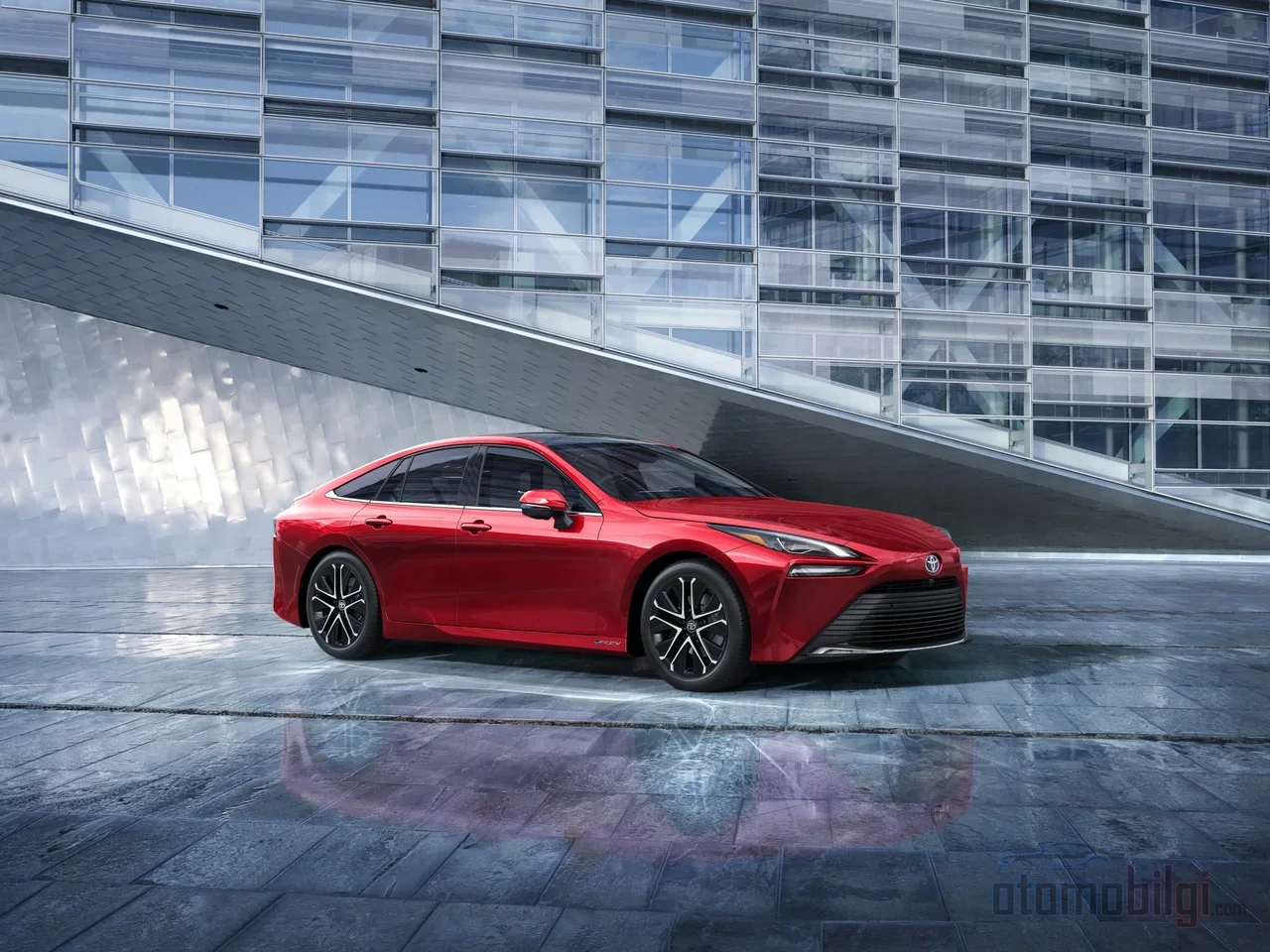
- Toyota Mirai approximately 640 km of range, and refueling takes about 5 minutes driving
- BMW iX5 Hydrogen up to WLTP 750 km of promised range
- Toyota's 2024 global hydrogen vehicle sales fell to just 1,702 units
- Toyota-Volvo-Daimler alliance 700 patents and 560 engineers was introduced with the emphasis on
- The United States infrastructure law allocated $7 billion to regional hydrogen hubs
What is a hydrogen car and how does it differ from a battery electric one?
First, let's quickly refresh the basics, because understanding the strategy requires knowing the technology. A fuel cell vehicle carries compressed hydrogen in its tanks; the hydrogen in the tanks reacts with oxygen in the fuel cell stack to generate electricity, and this electricity powers the motor. The only thing coming out of the exhaust is water vapor. The driving experience is very similar to a battery electric vehicle: silent, no gears, instant torque.
The real difference comes down to a single point: refueling. A hydrogen car's tank fills up in about 5 minutes . So you keep the habit you have at a gas station; only instead of smoke, vapor comes out of the exhaust. Think of it like swapping your phone's battery instead of charging it - the energy that gets the job done is the same, but the refill time is completely different.
With sales this low, what explains this persistence?
That is the crucial question. Toyota's global hydrogen vehicle sales fell to 1,702 units in 2024; the Mirai remained almost unchanged in 2026 and the market is still narrow. So why are billion-dollar companies continuing a losing bet?
The first reason is using it as a platform for developing the technology. Toyota openly admits that these vehicles are not simply market products. Every Mirai sold is a laboratory tested on real roads; fuel cell data, durability information, and software expertise come from here. The third-generation fuel cell system will be introduced no earlier than 2026, promising improved fuel efficiency in passenger vehicles and increased durability in heavy-duty units.
The second reason is the uncertainty created by the EV transition. Battery-powered vehicle demand is not growing at the same pace in every market, and manufacturers do not want to put all their eggs in one basket. Some capital has already turned to hydrogen and synthetic fuels. Moreover, according to one view, while the electrification wave redraws the automotive landscape and opens up space for new players, those holding alternative technologies in their hands stay safe. Toyota's strategy may be both to stay 10 years ahead of everyone and to avoid entering a very costly dead end - both outcomes are still on the table.
Heavy-duty vehicle market: where is hydrogen's real bet?
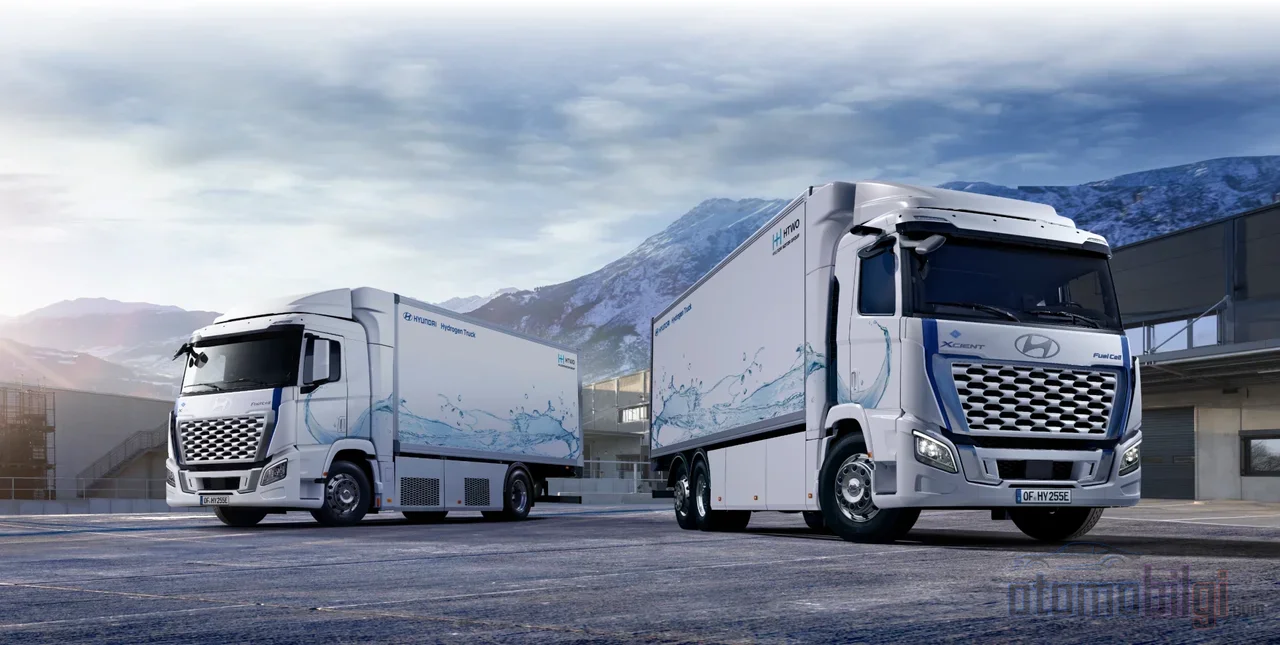
I think this is the most critical part of the page, because hydrogen's future will most likely be written not in passenger cars but in trucks. The logic is simple: the bigger a battery gets, the heavier it becomes. In a long-haul truck, battery space eats into load capacity and also reflects charging time onto operations as a cost. Hydrogen, on the other hand, offers diesel-like fast refueling, long range, and load capacity. The US Congressional Research Service also emphasizes that hydrogen vehicles are suitable for applications requiring long range, fast refueling, and heavy loads.
And it is precisely at this point that manufacturers take the stage. March 31, 2026it was announced that Toyota, Volvo Group, and Daimler Truck joined the cellcentric fuel cell joint venture; the aim is to develop a stable alternative to diesel fuel. The partnership was introduced with the figures of 700 patents and 560 engineers at a hydrogen infrastructure summit in Europe. Daimler Truck is already pursuing a dual-track strategy: battery for short distances, hydrogen for long distances.
The patent side is also interesting. Heavy-duty vehicle fuel cells 15,000-hour lifespan targets are advancing; Daimler Truck's applications focus on commercial-scale bottlenecks such as high-voltage safety architectures and modular solutions. From 2000 to 2024, patents under heavy-duty vehicle energy infrastructure - including charging, smart grid, and hydrogen - increased significantly. In other words, what is on stage is not so much flashy concept vehicles as a patent vault quietly being filled. It is also reported that Ford has filed an under-floor fuel cell patent application for its Super Duty trucks, but this news has not been verified with a primary source; it is wise to read it with caution.
What cards are Toyota, BMW, and Hyundai playing?
The strategies of the three major players resemble each other, but their emphases differ. Let's compare them briefly:
| Manufacturer | Current move | Focus |
|---|---|---|
| Toyota | 2026 Mirai on sale, third-generation fuel cell system on the way | Passenger vehicles + heavy-duty vehicles + industrial hydrogen |
| BMW | iX5 Hydrogen to be produced in 2028, joint development with Toyota | The fifth powertrain option of the X5 |
| Hyundai | Investing in hybrids while continuing fuel cell development | In the long term, solid-state batteries + hydrogen |
| Daimler Truck | Cellcentric joint venture | Dual-track decarbonization: battery + hydrogen |
BMW's move is particularly clever: instead of positioning hydrogen as a separate model, it is positioning it as the fifth option alongside the X5's gasoline, diesel, plug-in hybrid, and electric versions. If the customer wants it, they buy it; if not, the other four options are still there. The risk is almost zero, and the experience is substantial. BMW is also part of the front, together with Hyundai and Toyota/Honda, that pressures governments to include hydrogen in their electric vehicle strategies; in March 2026, such a call aimed at Australia was on the agenda.
Toyota, on the other hand, is broadening the picture: through its California-based North American Hydrogen Center, it is expanding commercial and industrial hydrogen solutions and researching combustion engines that burn hydrogen directly, in addition to fuel cells. This engine is less efficient than a fuel cell, but it is part of the development program. In other words, Toyota is not putting all its eggs in one basket with hydrogen - it is building a whole coop.
The infrastructure stakes: if there are no stations, how does the bet pay off?
Hydrogen's biggest weakness is infrastructure. In the USA, stations are concentrated almost exclusively around Los Angeles and the San Francisco Bay Area; therefore, using a hydrogen vehicle outside California is practically very difficult. Toyota gives a typical automotive answer to this problem: with the purchase of a 2026 Mirai, 15,000 $ worth of or 6 years of free fuel is offered. In other words, it tries to make up for the infrastructure deficit with the wallet.
But the picture is not entirely bleak. The California Energy Commission is investing in the first ring of a 100-station network. The US Infrastructure Law allocated 7 billion $ to regional hydrogen hubs. The International Energy Agency predicts that the cost of producing hydrogen from renewable electricity could fall by 30% by 2030. For trucks, there is also a critical advantage: a fleet can set up its own station. A much easier job than getting a station opened for 500 distributed passenger vehicle owners.
How justified is the efficiency criticism?
The most serious technical criticism hydrogen faces is efficiency. Generate electricity, convert it to hydrogen, compress it, transport it, then convert it back to electricity in the fuel cell - energy is lost at every step of this chain. In a battery-powered vehicle, electricity goes directly to the battery; hydrogen is a long transmission chain. Electrolyzer efficiency is reported to be around 75% but when the entire chain is considered, the losses grow.
Realistically speaking, this criticism is decisive for passenger vehicles. Hydrogen's chances depend on the vehicle type: in light vehicles, batteries are a very strong competitor, while in heavy vehicles, the battery's weight and charging time open up space for hydrogen. One academic analysis concludes that hydrogen vehicles will not replace electric trucks and cars before at least 2050. So in the short term, the battery wins the race; the debate will really open in the second stage. Let us also add a tactical warning: it has been observed that interest in energy alternatives historically fades once fossil fuel crises pass; the economic viability of green hydrogen depends on production costs, infrastructure investment, and policy support.
Which promise is realistic, and which is wishful thinking?
Let me give you my filter too, so it helps you make your own assessment:
- Realistic: Hydrogen positioning itself as an option in heavy vehicles, fleets, and industrial applications. Manufacturer alliances, patent density, and 15,000-hour durability targets are concrete steps in this direction.
- Realistic: Hydrogen surviving in a niche passenger car market, in regions with infrastructure support. 5-minute refueling and 640-750 km range are real advantages.
- Doubtful: Hydrogen becoming a widespread family car in the coming decade. The trio of infrastructure, cost, and efficiency doesn't seem to allow it.
- Doubtful: Market growth projections. Different research organizations publish very different figures and growth rates for the same market; absolute values are not consistent, so they should be read carefully.
My summary is this: manufacturers aren't giving up on hydrogen because this isn't a sales race, it's a positioning race. Patents are accumulating now, engineering know-how is forming now, and the truck market is taking shape now. The likelihood of hydrogen becoming a serious player in heavy vehicles in the 2030s is strong; in cars, however, it may continue to remain in the shadow of batteries. If it were you, would you bet on this? In my opinion, Toyota's answer is very clear: not leaving that seat empty, even by giving away free fuel.
Sources
- 2026 Toyota Mirai | Toyota.com
- Toyota Hydrogen Solutions | Toyota.com
- Toyota's Hydrogen Strategy Is Either 10 Years Ahead of Everyone, or a Very Expensive Dead End - Yahoo Autos
- New Toyota hydrogen fuel-cell tech to bow 2026 at earliest - Driving.ca
- The Toyota Nobody Cares About Virtually Unchanged for 2026 - Autoblog
- Hydrogen Fuel Cell Technology - BMW Group
- BMW to Launch Hydrogen-Powered iX5 SUV in 2028 - Cars.com
- BMW, Hyundai and Honda Urge Australia to Include Hydrogen in EV Strategy - Fuelcellsworks
- Hyundai bets on solid-state batteries and hydrogen for the long haul - CarExpert
- Building a global hydrogen champion - Daimler Truck
- Hydrogen-Fueled Medium- and Heavy-Duty Vehicles - Congressional Research Service
- Hydrogen Fuel Cell Heavy Duty Truck Durability 2026 - PatSnap
- Daimler Truck and the future of zero-emission logistics - Parola Analytics
- 4 Energy infrastructure - WIPO Patent Landscape Report
- European Hydrogen Infrastructure Summit 2026 - Hydrogen trucking power trio
- Toyota Hydrogen 2026, 70% Gas Price Surge Spurs cellcentric - Enkiai
- Hydrogen Vehicles & Refueling Infrastructure - California Energy Commission
- Hydrogen Fueling Stations - Alternative Fuels Data Center
- Hydrogen Fuel Cell Vehicle Market - Fortune Business Insights
- Hydrogen Fuel Cell Vehicle Market - IMARC Group
- Persistence on Fuel Cell EVs Surfaces In Japan, Germany, US - CleanTechnica
- Hydrogen Fuel Cell Vehicles: Opportunities and Challenges - MDPI
- Future of Electric and Hydrogen Cars and Trucks - MDPI
- Economic perspectives of hydrogen and fuel cell vehicles - ScienceDirect
- The Future of Hydrogen - IEA