Will Solid-State Batteries Really Be on the Production Line in 2026?
Share This Page
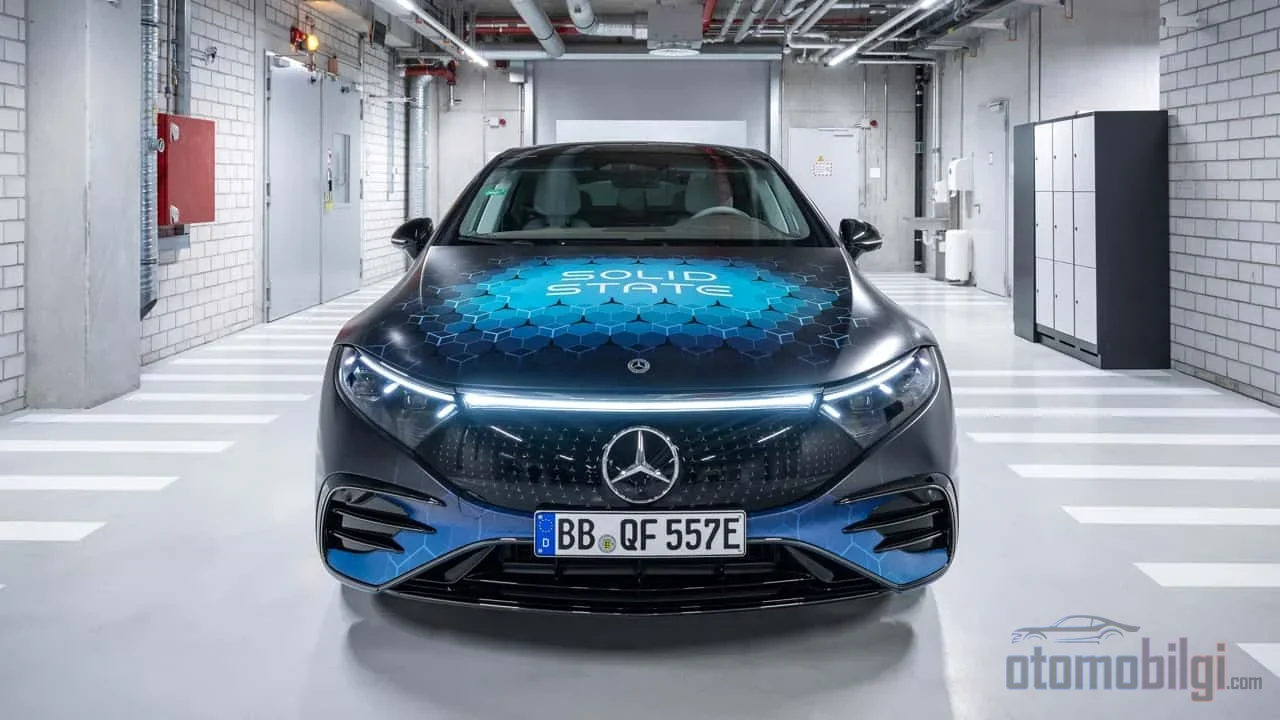
Short answer: no, at least not in the sense most of us have in mind. In 2026, solid-state batteries are in pilot lines, prototype vehicles, and limited premium production trials; even the industry's own plans point to 2030 for widespread mass production. So the announcements are generous, while the production lines are cautious. So where exactly is the gap between these two worlds? Let's take a look.
Highlights
- In conventional lithium-ion, thermal events start at around 90°C while in solid-state systems this threshold is ~247°C
- Today's good lithium-ion cells 200-300 Wh/kg; the commercial solid-state target 400-500 Wh/kg
- Almost all of the "solid-state" batteries on the market in 2026 are actually semi-solid hybrid designs
- The production cost of fully solid-state cells currently carries a 3-5x premium
- True widespread adoption, according to industry plans, is after 2030
What Is a Solid-State Battery Really, and What Does It Promise?
Let's start from the basics, because everyone treats this technology like a "magic box." In a solid-state battery, the flammable liquid electrolyte is replaced by a solid electrolyte - polymer, oxide, or sulfide based. Why is this so important? Because the biggest safety nightmare in today's lithium-ion cells is thermal runaway, meaning the battery heating itself up and catching fire. The solid electrolyte significantly reduces this risk: in comparative tests, thermal events in solid-state systems start at around 247°C while in classic lithium-ion this point is around 90°C. The difference can be thought of as the difference between an oven and a lighter.
The second big promise is energy density. When a lithium metal anode is used instead of a graphite anode, the cell can store much more energy at the same weight. Today's good cells hover in the 200-300 Wh/kg range, while the commercial solid-state target is 400-500 Wh/kg; potential of 500-600 Wh/kg is being discussed for the future. What does this mean in practice? Roughly 350 Wh/kg corresponds to a range of 1,000 kilometers; 400-500 Wh/kg can carry you beyond 1,200 kilometers. One more thing: fast charging. Some companies report 80% charge in 10-15 minutes, and one even claims nearly 100% charge in 5 minutes. Industry experts approach these claims with skepticism until independent verification arrives - and I think they're right. There's also cold weather: one manufacturer's 350 Wh/kg cell retains 72% of its capacity at -30°C, while another claims stable operation at -40°C. The cycle life target is 80% capacity after more than 1,000 charge cycles.
Manufacturer Timelines: Who Promises What, When?
Now let's move on to the fun but equally confusing part: the timelines. Everyone has announced a date, but the dates don't all mean the same thing. Some say "initial production," some say "mass production," and some say "small-scale production" - these three are very different things.
| Manufacturer | Target | Timeline |
|---|---|---|
| CATL | Investing in three electrolyte routes | Initial production 2027, mass production 2030 |
| BYD | 400 Wh/kg, 5C charging | Initial production 2027 |
| Dongfeng | 350 Wh/kg | Mass production plan for late 2026 |
| Toyota | 450-500 Wh/kg | Small-scale production 2027-2028, mass production after 2030 |
| Samsung SDI | 80% charge in 9 minutes by 2027 | Pilot line 2023, mass production target 2027 |
| Volkswagen | Launch of a solid-state battery vehicle | Planned for 2026 |
The Toyota side is particularly interesting: Japan's ministry of industry has confirmed a production plan starting in 2026, but the ramp-up is slow and mass production looks to be after 2030. So the sentence "production starts in 2026" is technically true, but it may only apply to a few hand-made cells, not the car in your garage. Samsung SDI set up a pilot line at its R&D center in Suwon and produced prototypes at the end of 2023; the target is 2027. QuantumScape, meanwhile, reported 80% capacity retention after 400 cycles at a 4C rate in the lab - be careful, that's called a lab test. There are also bold claims: one company's claim of the "first mass-production-ready all-solid-state battery" was verified by an independent testing body, reaching 80% in 4.5 minutes when charging at an 11C rate. This is one of the most concrete verifications made public and it's the optimists' main card.
If It's This Great, Why Isn't It on the Production Line Yet?
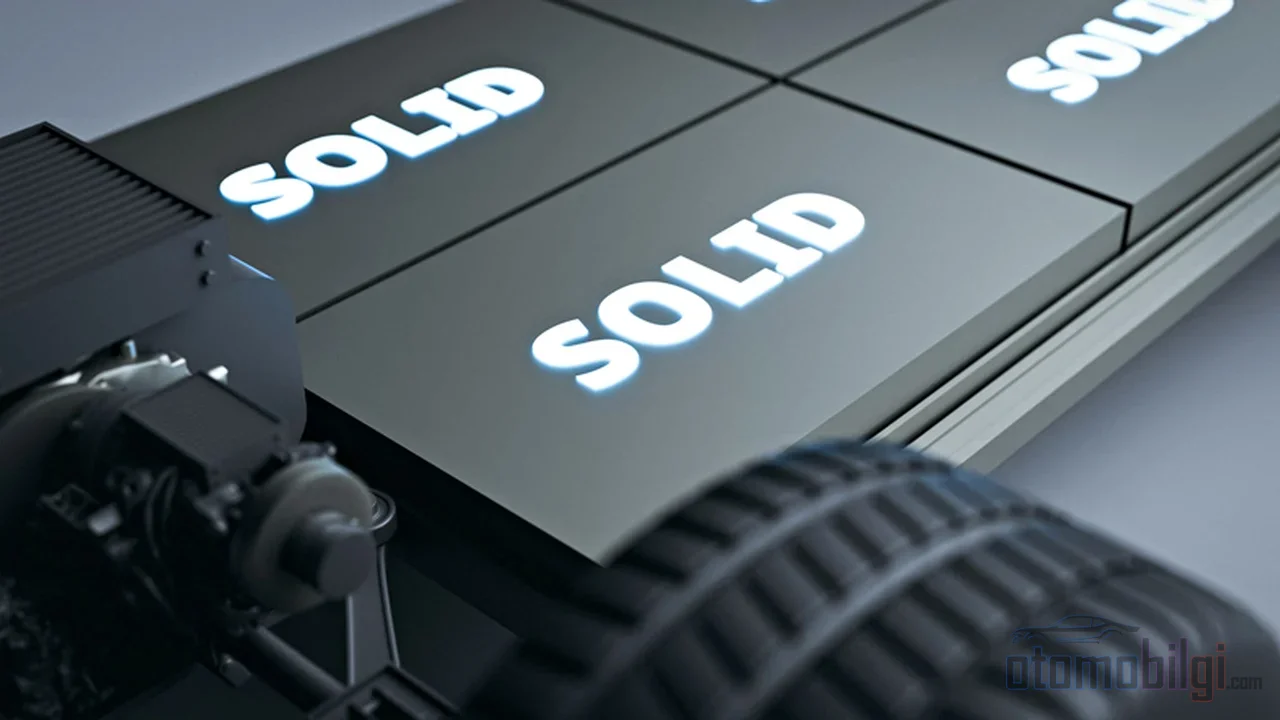
That's the million-dollar question. The answer isn't a single thing, but several harsh engineering realities stacked on top of each other. The simplest analogy is this: a solid-state cell uses a material that, unlike a liquid, can't seep everywhere and settle itself in. The solid electrolyte doesn't fully conform to the electrode surface; microscopic gaps remain, and these gaps increase resistance. Think of it like your phone's charging port loosening, but at the scale of one-thousandth of a millimeter - and the problem grows with every charge.
Dendrites, dry rooms, and 1,000°C furnaces
The second problem is dendrites: at high current, lithium can penetrate into the solid electrolyte like sharp points and cause a short circuit. So the solid electrolyte isn't flammable, but it isn't harmless either; the danger just comes through a different door. The third problem is production itself. Sulfide electrolytes react with moisture in the air and release toxic hydrogen sulfide - which means an ultra-dry production environment. If you choose the oxide route, you then need to sinter the cells at about 1,000°C. Every chemistry route has a trade-off, and they're all expensive.
And of course, cost. All-solid-state cells are currently limited to pilot scale and carry a 3-5x production cost premium. The solid electrolyte materials alone account for 40-50% of the total battery cost. The reality told in the industry is this: manufacturing know-how matters more than chemistry know-how. The yield of the pilot line - meaning what percentage of the cells that start out end up usable - is the fundamental variable that determines the cost curve. Let's add an interesting science note: a study from MIT this year showed that grain boundaries in solid electrolytes carrying different chemical and electrical properties could explain frequent failures through ion interaction. So the answer to the question of why they fail is becoming clearer - but clarity isn't the same as having started production.
The "Semi-Solid-State" Trick: Transition or Marketing?
Here's a soap-bubble test for you: as of 2026, nearly all batteries marketed as "solid-state" are actually semi-solid hybrid designs. These are hybrid cells containing liquid electrolyte amounting to 5-15% of their total weight. Not the real, 100% solid "all-solid-state" (ASSB) cells. Is this a bad thing? No - quite the opposite; the argument is that semi-solid cells are the only technologically viable solution ready for vehicles in 2026. They are already being used in Nio and IM Motors vehicles, offering 300-360 Wh/kg energy density. Major players including Toyota and CATL are also passing through the semi-solid stage; CATL plans semi-solid cells around 2026 and full solid-state for the 2030s.
But let's be honest: if a car is advertised as "solid-state battery" and contains 10% liquid electrolyte, maybe they aren't deceiving you, but they are pulling the wool over your eyes. Comparative findings are also interesting: semi-solid cells show less volatility in cell-to-cell voltage distribution but perform worse in the edge cells of the battery pack. In other words, a transition technology is a transition technology - most of the promised celebrations belong to it, not to reality.
2026's Real Test: The Year of Validation
The industry's own self-definition for 2026 says a lot: this year is the "year of validation". There are small-batch prototype trials and vehicle assembly tests; small-scale production limited to premium models is expected in 2027-2028; real widespread adoption comes after 2030. Moreover, in 2026-2027 all solid-state batteries are at the "small-scale demonstration" stage, and the target applications are niche areas like low-altitude aviation and humanoid robots rather than cars. Your robot's battery will be renewed before your car's - think about that!
On the standards front there is a concrete development: China is preparing to release the first solid-state EV battery standard in July 2026. The standard is a serious step, because it defines what the term "solid-state" will mean and can reduce marketing ambiguity a bit. China's official roadmap is also cautious: 350 Wh/kg liquid cells in 2025, 400 Wh/kg hybrid in 2030, 500 Wh/kg true solid-state in 2035. Note this - the true solid-state target is 2035. In other words, even the market with the most aggressive production plan has an official timeline ending years after the announcement headlines.
What Are the Skeptics Saying, and Are They Right?
There are two camps, and both are worth listening to. The optimists say: the technology is genuinely leaving the lab, fast-charging results with independent validation and standards work are concrete signs. The skeptics argue that solid-state batteries are not significantly better than current lithium-ion in energy and power density, and that their benefit is marginal. The "hype, hopes and hurdles" framework from physics circles is apt: catching the same range as conventional technology may require a pack above 110 kWh, meaning you don't have to reinvent the wheel from scratch.
My take is the middle path: if the claims hold, the revolution potential is real. But the market rewards execution, not announcements, and the main risk is that commercialization turns out longer and more expensive than public timelines suggest. The recommended stance is exactly that: informed optimism. Get excited, but pay the bill based on pilot line yield, not on rumors.
So When Do I Get a Car with a Solid-State Battery?
Early products seem set to appear at the end of the 2020s, with broad scale coming in the 2030s. And there is an important nuance: solid-state is not immediately replacing lithium-ion. LFP and sodium-ion chemistries keep improving; solid-state will enter premium and sector-specific applications first. So in the early years these batteries will be rare, expensive, and of course in models that feel groundbreaking - then the price curve drops, and the rest becomes a familiar story, like fast-charging stations.
Let me also give you a golden reading tip: when you see a solid-state battery news item, ask these three questions. One, is the data at cell level or pack level? Two, is manufacturing yield being disclosed? Three, is it a single-layer lab cell or a full-size cell? Single-layer lab cell data counts as weak evidence; what you really need to watch is pack-level performance and manufacturing yield. The same applies to fast charging: solid electrolytes not decomposing at high currents is a theoretical basis for a real advantage, but real-world conditions - charger power, thermal management, capacity loss after cycling - remain uncertain.
In Short: The Promise Is Real, the Timeline May Be a Lie
Solid-state batteries are not a fantasy; safety thresholds, energy density targets, and independently verified test results show the technology is real. But what is on the production line in 2026 is not what most headlines imply: pilot lines, validation tests, and semi-solid transition cells. Anchoring the timeline for true all-solid-state to 2030 is the healthiest expectation right now. The question is not mine, it is yours: by 2030, current batteries will be so good that will you even need solid-state then?
Sources
- Solid-State Batteries 2026: How the Technology Is Finally Reaching Commercial Use
- Solid-State Battery Timeline 2026-2035: What Happens Next?
- Solid-State Battery Status in 2026: Chemistry, Challenges and Future
- Solid-State Battery Hype vs. Reality: 2026 Edition
- Samsung SDI to Collaborate on All-Solid-State Battery Development
- Donut Lab battery charges to 80% in 4.5 min in independent test
- A solid-state EV battery standard will be released in China
- All-Solid-State: No More 'Empty Promises'
- Discovery helps explain why solid-state batteries often fail - MIT News
- Performance comparison of semi-solid-state batteries - ScienceDirect
- Solid-State Batteries: Hype, hopes, and hurdles - Physics Today