Why Haven't Hydrogen Fuel Cell Cars Delivered on Their Promise?
Share This Page
Hydrogen fuel cell cars failed to find the promised path; because producing hydrogen from electricity and then converting it back to electricity wastes 2-3 times more energy compared to a battery electric vehicle. Add the sparse station network and high costs, and it lost its chance in the passenger segment; today its real chance lies in trucks and urban fleets. Now let us lay this story on the table, separating promise from reality.
Highlights
- Well-to-wheel efficiency of hydrogen vehicles 25-35%; battery EVs 70-90%.
- Global hydrogen vehicle sales in 2025 16,011 units - but almost all of the growth came from China and South Korea.
- Toyota Mirai dropped from about $60,000 in 2018 to $15,000 in 2021 on the used market.
- As of the end of 2024, there were only about 1,160 hydrogen stations worldwide.
- On the truck side, the US market is expected to grow from 5,000 units in 2024 to 75,000 units by 2030.
Why Do Hydrogen Cars Sell So Poorly?
Let me be honest first: the idea was truly beautiful. A hydrogen fuel cell vehicle, or FCEV, converts the chemical energy of hydrogen into electricity and runs on an electric motor. Only water comes out of the exhaust. It is more efficient than a gasoline car. So the promise had three pillars: fast refueling, long range, zero emissions. All of them were designed to beat electric vehicles at their own game. Then what happened? None of the three could be delivered as promised.
Consider how small the global picture of 2025 was: only 16,011 hydrogen vehicles were sold worldwide. Yes, there is roughly a 24-25% increase compared to the previous year, but almost all of this growth comes from two markets. China leads with 7,797 units ; the expiration of the purchase tax exemption at the end of the year and the pressure to meet targets in the hydrogen pilot city clusters pulled demand forward. In South Korea, 6,802 passenger cars were sold - a surprising Hyundai Nexo launch of the second generation in April 2025 driving an 84.4% growth. Everywhere else is shrinking: Europe 566 units (-23.1%), Japan 430 units (-37.3%), and North America only 365 units (-37.7%).
The picture is also clear on the manufacturer front: With 6,861 units, Hyundai leads by a wide margin, carrying 42.9% of the global market alone. Former leader Toyota, however, fell to 1,168 units, down 39.1%, with the Mirai and Crown FCEV combined. Honda's record is 185 CR-V e:FCEV units. In the first half of 2026, global sales were only 4,643 units - in Europe, just 14 vehicles in the first half. The 2026 Mirai launching with only minor updates also sums up the situation: no expectation of expansion remains on the passenger side.
The Efficiency Math: Where Does the Energy Go?
Here, the biggest enemy of the hydrogen car is not a rival vehicle, but physics. In a battery EV, you store electricity from the grid in the battery, then use it with the motor. There is loss, but it is reasonable: around 15-30% in storage around, energy is lost. On the hydrogen side, the chain is longer: take electricity, convert it to hydrogen via electrolysis, compress and transport that hydrogen, store it at the station, then convert it back to electricity in the fuel cell. A bit escapes at every step; losses in storage reach up to 55-70%.
Let me make a simple analogy: a battery is like pouring your water directly into a flask. Hydrogen is like first boiling the water and transferring the steam to another container, then cooling it down to make it drinkable again. Your thirst is quenched in the end, but the kitchen is a disaster.
To put it in numbers: hydrogen vehicles require 2-3 times more energy for the same distance. Overall well-to-wheel efficiency is 25-35% in an FCEV, versus 70-90% in a battery EV. While a fuel cell can convert about 40-60% of the input energy into usable power, a lithium-ion battery can exceed 90%. A lifecycle analysis shows that well-to-wheel efficiency varies between 6.8% and 29.2% depending on how the hydrogen is produced - meaning even in the best case it lags behind the battery.
So Why Does It Still Win Against Gasoline?
Let's also tell the fair side of the story. If you compare a hydrogen car directly with a gasoline car, the picture changes: fuel cell vehicles consume about 29-66% less energy and emit 31-80% less greenhouse gases than conventional vehicles. So a hydrogen car is not a bad idea - it's just mathematically unlucky when pitted against the battery-electric car. It loses when the question is always "hydrogen or battery" rather than "hydrogen or gasoline".
Station Network: Where Is the Promised Refueling Revolution?
The promise of fast refueling came with a condition: being able to find a place to refuel. By the end of 2024, the number of hydrogen stations worldwide was around 1,160; that year 125 new stations had opened. For comparison: even the number of EV charging points in any major city exceeds this figure. California committed a development fund of 100 stations for its zero-emission vehicle target, and the state's network would eventually reach the capacity to support about 150,000 light-duty FCEVs - but it must be admitted that even this was just the beginning.
Moreover, the problem is not just the number of stations, but the fuel itself. In 2022-2023, California experienced a serious hydrogen supply shortage. Your car refuels super fast, but can you refuel it? The results were striking: a Toyota Mirai that sold for about $60,000 in 2018 could drop to $15,000 on the used market in 2021. Amid the shortage, manufacturers tried to hold on to buyers with heavily subsidized lease campaigns like $349-399/month. That's why Toyota and Hyundai don't sell or lease their FCEVs only in markets where hydrogen is genuinely available - they're not even willing to sell them, offering them almost under a registration requirement instead.
There is also the cost front: the most common technology in automotive is PEM, i.e. proton exchange membrane fuel cells, and most of them use a platinum catalyst. That catalyst alone accounts for roughly 46% of the fuel cell's total cost. This is why fuel cells end up more expensive than a BEV battery. The safety of hydrogen also gives consumers pause: it is a highly flammable gas and its flame can be almost invisible to the naked eye.
Trucks and Fleets: Where Is Hydrogen's True Domain?
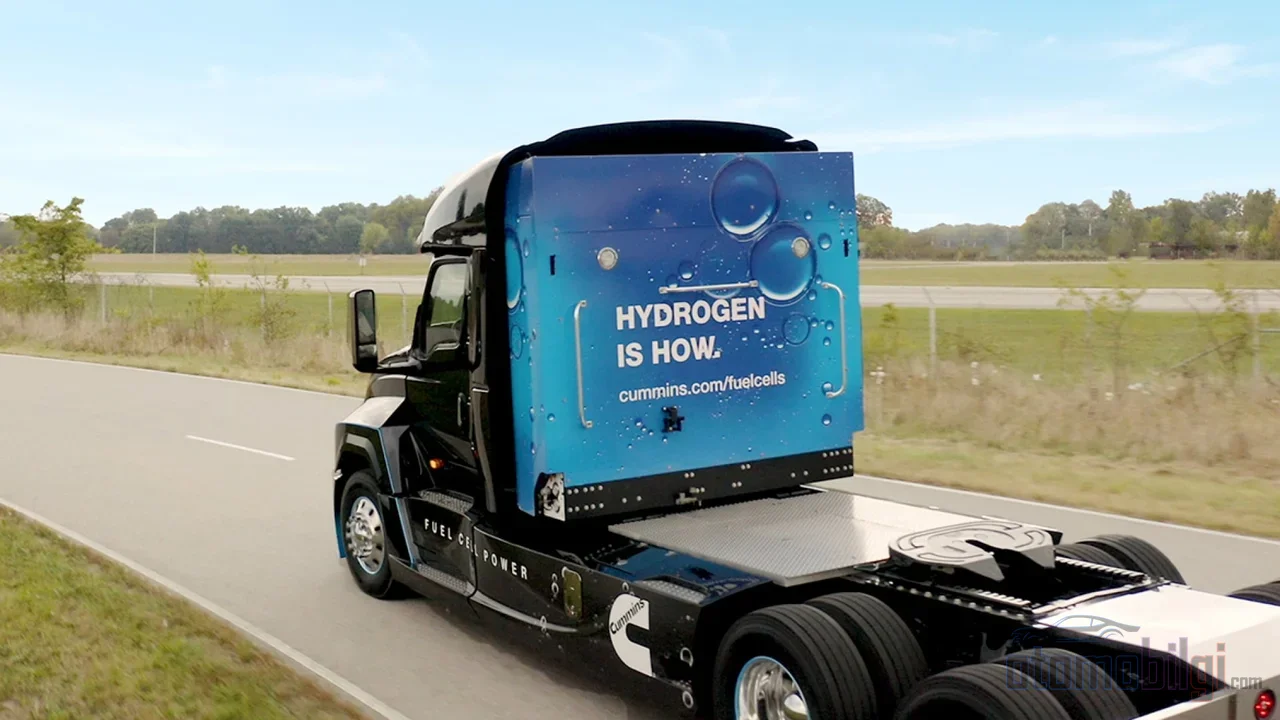
Now let's get to the interesting part. Why is this technology, a loser in the passenger segment, still a serious candidate in heavy-duty vehicles? The answer is weight. If you want to carry a long-haul truck entirely on batteries over long distances, the battery pack adds weight, and at some point you are replacing the payload with batteries. Energy analyses have long shown that fuel cell solutions perform best on long ranges where battery weight exceeds practical limits. The range of fuel cell heavy-duty vehicles can increase roughly twofold compared to battery-powered ones.
The industry has locked onto this direction:
- Volvo Trucks announced that its hydrogen combustion engine trucks would be suitable especially for long distances and regions with limited charging infrastructure.
- Volvo Group announced plans to accelerate the hydrogen mobility value chain in Europe together with TotalEnergies, TEAL Mobility and MB Energy.
- Hyundai plans to spend more than 200 times to increase its fuel cell production by 2033 to $6.7 billion .
- Stellantis kicked off the hydrogen van era with mid-size commercial vans branded Peugeot, Citroën and Opel - a sensible move for urban fleet use.
In the US, the hydrogen truck market is expected to grow from 5,000 units in 2024 to 75,000 units by 2030; California's Advanced Clean Trucks rule is the main driving force here. Market research firms also foresee big growth on the heavy-duty side: one report raises the hydrogen truck market from $6.3 billion in 2026 to $32.1 billion in 2033, while another goes from $6.70 billion in 2026 to $44.92 billion in 2034. These are estimates and the estimates are estimates, but the direction is common: trucks.
Think of the difference between a passenger car and a truck like this: In a passenger car, you can charge overnight from an outlet in your garage; outlets are everywhere. If you are a trucker, your range and refueling time determine the pace of your business - and the charging network does not yet exist at every point along your route. In this scenario, the promise of fast refueling and long range regains its meaning.
Optimists and Skeptics: Who Is Right?
The hydrogen front has stubborn advocates. British presenter James May said he believes hydrogen has a critical future even after owning two Mirais. Market reports are dazzling: one estimate puts the FCEV market at $5.43 billion in 2026 rising to $205.5 billion in 2035, an annual 50.06% reach that with growth. But a warning is needed here: another report for the same year says 0.45 billion dollars, while yet another says 3.25 billion dollars for 2025. The difference between them is tens of times. This wide discrepancy shows that, for now, these market size estimates should be approached with a grain of salt.
The skeptics are harsher: the verdict that "hydrogen cars are not the answer" is now the common view among many automotive experts; still, it is accepted that a fuel cell EV could be a better option for some customers. It is also a fact that even the argument that hydrogen is cleaner than gasoline is questioned in energy use analyses, depending on how the hydrogen is produced. The question marks analysts have for 2026 are also clear: can infrastructure expansion meet the demand, can pilot projects turn into sustainable operations, and will subsidies remain predictable in terms of vehicle price and total cost of ownership?
Conclusion: Is It Over for Passenger Cars?
In my view, the picture is now quite clear. The promise of the hydrogen fuel cell passenger car - fast refueling, long range, zero emissions - has ceased to be an advantage in the face of battery EV development; while the grid reaches everywhere, stations are still few in number, and the efficiency chain is mathematically behind. In the passenger segment, this story most likely does not work without a station network, and the network is not built without passenger demand. The vicious cycle continues.
But it would also be wrong to bury hydrogen completely. In long-haul truck, bus, and urban fleet use, in scenarios where battery weight is a problem and vehicles return to a single hub at night, the fuel cell is still a strong candidate. I will not say the hydrogen car is dead; only the stage has changed. The stage is no longer the sedan in our garage, but the tractors on the highways and the fleet parking lots.
What do you say - should hydrogen passenger cars have been given one more chance, or was this train already missed?
Sources
- Global H₂ vehicle sales rise by nearly 25%
- Hydrogen Fuel Cell Vehicle Market - Precedence Research
- Battery Electric Vs Hydrogen Fuel Cell: Efficiency Comparison
- Hydrogen Fuel Cells vs. Lithium-Ion Batteries Compared
- Life cycle assessment on energy efficiency of hydrogen fuel cell vehicles (Lu et al., 2022)
- Economic perspectives of hydrogen and fuel cell vehicles (Ajanovic et al., 2026)
- Performance, emissions and economic analyses of hydrogen fuel cell vehicles (Halder et al., 2024)
- Energy analysis of electric vehicles using batteries or fuel cells (Campanari et al., 2009)
- Why have electric vehicles won out over hydrogen cars (so far)? - MIT Climate
- Fuel Cell Electric Vehicles - Alternative Fuels Data Center
- Hydrogen Infrastructure Is Being Built Now - H2 FCP
- Toyota Mirai gets deepest discount yet - amid hydrogen shortage
- Running on Empty: Hydrogen in California
- PEM Fuel Cells vs Batteries for Electric Vehicles - Intelligent Energy
- Hydrogen Trucks: Long-Haul's Future? - NACFE
- Volvo's future hydrogen truck - Volvo Trucks press release
- Industry leaders scale full value chain for hydrogen mobility across Europe - Volvo Group
- The Rise of Hydrogen-Powered Trucks in the US
- Hydrogen Truck Market - Grand View Research
- Hydrogen Truck Market - Polaris Market Research
- Global Hydrogen Vehicle Sales Reach Just 4,643 Units in H1 2026
- Power-to-hydrogen explained - GridX
- Hydrogen cars are definitely (maybe) still going to happen
- Why hydrogen cars are not the answer - The Car Expert