Do Robotaxis Really Solve Urban Transportation?
Share This Page
Robotaxis, as of today, are not solving urban transportation: fleets are growing rapidly and, although accidents per mile are lower than those of humans, their peak-hour capacity cannot replace public transit, their price remains at best several times that of a bus ticket, and there is no measured data yet showing that they reduce car ownership. In other words, the promise is big, but the reality currently stands in a much narrower window.
Highlights
- Waymo, September 2026 as of 15 US cities per week 500,000 paid rides carries; its fleet has around 4,000 vehicles.
- According to IIHS research, Waymo's accident rate is 68% lower than that of human drivers.
- WMATA's Orange Line carries 15,400 passengers per hour during peak hours - a massive figure compared to robotaxi fleets.
- Analyses say a robotaxi ride is 3 to 8 times more expensive than a bus ticket.
- Las Vegas granted only 10 permits to Tesla's request for 5,000 permits.
Yes, I'm aware: wherever you open the news, you see headlines saying "cars will be erased from cities." I feel the same excitement, truly. But the hardest task for someone in love with the automobile is to question what they love - and that is exactly what we're going to do today. With numbers, with measured results. If you're ready, let's begin!
How Big Is the Fleet in Reality? The Gap Between the Promise and the Vehicles on the Street
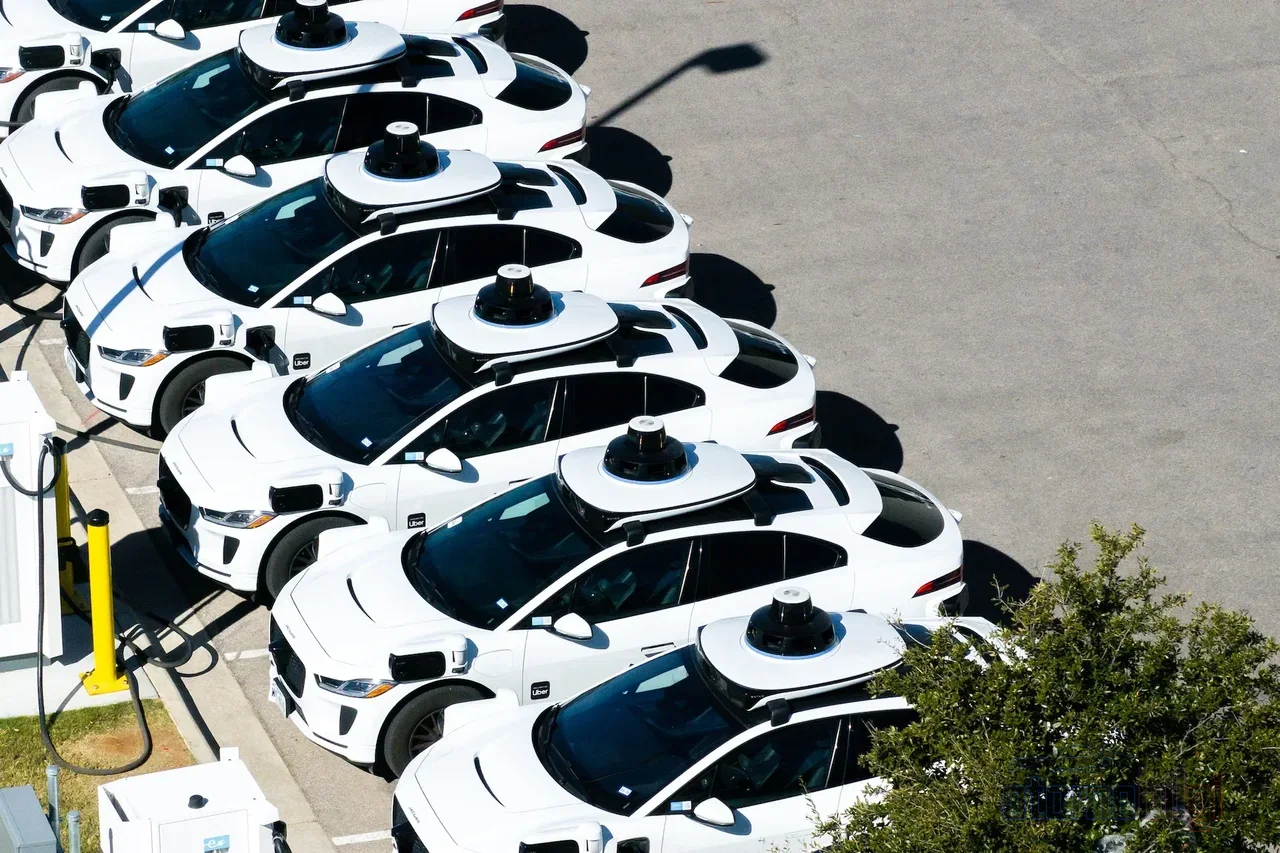
First, the good news: growth is incredibly fast. Two years ago, in September 2024, Waymo was in only three cities - Phoenix, Los Angeles, and San Francisco. As of September 2026, it serves 15 cities and averages 500,000 paid rides per week. The fleet was around 2,500 vehicles in November 2025; now estimates hover around 4,000 . The Texas fleet has grown 49% in the last three weeks - yes, nearly by half in three weeks. The factory established with Magna in Mesa, Arizona, covering 239,000 ft² , has the capacity to produce tens of thousands of autonomous vehicles per year at full capacity.
But here's the interesting part: about 80% of these 4,000 vehicles operate only in California and Texas . The remaining roughly 800 vehicles are spread across twelve cities. So the perception that "robotaxis are everywhere in the US" is somewhat misleading - the real picture is limited to a few metropolises.
So what about the China side?
As of February 2026, Baidu's Apollo Go service does 300,000 rides per week, and the cumulative ride count has surpassed 20 million . In the first quarter of 2026, 3.2 million fully driverless rides were completed, and the single-week peak reached 350,000 . There are publicly available pilot services in more than a dozen Chinese cities; a fully driverless service with Uber has launched in Dubai, and Level 4 approval was granted in Switzerland. So this is not just America's game - this is clearly a global race.
There is also a small but important tension: Waymo's China-made Zeekr-based "Ojai" minibuses have, for now, lost their cost advantage due to customs tariffs. Even though the technology is great, geopolitics is reflected in the price list, unfortunately.
| Operator | Scale (2026) | Coverage |
|---|---|---|
| Waymo | ~4,000 vehicles, 500,000 trips per week | 15 US cities, 80% of the fleet in California and Texas |
| Baidu Apollo Go | 300,000 trips per week, over 20 million total | More than 10 Chinese cities, expanding to Dubai and South Korea |
| Tesla | 42 registered autonomous vehicles in Texas | Small pilot service in Austin; no permit step in California yet |
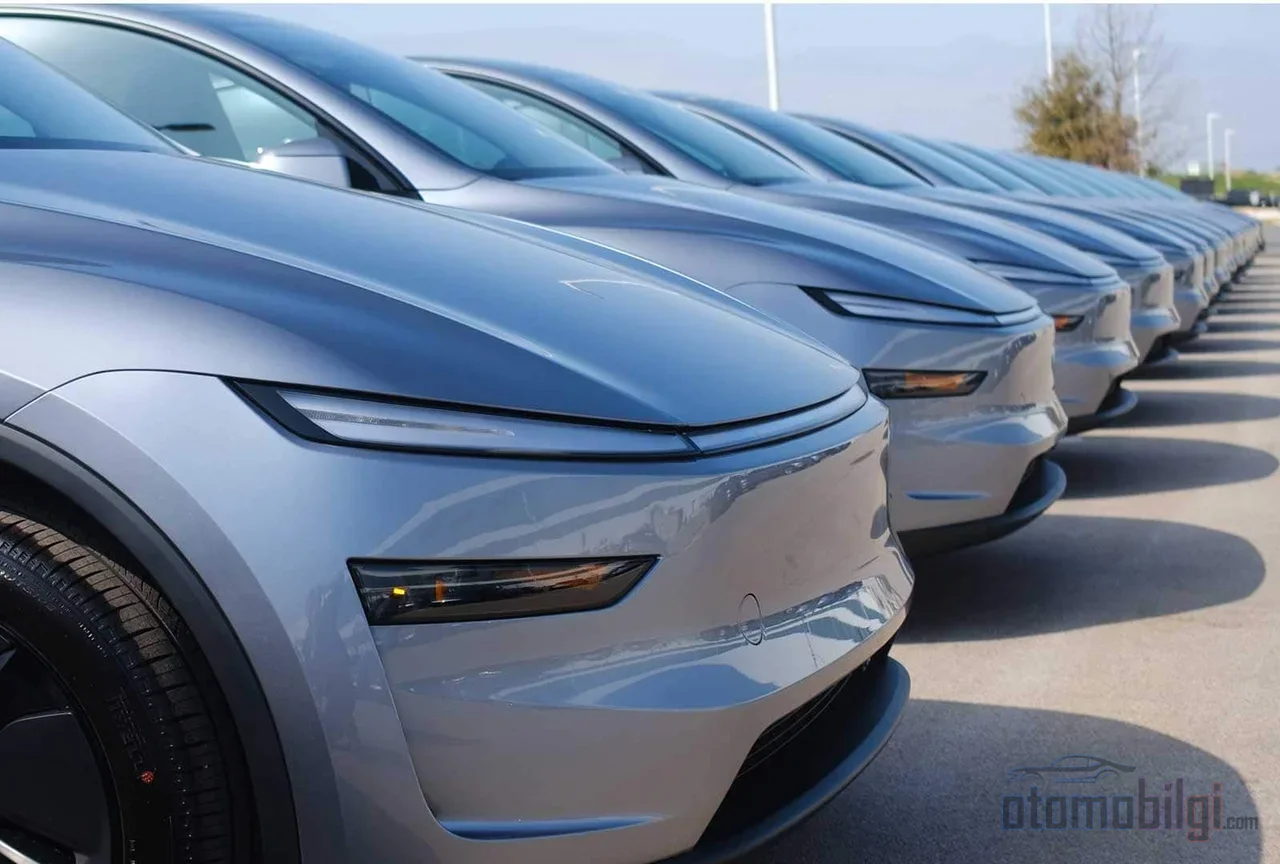
Tesla's line also deserves a mention. In Texas with only 42 registered vehicles it is far behind Waymo and has not yet taken the steps required for robotaxi permits in California. Promises are being discussed, but permits are not yet on the table.
Safety: Low Crash Rate But Rising Crash Count - How Can Both Be True?
Here is the part that might confuse you, but the logic is actually very simple. If you look at it per kilometer, the picture is bright: IIHS's independent research shows that Waymo's crash rates are 68% lower than human drivers', and single-vehicle crashes are 85% fewer. A separate peer-reviewed study found a crash rate of 2.1 IPMM for autonomous driving systems in police records; for human drivers this rate is 4.68 - meaning roughly a 55% reduction. These are truly impressive numbers and a genuine milestone for public trust.
Now let's look at the other side. Between July 2021 and November 2025, 1,429 Waymo crashes were reported to NHTSA; 117 injuries and 2 deaths are on record. In Los Angeles County, Waymo reported 69 crashes in 2024, while in 2025 that number rose to 219 - more than triple. Most crashes are reported to be minor and injury-free, and an important piece of context: as of March 2026, Waymo has driven over 200 million miles . For comparison, US drivers drove 3.3 trillion miles last year. So absolute numbers are rising rapidly as the fleet grows; the rate remains low. Both statements are true - they just answer different questions.
And the errors themselves are interesting: Waymo recalled 1,212 vehicles due to a software issue causing low-speed collisions where vehicles hit gates and chains. No one was injured and the regulatory review was closed after 14 months. But it's also worth noting those Wuhan footage clips - at the end of March 2026, videos of passengers stranded in their vehicles after Apollo Go cars suddenly stopped made their way to social media. This content is not a verified official report, but let it stay in the back of our minds as visible proof that the software is not yet flawless.
Can Robotaxis Replace Public Transit at Rush Hour?
I think this is the most crucial question of the whole piece, and the clarity of the answer may surprise you. Picture for a moment how much work a metro line does: the Orange Line in the Washington DC area carries 15,400 passengers per hour at rush hour. Waymo's entire fleet of 4,000 vehicles, at 500,000 trips per week, remains tiny next to this single line. Think of a metro car - more people than could fit in cars. A robotaxi, by definition, holds only a few people. This is not a calculation error; it's something about physics.
Even more annoying is the traffic side. Researchers measured that Waymo vehicles cruise empty 43-45% of the time between trips - meaning without passengers, just gliding through traffic on their way to the next call. The result? The net impact on traffic is no different from the ride-hailing we know. Moreover, Rapp-trans's analysis shows that more than 80% of robotaxi trips go directly point to point, with only about 16% of them serving as connections to/from public transit. So instead of dropping you at the metro station and feeding the bus, robotaxis are stealing passengers from the metro.
Kearney's analysis sketches the extreme scenario of this: public transit usage could drop by as much as 75% because of passengers shifting to automated vehicles - and since the peak-hour capacity problem remains unsolved, congestion is literally "reinvented". Journalist Benjamin Schneider's summary is thought-provoking: unlike a new metro line, robotaxis offer no capacity or travel time improvement at all compared to ordinary cars. Same number of vehicles, same congestion - just no human at the wheel.
Can a Robotaxi Ride Really Be as Cheap as a Bus?
Elon Musk claims a robotaxi ride will be cheaper than a bus or metro ticket. Who wouldn't want that? But counter-analyses that put the numbers together paint a different picture: even in the cheapest scenario, a robotaxi ride is 3 times the bus fare, and in the most expensive scenario 8 times. Fares in Miami are currently running at $12-20 for 5-10 miles, and in the $20-35 band for over 10 miles - 10-20% cheaper than ride-share, yes, but incomparable to a bus.
Prices also vary considerably between operators. For the same 2.25-mile trip in Dallas, Tesla quoted $6.15 while Waymo charged $13.93 for the same journey - a 56% difference! Although this is a second-source comparison, the gap shows the price war is just beginning. In another comparison of fifty sample trips, human-driven ride-hail averaged $28.14, while the same trip was $9.50 more expensive with Waymo. So the robotaxi is getting cheaper than a taxi; still expensive compared to a bus.
Will We Really Say Goodbye to Car Ownership? The Cost Calculation
The main promise of robotaxis is this: you can do without a car, because it arrives at your door every time you call. But does the economics support this? In the US, the cost of vehicle ownership is estimated at around $0.65-1 per mile - for new vehicles this figure rises to as much as $0.77. In contrast, the Tesla Cybercab targets reducing operating costs to $0.20/mile ; realistic estimates hover around $0.25-0.30/mile. Some analyses suggest a profitable operation would be possible at $1/mile, with the cost potentially falling to $0.50 within 4-5 years.
But here is where you should hear a discordant note: figures like "car ownership in city centers drops by 60%" are currently pure speculation. No measured, verified ownership-cost decline data exists in any city yet. The cost per vehicle is in the same situation - Morgan Stanley says about $125,000 per vehicle for Waymo, while Ark Invest estimates $18,000 for the Tesla Cybercab. Two estimates light years apart, from the same industry. The difference stems from which business model each has bet on: one on a luxury stack of sensors, the other on a stripped-down cheap vehicle. Which one wins - the roads will show. Cathie Wood's team also argues that robotaxis could shrink the $4 trillion vehicle market by reducing the need for private cars - but be careful, this too is still a prediction. I see it like a missing piece of a puzzle: the picture looks nice, but the piece isn't in place yet.
How Do Municipalities View This Business? Regulation Will Determine the Difference Coming Out of Your Pocket
The attitude of cities is, in my view, the backbone of this whole story. The most striking example is Las Vegas: Tesla requested 5,000 robotaxi permits, and the city initially granted only 10. On top of that, a 45 mph speed limit, and airport trips are banned. This is a "slow down" message drawn with a pen. In California, Tesla obtained a new transportation permit, but is still waiting for the permits required for driverless public service. The cities where Waymo offers fully driverless service are Atlanta, Austin, Los Angeles, Miami, Phoenix, and San Francisco - all large markets that resemble one another and are open to regulation.
Future headlines will be written here, because cities are learning to play their strongest card: planning experts are discussing charging autonomous vehicle operators road usage fees to prevent congestion, or implementing demand management tools. Legal circles are also proposing a framework that regulates "externalities" such as pollution, congestion, and road wear. So whether the robotaxi will compete with public transit or feed it is left not to technology but to the decision of municipal councils . Optimists (like Brookings) say the shift away from car ownership could accelerate and congestion could decrease; pessimists paint a scenario of a 75% collapse in public transit. The common ground lies in a single sentence: regulation will determine the outcome.
So What's the Verdict? Where Do We Stand on the Promise of "Erasing the Car from the City"?
Let me draw my own picture, so it's clear. What has been measured so far: fleet growth is real and fast, safety per kilometer is better than human drivers, and prices are falling below ride-hailing. Not yet measurable: an actual decline in car ownership, anything that comes close to metro capacity during rush hour, and clear evidence that traffic has decreased - on the contrary, empty cruising vehicles are muddying the picture. My grade right now would be "promising but far behind the promise." The robotaxi is a great taxi alternative; not yet a city transportation solution . If it were you, would you keep your metro ticket, or pay three times as much for a car that picks you up at your door? Whatever your answer, cities' answer will probably be close to it.
Sources
- Waymo is scaling fast: Here's what the fleet data shows
- Scaling our fleet through U.S. manufacturing
- Waymo Now Has 2500 US Robotaxis
- Baidu's Apollo Go robotaxi hits 300,000 weekly rides as it expands to South Korea
- Uber Launches Baidu's Fully Driverless Apollo Go in Dubai
- Apollo Go robotaxi wins Level 4 approval in Switzerland
- Waymo's driverless cars crash less often than people
- Comparison of Waymo rider-only crash data to human benchmarks (Kusano et al., 2024)
- The Safety Data on Autonomous Vehicles
- As robotaxi accidents increase in L.A.
- Understanding the Limitations of Autonomous Vehicles
- Robotaxis won't fix congestion-they'll reinvent it
- Robotaxis and the case for public policy accelerationism
- Cyberbus vs. Robotaxi
- Tesla's Elon Musk: Robotaxi ride to cost less than a bus ticket
- Breaking down robotaxi economics
- If Robotaxis Get This Cheap, Why Own a Car?
- Robotaxis Are Here
- Tesla asked Las Vegas for 5,000 robotaxi permits
- Tesla touts California robotaxis but does nothing to get permits
- As Robotaxis Arrive, Cities Face a New Transportation Challenge
- Regulating Robotaxis
- State DOT Policy and Regulatory Approaches
- How autonomous vehicles could change cities
- How much will robotaxis really reshape cities?