Can Autonomous Vehicles Be Hacked? Cyber Risks in Connected Driving
Share This Page
Yes, connected autonomous cars can be hacked - but not every car is sitting there ready to be taken over at any moment like in a horror movie. Here is the real picture: every internet-connected car carries an attack surface, and security research has demonstrated concrete attack paths targeting both vehicle systems and sensors. No panic, but there is seriousness.
Highlights
- The 2015 Jeep hack case is considered the turning point of automotive cybersecurity
- LiDAR perception could be fooled with fake obstacles using a device costing about $60
- UN R155 is the first binding international regulation mandating vehicle cybersecurity
- In January 2025, an ethical hacker found a remote access path through a brand's connected service system
First, Let's Untangle This: ADAS, ADS, and What Is Actually Inside the Thing Being Hacked?
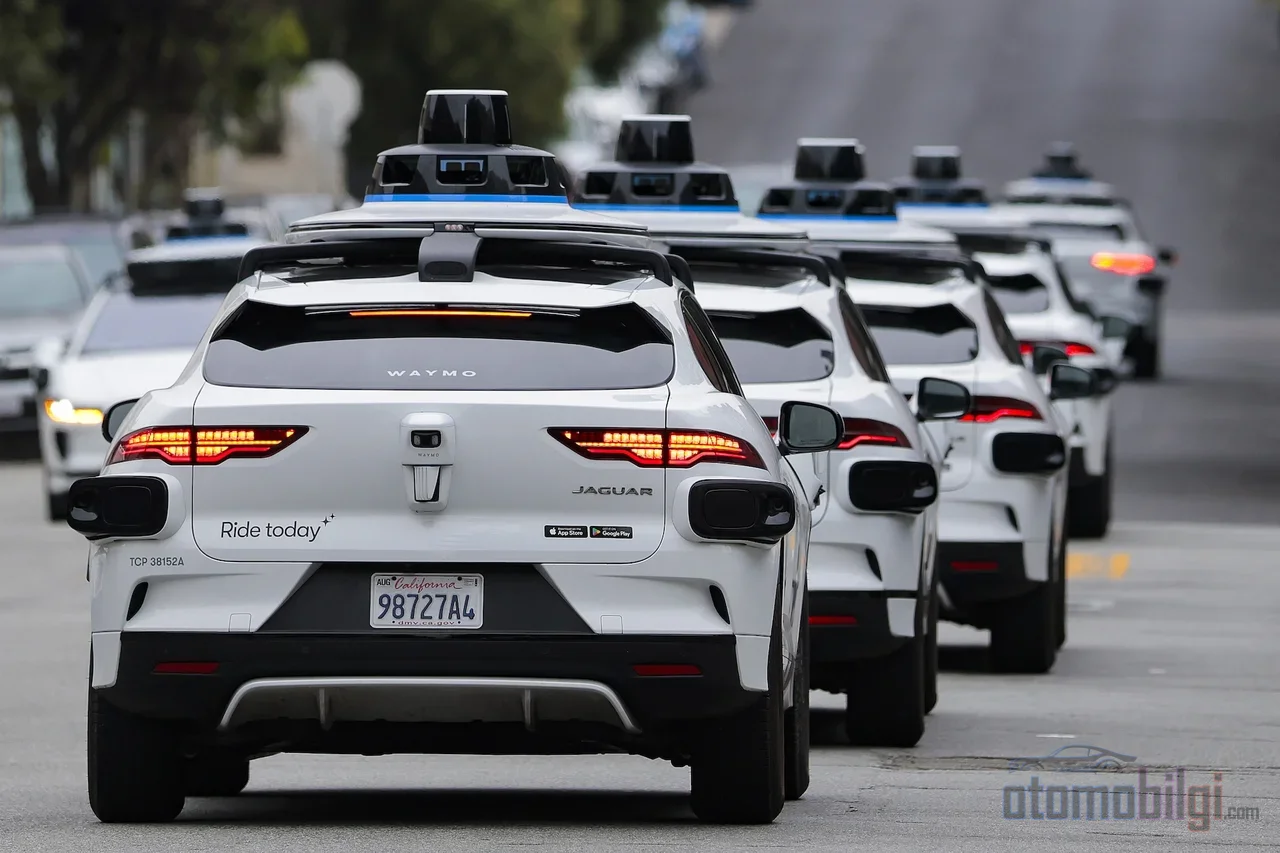
To understand autonomous car hacking, let's first clarify this: not every "autonomous" car is the same thing. ADAS systems like automatic emergency braking, adaptive cruise control, or lane keeping assist the driver; they do not replace the driver. Tesla's Autopilot and Full Self-Driving systems fall into this category; if you are behind the wheel, the responsibility is yours. By contrast, ADS, that is, fully automated driving systems, operate without human supervision under certain conditions - Waymo's driverless robotaxis are the best-known example of this class.
This distinction also matters for cybersecurity, because a car operates not only with its own controls but with every piece of information it receives from outside. Satellite signal, vehicle-to-vehicle communication, internet connection... Each one is a door. A door may be locked, but the door is still there.
How Is a Car Taken Over via the Internet? Real Cases
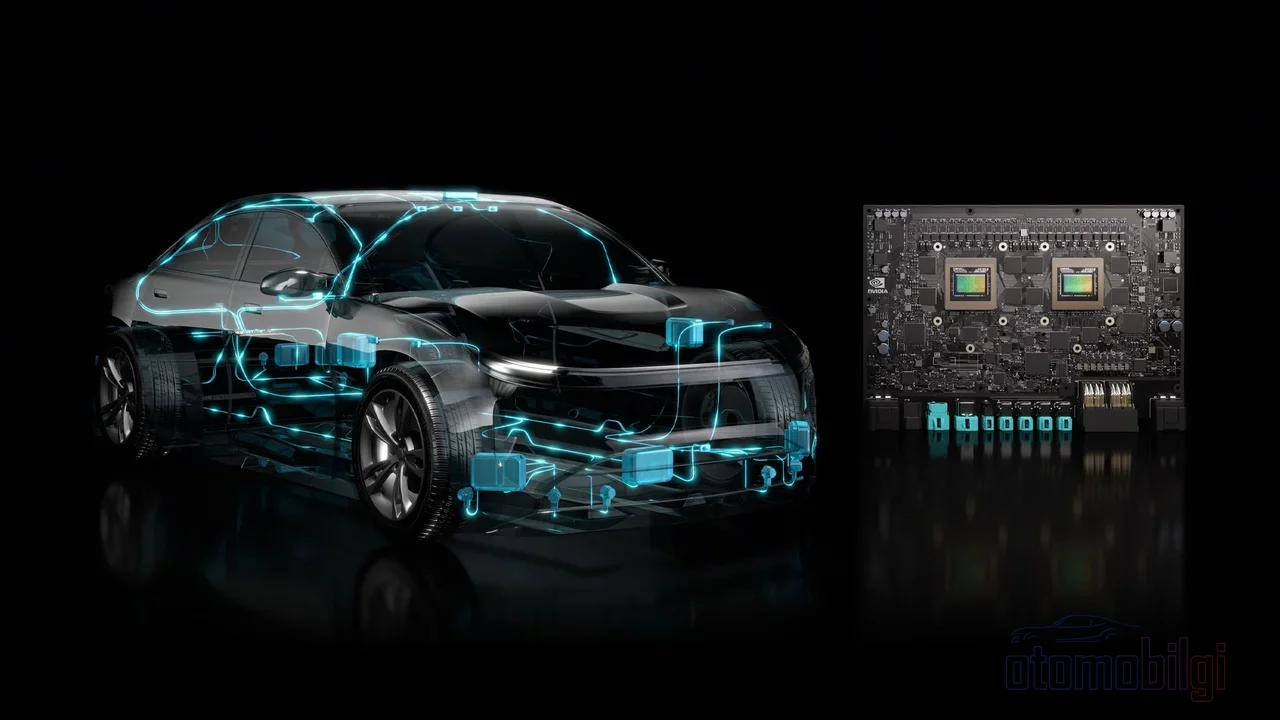
Let's talk about history, not theory. In 2011, researchers demonstrated that a car's basic functions could be taken over remotely with moderate expertise. In 2013, two security researchers broke into the computer systems of two popular models on sale using a laptop. These were perhaps laboratory shows, but they set the stage.
The real bomb went off in 2015: two researchers broke into a Jeep over the internet and remotely stopped the vehicle traveling at 70 mph (about 113 km/h) on a highway - with a journalist inside. That write-up is considered the birth moment of automotive cybersecurity, and the consequence was serious: the manufacturer in question recalled hundreds of thousands of vehicles. Around the same year, even the FBI issued a public warning that motor vehicles were becoming increasingly vulnerable to remote exploitation.
The story did not end in 2015. In January 2025, an incident came to light in which an ethical hacker discovered a remote access path through a brand's satellite-supported connected service. A security experiment conducted on an electric pickup also showed that the vehicle's remote access flow could be attempted to be imitated. So remote hacking is not a historical anecdote; it is a class of risk that continues to be tested today. The industry, for its part, is leaning on software updates and certified security management to manage these risks - we will get to that shortly.
Tricking the Sensors: Let's Not Call It Hacking... Let's Call It Spoiling the Game
This section is my favorite, because the attacks here target not the car's computer, but the car's eyes. A robotaxi can suddenly start behaving as if it were driving blindfolded. There are three main scenarios:
GPS Jamming and Spoofing
It's important not to confuse the two. Jamming means completely disrupting the GPS signal - the vehicle's location information becomes blurred, just like a radio losing its signal. Spoofing, on the other hand, is more cunning: by sending a fake GPS signal, you make the navigation system "think" it is in the wrong location. The system thinks it is working, but it is somewhere completely different. GNSS manufacturers are therefore developing protection layers against jamming and spoofing.
Injecting Fake Obstacles into LiDAR
LiDAR is that rotating roof unit that sprays out laser light and measures distance from the reflected light - the most familiar part of robotaxis. In 2015, a researcher used a device worth about 60 dollars to "show" an autonomous car fake vehicles, pedestrians, and walls. Subsequent academic studies made the picture even clearer: fake obstacle injection attacks can block the perception of the real vehicle ahead and lead to a collision; or conversely, they can place an imaginary car on an empty road, causing the system to stop unnecessarily. LiDAR's weakness is its vulnerability to jamming, because low-cost near-infrared sources can easily saturate the sensor.
Deceiving Artificial Intelligence Itself
Radar is not innocent either; there are evaluation studies showing that radar spoofing attacks affect perception systems. Even more interestingly, machine learning-based perception models are vulnerable to carefully crafted adversarial inputs - meaning carefully crafted interventions that look meaningless to the human eye can push the AI into misclassification. Comprehensive surveys examine the entire spectrum of these sensor-focused attacks and state that defense should not be a single solution, but layered.
V2X: When Vehicles Talk to Each Other, Who Is Listening to This Conversation?
V2X is an umbrella term covering the vehicle's communication with everything: vehicle-to-vehicle (V2V), vehicle-to-infrastructure (V2I), and even vehicle-to-portable devices like phones. Learning before you do that the car ahead of you at an intersection is braking is a great safety feature - but every broadcast message also opens a window for attack. Encryption alone is not enough.
V2X vulnerabilities can lead to unauthorized access, message tampering, privacy violations, and in the worst case, life-threatening risks. Worse still: a vulnerability in a single vehicle can spread to other vehicles, just like the flu in a school. V2X data can also be intercepted and altered. The International Telecommunication Union has published dedicated safety guidelines for V2X communication, and the ISO/SAE 21434 standard, which covers the core principles for vehicle cybersecurity, also encompasses this communication layer.
What Are Manufacturers Doing? Regulation and Safety by Design
The good news is this: this field is not a brilliant chaos; the rules are getting increasingly stricter. UN R155 is the first international regulation to make vehicle cybersecurity binding. It requires manufacturers to establish a certified Cybersecurity Management System that manages cyber risks throughout the vehicle's lifecycle - in other words, the era of "we sold the car, the rest is not our problem" is coming to an end. In the EU, it has been mandatory for all new vehicle types since July 2022. It is complemented by UN R156: which regulates requirements for the secure management of software updates.
The approach most strongly advocated by experts is security by design: security should not be patched onto the vehicle afterwards, but embedded from the very beginning of the design. If a vehicle is connected, the vehicle network must also be built to withstand attacks arising from that connectivity. There is movement on the privacy front as well; a five-year regulation banning the sharing of location and driver behavior data collected from vehicles with consumer reporting companies was finalized in January 2026.
OTA Updates: Weakness or Shield?
OTA, i.e. over-the-air software updates, is both the hero and the suspect of this story. The hero side is this: when a vulnerability is discovered, the manufacturer can send a patch within minutes without calling the vehicle in for service. After the 2015 Jeep incident, nobody wanted to queue up at dealerships - OTA fills exactly that gap. Security is also ensured through digital signing and cryptography; that is, it is possible to verify that an incoming update really comes from the manufacturer.
The suspect side is this: if the vehicle is constantly connected, the attacker's potential channel is constantly open too. Analyst warnings that increasing OTA use in the automotive industry raises vulnerability to attacks remain on the agenda in 2026 as well. So OTA is a shield, but it is not sufficient on its own; it only becomes meaningful when combined with signing, cryptography, and threat assessment.
So Are Robotaxi Accidents Cyberattacks? Let's Tell the Two Apart
The most common mistake when reading about this topic is to interpret every robotaxi accident as "hackers did it." The data does not say so. Driverless vehicle accidents recorded in Los Angeles County were 69 in 2024, 219 in 2025, and 186 so far in 2026; but more than 80% of these accidents involved no visible injuries, and most were low-speed, urban contact incidents. This increase is mainly due to the growing number of vehicles on the road. Accident records across California - 304 in 2024, exceeding 590 in 2025 - paint a similar picture.
The safety picture is not one-dimensional either: one robotaxi operator reported no accidents involving serious or fatal injuries over 67 million miles as of September 2026; an insurance study had also found an 88% reduction in material damage with these systems. But experts emphasize that these data reflect controlled operating zones and mild conditions, and it is too early to generalize. Cyberattacks, however, are a separate category in this picture: in known publicly documented cases, robotaxi accidents were not based on sensor or system hacks. Confusing the two leads to overlooking the real risks of both - there are two separate problems that need to be taken seriously.
The technology debate is also linked to cybersecurity: while one operator advocates a multi-sensor approach with lidar, another follows an "end-to-end" AI path relying entirely on cameras. There is not yet enough data on which architecture is more resilient against attacks - and this is an open question stemming precisely from the fact that the advantage of sensor fusion has not become clear here.
Conclusion: Should We Be Afraid, Or Just Stay Alert?
In my opinion, the latter. The concrete fact is this: remotely breaking into vehicles is possible, fooling sensors has been proven in experiments, but all of these are capabilities that emerged under controlled research conditions. In everyday life, there is no army of hackers following you; what exists are regulations that force the industry to make security mandatory from the design stage onward, certified systems, and continuous OTA patches. The question is not "can it be hacked," but "how quickly is it detected and closed when hacked." And that answer is in a much better place than in 2015.
Sources
- Researcher Hacks Self-driving Car Sensors
- On the Realism of LiDAR Spoofing Attacks against Autonomous Driving Vehicles
- Autonomous vehicle technology vulnerable to road object spoofing and vanishing attacks
- Overview of Sensing Attacks on Autonomous Vehicle Technologies
- A review of cyber attacks on sensors and perception systems in autonomous driving
- On the road to autonomous vehicles
- What is V2X Security?
- Security guidelines for vehicle-to-everything (V2X) communication
- Cyber security standards and issues in V2X communications
- As robotaxi accidents increase in L.A., the data reveal the safer driver
- New Swiss Re study: Waymo is safer than even the most experienced human drivers
- Waymo goes on offense ahead of Tesla's Cybercab launch
- Tesla and Waymo Crashes Raise Questions About Autonomous Vehicle Safety