Why Does Tesla Still Want a Driver While Waymo Roams the City on Its Own?
Share This Page
Waymo and Tesla approach autonomous driving through two completely opposite doors: Waymo is a Level 4 system operating driverless robotaxi services in lidar-mapped, geographically limited areas; Tesla is a software strategy distributing a Level 2 Full Self-Driving (Supervised) system that relies only on cameras, where the driver must be ready to intervene at any moment, to millions of cars. One is extremely safe in limited places, the other works everywhere but under supervision - and this difference is no coincidence; it is the very business model of the two companies.
Highlights
- Waymo performs 250,000 trips and 2 million miles of unsupervised autonomous driving per week.
- Driver intervention (takeover) is recorded in 24% of Tesla FSD drives.
- Waymo's 6th generation system carries 13 cameras, 4 lidars, 6 radars per vehicle; Tesla uses only 8 cameras. it uses.
- Tesla's system is legally Level 2: responsibility lies with the driver; at Waymo, it lies with the company.
- Mercedes has paused the Level 3 program of Drive Pilot; BMW has also backed away from the same path.
Let's First Determine Whose Car It Is: What Do the SAE Levels Tell Us?
When we say autonomous driving, a single thing is not meant. The SAE J3016 standard divides vehicles into six levels from 0 (fully manual) to 5 (fully autonomous). And the crucial point is this: which level you are at directly determines who is responsible in an accident.
Tesla FSD is officially Level 2, meaning an advanced driver assistance system. The person at the wheel must remain alert at all times and be ready to take over from their seat - and legal responsibility lies with them. Waymo, on the other hand, is Level 4: full autonomy in specific areas under specific conditions. In San Francisco, no one is at the wheel, and if something goes wrong, it is the company that is held accountable. Mercedes' Drive Pilot sits between the two worlds as Level 3: conditional automation - the system frees you in some situations, but you must take back the wheel when a warning comes.
These levels are sometimes criticized: FSD, as a Level 2 system, can actually drive better than some Level 3 and 4 systems; the level label does not give a complete picture of driving capability. But for the legal picture, it is still decisive - this classification is the only thing that moves someone up one rung of the ladder, shifting responsibility from the driver to the company.
Waymo's Path: Memorize the City First, Then Drive
Waymo's philosophy is like a student studying for an exam: first memorize the subject from beginning to end, then solve questions that never leave that subject. The vehicles operate only in three-dimensionally lidar-mapped, geographically limited areas - in the industry's terms, within the Operational Design Domain (ODD). Every traffic sign, intersection, lane, and speed limit is continuously mapped and updated.
On the sensor side, it is a fully armored fleet. The 6th generation system started fully autonomous operation in early 2026, carrying 13 cameras, 4 lidars, 6 radars carries; these numbers can vary depending on the vehicle platform. Lidar sends out millions of laser pulses and measures return times to generate point clouds - providing cameras with a physical redundancy layer at night and in poor visibility conditions. Waymo's co-CEO stands precisely at this point: he argues that multi-sensor is essential for safe full autonomy in conditions like dust and glare.
On the algorithm side, the work is serious too: structures like SW-Former, which performs three-dimensional object detection on the lidar point cloud, tracking models that predict the movements of traffic actors, and EMMA, which is increasingly evolving toward an end-to-end architecture, form the system's brain.
What about cost? The fleet cost, once about 250,000 dollars per vehicle, has today dropped to around 150,000 dollars ; the unit price of lidar has also fallen to 500-1,000 dollars . The fleet has grown to more than 2,000 vehicles . In other words, time is working in Waymo's favor - it started expensive and is getting cheaper.
Tesla's Path: First Millions of Teachers, Then Autonomy
Tesla's approach, on the other hand, is a completely opposite study tactic: instead of memorizing the question bank, learning from thousands of practice exams. There is neither radar nor lidar in the vehicle - only 8 cameras and 12 ultrasonic sensors. This is called "vision-only," that is, a vision-only philosophy. The Tesla camp's argument is simple: humans also drive with two eyes, and with sufficient processing power, cameras are enough.
On the software side, Tesla is far ahead. The multi-task Lane & Object HydraNet, the Occupancy Network that performs three-dimensional voxel extraction, and a deep learning-based neural network planner activated in 2024 - today the system operates entirely with an end-to-end architecture. Its main trump card is data: millions of vehicles on the roads continuously collect data, Trigger Classifiers capture interesting moments, and a training infrastructure called Dojo learns on top of this mountain. Tesla's robotaxi target is ambitious - more than 1,000 vehicles in the short term, a fleet exceeding 1 million by the end of 2026. However, some observations in the field also show that the fleet shrank for a while instead of growing; there is still a distance between goals and reality.
The Physical Limit of Cameras
The vision-only approach has one weakness that cannot be overcome with software: camera performance drops in fog, rain, snow, and storms. FSD's version 13 significantly improved night driving, but the physical limit of a system without a perception sensor remains the same. A striking test demonstrates this: while an FSD vehicle was fooled by a fake "road" image projected on a wall, the lidar-equipped vehicle stopped. The camera sees the image, while lidar measures that there is a wall there. Tesla's aim to drive even in unmapped areas (it settles for normal map services) provides freedom, but performance clearly weakens in areas it does not actually know.
Safety Record: Are the Numbers Really Comparable?
Looking at the current performance of the two approaches, the picture gets interesting:
| Criterion | Waymo | Tesla |
|---|---|---|
| Level | SAE 4 | SAE 2 |
| Sensor set | 13 cameras, 4 lidar, 6 radar (6th generation) | 8 cameras, 12 ultrasonic sensors |
| Unsupervised autonomous driving | 2 million miles per week | Zero |
| Disengagement frequency | One per roughly 9,793 miles (California 2024) | One per average of 213 miles on highways |
| Total accumulated road distance | Roughly 100 million miles (mostly autonomous) | Roughly 5 billion miles (mostly with drivers) |
But one caveat applies: these disengagement figures cannot be directly compared. The definition of "disengagement," the conditions, geography, and measurement method are completely different between the two companies. Rather than absolute values, the relative improvement shown under the same conditions is meaningful. Also, Waymo's figures come from crowded city streets while Tesla's largely come from highways - one should not compare apples to oranges.
Looking at the safety profile, Waymo paints a strong picture: per million miles, a 1.28 serious crash rate below that of human drivers; only 12-15% of reported incidents were found to be its fault - robotaxis are frequently rear-ended while stopped. On the other hand, the picture is not without cracks: in 2025, more than 590 Waymo robotaxi crashes were recorded in California, and the number is rising as the fleet grows. Although most are minor incidents without injuries, as the fleet grows, the growth in crashes seems inevitable. The public health perspective assessment from Johns Hopkins stands in the same place: early data shows it can reduce serious crashes, but more data is needed.
On the Tesla side, the robotaxi fleet in Texas has driven roughly 328,621 miles without crashes, but community analyses bring the crash rate per mile closer to Waymo's 2025 figure of 134,410 miles - meaning the gap has not closed. A side-by-side passenger test conducted in Austin also nicely summarizes the difference: while the Waymo app offers sensor visualization, Tesla Robotaxi is quieter, sometimes even more cautious than a human driver, and was roughly 25% cheaper than a similar Uber ride. Price is Tesla's quiet but real advantage.
Mercedes Drive Pilot: Why Did the Third Way Fall Behind?
In this picture, the often-forgotten third player is Mercedes. Drive Pilot was the first SAE Level 3 system approved in the US: it was offered on the 2024 EQS and S-Class with lidar, advanced cameras, GPS receivers, and a large sensor suite. With an update, it became the fastest certified Level 3 system in series production, rising to 95 km/h on German highways. That sounds like a victory, doesn't it?
Then 2026 came and the picture changed: Mercedes paused the Drive Pilot Level 3 program that had been offered since 2021 and, on the 2026 US-market S-Class left it to its own Level 2++ system. BMW also joined those abandoning Level 3. The lesson here is clear: the lidar-equipped, heavily certified, and expensive conditional automation approach is struggling to find traction in the market. An in-between solution - where the driver is neither fully free nor fully responsible - turned out to be the hardest option to explain to the customer.
Who Is at Fault When a Crash Happens? The Legal Picture
Liability is the real battlefield of the level war. At Level 2 the driver is responsible, at Level 4 the company is - and this difference produces very concrete consequences in the courts. In Miami, a jury found Tesla partially responsible and awarded $329 million in compensation and punitive damages; even for a Level 2 system, the jury's blaming the manufacturer shows how volatile the picture is. As the automotive world moves toward eye-off technology free from constant monitoring, the likelihood of the manufacturer being held responsible in the event of an accident also increases.
The regulatory side, meanwhile, is still catching up. California had not even given law enforcement the authority to issue basic traffic citations to autonomous vehicles until 2026; as of July 1, police can directly fine the manufacturer for violations. Utah, for its part, approved a legal framework in 2026 that includes separate causes of action and damage caps for autonomous vehicles. In other words, the law is chasing technology - and has not caught up yet.
The Market Is Growing But Nobody Knows the Number
Estimates of how much the robotaxi market will grow diverge sharply: one forecast projects the $1.27 billion market of 2026 to reach $96.3 billion by 2034, while another predicts $147 billion for 2033; yet another analysis sees a global market of roughly $415 billion by 2035, including a $48 billion US share. This wide range is actually the most honest signal: the field is still at an early stage, and predicting the future is, for now, somewhere between speculation and science.
Why Are the Two Strategies Not Following Each Other's Tracks?
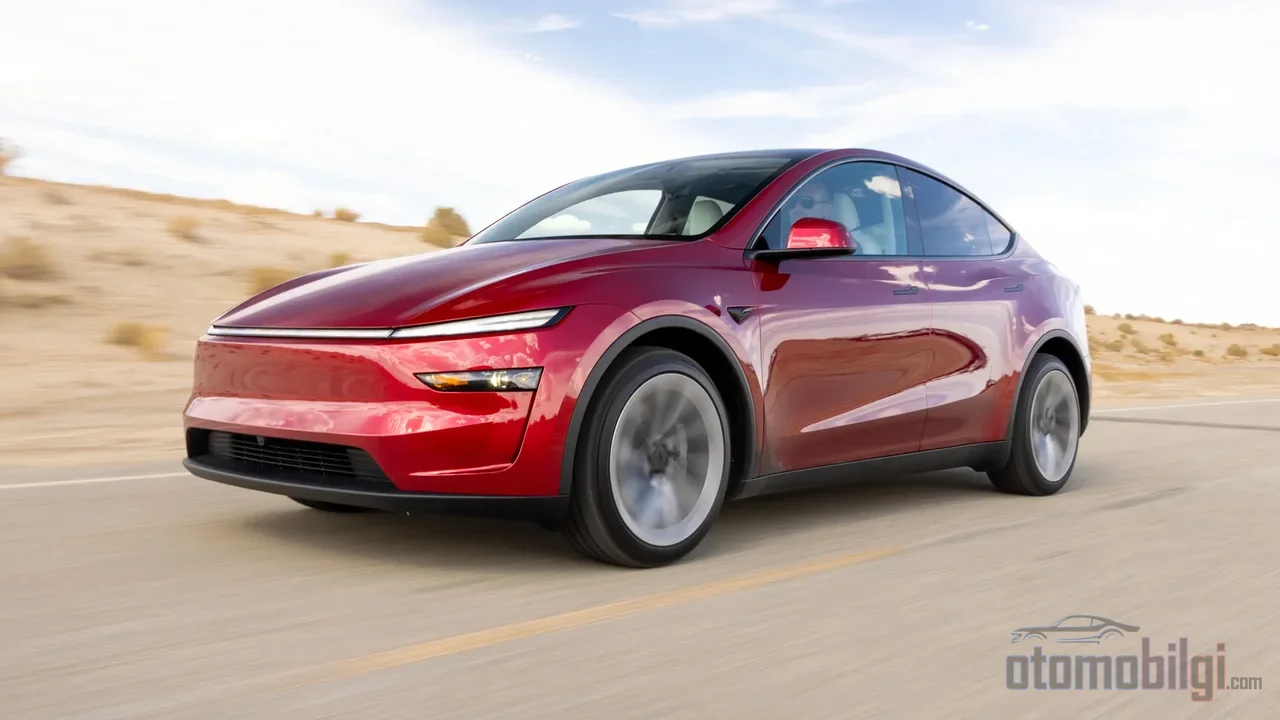
Perhaps this is the most curious question: Will Tesla go build a robotaxi fleet like Waymo, or will Waymo switch to cameras? The answer is no - because the two are actually selling different things. Tesla sells vehicles: collecting data from the millions of owners of its $25,000 cars and adding capabilities via software; every new vehicle is a new teacher for the system. Waymo, on the other hand, rents out a service: it operates in limited zones with expensive but safety-proven vehicles, and increases the number of zones as it grows. One is scaling horizontally (number of cars) - not vertically, but in depth (maturity per zone).
The sensor debate also doesn't end for the same reason. Musk's classic question - "if lidar conflicts with the camera, which signal do you trust?" - was met in engineering circles with Kalman filters and redundancy arguments: even if two sensors disagree, a third one acts as arbiter. Lidar prices dropping to 500-1,000 dollars also weakens the "lidar is expensive, that's why no" argument; however, Tesla having sold millions of "FSD capable" computers and brand perception don't make a turnaround easy. To sum up the day in one sentence: on the sensor side Waymo leads, on the algorithm and data side Tesla is ahead - and which one reaches Level 5 first depends on which one combines these two leads faster.
The Bottom Line
Waymo is currently walking on one distinct yet equally sensible path with passengers it actually carries without a driver, while Tesla walks the other with data flowing from millions of vehicles, even though it has yet to carry a single passenger without a driver. One deepens by prioritizing safety, the other spreads by prioritizing scale. My bet: the winner will likely be a mix of these two philosophies - regions mapped with cheap sensors, end-to-end algorithms learning from millions of vehicles. Which one would you bet on? See you in the comments!
Sources
- Tesla vs Waymo - Who is closer to Level 5 Autonomous Driving?
- Full Self-Driving (Supervised) - Tesla Support
- Self-Driving Car Technology for a Reliable Ride - Waymo
- Waymo vs Tesla: Two Ways to Build Self-Driving Cars
- The 6 Levels of Vehicle Autonomy Explained
- DRIVE PILOT 95 km/h - Mercedes-Benz Group
- Following Mercedes, BMW also abandons Level 3 automated driving
- As robotaxi accidents increase in L.A., the data reveal...
- The Safety Data on Autonomous Vehicles - Johns Hopkins
- Studying "Fault" In Robotaxi Crashes - Forbes
- Carmakers push toward 'eyes-off' driving - Reuters
- Self-Driving Cars: Liability, Current Legislation
- Robotaxis $400 Billion Market in 2035 - Goldman Sachs