When Will Cars With Body-Integrated Batteries Hit the Road?
Share This Page
Battery-body cars are electric vehicles that use a cell-to-pack, cell-to-chassis, or cell-to-body integration approach, meaning the battery cells are mounted directly into the vehicle's load-bearing structure rather than into a separate pack. This architecture promises to reduce weight and increase range, but in return it brings serious costs such as repairability and insurance expenses. Here lies that famous gap between the promise and the reality of mass production.
Highlights
- In conventional packs, the cell/pack mass ratio remains at 77% or below; with the BYD Blade, it is claimed that this ratio can rise to 84.5%.
- The BYD Blade Battery was introduced in March 2020; in the nail penetration test, the surface temperature stayed between 30-60°C .
- According to a claim attributed to Tesla, cell-to-body technology can provide approximately 10% weight reduction and a 14% increase in range .
- Tesla's structural pack has been described by experts as "zero repairability" ; even small scratches can lead to a total loss.
- Battery packs cost 10,000-20,000+ USD, which can reach up to half the price of the EV.
From Conventional Battery Pack to Structural Battery: What Exactly Is the Difference?
Think of it this way: in a classic electric car, the battery is a lidded box made up of cells. The cells are first placed into modules, and the modules into the pack. While the system works this way, each module can be managed independently, and a single faulty module can be replaced. That is the nice part. But each module has terminal plates, side plates, and connectors; all of these take up space and add unnecessary weight to the vehicle. It is like a box filled with packs that weigh more than the box itself.
The new approach strips away these intermediate layers one by one. Cell-to-pack (CTP) is the stage where modules are skipped entirely, and the cells are mounted directly into the pack. The numbers are quite telling: in a conventional pack, the gravimetric cell-to-pack ratio (GCTPR) is doomed to stay below 77%, and the volumetric ratio (VCTPR) typically below 50%, sometimes even below 40%. In the BYD Blade design, these ratios are claimed to reach 84.5% and 62.4% respectively.
The next step is even more radical: cell-to-chassis (CTC) or cell-to-body (CTB). Here, there is almost no separate box called a pack; the cells are integrated directly into the vehicle's body. In other words, the battery no longer just stores energy, it also becomes part of the skeleton that keeps the car upright. Much like the load-bearing walls of a building that also separate the rooms. At this point, the pack has to fulfill three separate structural functions at once; for example, carrying the vertical loads from passengers and cargo is one of them.
BYD Blade Battery: The Poster Child of the Structural Revolution?
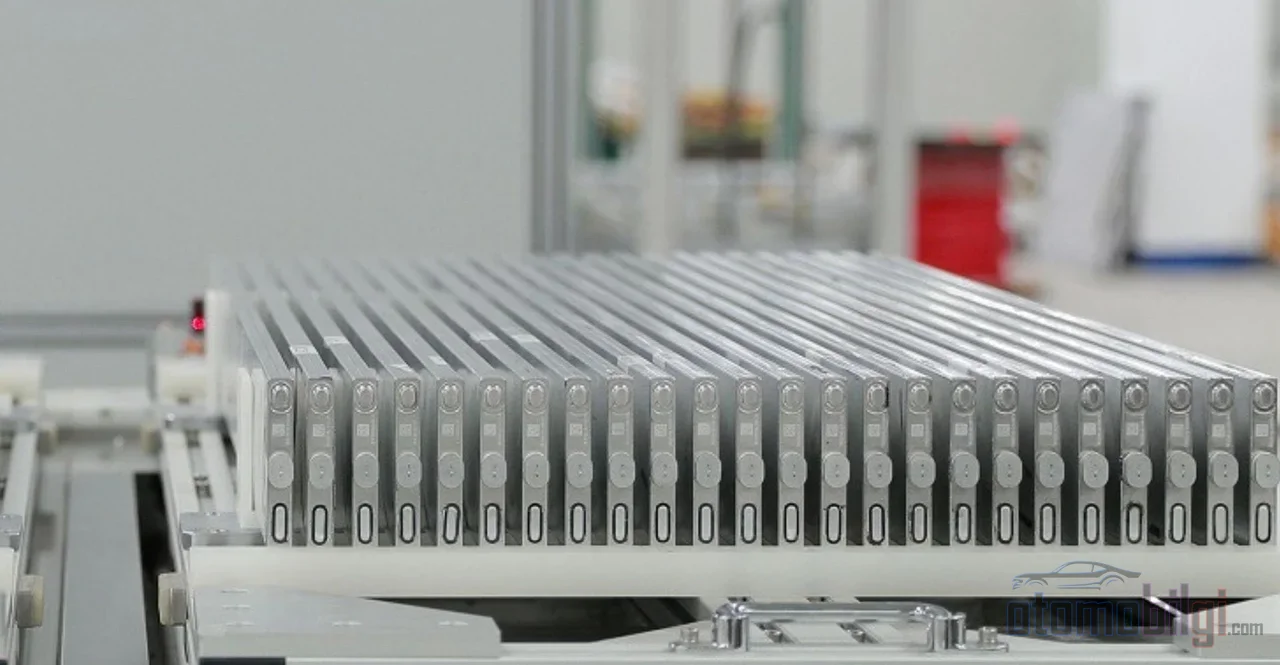
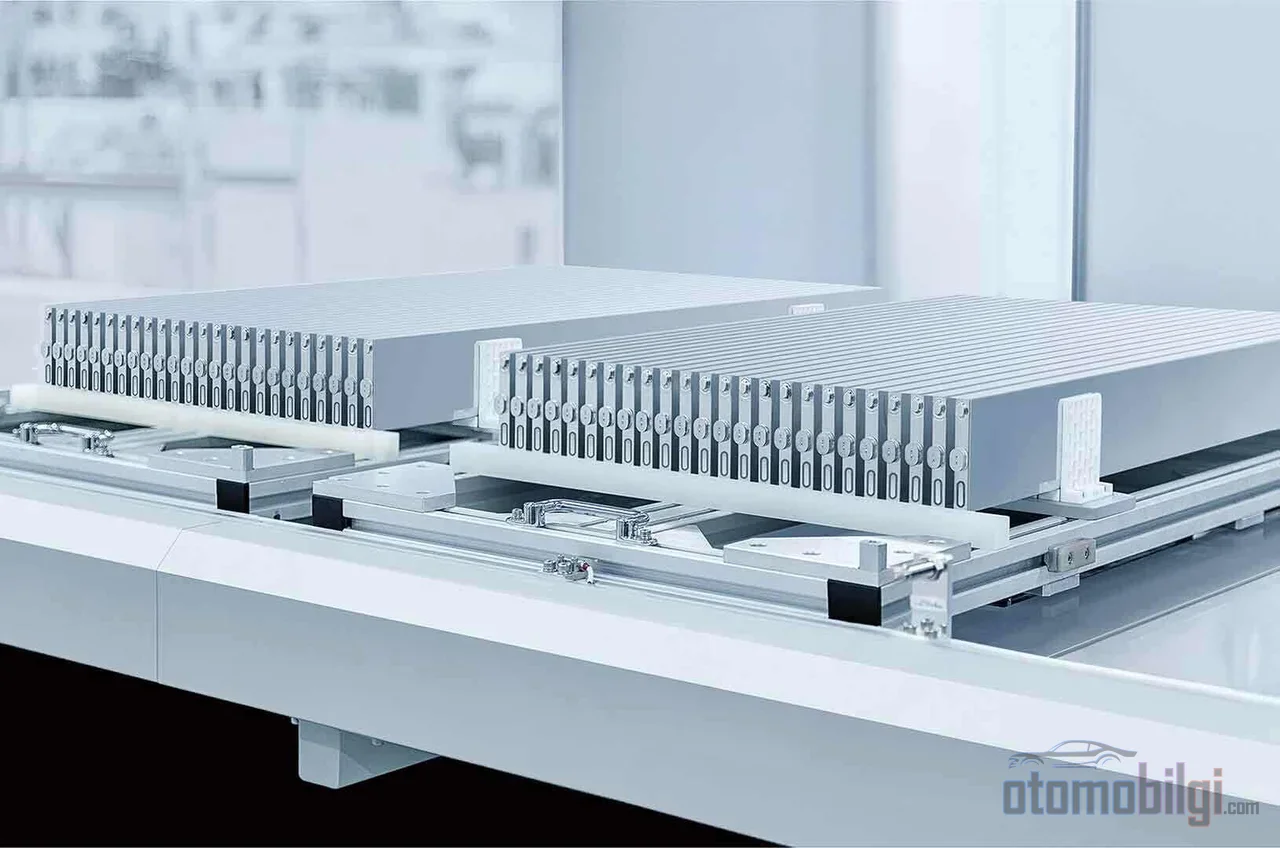
The most famous example in this field is undoubtedly the BYD Blade Battery. Developed by FinDreams Battery, a subsidiary of BYD, this battery was the first of its kind, introduced in March 2020's launch surprised everyone. The idea is simple but clever: making the cells long, thin "blades" instead of generic boxes and packing them tightly into the pack. The cell dimensions are also ambitious: only 13.5 mm on the Z axis, while on the X axis it 600-2500 mm can vary between.
What is promised on the safety side?
BYD's most heavily promoted topic is safety. Blade uses LFP chemistry and passes the nail penetration test, considered the "Everest" of thermal runaway tests: no smoke or flame in the test, and the cell surface stays in the 30-60°C range. As if that weren't enough, no fire or explosion occurs in the 300°C oven, crush, bend and 260% overcharge tests either. BYD also cites 27 years of battery history and over 3 million battery-equipped vehicles produced; in other words, this is not a laboratory toy, but a mass-production product.
How real are the gains?
Let's look at the numbers: in pack space utilization a 50% increase, in volumetric energy density 439-450 Wh/L (standard LFP packs are in the 120-230 Wh/L band, and NCM523 is in the 250-380 Wh/L band). A 40% reduction in secondary components, and a 20-30% drop in pack cost. Pack height drops by about 50 mm compared to modular LFP; this gives designers extra air underneath the vehicle. One reason for the BYD Han's is this thin underbody. When the cell length rises to about 0.233 945 mm, the roughly 10% increase in pack energy density is a continuation of the same logic.
| Feature | Traditional pack | Blade / CTP approach |
|---|---|---|
| Cell-to-pack mass ratio | 77% and below | Up to 84.5% |
| Volumetric cell-to-pack ratio | ~50% (sometimes below 40%) | Up to 62.4% |
| Volumetric energy density | 120-230 Wh/L (LFP) | 439-450 Wh/L |
| Pack height | Modular LFP reference | About 50 mm thinner |
| Secondary components | Excessive | 40% reduction |
Tesla 4680 and Structural Pack: Where Does the Promise Stand?
The claim attributed to Tesla is bold: cell-to-body technology can provide roughly a 10% weight reduction and a 14% range increase . So in theory everything is great. But looking at the middle of 2026, the picture is a bit more complicated. Tesla, on January 28, 2026, restarted Model Y pack production with its in-house 4680 cells and quietly brought back the 4680 in selected Model Y versions in February. It's like a classmate handing in their homework and then saying "actually my first attempt was better."
What's really interesting is the gap between targets and reality: Tesla's targets of 100 GWh for 2023 and 3,000 GWh there was a target. But as of 2026, these cells are being used in a single Model Y unit. On the agenda are 2026 plans for four new dry-cathode 4680 variants and the cell coded NC05 that will power the robotaxi; there is also news of a factory in the US that will produce 4680 and low-cost LFP cells for Tesla. So the direction is right, but the pace is slower than promised. Tesla's 4680 performance figures show quite clearly the gap between promise and production reality in the "make your own cell" strategy.
The overall picture points in a similar direction: global energy outlook reports confirm that CTP and CTC designs do genuinely increase total energy density by eliminating intermediate modules. So the promise is not entirely empty; it is just that the pace of implementation differs greatly among some manufacturers (and even within some manufacturers themselves).
Hidden Cost 1: The Repairability Crisis
Now let us move on to the less discussed side of the matter. The most painful point of the structural battery is repair. If the battery carries the structure, touching the battery means touching the car's skeleton. Even a minor parking accident can affect the pack. Tesla's structural pack has been described by experts as "zero repairability" ; even a small scratch can lead to the vehicle being written off. In many EVs there is no way to repair or assess a lightly damaged pack. Things are no different on the BYD side: because the cells are glued in place, damage to a single cell usually requires replacing the entire pack.
Let us also add a balancing note: there are views that the pack can be removed and reinstalled in 3-4 hours. And not everyone in the field agrees; for example, the second generation of Blade is mentioned in some assessments as offering easy scalability and repair advantages in terms of modularity. So it is not a one-sentence piece of bad news, but the traditional design's comfort of "remove the faulty module, install a new one" is seriously reduced in this architecture.
Hidden Cost 2: Insurance and Cost of Vehicle Ownership
Where the difficulty of repair directly hits your wallet is insurance. Battery packs 10,000-20,000+ USD; this can go up to 50% of the EV's price. Major structural or battery repairs 10,000 USD can exceed the threshold and EVs become more prone to total loss declarations. The lack of a repair standard pushes insurance premiums upward; repair costs run above those of internal combustion vehicles in comparisons. In short, a structural battery can make you happy at the dealership, but the story you tell at the table after an accident may be sadder. I think this is the finest proof that you should not look only at range when buying a car.
Promises Stuck on the Production Side and the Next Stops
Then there is the factory reality. With massive Blade-style cells, 500 mm roll-to-roll alignment with electrode rolls above that, lamination, and quality control are incredibly difficult. Production inconsistency can erode CTP's theoretical advantages; high quality control is a prerequisite of this architecture. So saying "make the cell long, reinforce the pack" is easy, manufacturing it is a completely different story.
Design constraints add to that: LFP's cold-weather performance is weak, and thermal management is trying to compensate for this shortcoming; efficiency losses occur at low temperatures. BYD's patent dependency also limits other manufacturers. On the other hand, the scene is moving: at Auto China 2026, the BYD Da Tang SUV was introduced on a 1,000-volt architecture. Solid state is also on the horizon; news is circulating that China is preparing to release its first solid-state EV battery standard, and some manufacturers ~1,000 km are announcing series production of solid-state batteries with range claims. But some of these announcements are still at the level of unverified claims; so it is wise to approach solid state with less conviction than structural batteries. Regarding the new generation of Blade, claims such as 30-40% energy density increase, 190-210 Wh/kg, 3,000+ cycles and 800V/480 kW charging are also in circulation; however, some of these rely on a single source and need to be read with caution.
So, Are Cars With a Battery as the Body Worth Buying?
My summary is this: structural battery is not a marketing tale; the energy density and cost gains are real, and global data supports this. On the BYD side, safety and volume gains are concrete, while on the Tesla side, production pace is behind targets. In return, real bills are being paid in terms of repairability, insurance, and ownership costs. My question to you is: would you want a design that carries every kWh in your car more efficiently but ties its fate to a single piece in a minor accident, or a battery that is a bit heavier but can be disassembled and repaired? The answer will probably become clearer in 2027 when we look at insurance differences.
Sources
- BYD's revolutionary Blade Battery: all you need to know
- The Next-Generation Battery Pack Design: from the BYD Blade Cell to Module-Free Battery Pack
- BYD Blade Battery - Wikipedia
- BYD Blade Battery: The Advanced and Safe Battery Technology Explained
- Tesla's 4680 battery cells are underperforming - Electrek
- Tesla 4680 Battery Cell Production Is 'Getting Good'
- Tesla Brings the 4680 Battery Back to Model Y
- Tesla plans four new batteries in 2026 - Reuters
- Electric vehicle batteries - IEA Global EV Outlook 2026
- A review of cell-to-body (CTB) battery-structure integration - Frontiers in Mechanical Engineering
- Scratched EV battery? Your insurer may have to junk the whole car - Reuters
- EV battery repair hurdles may inflate insurance premiums - Green Car Reports
- EV Battery Damage Can Total Your Car - Total Loss Appraisals
- Lightly Damaged Battery? Your Insurer Might Total Your EV - KBB
- BYD Blade Gen 2 - IDTechEx
- Cell-to-Chassis Architecture in EVs - eMobility Engineering
- EV Battery Pack Designs: From Modules to Body-Integrated Power
- Cell-to-Chassis Battery Market Research Report - Dataintelo
- Auto China 2026 Deep-Dive - Caresoft Global
- Solid-state EV battery standard in China - Electrek
- How Structural Repairs Differ on Electric Vehicles - Center Collision