Do Fuel Loyalty Programs Save You Money?
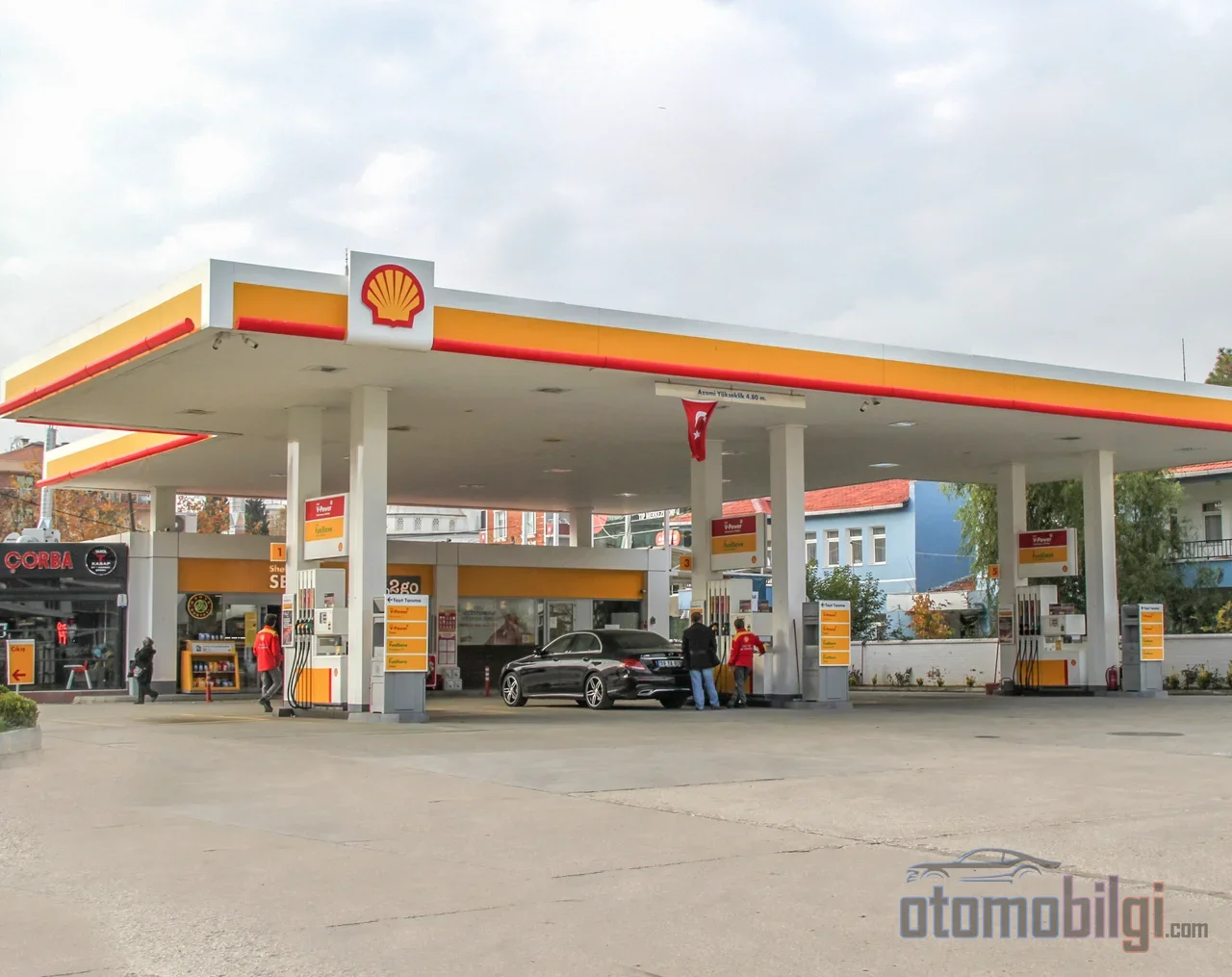
A driver leaving hundreds of liras at the fuel pump every month naturally has a question pop into their head: how much does this station's loyalty card, or the points in this mobile app, actually return in liras? Some drivers think they are accumulating points to fill the tank for free, while others, quite the opposite, don't even want to hear the names of these programs. The truth lies somewhere in between, but not close to either. The purpose of this article is neither to advertise any brand nor to repeat today's per-liter price; it is to enable you to apply the mathematics of the loyalty program to your own consumption and decide for yourself whether it is worth it or not.
To evaluate a program, knowing three things is enough: how many liras a point unit is worth, how the difference between discounted and regular liters translates into cost per kilometer, and what the hidden conditions of the membership take from you and what they give you. Once you can set up these three calculations, no campaign text written in advertising language can mislead you.
Who is the loyalty program loyal to?
Let's clarify from the start: the primary purpose of fuel loyalty programs is not to put money back into the driver's pocket. The industry is reviving the era of loyalty and promotions at stations in 2026; the expectation of distribution companies from these systems is clearly customer loyalty. In other words, the program's design is built on locking you into a brand's station and preventing you from going to the competitor's pump. This is not a bad thing, but it should stay in a corner of your mind while doing the math: the primary winner of the system is the party operating the chain.
So what about the driver's side? The programs of the widespread chains in Türkiye are mechanically similar to one another. In Petrol Ofisi's Positive Card application, you register your license plate in the mobile app; after the first fuel purchase, the plate is verified once, and points are automatically deducted with every purchase made with the registered vehicle. In Opet's Blue Program, a blue chip has been accumulating on fuel and market purchases since 2022; as of early 2025, your membership tier is re-determined according to the chip you accumulated in the last 90 days. At TotalEnergies Club, you tell the attendant the code or phone number you got from the app at the pump; GO Card also earns points on every fuel and autogas purchase. For those who don't want to carry a card, plate registration is the easiest way.
Highlights
- Even Opet's highest tier, Ultra, returns only 0.15% of the purchase as points.
- At TotalEnergies, 1 point = 0.01 TL; no comparison can be made without converting the point unit into liras.
- Due to an EPDK decision, fuel points can only be spent at the brand's own stations and only on fuel.
- Discounts in bank and corporate agreements go up to 4% to 15%, but most are business-focused or spending-threshold-based.
Converting the point unit into liras: the fundamental mathematics of the matter
The most common mistake in this business is thinking that the number of points is real money. Fifty thousand points sounds big; but the points coefficient announced by the distribution company shows that on a fuel purchase of nearly a hundred liras, what you earn is measured in kuruş. TotalEnergies states this clearly with an exact figure in its official information: 1 Fuel Point = 0.01 TL. So five thousand points means fifty liras. No points balance counts toward a calculation unless you know the coefficient.
The percentage-based example is more striking. According to Opet's own official rates, when buying gasoline and motorin, a Basic member earns fuel points at a rate of 0.07%, a Full member at 0.10%, and an Ultra member at 0.15%; on autogas the rate is 0.1%. Let's make it concrete: a Basic member buying 100 TL of gasoline earns points worth 0.10 TL, a Full member 0.15 TL, and an Ultra member 0.20 TL. During campaign periods there is also an upper cap on points earning: in three-month periods, up to a shopping amount of 7,500 TL for Basic membership, 12,500 TL for Full, and 25,000 TL for Ultra. These figures, which look small at a glance, shrink even further for a low-volume driver: since the tier is determined by spending over the last 90 days, a driver who buys little fuel stays at the lowest rate, namely 0.07%.
The conclusion to be drawn here is this: loyalty points are not a discount, but a very small cashback. When you place them side by side with a bank discount of up to fifteen percent, the difference between them is tens of times larger. We will make this comparison in detail later in the article.
Converting the discounted liter into a cost per kilometer
The lasting way to measure the real value of these programs is to talk about kilometers, not liters. For this, you first need to know your vehicle's real consumption. The method is simple: to find consumption per 100 kilometers, you divide the liters spent by the kilometers traveled and multiply by 100. For example, a vehicle burning 24 liters over 400 kilometers consumes 6.0 L/100 km. The most reliable measurement is the full-tank method: fill the tank completely and note what you paid, then at the next fill-up divide the kilometers covered by the total spending. This way you find both your consumption and your cost per kilometer in a single sitting.
The fuel cost per kilometer is the product of the liter price and the consumption value; or it is found by dividing the total fuel expense by the kilometers covered. Now we tie this formula to the mathematics of discounts. In the distribution sector, the power of a per-liter discount is seen in fleet accounts: a fleet buying 20,000 liters of motorin a month creates a 50,000 TL monthly difference with an advantage of 2.50 TL per liter. The same logic scales down to the individual driver. Suppose your vehicle burns 6.0 L/100 km and an agreement gives you a certain kuruş advantage per liter: your gain per 100 kilometers is six times the advantage amount. The savings per kilometer, in turn, is the liter advantage multiplied by your consumption value. Once you set up this multiplication, you can convert every campaign you come across to a per-kilometer basis in seconds.
The same discipline extends to driving habits as well. It is a known fact that consumption increases at high speeds, and that even without changing driving style, savings can be achieved when maintenance is performed on a vehicle whose periodic maintenance has been neglected. But that is not the road this article is about; here we measure what can be gained on paper, without touching your driving habits.
The invisible walls of points: spending restrictions and validity
The elements that distort the point calculation are often not the earn rate, but the spending conditions. In Türkiye, the most important of these conditions comes from legislation: Under EPDK's December 2010 decision, fuel points earned from February 2011 onwards can only be used at that brand's stations and only for fuel purchases. On the Opet side, the restriction goes one step further: there is no cross-spending between point types. You can only spend the points you earn on LPG on LPG, and the points you earn on gasoline and diesel only on gasoline and diesel. You cannot use fuel points for grocery shopping or anywhere other than fuel.
The other conditions to follow in practice are:
- Points have an expiration date; at Opet, the period varies according to membership level.
- Points cannot be spent without the card or phone being activated; the activation SMS is charged through the operator's tariff.
- Program terms can be changed without prior notice, the program can be suspended, membership can be cancelled, and fees may be charged. These are explicit provisions found in the companies' own contract texts.
There is also a psychological side. Sticking to a single brand to accumulate points often means giving up a concrete per-liter price difference you could see at a competing station nearby. If you multiply the liter difference by your actual consumption and reduce it to kilometers, the opportunity cost of loyalty emerges. Let us add that the Opet Card is not a credit card, that it awards points on cash payments as well, and that it operates independently of credit card points; this distinction matters for those who do not want to carry a card.
Loyalty points or a bank discount?
Let us run the comparison on two fronts. The first front is station loyalty programs: refund rates, as we have seen, are in the 0.07% to 0.15% band. The second front is bank and corporate agreements: here things change considerably. Credit cards designed for businesses can offer discounts of up to 15% at all stations; fuel management systems for SMEs provide advantages starting from 4% at Petrol Ofisi stations. On the individual side, banks' fuel campaigns come periodically in the form of extra installments or extra points; one example where a campaign's discount rate reached 9% but the advantage only kicked in on the fifth purchase sums up the logic of conditional gains.
The reason for the difference is simple: station points are unconditional on every purchase but very small; bank discounts are large but usually business-oriented or tied to a spending threshold. Most of the big-number point giveaway campaigns circulating on social media also fall into this second group: they include a minimum spending amount, a time limit, and a one-time gain. They are not lasting savings; they are promotions. When making a decision, the criterion is still the same formula: find the benefit's per-liter equivalent, convert it to kilometers with your own consumption, and consider the real cost of the conditions (threshold, order, duration).
How do you set up your own calculation?
Let's give you a method instead of advice. A four-step test works for every program and in every period:
- Determine your monthly fuel spending using the full-tank method; note both the liters and the amount.
- Find the program's point coefficient and convert your one-month earnings into liras. You can use the 0.07% to 0.15% band as a benchmark.
- Calculate the per-liter equivalent of a bank campaign or per-liter discount and multiply it by your consumption; reduce it to the cost per kilometer.
- Take into account the points' expiration date, the activation requirement, and the unilateral change clause; points that cannot be spent are points never earned.
The result: yes, but only knowingly
Let's answer the question directly: fuel loyalty programs do not by themselves provide meaningful savings; when a rebate below one percent is converted to the cost per kilometer, it turns into a difference of cents. Still, they are not free: if you become a member in five minutes by registering your license plate and are already tying your vehicle to a single brand, it does no harm to collect the small rebates accumulated with each purchase. The real big gain lies not in loyalty points, but in per-liter discounts whose conditions are well read and in bank agreements. In the past, a promotional item given at the station was counted and the prices of two neighboring stations were compared; today you enter your vehicle's license plate into the app, but the one doing the math is still you. Accumulate points, but always know what kind of accumulation you are pursuing.