How Much Do HGS Toll Charges Affect Ownership Costs?

If you are one of the few who sit down and calculate their monthly vehicle budget from start to finish, your table most likely includes lines for fuel, insurance, annual motor vehicle tax, and maintenance. These are the backbone of the calculation, leaving no room for debate. But if you cross the bridge every morning with your car, or take an intercity trip on the highway twice a month, the item that inflates the budget in the most insidious way is in none of these lines: HGS toll charges. This expense, collected in small amounts at gate after gate, seems insignificant when looked at individually; but when totalled at the end of the year, it approaches many drivers' monthly fuel bill. More importantly, in most common cost-of-ownership calculations this item is either completely absent or gets mixed into fuel and disappears. The purpose of this article is to show you where to place the toll charge in your calculation, how to measure it, and how to tie it to your budget.
A Brief Reminder About the HGS System: How Does It Work?
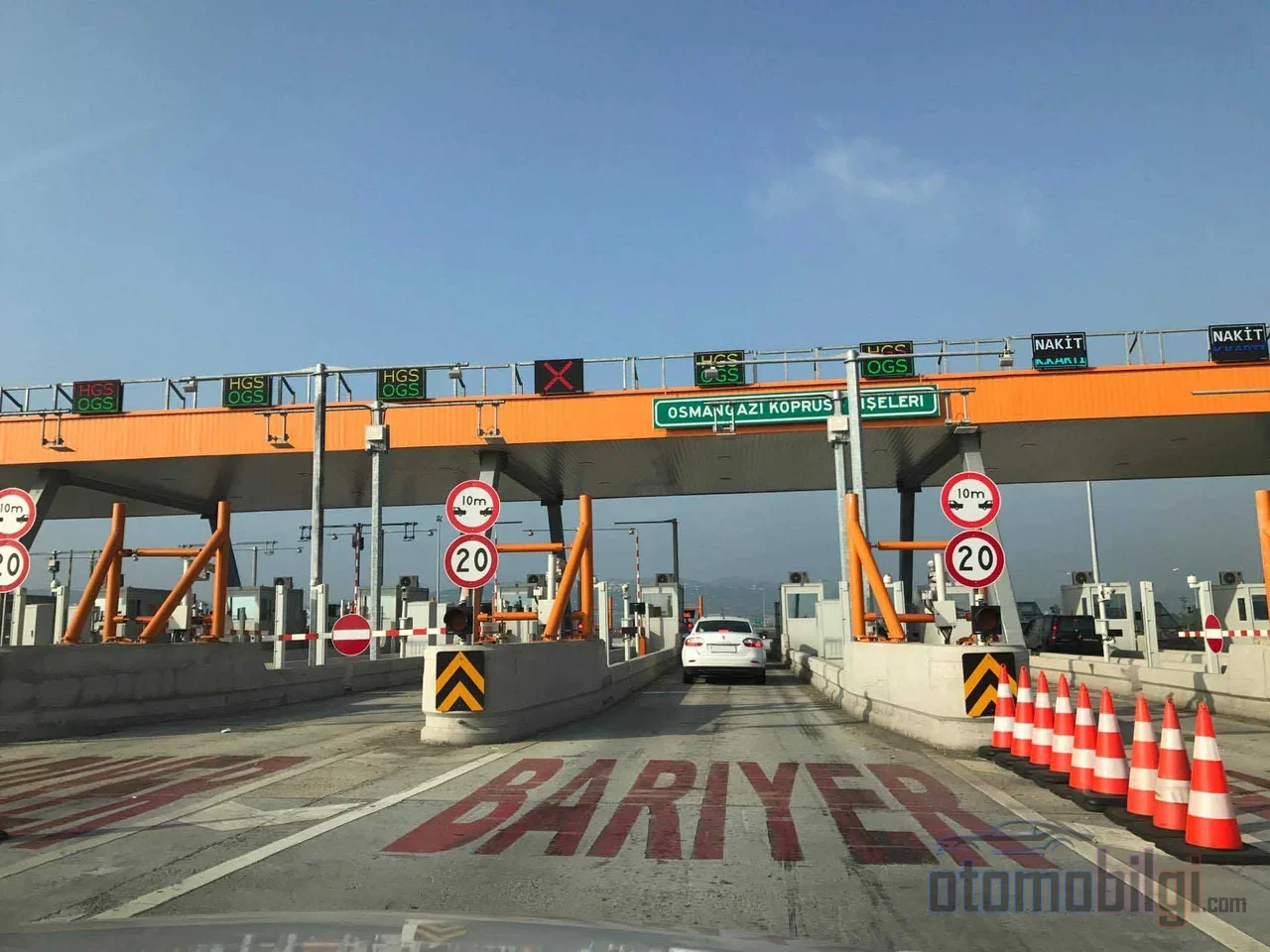
The Fast Pass System (HGS) is an electronic, prepaid collection system that allows payment at toll booths without stopping at toll highways, bridges, and tunnels. Applications are made through PTT offices, banks, and authorized sales points; for individual applications, an ID and the vehicle registration certificate are sufficient. The product comes in two types: a sticker attached to the windshield and a card that offers carrying convenience.
Two details directly concern the cost side. First, the system works through a single account assigned to the license plate; the sticker or card cannot be used on another vehicle. The vehicle class is written on the sticker and the toll charge is priced according to this class. Second, the sticker is attached slightly below the rearview mirror and becomes unusable once it is removed from its place; in vehicles with metallized glass, it must be positioned in the black dotted area behind the mirror. So when you change vehicles, this item requires a new setup from scratch; if the vehicle is sold, the sticker is cancelled at PTT, and after a certain verification process the balance is transferred to a new product or refunded.
Why Is the Toll Charge a Variable Cost?
Dividing ownership costs into two is the most solid framework of budget planning. Fixed costs are the items you pay whether you use the vehicle or not: annual motor vehicle tax, comprehensive and traffic insurance, periodic technical inspection intervals, and the depreciation of a stationary vehicle. Variable costs, on the other hand, grow as the wheels turn: fuel, tires, maintenance, parking. If you keep the vehicle in the garage all week, variable items drop to nearly zero; fixed items never drop.
The HGS toll charge, in this distinction, is a completely variable, usage-based item, and moreover its variability is uninterrupted: if one month you only use toll-free urban roads, it is zero; if you set off on a 15-day highway-heavy vacation, it makes a sudden jump. It is as sensitive to usage as fuel, but its distribution is more uneven; because fuel is burned at every kilometer, while the toll charge only arises when you enter a tolled route. Covering the same distance via state roads can eliminate this item entirely. we'll cover how to do the comparison below.
Highlights
- The HGS toll should be treated as a fully variable item in the cost of ownership.
- The fee is the sum of the toll booths along the route; vehicle class and the number of booths are the two determining variables.
- In most common monthly expense formulas, the toll item does not appear at all.
- If the balance is insufficient, a penalty arises; if a top-up is made within 15 days, the passage is counted as normal.
- Tariffs are updated periodically; when calculating, the current tariff must be verified from an official source.
How the Toll Is Calculated: Booth-by-Booth Method
The HGS fee is not a single figure; it is the total of the fees for every highway and bridge booth on the route. That's why a quick method is needed for an accurate calculation. The steps are as follows:
- Map out the actual road route; work on the road you will actually use, not the distance as the crow flies.
- List the toll booths on the route one by one; including entry and exit points.
- Price each booth according to your vehicle's class.
- Add the total to the expense table as an item separate from fuel.
The last step looks simple, but that's where the trick of this job lies. Mixing the booth fee into the same line as fuel is a common mistake that undermines transparency. Fuel depends on the vehicle's consumption and mileage; the toll, on the other hand, depends on your route choice. Keeping the two separate gives you clear comparison material when you need to choose between a highway and a state road.
Rates are updated periodically; fees change depending on factors such as road construction and maintenance costs, usage impact by vehicle class, inflation and exchange rates. Therefore, calculating once and shelving it is not enough; when renewing your annual budget, you need to work with the current tariff. For an exact figure, the most reliable way is to consult the official tariffs of the General Directorate of Highways.
Where Does HGS Fit in the Cost of Ownership Table?
The common monthly expense formula is set up like this: fuel, loan installment, and annual items divided by twelve; that is, the monthly share of insurance, maintenance, inspection, MTV and parking. In most examples of this formula, there is no toll line. The finding is striking: some vehicle owners skip bridge and highway usage entirely when calculating their total monthly expenses. It is the same on the fleet management side; toll system expenses are counted among the most commonly overlooked items, and they only become visible in professional total cost of ownership calculations when added to the fuel line. One structuring approach, however, explicitly lists bridge and highway usage under a separate heading, alongside usage expenses like parking and washing; this is the most accurate placement for individual calculations as well.
| Item | Cost Type | Position Under HGS |
|---|---|---|
| Legal payments up to MTV, insurance and inspection | Fixed | Independent of the toll; paid even if you don't use it |
| Fuel | Variable | Depends on mileage; affected by route preference |
| Maintenance, tires, parking | Variable | Increases with use |
| Bridge and highway toll charges | Variable | Incurred only when toll routes are used, should be tracked separately from fuel |
| Depreciation (loss of value) | Fixed | Largely independent of how the vehicle is used |
The practical conclusion from the table is this: The HGS line item is the most route-sensitive of the variable expenses. There is nothing you can do about the fixed items; you can influence some of the variable items only by changing your lifestyle. Tolls, however, are one of the rare expenses that can be reduced to zero with a single route choice.
City and Intercity Use: How Does the Budget Change?
The weight of tolls changes drastically depending on how you use the vehicle. in other words, the automatic top-up limit is a natural part of budget planning. But if a bridge or a toll tunnel is used for the daily commute, the item becomes a regular expense that accumulates every working day; when weekends are added, the monthly amount is clearly above what most drivers estimate. Looking at the annual total, the difference between a regular bridge user and a driver who never uses one can rival the differences in insurance premiums.
In intercity use the picture is different but the logic is the same: on long highway routes the number of toll booths increases, and the charge scales roughly with distance. For a driver who makes a long trip a few times a year, the item shows a seasonal spike; for a driver who hits the road every weekend, it becomes a fixed annual expense. Therefore, when planning a toll budget, the healthiest method is to first define your own usage profile, then work out the number of tolls in a typical month and multiply by twelve. When giving instructions for balance top-ups, it is also recommended that the minimum top-up amount be set according to this frequency of use; that is, the automatic top-up limit is a natural part of budget planning. When the balance approaches the minimum limit, the account goes onto the gray list, and if it drops below, onto the black list; a top-up removes it from the list.
The Penalty Mechanism: How to Prevent Budget-Disrupting Surprises?
The toll line item also has a flip side: passes made with insufficient balance. The toll is attempted to be collected from the HGS account within a 15-day period after the pass; if sufficient balance is loaded within this period, the pass is considered normal and no penalty fee is paid. If the period expires, a violation occurs; for unpaid bridge crossings, additional liability at multiples of the normal fee may come into play. Violations can be viewed through e-Devlet or the Highway Authority's toll inquiry channels. Passes without a transponder or with errors are penalized in a similar way.
In terms of budget, the meaning of this is clear: a driver who tracks the toll in the variable cost table also manages the balance consciously and effectively eliminates the risk of penalties. The automatic top-up instruction ensures that the selected amount is loaded from the linked account when the balance falls below a certain limit; if the top-up fails, the user is notified via SMS. A penalty should not disrupt the cost calculation as a unplanned single item.
Highway or State Road: Setting Up the Comparison Correctly
This is one of the most frequently asked questions by drivers, and the answer is given through a three-way comparison: toll fee, fuel difference and time difference. The highway is usually a route covered in less time and often with less fuel; in return, a toll fee is paid. The state road eliminates the toll fee, but distance, time and consumption may increase; passing through city centers also reduces driving comfort. In the long run, considering the highway expensive by looking only at the toll fee means overlooking the fuel and time differences. The correct approach is to calculate all three items separately for both routes and compare the totals.
The result of the calculation also changes depending on frequency of use. For a driver who rarely travels, the comfort of the highway may justify the toll fee; for a driver who uses the same route every week, the accumulation of small differences throughout the year is decisive.
Conclusion: This Is the Item You Should Add to Your Calculation
The direct answer to the question is this: The HGS toll fee enters the cost of ownership as an usage-based, fully variable item; its weight varies from zero to the level of a regular monthly expense, depending only on how much toll road you use. For a city user without tolls, this item is negligible; for a daily bridge user or a driver who frequently travels between cities, it can rise to the same league as insurance and maintenance in the annual total.
The practical advice is summed up in three points: track the toll fee in a separate line from fuel; set the automatic top-up limit according to your own crossing frequency and keep the penalty period (15 days) in your calendar; since tariffs are updated periodically, recalculate this item with the current official tariff in the annual budget renewal. The conviction of someone who has been making these calculations for thirty years is clear: the real trap in the cost of ownership is not the big items, but the small items that are systematically forgotten. HGS comes first among them.