Do Rear Seat Screens Really Add Value to Journeys?
Share This Page
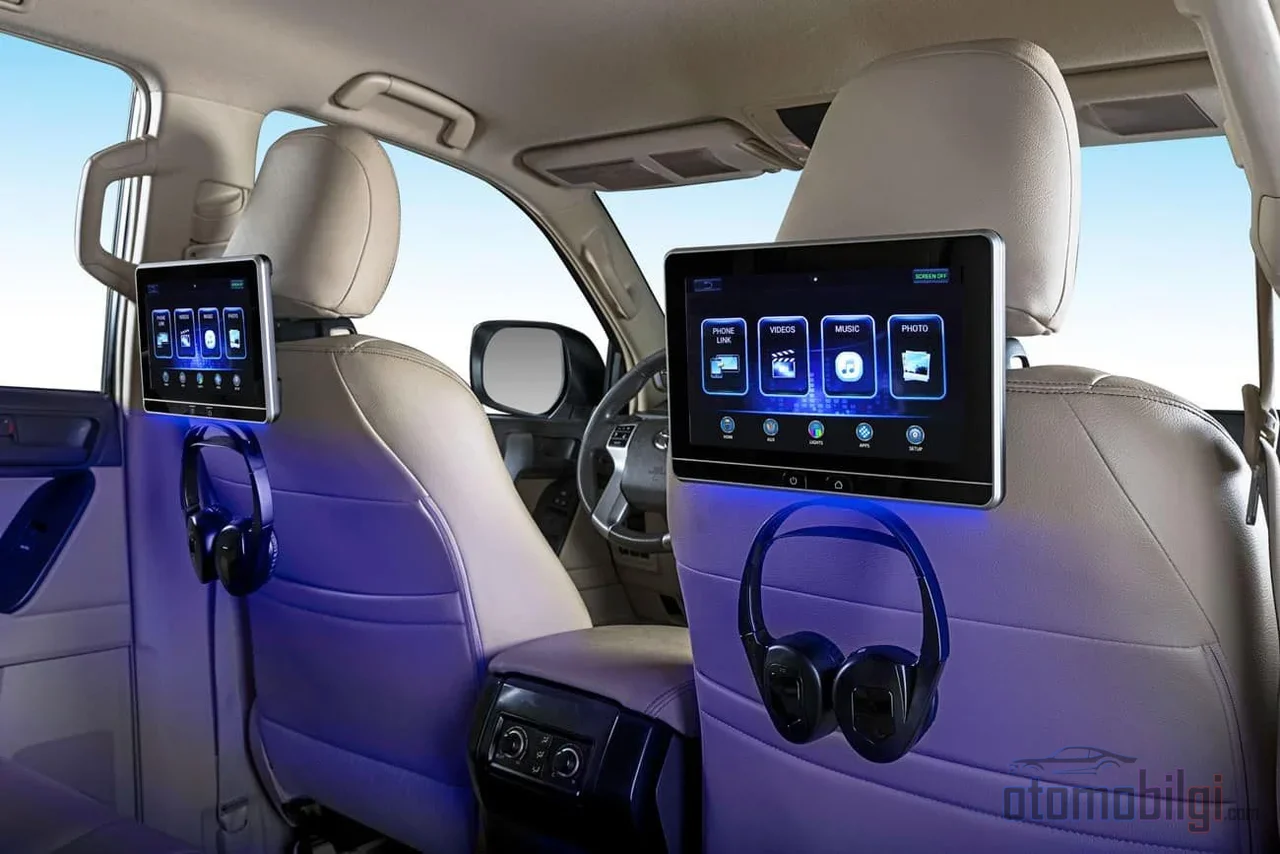
Rear seat entertainment screens (RSE) are screen systems mounted behind the front seat headrests or on the ceiling, offering rear passengers movies, series, and music. They are most often entirely independent hardware from the front console: they run their own apps, send their own audio to wireless headphones, and take care of entertainment throughout the journey without disturbing you or the passengers. Whether they truly add value depends entirely on how you use your vehicle and your travel habits.
Highlights
- Screen sizes typically range from 7 to 15.6 inches; 10 inches is the most common choice.
- Higher-end models run on Android and can directly access apps like Netflix, YouTube, and Disney+.
- Factory systems start at $1,400 and can exceed $5,000 in luxury vehicles.
- Aftermarket solutions are available starting from $300 for a single screen.
- In 2026, these systems are becoming widespread in models like the Range Rover, Cadillac Escalade, Jeep Grand Wagoneer, and Kia Carnival.
How exactly does a rear seat entertainment screen work?
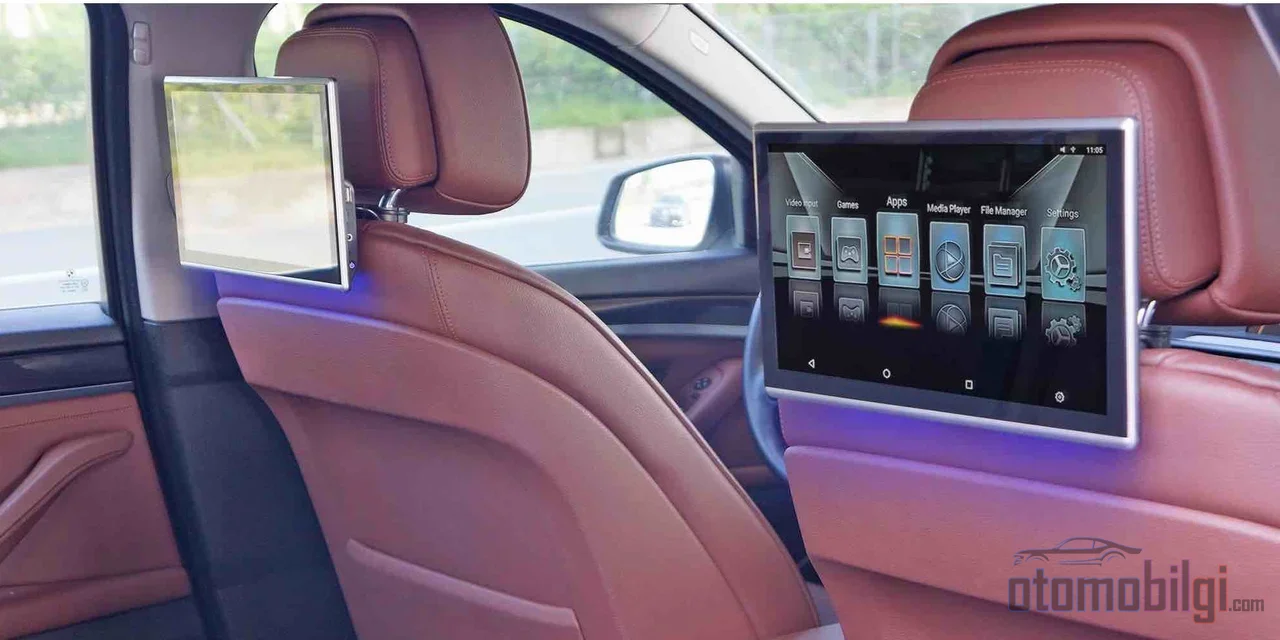
Let's first answer the most frequently asked question: Are these screens an extension of the multimedia system in the front console, or are they computers on their own? The answer is mostly the latter. Rear seat systems are usually designed as hardware independent from the front system. Some of the higher-end models run on the Android operating system and can access apps like Netflix, YouTube, Disney+, or Hulu on their own. So the passenger in the back seat manages their own content without ever occupying your phone or your front screen.
In systems with two separate screens, each screen can display different content. While the little brother watches cartoons, the older sister can open her series, and nobody meddles in anyone's programming. If both screens need to show the same content, most systems activate "Mirror" mode, i.e. mirroring.
The remote control side is also interesting. In accessory systems from some manufacturers, control is possible via a smartphone app alongside the remote; in other systems, control is consolidated on the touchscreen itself or an infrared remote. In advanced "multi-zone" models, the driver can manage rear content from the front panel. But there is a warning here: the lack of full control from the front console is still one of the most common complaints on user forums. You have to reach over to the person next to you to change what's being watched in the back while driving. Imagine that - trying to fix a jumbled video in the middle of a trip is not exactly enjoyable.
Where does the content come from?
Source variety varies depending on the system's class. Simple systems make do with USB, SD card, and HDMI inputs; some can store up to 1 TB of content. So you can load your family's movie archive onto a card and hit the road. In more advanced models, things get serious: With Wi-Fi and mobile hotspot support, streaming services like Netflix and YouTube open directly on the screen, and thanks to the HDMI input you can even connect a game console. There are also models that mirror your phone's screen onto the display; Some models like the Honda Odyssey approach this feature with a "bring your own device" philosophy.
And there are notable examples on the market side as well. In models like the Ford Expedition and Jeep Grand Wagoneer, Amazon Fire TV comes embedded in the screens; The 2026 Grand Wagoneer offers Fire TV support on 10.1-inch displays. In the Jeep, passengers can even adjust the climate settings from the rear screen, meaning the screen is no longer just a movie box but has become a kind of rear console.
How is the sound transmitted: Does Bluetooth headphone support really work?
In my opinion, the smartest aspect of these systems is the audio side. A child watching a movie in the back seat doesn't drive you crazy by blasting the show's audio through the cabin; the sound goes to wireless headphones, and the cabin stays quiet. Higher trims come with two separate audio channels, so passengers using the two screens can listen to their own content with their own headphones. The connection method varies by model: infrared headphones were common in older systems, while Bluetooth headphone support has started to become standard in newer generations.
For example, some dual-screen systems come with two pairs of wireless headphones in the box, and users can pair their own AirPods with the system. If your system doesn't have Bluetooth, an FM modulator kicks in: the sound is broadcast to an empty frequency on the car radio, and everyone can listen through the car speakers. Since infrared headphones are very prone to getting lost, it's worth knowing the prices of spare headphones: they range from 50 to 150 dollars per pair.
Does it really add value, or is it just an expensive option?
Now we come to the crucial question. When you look at the price side, the picture splits in two: factory systems cost serious money, while aftermarket solutions are more affordable but require labor. Let's summarize the price ranges at a glance:
| Solution | Approximate Price | Notes |
|---|---|---|
| Aftermarket single screen | $300-1,000 | The most budget-friendly option |
| Aftermarket multi-screen system | $800-2,000 | Installation typically $100-250 |
| Factory packages (family vehicles) | $1,400-2,000 | Minivan and large SUV examples |
| Luxury vehicle factory packages | $1,500-5,000 | Standard or a free option on some trims |
Concrete examples on the factory side are striking: a minivan's rear entertainment package exceeds 1,400 dollars, and in some large SUVs it goes over 2,000 dollars. In the luxury segment, these packages range from 1,500 to 4,500 dollars, reaching 5,000 dollars at the top end. If you spread it over a payment plan, you're paying about as much as a monthly phone bill. On the other hand, some luxury brands have an interesting privilege: at the higher trim levels, rear-screen entertainment often comes standard or is offered as a free option.
The aftermarket side is more flexible. A single screen is available starting at $300, while multi-screen systems range from $800 to $2,000. Professional installation runs around $100 to $250; if you install it yourself, you can save up to 70 percent compared to dealer pricing. But a safety warning is needed here: in vehicles with active headrests or in-seat airbags, faulty installation carries serious risks, so it's best to leave the job to someone who knows what they're doing. There are also special solutions for Tesla owners; some aftermarket rear screens with Bluetooth audio, CarPlay, AirPlay, and app support can be found for around $400.
Why not just buy a tablet?
Let's be honest, this question deserves a fair answer. Many people in forums say "you already have a tablet, why a rear screen?" and they have a point. A tablet is cheaper, can be used outside the car, and when it gets old you only replace the tablet. A built-in system, on the other hand, ages with the car; as technology advances, your screen grows stale, and the update path is usually limited to factory software. Still, families on long journeys defend built-in systems: the tablet runs out of battery, gets dropped, gets lost; an embedded screen is always there, and it ends the "what are we watching now" fight between your two kids by playing separate content on each screen.
There are other practical problems, too. An open screen mounted on the ceiling can block the driver's rearview mirror. Screens visible through the windows can attract curious eyes, and even thieves. A ceiling mount leaves a permanent cut in the headliner, which is a headache in a leased vehicle. And in three-row vehicles, passengers in the back may not see the headrest screens at all. There's one more detail most people don't know: screens drain the battery when the engine is off. Even with an auto shut-off feature, you need to watch the battery in a vehicle parked for a long time.
In which vehicles are rear-seat screens becoming standard?
These screens, once the adornment of only luxury sedans and top-tier SUVs, are now making their way into family vehicles. Among the names offering a rear-seat entertainment system for the 2026 model year are Range Rover, Cadillac Escalade, Jeep Grand Wagoneer, Kia Carnival, and BMW models. Minivans aren't leaving the stage either: On Kia's family-focused model, two 14.6-inch screens can play different content, and at higher trim levels the system is offered as an option. Some automakers also provide access to the system through their accessories catalog; for example, an RSE accessory for a minivan can be purchased for around $1,700, and software updates may cost extra.
The direction of the market is interesting, too. The global volume of rear-seat entertainment systems is estimated to be around $5.89 billion in 2025, projected to exceed $14 billion by 2033 with annual growth of around 11.8 percent. Since this projection rests on a single source, it shouldn't be read as an exact figure, but it does indicate the direction: these screens are not a passing fad, they are set to become one of the permanent parts of in-car entertainment.
On the technology side, refreshing developments continue as well. Many vehicles now support OTA, meaning wireless software updates; rear entertainment systems are becoming part of this ecosystem too. On your next journey, your system may well have updated itself while waiting in the parking lot. Aesthetically, however, there are still those who turn their noses up; as an editor from the automotive press put it in Alt, in some interiors these black rectangles really can sit like foreign objects.
What is the real benefit for families, and how should screen time be managed?
If your family takes long journeys, the benefit is tangible: while the children are occupied, driver distraction decreases and the cabin becomes calmer. A 600-kilometer trip with two children watching a movie in the back is a completely different experience from the same trip with a constant barrage of questions from behind. This setup, which leaves no room for dead tablets and content fights, truly makes a difference for families with multiple children.
But the other side of the coin is screen time. Health organizations recommend age-based screen limits and quality content selection for children; car journeys are not outside this equation. My advice is this: before setting off, plan the screen time and screen-free breaks in advance. No matter how advanced the system, four hours of uninterrupted cartoons is not a break, merely a postponed restlessness.
Conclusion: Should I buy it?
My decision can be summarized in a clear formula: If you take a few long journeys a year and have regular passengers in the back seat, a built-in system is worth the money; especially if you find a model where it comes standard at the hardware level rather than as a factory package, your advantage multiplies. If you use your vehicle mostly for short distances within the city, a tablet-based solution makes far more sense. Aftermarket installation is budget-friendly, but professional support is essential when it comes to airbags and the headliner. Screens genuinely add value for passengers; the question is not about the system, but which side your travel habits fall on.
Sources
- Rear Seat Entertainment Systems | Vehicle Support
- Single vs. Multi-Screen Rear Entertainment: Key Differences
- 2026 Jeep Grand Wagoneer Technology
- How to Use the Rear Entertainment System - Honda Info Center
- How do I operate the rear-seat entertainment system - BMW USA FAQ
- Built-In Car Entertainment Systems: Are They Worth the Money?
- Rear Seat Entertainment Systems For Most Needs and Budgets
- Rear Seat Entertainment and Cabin Quietness - 2026 Kia Carnival MPV
- Screen time and children - Mayo Clinic
- Tesla Model 3 & Y MSX-Entertainment 3.0 Rear Touch Screen