What Data Does a Connected Car Collect About You?
Share This Page
Connected cars collect a very wide range of data, including your location history, acceleration and braking habits, voice commands, contact list, and final destinations. While this data can be used for innocent purposes such as improving navigation, personalizing the system, and running emergency services, it can also be shared to influence insurance premiums and feed targeted advertising. In short, your car is no longer just wheels and an engine, but a computer that generates data.
Highlights
- A connected vehicle can generate over 300 TB of data per year
- Modern cars record hundreds of behavioral measurements such as hundreds of acceleration, braking, and cornering
- Driving behavior data is shared with insurance companies and can affect your premiums
- Manufacturers grant the right to delete data and stop sharing via online privacy forms
- The OTA update market is expected to reach $17.10 billion by 2033
Is my car listening to me, and what data does it collect?
Let me be honest with you: yes, it most likely does. Nearly all vehicles produced in the last five years record your driving. Acceleration intensity, braking force, cornering speed... These are just a few examples; in reality, hundreds of behavioral measurements are collected in the background. Think about it: you're just commuting to work, but your car is noting every sudden brake you make at a red light, the trips you take at 2 a.m., and even how many degrees you set the air conditioning to.
Privacy policies generally highlight five categories: diagnostic data, i.e., the vehicle's health report; location data; usage data extending to app usage; driving behavior data down to braking and acceleration; and in-cabin interactions, i.e., your voice commands and media habits. Your sensitive GPS location and travel history are also part of this package. And there's also your VIN number, meaning your car's fingerprint. When all of these come together, a driving profile that identifies you emerges.
Now for the good news: not all of this data is collected for a bad purpose. But knowing where your data goes is just as important as knowing what button you pressed. So let's continue.
What is this data actually used for?
The most innocent user: navigation. Connected navigation systems send and receive external data to support you with traffic and direction information. The system that informs you about congestion is fed by the anonymized location data of millions of drivers. The same data also serves safety efforts such as emergency services, mapping, and crash analysis. So data sharing really does have a life-saving side; denying that would be naive.
The second layer: personalization and maintenance. Diagnostic data is used for quality assurance, research, recall tracking, and service work; it can also be transferred to dealerships and repair companies. Thanks to your daily driving and maintenance habits, your car can say "We invite you to service" before it breaks down. Nice, right? So, shall we move on to the third layer?
Now for the part that gives you goosebumps: marketing and insurance. Usage data can be processed for advertising; combined with location data, it forms a package worth its weight in gold for targeted ads. What's worse, driving behavior data can be shared with insurance companies and directly affect your premiums. From odometer readings to braking and acceleration statistics, even what hours you drive, everything goes into that score. The driving profile of someone working the night shift looks different from that of someone commuting to an office by day, and that difference can cost you real money.
And let's not skip this detail: according to privacy policies, all this data can also be shared with law enforcement.
Voice commands, CarPlay and Android Auto: how much do they collect?
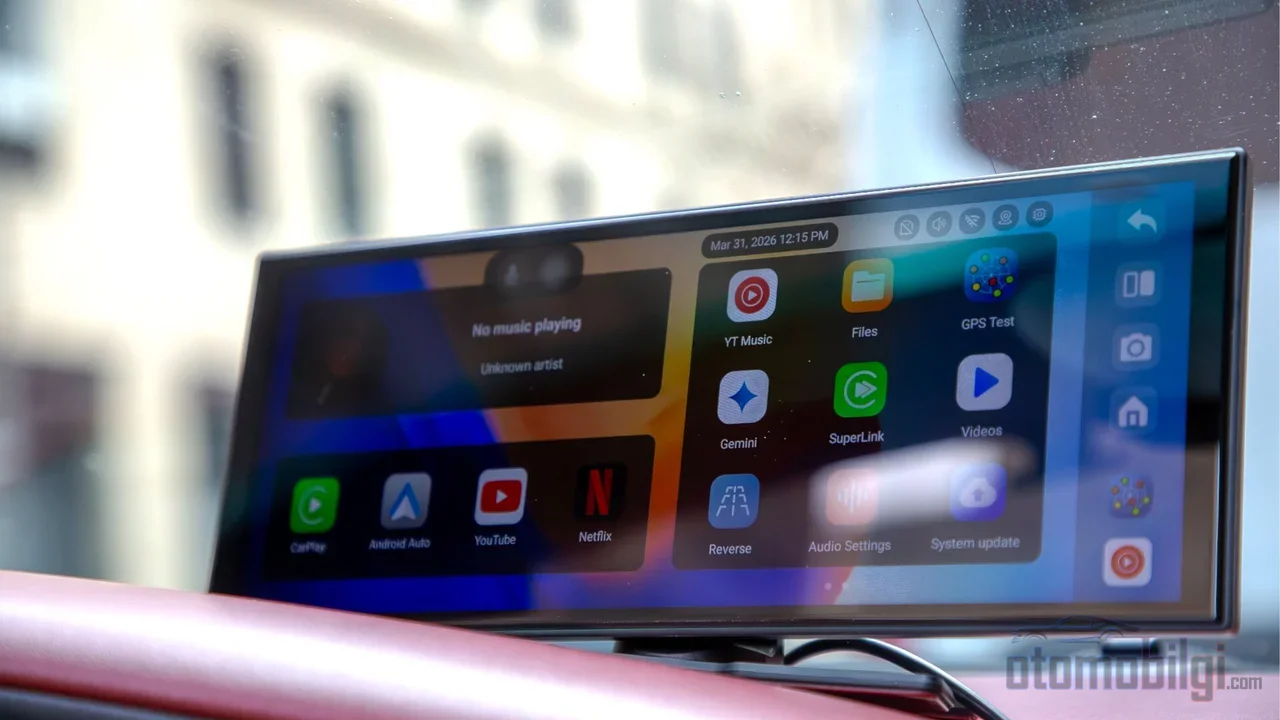
In-cabin interactions more than deserve a separate heading. When you say "Where's the nearest coffee shop?", that command goes to the system for processing; voice assistants analyze your voice to understand what you're saying. Your media habits, the playlists you listen to, and your seat and climate preferences are also written into the system's memory. In one academic measurement, an Android Automotive-based system was found to sample vehicle speed approximately 25 times per second and collect it; model information, climate and seat data were also added to the list. 25 measurements per second! Genuinely impressive when you think about it, and a little chilling.
So what happens when you connect your phone? CarPlay and Android Auto work similarly: they bring the experience on your phone to the car's screen, but this connection may require consent to data sharing; in some vehicles, accepting the collection of speed, odometer and location data can be a precondition for establishing the connection. There's quite a bit of discussion on user forums about this, because someone who quickly ticks the consent box doesn't fully know what they're agreeing to.
There's also the lasting effect of phone pairing: the system can copy and store your contact list, recent calls, message previews, recent destinations and app data. When you sell or rent out your car, remember that this memory goes with it. It's like selling your old phone without restoring it to factory settings - nobody wants to do that.
Is the data really being sold? The lawsuits that have come
The answer to this question is no longer hypothetical; when we look at court files, the seriousness of the matter becomes clear. In January 2025, GM settled with the consumer protection agency FTC on the grounds that it collected and sold customer driving data without permission through its Smart Driver program. Under the agreement, GM was banned from selling driver data to consumer reporting agencies for five years and was required to publish a current list of the third parties it shared data with.
During the same period, the Texas Attorney General filed suit against insurance giant Allstate and its subsidiary Arity over approximately 45 million Sued over claims that the American company collected and sold driving data through software embedded in smartphone apps. So your data can leak not only from your car, but also from the fuel and family-finding apps on your phone.
Another link in the data chain is the insurance industry's data providers. According to a 2023 report, products from one of these companies were used by 86% of new auto insurance policies in the US; its revenue exceeding three billion dollars shows the scale of the business. So while your driving score gets gossiped about, a real market is churning. A study published in September 2026 revealed that vehicles send location, VIN, and other identifiers to major technology companies. The data doesn't only go to insurers; it also finds a place at the table of tech giants.
Faced with this picture, regulation is also accelerating: Led by California, 16 states have enacted laws granting the right to opt out of data collection, and three more states' laws will take effect in 2026. California, North Carolina, and Rhode Island are among the few states that largely ban the use of driver data to raise premiums. But there is also an important warning from the industry front: data industry representatives have officially stated that, despite the ban applied to a single manufacturer, driving behavior data will continue to be used in the market and continue to affect premiums. So even as the legal framework develops, this battle is not over yet.
The relationship between OTA updates and data collection
OTA, in other words over-the-air software updates, is the superpower of the connected car. Like the app on your phone, your car can receive new features remotely; even safety recalls can now be resolved with a software package, without plugging in a cable. Some vehicles can be set to update automatically. The market size is expected to grow from 5.61 billion dollars in 2026 to 17.10 billion dollars in 2033 - an annual growth of about 17.2%. These figures are a clear sign that every future car will be connected to the internet.
But the other side of the coin is this: OTA capabilities also strengthen real-time diagnostics and data collection. Since the vehicle is in constant contact with the cloud, it can also constantly send the data it collects. Industry experts emphasize that every OTA update carries a separate risk, like a separate launch, and can affect cloud services and in-vehicle networks. Receiving updates is nice; but you also need to ask what each update is reporting in the background.
How can I turn off data sharing? (Step-by-step guide)
Good news: you can do more than you think. Bad news: there is no single "off" button, you will need to do a bit of digging. There are three types of requests, and you can submit them from the manufacturer's privacy pages:
- Limiting the Use of Sensitive Personal Information - for driver's license number, sensitive geolocation, and biometric data
- Opt-Out - stopping the sale to and sharing with third parties
- Right to Delete - permanent deletion of your data from manufacturers and service providers
In practice, there are three routes you can take. First, manufacturers' online privacy forms; almost all major brands offer a request page. Second, the connected mobile apps: in Toyota and Lexus, you can tap the person icon and reach the Data Privacy Portal via Account; in Mitsubishi's roadside assistance app, you can turn off Trip Recording. Third, the vehicle's own menu: in Ford SYNC, you can go to Settings → Connectivity → Connected Vehicle Features and switch off the Share Vehicle Data button; in BMW's iDrive 7 system, you can enable and disable GPS tracking under CAR → Settings.
If you are curious what your car has collected, you can get a vehicle privacy report by entering your VIN number; in addition, various privacy projects publish data collection lists by vehicle model. Request results usually arrive within 45-90 days as a CSV or PDF file - yes, patience is required.
Now for our old friend, the trade-off talk: turning off sharing may cause you to lose features like roadside assistance, crash detection, or remote locking. An even more striking example: on at least one manufacturer's vehicles, turning off certain sharing options could render the car unusable in the future. So before you flip the switch, find out which of your car's features depend on which data. There is also a share of hopelessness: under the privacy laws of certain countries, among hundreds of people who asked manufacturers for a list of data-sharing recipients, not a single manufacturer responded. Transparency is still lacking.
So, can I use my car disconnected?
Partly yes. You can turn off the Wi-Fi connection, online apps, and data sharing settings from the menus; if you connect your phone only when needed instead of pairing it every time, you reduce the personal data stored in the cabin system. But in modern vehicles that stay permanently connected via eSIM and require a telematics subscription, staying completely hidden is becoming increasingly difficult. In some models, even basic safety features are locked to connectivity. In my opinion, the most balanced approach is this: get to know your car, poke around its settings, fill out the privacy forms, and consciously choose which comfort is worth which data. Be the one who controls your car, not the data.
I'm asking you too: have you ever wondered what your car records, or would you rather close your eyes? Let's talk in the comments - everyone has a story about this.
Sources
- Your Car May Be Spying On You. Here's How to Get It to Stop. - Consumer Reports
- How to Figure Out What Your Car Knows About You (and Opt Out of Sharing When You Can) - EFF
- How Safe Is Your Data in Connected and Autonomous Cars - arXiv
- Analyzing Privacy Implications of Data Collection in Android Automotive - arXiv
- Cars & Consumer Data: On Unlawful Collection & Use - FTC
- Privacy Regulation of Auto Industry to Accelerate in 2026 - Nelson Mullins
- Your Car Is Sharing Data With Big Tech - Consumer Reports
- How do I turn off data sharing in my vehicle? - Ford
- Data Privacy FAQ - BMW USA
- OTA Car Software Updates: Are They Safe? - Consumer Reports
- Automotive Privacy - Automotive Innovation Alliance
- Car Infotainment Privacy: What Your Vehicle Stores (& How to Clear It) - Pacific Driver Education