What Does an eSIM Do in a Car
Share This Page
The eSIM in a vehicle is a SIM chip embedded in the telematics control unit and soldered in place during production; it is the cellular internet source that enables systems like wireless CarPlay and Android Auto connectivity, OTA software updates, live traffic, music streaming and emergency calling. In other words, that hidden little chip inside the car is what makes it possible for the vehicle to stay up and running without a phone. So what exactly does it feed, and what happens when the trial period ends? Let's take a look.
Highlights
- The vehicle eSIM, known by its technical name eUICC chip; the operator profile can be changed remotely via software.
- March 31 2018, the eCall emergency calling system has been mandatory on every newly type-approved vehicle model in the EU.
- An example subscription price: GM's Super Cruise system costs $39.99 per month after a 3-year trial.
- of drivers 76% do not sign up for their brand's connected service subscriptions.
- Some features, such as offline maps, continue to work without internet.
What Exactly Is the Vehicle eSIM and How Does It Work?
Think of the SIM card in your phone: a small piece of plastic with a chip inside, physically swapped out if you want to change operators. The eSIM in a vehicle is the soldered version of this. It is embedded directly into the telematics control unit (TCU) on the production line, and its technical name is eUICC - that is, embedded universal integrated circuit card. Sounds cool, I know.
The real difference is this: while a physical SIM locks you to a single operator, eUICC can store multiple operator profiles and switch between them remotely. Cars stay on the road for 15 years, sometimes even longer. During that time, 3G networks are shut down, operator contracts and data rules change. Thanks to the soldered chip, the manufacturer can adapt to all these changes with a software update. A card-slot solution would have been far more sensitive in a brutally harsh vehicle environment with vibration, winter freeze and summer heat.
There is one point to note: not every embedded SIM automatically qualifies as an "eSIM". Some embedded chips do not support remote provisioning at all, meaning profiles cannot be changed over the network. A true eSIM works according to GSMA standards: most vehicles on the road today use the SGP.02 (M2M) standard, SGP.22 is aimed at consumer devices, and SGP.32, published in 2023, gives the manufacturer more direct profile control on the IoT side.
What comes pre-loaded from the factory?
Vehicles usually leave the production line with a basic profile called "bootstrap". This profile provides basic connectivity throughout the factory-port-dealer journey. When you take delivery of the vehicle, the full data plan is downloaded. In other words, right in the showroom, that car is already connected to the network - in a way, it introduced itself to the internet on the day it was born.
Which Systems Does the eSIM Feed?
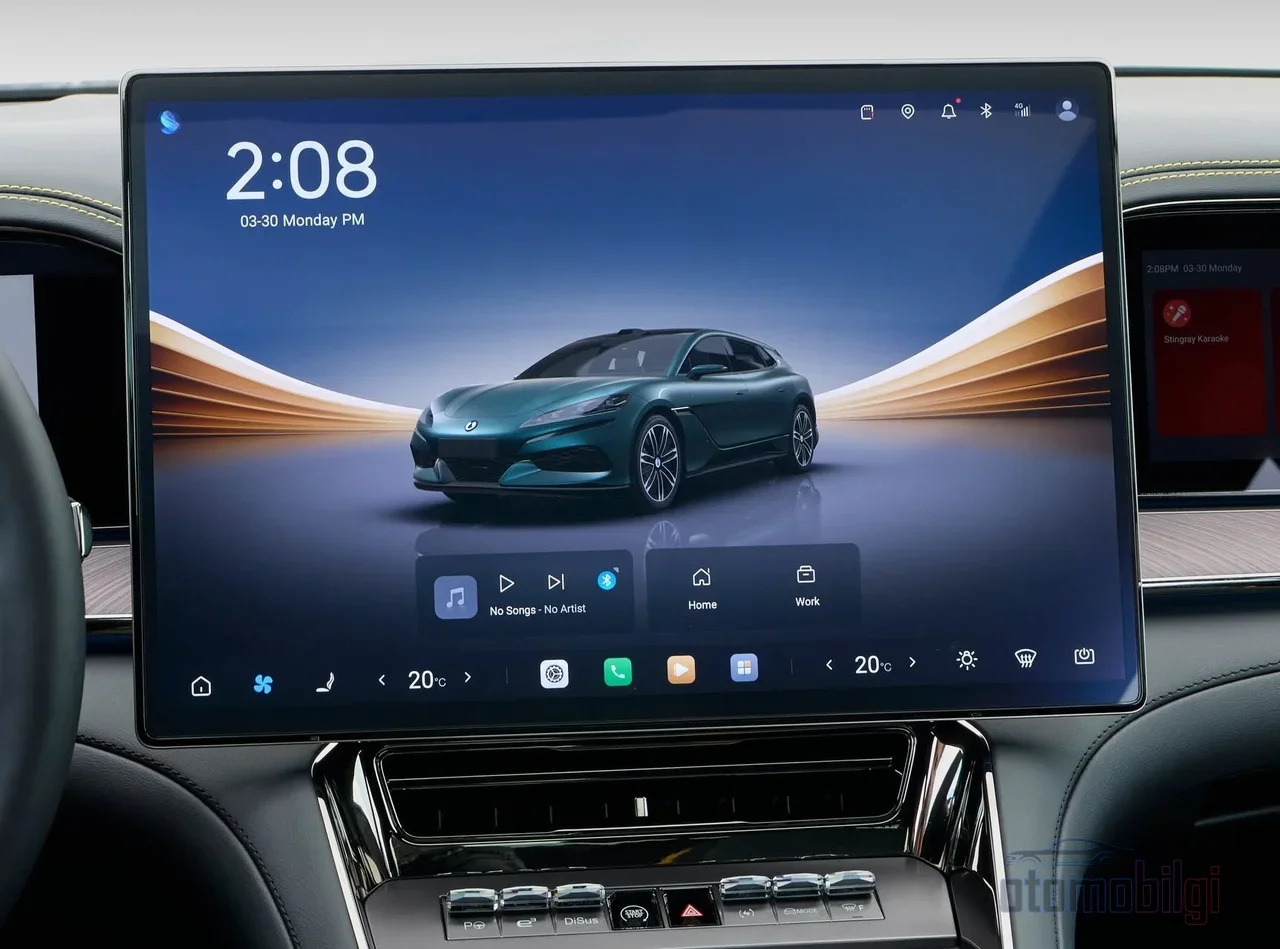
Here is the exciting part. That little chip powers almost everything that requires the car to be connected. Let's take a look one by one.
Wireless CarPlay and Android Auto
Here's how wireless CarPlay works behind the scenes: first your phone connects via Bluetooth, then Bluetooth negotiates a Wi-Fi connection, and the actual data transfer flows over Wi-Fi. But here's the interesting part: a wireless connection uses the same amount of cellular data as a wired USB connection. That's because the connection method only affects the transfer between the phone and the head unit; music, maps, and messages still reach the internet through the phone's cellular plan.
Side note: this data-heavy connection can drain your phone's battery quickly. With wired USB plugged in there's no battery problem, but with wireless you might step out of a long trip to a phone looking at you like it's hungover.
OTA Updates
OTA, or "over-the-air" updates, means the vehicle's software is downloaded and installed over a mobile network. Bug fixes, performance improvements, safety patches, and even new features - it all arrives without going to a dealer, while your car sits in its parking spot. Technically, this process is done by remotely reprogramming the flash memory in various electronic units. It's as if your car is reborn itself while you sleep.
There are concrete examples: the 2020 Chevrolet Corvette received an OTA update for a trunk-related bug; owners who registered got the fix without visiting a dealer. Hyundai also announced that the Ioniq 5 gained end-to-end OTA capability and can receive bug fixes and new features. Today these updates are becoming increasingly common in new vehicles, and their duration and coverage have become a topic of curiosity. The OTA wheel doesn't turn without connectivity: if eSIM management is weak, vehicles that silently drop off the network get stuck updates, and paid features may never activate.
Live Traffic, Navigation, and Music Streaming
Live traffic information, connected navigation, and in-car Wi-Fi are classic parts of the paid packages manufacturers call "connected services." At Mercedes, live weather and traffic come with connected navigation via an annual $150 subscription. Ford's Premium Connectivity package offers advanced maps, live traffic, and, while parked, video calling and productivity apps. Toyota offers "Integrated Streaming" music streaming in a limited number of vehicles, while Kia Connect sells it in packages at different levels. The common denominator: at the heart of them all is that cellular connection in the car.
Emergency Call: eCall
Perhaps the most vital role is here. Since March 31, 2018, eCall has been mandatory for every new type-approved vehicle model in the EU. When a serious accident occurs - usually when an airbag-level impact is detected - the car automatically calls 112 and sends vehicle data such as location to emergency services. You can also use the manual SOS button if you wish. Without a cellular connection this system doesn't work at all; so eSIM is not just a convenience, sometimes it's life-saving infrastructure.
What Happens When the Free Trial Ends?
The classic scenario that happens to almost everyone who buys a new car: in the first months everything is free, then the cushion comes down hard. The general pattern goes like this: when the trial period ends, the data service stops and they don't automatically push you into billing; whether you want to continue is up to you. With some services like SiriusXM, however, a subscription is required to continue once the trial ends. Some users whose OnStar trial ended report losing some features.
The pricing side is interesting too. The Super Cruise semi-autonomous driving system at GM brands costs $39.99 per month or $399 per year after the 3-year trial. Some manufacturers offer a completely free base plan: basic services like call notifications, roadside assistance and vehicle health reports remain free.
But there's another side to the coin: 76% of drivers don't sign up for their brand's connected services subscriptions. While manufacturers see these services as a revenue stream, consumers' perception of value is more cautious. The pay-per-feature vs. bundled subscription debate is heating up for this reason too. My advice is simple: count which features you actually used during the trial, then decide.
Can a Phone Hotspot Replace Car Internet?
Short answer: yes for most things, no for everything. A phone hotspot (tethering) creates a small Wi-Fi network using your phone's cellular plan, and you can feed the infotainment system with it. Many people who want to run wireless CarPlay or Android Auto in their car without paying for a separate data plan prefer this route.
The built-in car Wi-Fi has its advantages too: for example, the AT&T plan provides connectivity for up to 10 devices per vehicle; OnStar also says the built-in hotspot provides a faster and more reliable connection with a stronger signal. Also, if your car has a separate device and plan, you can set up multi-device connectivity without consuming your phone's plan. So on a long trip, tablets, laptops and game consoles can all benefit from the same network.
| Method | Strength | Drawback |
|---|---|---|
| Built-in car eSIM | Up to 10 devices, strong dedicated signal for the vehicle, feeds systems like eCall and OTA | Requires a subscription once the trial ends |
| Phone hotspot | No car data plan payment needed, works with your existing phone plan | Consumes your phone's plan, drains the battery quickly |
Which Features Keep Working Without Internet?
Don't assume everything depends on connectivity; some systems in the car work regardless. The most well-known example: with internet available, Google Maps with previously downloaded offline maps can still show directions without a connection. If you download the map to your phone at home, even if the signal runs out in the middle of a mountain, you won't care.
Beyond that, classic radio, phone connection via cable or Bluetooth, the camera, and basic vehicle functions work independently of the connection. Let me remind you: while networks change, vehicles can be affected too. Some older 3G/4G vehicles required a software update during network transitions like 5G, and these updates could be done from home. So even if the connection ends, the vehicle continues on its way as if nothing happened - only a part of it cannot switch to "smart" mode.
Final Word: That Little Chip Is the Car's Nervous System
Don't think of the eSIM in the car as a single device; think of it as a nervous system that connects the car to the internet, renews itself, and protects you in an accident. Everything from wireless CarPlay to OTA updates, from live traffic to eCall, flows through that chip. What you need to decide is which features are worth paying for: think of the trial like a coffee - you tasted it before it was finished, then whether you subscribe or not is your call. Which connected service do you think is worth paying for? In my opinion, OTA updates should at least start talking voluntarily!
Sources
- Automotive eSIM management explained | Cubic³
- eCall 112-based emergency assistance - Europa.eu
- Impact of OTA Software Updates on Automotive - Excelfore
- Does Apple CarPlay Use Data? - CarTech Studio
- What Automakers Offer App Subscriptions - Cars.com
- Connected Car Subscriptions - Edmunds
- 76% of drivers are skipping connected car subscriptions - Dealership Guy News
- In-Car Wi-Fi - AT&T
- Built In Wi-Fi Hotspot FAQs - OnStar
- Mobile Hotspot vs Phone Hotspot - TravlFi
- Use Google built into your car without mobile data - Google Support
- Nickeled and Dimed? - MotorTrend
- Connected Services Plans - Toyota