Why Does the Wi-Fi Hotspot in Your Car Work Differently from Your Phone's?
Share This Page
The Wi-Fi hotspot in a car works differently from your phone's hotspot feature: it uses a modem built into the vehicle, an external antenna, and a separate paid data plan ; so it differs from a phone in terms of coverage, device capacity, and connection logic. In other words, it is not a system that shares your phone's internet, but an internet subscription that belongs to the car itself.
Highlights
- A car's hotspot receives a more stable signal than a phone thanks to the roof antenna.
- Most vehicles do not offer free internet: a separate data plan is required.
- At some carriers, car Wi-Fi is priced in the range of 10-20 dollars per month.
- OnStar systems promise connections to up to 18 devices within a range of up to 15 meters. promises connectivity of up to
- If you drive alone, phone tethering is often a more economical option.
How does car Wi-Fi actually work?
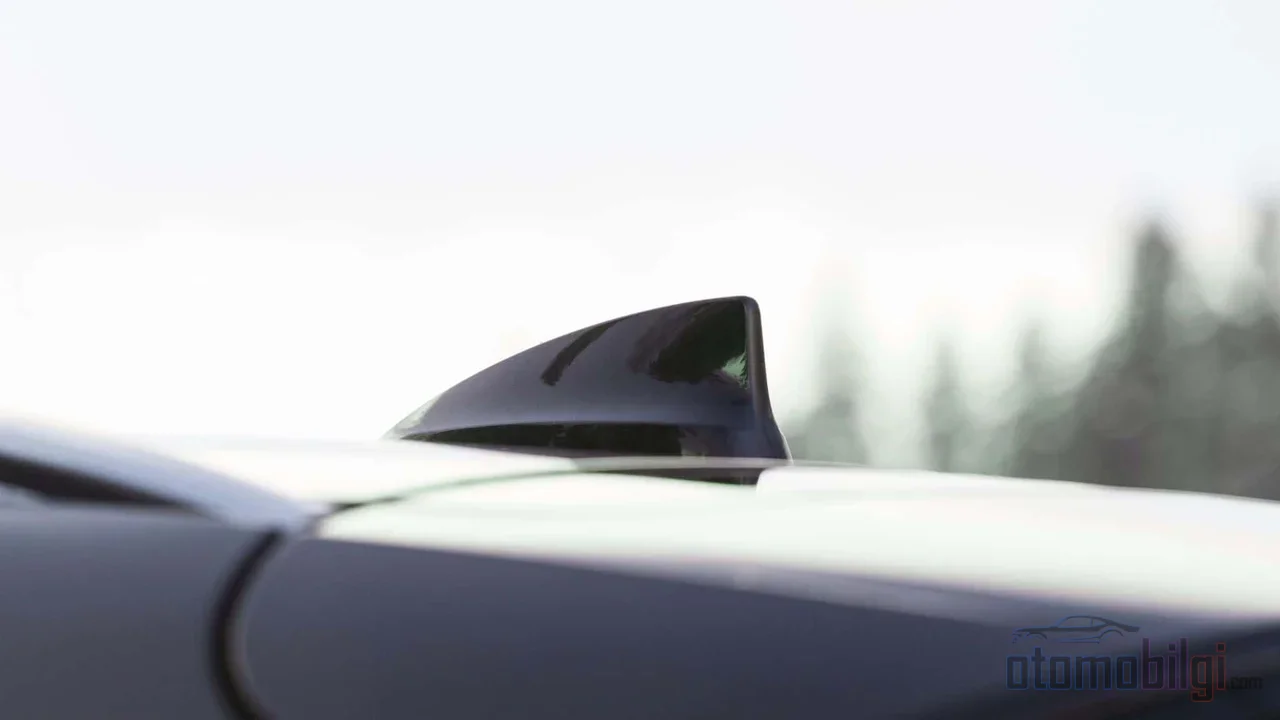
At first glance, the system seems similar to a phone's: connect to the cellular network, then broadcast a Wi-Fi network around you. The difference lies in the hardware that does this. Instead of a single antenna inside the phone, the car has a built-in modem and router. The modem typically works with an external antenna placed in the fin antenna on the roof or behind the trim panels. Imagine a device moving around with a metallic cabin surrounding it and a large antenna on top - it is in a far more advantageous position for capturing signals compared to a phone.
The size of the antenna is the key word here. A roof antenna is both larger and more powerful than an average smartphone. Technically, the matter is not pure power but the reception sensitivity provided by antenna gain: the car hears the same cell tower more clearly than a phone. Let me give you an analogy - it is like a megaphone standing on top instead of a small speaker in the corner of the room. The same broadcast, much better perception.
The ways of connecting are not uniform either. Some vehicles broadcast Wi-Fi by mirroring the phone's internet to the infotainment system, relying on the phone's data. Others use a portable router/modem that requires a monthly subscription. The most common modern solution is embedded 4G LTE systems: an independent modem inside the vehicle with its own cellular subscription. This last category usually offers the highest speed as well, because it takes direct advantage of the car's antenna.
Why is the data plan different from a phone plan?
This is where most people are surprised: the car's Wi-Fi is not free. Internet does not come from the factory; you usually need to get a separate data plan from the dealer or the carrier. The system connects to the carrier through the eSIM or a classic SIM card in the embedded modem - meaning the car is treated as a separate device from your phone in terms of plans.
Carriers have approached this market with different models. Some examples that are not alike:
- AT&T Connected Car: per vehicle per month 15 dollars; up to nine vehicles on one account, with up to ten Wi-Fi devices connected per vehicle.
- Verizon: for unlimited plan holders, Connected Car Wi-Fi is 20 dollars per month, and for data-only plan holders 10 dollars.
- T-Mobile Magenta Drive: unlimited data starting at 20 dollars per month starts, video is typically streamed in SD quality.
- OnStar: an OnStar plan is required for the hotspot; prices 19.99 dollars, 34.99 dollars/month in tiers like these, and starting at around 199 dollars annually.
On the manufacturer side, the picture is similarly varied. Toyota offers 4G LTE over the AT&T network and allows connections for up to five devices. Nissan, 2026 model year includes 2 GB of data per month in selected vehicles - meaning you get some free traffic when you subscribe. BMW's Personal eSIM 5G approach is interesting: either you buy a separate plan, or the vehicle is added as a new device to your existing phone plan. T-Mobile also allows establishing a connection on vehicles with Personal eSIM - including leased vehicles - by signing in and managing your profile.
There is also a more independent route: pop a data-heavy SIM card into the vehicle's card reader and turn on the hotspot from the touchscreen. For those who don't like the subscription model, this is the simplest solution in many cases.
How many devices can connect, is the connection established automatically?
Phone tethering usually handles one, let's be optimistic, a few devices. In-car Wi-Fi, on the other hand, can be thought of like a family vehicle: in a typical scenario, seven people can connect in addition to the user. OnStar's claim is bolder - support for up to 15 meters (50 feet) of range within range of 18 devices ; another OnStar sharing mentions eight simultaneous devices. The range extends beyond the vehicle as a bonus: the connection doesn't drop near your parked car.
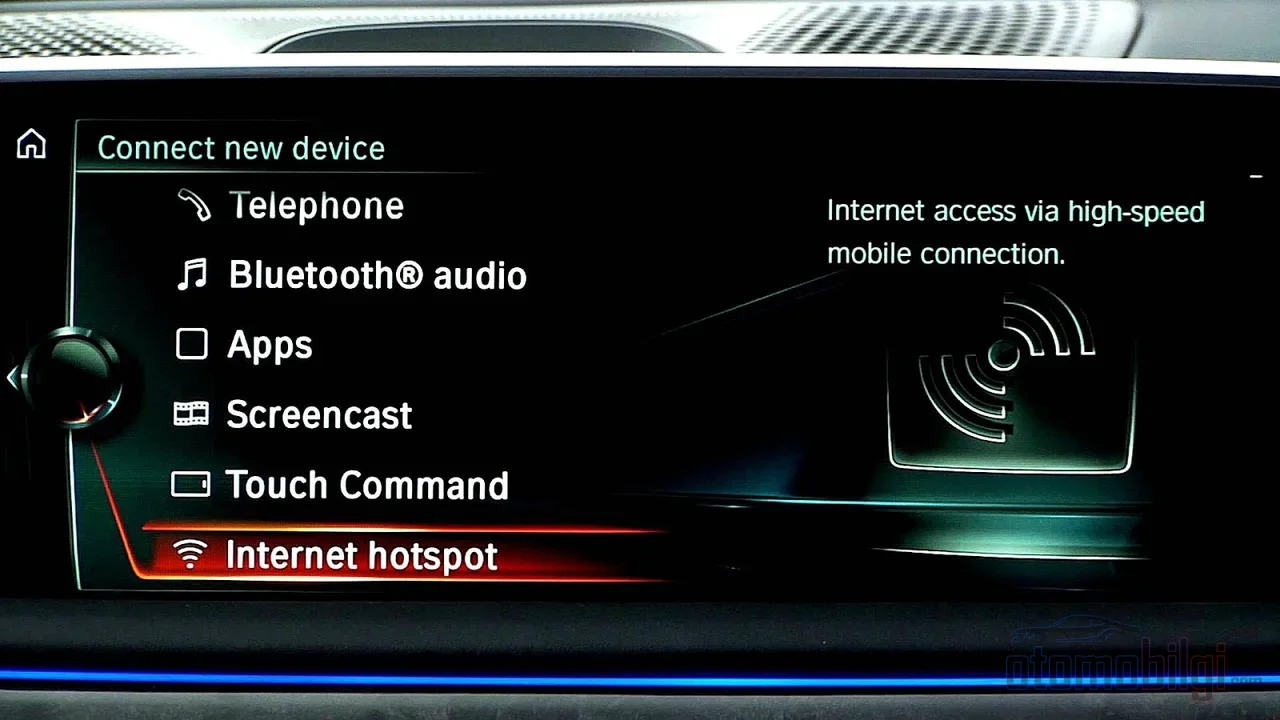
Setup is done in most brands via the OEM app (such as myChevrolet, MySubaru) or directly from the infotainment screen; you choose the network name and password yourself. After that, it's the familiar Wi-Fi routine: the device joins the network, passengers watch videos, download music, and make video calls without using up their phone data.
On the automatic connection front, the phone ecosystem is actually quite capable. Android's Instant Hotspot feature can automatically turn on the hotspot by sharing credentials with nearby devices. On the community side, there are also automation flows that trigger your phone's hotspot when a device connects via Bluetooth. So the luxury of automatic connection isn't limited to the car - your phone has it too.
How are speed and coverage in real-world use?
The marketing is clear: the embedded hotspot promises a better in-vehicle experience than the phone, with a stronger signal. The truth is that this promise largely relies on the antenna advantage, and it generally pays off in urban areas with good reception. But remember: the hotspot follows the strength of the cellular network. For example, for the 2026 VW Tiguan it is clearly stated that coverage parallels the 4G LTE network strength and speeds can vary in remote rural areas. No matter how good an antenna the vehicle has, the farther the tower, the weaker the signal.
User experiences aren't uniform either. Some owners, for example, 2024 Chevrolet Traverse someone who used it says the hotspot speeds fell short of expectations, and seeing the ongoing subscription cost, they abandoned the system. The skeptical view on the Subaru Forester forum actually sums up a common truth: car Wi-Fi is only as good as the hotspot device inside it and the cellular operator. It is not automatically better.
On the other hand, the general consensus on range and reliability is that car Wi-Fi offers wider range and a more consistent connection than phone tethering. The two options differ in speed, data limits, and the number of devices that can connect - which one makes sense depends entirely on your usage.
Moments when the hotspot makes more sense than phone tethering
Let's go through concrete scenarios, because the decision changes entirely based on them:
- Crowded car trips: If five or six people in a fully loaded vehicle try to share a single phone's tethering, it grinds to a halt like bumper-to-bumper traffic. An embedded hotspot easily handles multiple devices.
- Long-distance and rural routes: The roof antenna can pick up signals that the phone cannot in weak-coverage areas; this makes a difference even for navigation and music, let alone watching video.
- Devices that are useful while the car is parked: Since the range can extend outside the vehicle, tablets staying close to the car in a picnic area can also connect to the network.
- No hotspot availability: On tablet-focused trips with kids, you don't have to enslave your phone for tethering; the phone stays with you.
When is it unnecessary? If you drive alone and your data needs are limited to music and maps, a phone hotspot is generally the more economical option - and for many drivers it truly is. When the subscription fee adds up to an annual picture, the embedded hotspot easily becomes an unnecessary expense for light users. On user forums, there are plenty of people who canceled their subscriptions citing high prices and low speeds, switching instead to low-cost standalone solutions like $5 per month .
Checklist before making a decision
In short, the question is: is your car an internet device or an extension of your phone? To answer, I suggest you look at these:
- What network type does your car's hotspot use: 4G LTE or eSIM-based?
- Do you buy your operator's plan independently of the car, or add it to your existing plan?
- What does your monthly cost add up to annually - could you get a better phone data plan with that money?
- Is the cellular coverage in your area really strong? Because the hotspot is only as good as the network.
- Will you really connect many devices, or is a single phone enough to meet your needs?
A note for the future: as the number of devices in the cabin grows, in-car bandwidth can become congested and bottlenecked; Wi-Fi 6 targets exactly this in-car congestion with up to a fourfold increase in spectral efficiency per channel. So this difference may become even more pronounced in future models.
My short verdict is clear: the antenna and multiple-device advantage is real, but so is the cost. If you regularly take long trips with family or friends, an embedded hotspot isn't a luxury, it's comfort. If you mostly drive alone, keep your phone in your pocket - your wallet will thank you too.
Sources
- Car Wi-Fi Hotspot: What It Is and How It Works · Sparrowcar
- Here's How WiFi Hotspots Work in Cars · MotorBiscuit
- How do Wi-Fi Hotspots work in vehicles? · Briggs Supercenter
- What Is a Wi-Fi Hot Spot? · KBB
- Car Wi-Fi connection: the embedded hotspot guide · MecaVIN
- AT&T Assistant VP Shares the Travel Advantages of an In-Car Wi-Fi Hotspot · CNET
- In-Car Wi-Fi and Wireless Internet Service · AT&T
- Connected Car Wi-Fi FAQs · Verizon
- In-Vehicle Wi-Fi Hotspot · OnStar
- In-Car Wi-Fi Hotspot & Voice Plans | T-Mobile Magenta Drive · T-Mobile
- In-Vehicle Wi-Fi Hotspot · NissanConnect
- How does the 2026 Volkswagen Tiguan Wi-Fi Hotspot work? · Ancira Volkswagen
- Turn your Toyota into a powerful Wi-Fi hotspot · Passport Toyota
- What to Know About In-Car Wi-Fi · Capital One
- What is the difference: Wi-Fi hotspot and phone tethering · AT&T
- Connect personal devices automatically to Wi-Fi & instant hotspot · Google Support
- Mobile Hotspot vs Phone Hotspot for RV Internet in 2026 · Travlfi
- WiFi On The Go: Comparing In-Car Internet Options · SmartMove
- How Wi-Fi 6 will relieve automotive bandwidth crowding · Embedded.com
- Vehicle Sim Card Plans · SpeedTalk Mobile
- Connected car internet: In-car Wi-Fi guide & plans · UBIGI