DPF and EGR Facts for Diesel Owners
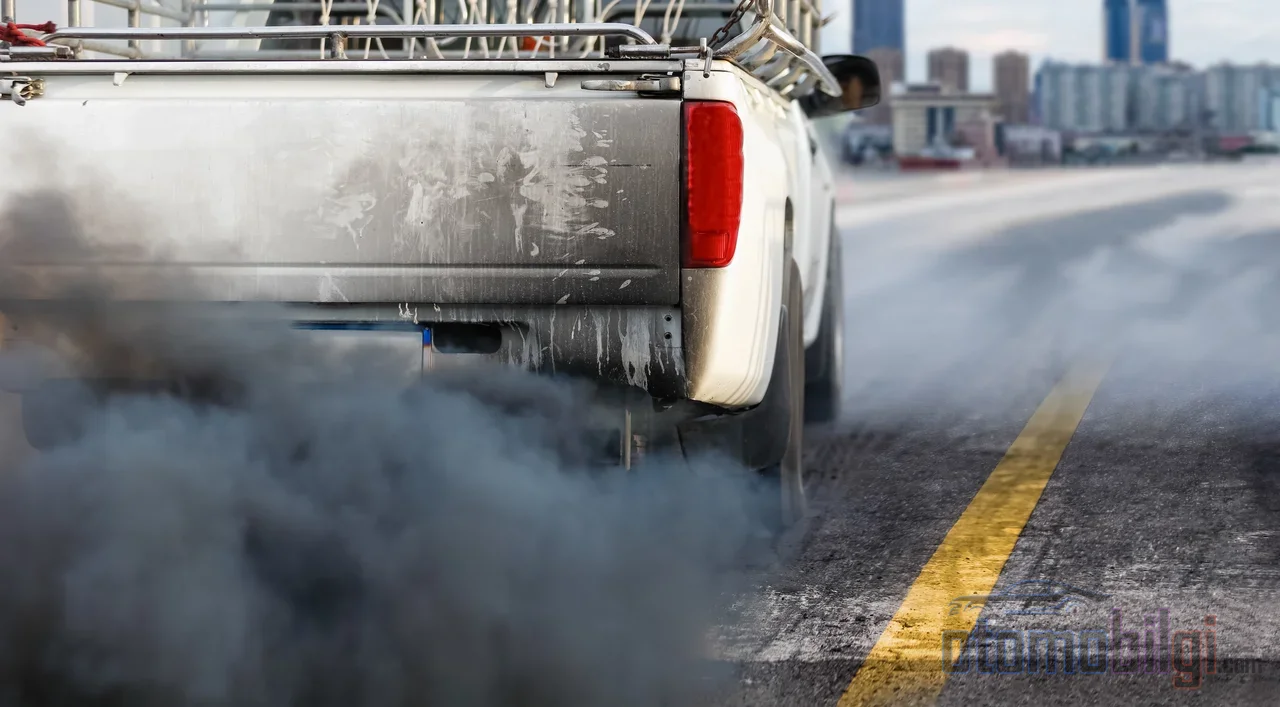
When your diesel vehicle commutes back and forth between home and work on a twenty-minute morning trip, something quietly builds up in the exhaust line: soot. Do not be one of the thousands of drivers who panic when the DPF light on the dashboard comes on. In this article, I explain with an engineer's eye, and with numbers, how the particulate filter and the EGR system work, what accelerates clogging, how to manage regeneration properly, and the costs and legal facts you need to know before going to a service center.
What Are DPF and EGR? Two Different Tasks, One Goal
The two systems are often mentioned in the same sentence, but their tasks are completely different. EGR, or the exhaust gas recirculation system, comes into play during combustion: by routing part of the exhaust gas back into the cylinder, it dilutes the oxygen and lowers the maximum combustion temperature. Because the temperature drops, NOx emissions formed by nitrogen and oxygen combining are reduced. Since diesel engines run with excess air, EGR rates are generous: while it typically stays in the 5-15% range in gasoline engines, up to 50% recirculation can be applied in diesels.
DPF, on the other hand, is the work of after-combustion. By trapping the soot and solid particles in the exhaust gas within the filter material, it prevents them from being released into the atmosphere. In short: EGR reduces NOx formation from the start, DPF catches the soot at the end. It is no coincidence that this duo became mandatory together; particulate filters became standard through emissions regulations in order to compensate for the increased particulate output that EGR causes by lowering combustion efficiency.
It is important to know that the EGR valve is not open at all times. When the engine is cold, at full throttle, under high load, and during rapid acceleration, the valve remains closed; it opens when the engine warms up, at constant speed, and at low-to-medium load. In new-generation Euro 5 and Euro 6 engines, the valve is electronically controlled; in diesels, the recirculated gas is additionally cooled by a heat exchanger to increase intake density.
Highlights
- In diesel engines, the EGR rate can reach up to 50%; in gasoline engines, the typical range is 5-15%.
- Short-distance urban driving is the most common cause of DPF clogging.
- Complete DPF replacement with an equivalent part is approximately 8,000-20,000 TL; professional cleaning is 200-400 € in Europe.
- DPF removal is prohibited in Turkiye and is counted as a serious defect at TUVTURK inspection.
What Is Regeneration and Why Does Urban Driving Kill the DPF?
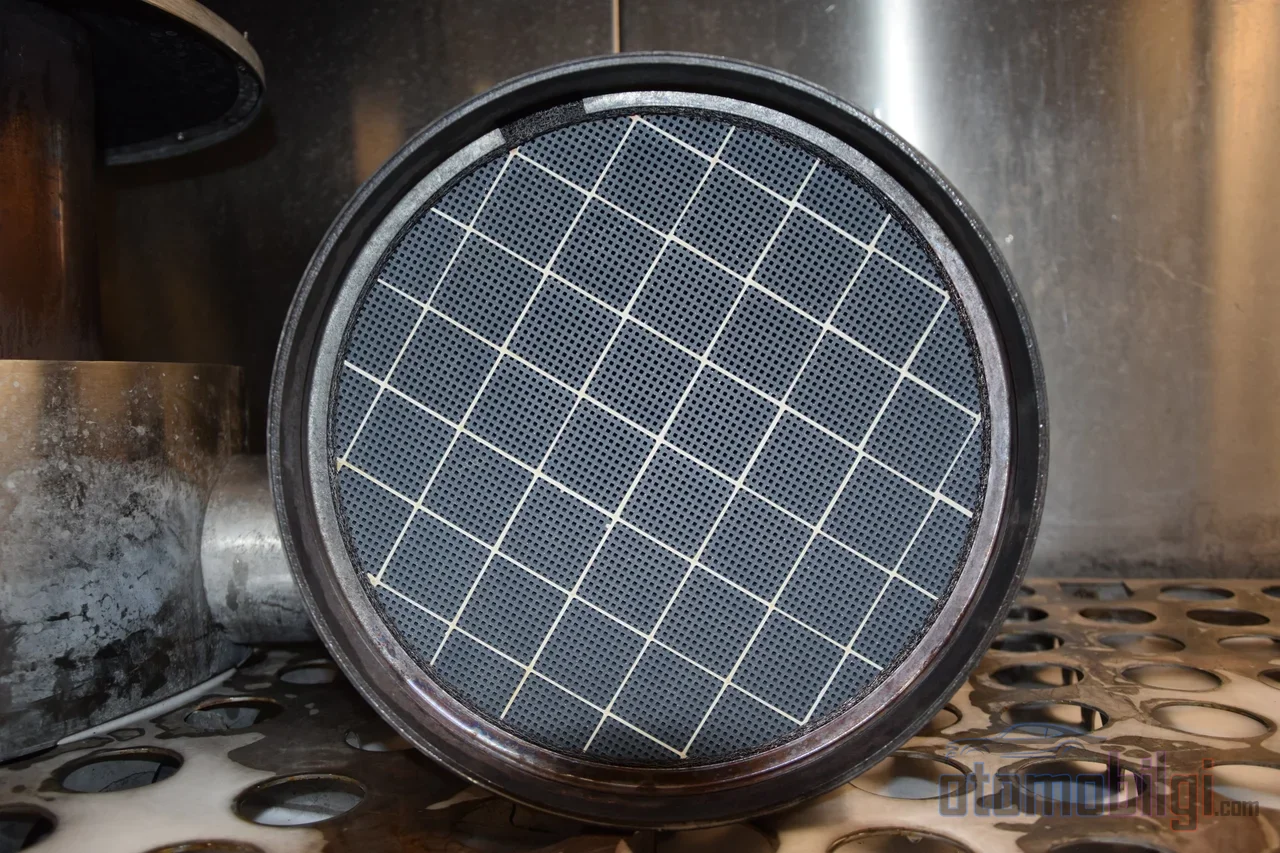
A DPF cannot store soot forever; its self-cleaning mechanism is regeneration. The soot accumulated in the filter is burned and converted into gas when the exhaust temperature rises sufficiently. There are three types: passive, active, and manual (forced) regeneration. Passive regeneration occurs naturally on long, loaded journeys; active regeneration occurs when the engine control unit sees the accumulation threshold and intervenes in fuel injection to create high temperature. In some vehicles this threshold is at approximately 25 grams of soot - it is a process that runs entirely in the background, unnoticed by the driver, and does not affect driving.
Here is where the problem starts: if you stop the car after active regeneration has begun, the process is cut short and soot keeps accumulating. For a vehicle driven in fifteen-minute intervals, the exhaust may never reach the required temperature. This is by far the most common cause of DPF clogging; a DPF warning light that stays constantly lit on the dashboard is the typical symptom of exactly this scenario.
DPF Light Is On: Completing Regeneration by Driving
When the light comes on, there is no need to panic or rush straight to the service. The practical formula is clear: driving uninterrupted for 15-20 minutes in the 2000-2500 rpm band ensures that regeneration is completed. A highway or ring road is ideal for this; 4. or 5. gear, at a steady pace above 2000 rpm. As a more lasting habit, driving above 2500 rpm for 20 minutes at least once a week significantly extends the filter's life.
Giving a single figure for the cleaning interval would be wrong; it varies depending on the usage profile. A vehicle used mainly in city traffic needs both cleaning and careful driving much sooner. The cost of neglect is also measurable: the buildup in the filter hinders the operation of the catalytic coating, shortening cleaning intervals by up to 30% and increasing fuel consumption.
What Happens If the EGR Valve Clogs? Symptoms and Cleaning
The EGR clogging mechanism is different from that of the DPF. Soot in the exhaust gas combines with oil vapor from the crankcase ventilation, forming a sticky layer on the valve; the valve can get stuck in either the open or closed position. The symptoms are familiar: rough idle and vibration, black exhaust smoke, increased fuel consumption, reduced traction, the check engine light, and stalling at idle.
- Rough idle, vibration, and stalling at idle
- Black smoke from the exhaust
- Noticeable increase in fuel consumption
- Loss of traction and the check engine light
There are two critical points. First, a clogged EGR negatively affects not only itself but also the DPF and the turbo system; the systems are interconnected. Second, and more importantly: loss of traction, smoke, and rough running are not caused solely by the EGR. A faulty injector, turbo, air flow meter, or low fuel pressure can also produce similar symptoms. All technical circles agree that parts should not be replaced without reading fault codes and live sensor data.
Not every EGR failure requires replacement. For soot-related problems, removing the valve and cleaning it with a special spray or solvent may be sufficient; with thick deposits, a wire brush and leaving it to soak come into play. During cleaning, care must be taken to prevent foreign matter from entering the cylinder head and intake manifold - this job requires manual skill, and even if you do it yourself, it demands meticulousness more than courage.
DPF: Cleaning or Replacement? 2026 Cost Table
The decision criterion is technically simple: if there is only soot buildup in the filter, cleaning is sufficient; if it is full of ash (ash doping), replacement comes onto the agenda. While soot can be burned away through regeneration, ash cannot - it permanently occupies space in the filter's structure. On the cost side, the method determines the cost.
| Method | Approximate Cost (2026) | Note |
|---|---|---|
| Forced on-vehicle regeneration | Most economical option | Triggered with a diagnostic device |
| Removal-based professional cleaning | Variable, labor included | Ultrasonic or chemical method |
| Ultrasonic / chemical cleaning (Europe) | 200–400 € | Removal labor is not included in the price |
| Complete DPF replacement (equivalent) | 8,000–20,000 TL | Comes into play when the filter is full of ash |
This table also explains why cleaning is spreading so rapidly in Turkiye. One cleaning network in the industry claims that, together with its dealers across Turkiye, it cleans and restores around 800 filters to service per day, creating savings of billions of lira annually at an average value of €1,000 per filter - since this is a commercial source, the figure should be read with caution, but the gap between filter replacement and cleaning is real.
DPF and EGR Deletion: Why Is It Banned and Why Is It a Bad Idea?
Every vehicle owner who sees the replacement prices thinks the same thing: remove whatever the filter is filtering and be done with it. And there is indeed a market in Turkiye that caters to this demand. But the legal side is clear in one sentence: DPF deletion is absolutely prohibited under current legislation and counts as a major defect in TUVTURK inspection. A vehicle with a deleted filter cannot pass the exhaust emissions test and is also detected during the physical inspection. Legally, there is no difference between removing the filter, drilling and emptying it, or disabling it via ECU software; all three are unlawful. Under the Highway Traffic Act, the deletion or removal of emission control systems is prohibited.
The technical side is even more striking. In the short term, the vehicle may feel livelier because the exhaust flow is freed up - this is the deletion market's only sales argument. However, the engine software and engine management are affected by this change; the vehicle's safety and efficiency are compromised, and warranty terms become invalid. When EGR is disabled indiscriminately, it is not only emissions that suffer - engine management, the DPF, and the fault diagnosis system are all affected in a domino effect. The EGR exists not to boost performance, but to control NOx; removing it disrupts the balance calculated by engine management before it can even be established. The expert community's recommendation is always the same: instead of deletion, preserve the system's natural operation and have it professionally cleaned when necessary.
Before Going to the Service Center: A Practical Decision Guide
The summary of the summary, through direct questions:
- Did the DPF light come on? Drive uninterrupted for 15-20 minutes at 2000-2500 rpm; if it cannot be completed, go to the service center.
- I drive short distances - will it clog? Yes - exhaust temperature will be insufficient for regeneration; one long drive per week is essential.
- Cleaning or replacement? Cleaning for soot buildup, replacement when full of ash.
- Does EGR deletion increase power? No; EGR is for NOx control, and its removal affects engine management, the DPF, and the periodic inspection.
- Can I clean the EGR myself? Yes, by removing the valve and using spray/solvent; professional cleaning without removal is also an alternative.
- Will a vehicle with a removed DPF pass inspection? No; it fails the emissions test and incurs a serious defect.
The math of diesel ownership isn't actually hard. The filter and EGR are the vehicle's emission systems; when you neglect them, the price you pay shows up first in fuel consumption, then in a cleaning bill, and finally in a replacement bill. One long drive a week, correct driving when the light comes on, and not replacing parts without diagnosis - these three rules turn the fear of a big bill into a genuine maintenance discipline.
Sources
- What Is an EGR Valve and How Is It Cleaned?
- What Is an EGR Valve and How Does It Work?
- What Is an EGR Valve? About EGR Removal
- What Is Diesel Regeneration? The Effect of Short Trips on the DPF
- How is DPF regeneration performed?
- Diesel particulate filters: guide to DPFs
- DPF Clogging Problem: Symptoms, Solutions and Cost
- What Is a DPF? Particulate Filter Failure and Cleaning
- Should the DPF Be Cleaned or Replaced? Symptoms and Cost
- What Is a DPF? What Happens If It Clogs, Cleaning and Replacement (2026)
- What is a DPF failure in diesel vehicles, and how much do cleaning and replacement cost?
- DPF Cleaning Prices: Cleaning or Replacement?
- Is DPF Removal Legal?
- EGR Removal and DPF Removal: An Engineering and Inspection Perspective
- Is Having the DPF Removed Safe?
- DPF Maintenance Renewal System (2026)
- What Is EGR and What Does It Do?
- What Is a DPF? Clogging and Cleaning
- What Is a DPF (Diesel Particulate Filter)?
- DPF Maintenance and Regeneration