Air Filter and Cooling System Maintenance on Türkiye's Dusty Roads
Share This Page
Air filter and cooling system maintenance in Türkiye should be performed more frequently than the maintenance schedules written to European standards suggest: dusty roads can halve the filter's lifespan, stop-and-go city traffic strains the cooling system, and long summer heatwaves increase the risk of overheating. Strictly following the wide intervals recommended in manufacturer manuals leads to premature engine wear and increased fuel consumption under these conditions. The right approach is to shorten the catalog values according to local conditions.
Highlights
- In dusty conditions, an air filter can become dirty in half the normal time; it makes sense to check it every 10,000-15,000 km.
- A severely clogged air filter per 100 km, 0.6-1.5 liters of extra fuel consumption.
- When cleaning the radiator fins, dirt must be washed from the front of the engine, that is, in the reverse direction of airflow.
- A 50% antifreeze mixture provides approximately -37°C freezing point and 108°C boiling point; it is used year-round.
- Engine temperature suddenly rising at a red light is the classic sign of overheating in stop-and-go traffic.
Why Are Catalog Values Insufficient in Türkiye?
The air filter intervals in maintenance manuals are usually given in the 15,000-30,000 km range. These values are set assuming an average European road and a temperate climate. The situation in Türkiye is different: dusty gravel roads in summer, high pollen levels in late spring, constant stop-and-go city traffic, and a hot climate directly affect how quickly the filter gets dirty. Especially in summer, dusty roads cause filters to clog much faster than normal.
The picture becomes even clearer in rural use. In agricultural machinery, the air filter is replaced at 200-500 hour intervals; however, in heavily dusty work this check drops to 100 hours. A dirty filter can cause power loss of up to 10-15%. Although conditions are milder in a car, the logic is the same: if the filter is clogged, less air enters the engine and performance drops.
Therefore, the practical recommendation is this: take the manual's value as the upper limit, but if you live in a dusty region, drive more than 20,000 km per year, or use the vehicle constantly in city traffic, cut the interval in half. Local service centers in Türkiye already recommend 10,000-15,000 km or annual replacement as standard advice; this is not a conservative interpretation of the catalog, but an adaptation to the conditions.
How to Tell When the Air Filter Is Clogged?
A clogged air filter restricts the engine's breathing, and this manifests itself with tangible symptoms the driver can feel:
- Pulling power drops, the car struggles on hills; it responds sluggishly when you press the accelerator.
- The air-fuel mixture becomes rich, meaning there is less air relative to the fuel ratio, and consumption increases noticeably.
- Idle speed fluctuates, engine sound changes, and vibration occurs.
- When the MAF sensor, that is, the mass air flow meter, gets dusty, it sends incorrect information to the ECU and the check engine light may come on.
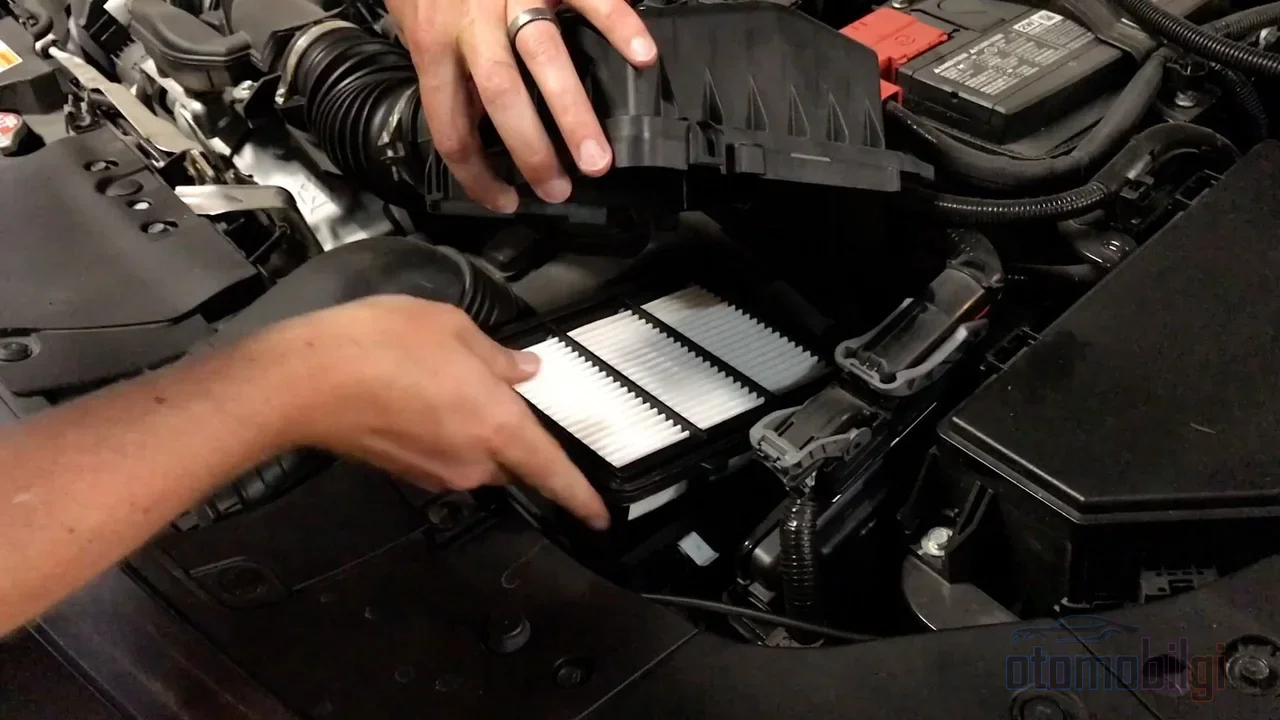
Physical inspection is also possible: remove the filter from its housing and hold it up to the light. If light does not pass through, if the filter surface is darkened, damp or oily, or if there are leaf and insect residues on it, it is time for a replacement. The process takes 5-10 minutes and can be done on most vehicles without special tools.
The cost of a serious blockage can be measured: 0.6-1.5 liters per 100 km of extra consumption. For a vehicle that travels 20,000 km a year, this means approximately 2,400 TL in additional fuel costs per year. Since the price of an air filter is far below this amount, early replacement clearly pays for itself.
Can the Filter Be Cleaned and Reused?
The short answer: no. Blowing it out with compressed air is a common habit, but it is not a permanent solution. The micro-pores of the filter paper do not open up with blowing; high pressure can tear the paper structure and allow dust to pass directly into the engine. Removing surface dirt improves the appearance, but the clogged pores remain closed and the engine still struggles. Replacement can never take the place of cleaning.
The price of being late is also tangible. In an engine that runs clogged for a long time, carbon deposits build up on the valves, spark plugs and piston heads; wear and compression loss appear in the cylinder liners. In addition, a dust-covered MAF sensor, a dirty throttle body and, in the worst-case scenario, turbocharger blade damage come into play. If the turbocharger is included, the picture can extend to the cost of a rebuild; it cannot be compared with the price of a filter.
Original Filter or Aftermarket?
The filter is one of the items where choosing an aftermarket part is the most risky. The non-homogeneous paper texture of a poor-quality aftermarket filter can allow dust to leak into the engine and cause MAF sensor and cylinder wear. Its effect on fuel consumption is also real: consumption rising to 5.8 liters after a poor-quality air filter was installed and returning to normal levels after switching back to the original filter is an example personally observed by drivers.
As a general rule, an original or approved quality equivalent part offers a longer service life in the long run and lowers the total cost of ownership. For some accessory items, aftermarket may be a reasonable option, but considering the filter's purpose - to protect the engine - a quality part should be preferred here even at the moment when the price difference is at its smallest.
How to Clean the Radiator Core and Check the Cooling System?
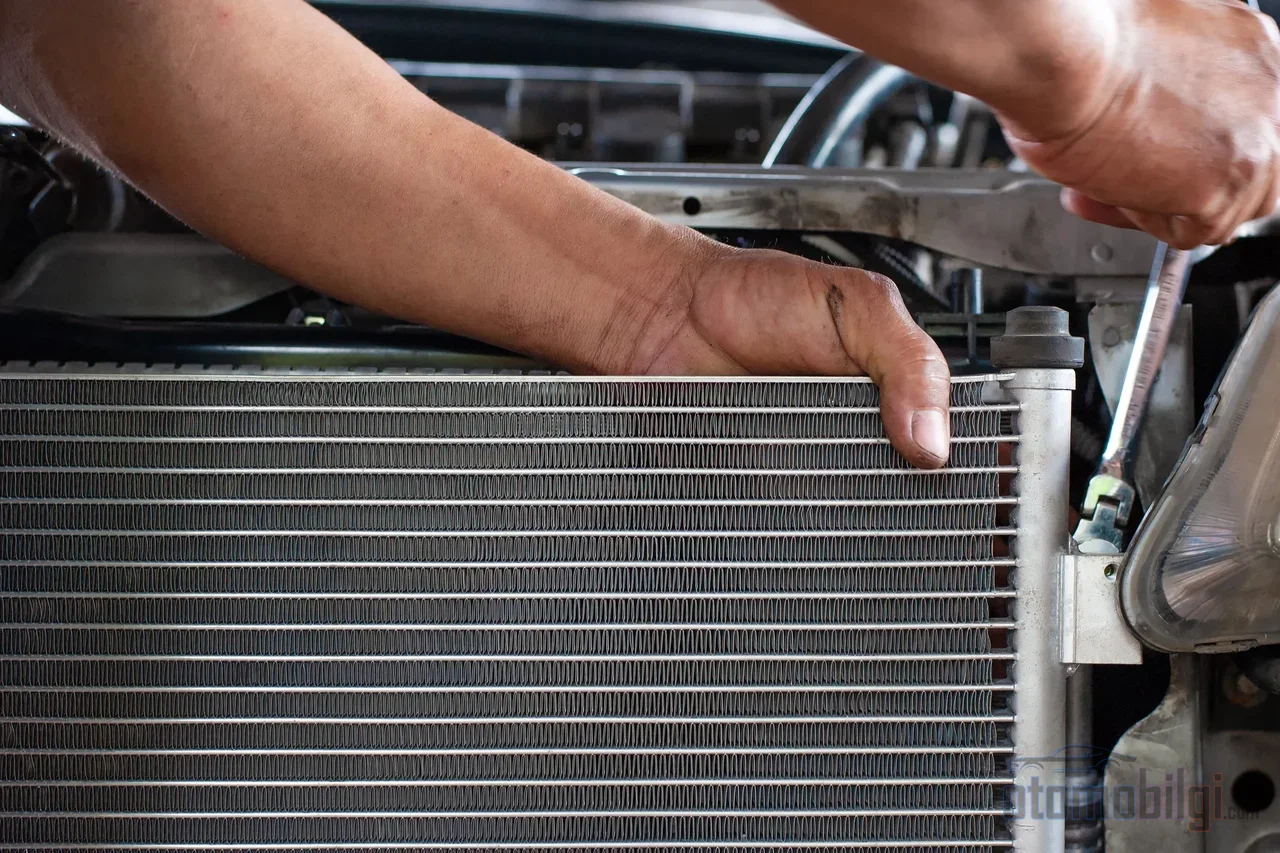
The radiator's task is to transfer the heat it receives from the engine to the air. Contamination between the core's thin channels disrupts this heat transfer, and in Turkish summers this means overheating. The basic rule of cleaning is a matter of direction: you must wash the dirt in the opposite direction from which it entered, that is from the front toward the engine If you wash from the front, you push the dirt deeper into the core, producing a blockage rather than a cleaning.
For insect and leaf residues on the grille, use a nylon brush and soapy water; harsh handling crushes the core fins. After cleaning, the air in the system must be bled: open the radiator cap and run the engine for approximately 7-10 minutes started. Before a long trip, checking the coolant level and leaks is essential; the most obvious sign of a leak is a puddle of brightly colored green, blue, red, or pink fluid accumulating under the engine.
How is the antifreeze ratio adjusted according to the season?
Antifreeze is not a winter-only product; it is used all year round and also protects against boiling in summer. The standard 50% mixture provides approximately -37°C freezing and 108°C boiling points. Mixtures prepared at the factory ratio lower the freezing point to between -35 and -45°C . The ratio is determined by the vehicle's climate and usually does not exceed 50%; the remaining volume is completed with pure water. Pure antifreeze should never be used; it must always be mixed with water at a certain ratio.
When choosing, the color in the bottle should not be the criterion; manufacturer approval and technical specifications should be the basis. It is most correct to also set the mixture ratio according to the vehicle manufacturer's recommendation. Antifreeze is usually renewed every 2 years ; this process, which completely drains and fills the cooling system, is also called flushing, and depending on the manufacturer, the replacement interval can extend up to 2-4 years. The manual's value is decisive.
What Are the Signs of Overheating and What Should Be Done?
In stop-and-go traffic, the signature of overheating is clear: the engine temperature, which drops while the vehicle is moving thanks to the wind effect, suddenly rises the moment you stop at a red light. The reason is simple - in a stationary vehicle, the airflow passing through the radiator is cut off, and if the fan and system are insufficient, the temperature rises rapidly. A very high temperature gauge and steam coming from under the hood are the clearest signs; in this case, you should immediately pull over to a safe place and turn off the engine.
The most common cause of overheating is a thermostat that does not open: the fluid gets trapped in the small circuit and never reaches the radiator. A water pump failure stops the flow completely; fan problems and excessive load produce a similar picture. A lesser-known cause is the failure or contamination of the pressure relief valve in the radiator cap. Ignoring overheating results in a blown head gasket; this is one of the most expensive repairs for a vehicle.
A Simple Maintenance Routine Adapted to Local Conditions
To put all this information into practice, a short checklist is sufficient:
- Visually inspect the air filter at every oil change; replace it every 10,000-15,000 km in dusty conditions.
- At the start of summer, wash the radiator fins forward from the engine, and gently clean the insects off the grille.
- Check the coolant level and color; renew the system every 2 years.
- Check for leaks before a long trip, and pay attention to colored fluid puddles under the engine.
- If the temperature needle rises in traffic, do not wait: stop, turn off the engine, and do not open the cap before it cools down.
A maintenance schedule is not a suggestion on a piece of paper; it is a reflection of the climate and roads the vehicle operates on. Türkiye's dusty roads and long summers work these two systems faster than the European catalog assumes. A driver who shortens the mileage to the right points, replaces the filter early, and cleans the radiator before summer arrives gets this care back both at the fuel pump and in the engine's lifespan.
Sources
- At How Many Kilometers Should the Air Filter Be Replaced?
- What Happens If the Air Filter Is Clogged? When Should It Be Replaced?
- When Should Vehicle Filters Be Replaced?
- How Often to Replace Air Filter in Car
- When Should a Tractor Air Filter Be Replaced?
- What Is a Radiator? Its Function, Core Clogging, and Maintenance
- Causes of Engine Overheating and Cooling System Failures
- At What Temperature Should Antifreeze Be Effective?
- When and How Should Antifreeze Be Added?
- Causes of Engine Overheating
- Car Radiator Cleaning in 11 Steps
- Maintenance Before a Long Trip