Full Course Yellow in WEC: The Yellow Flags That Change the Fate of the Race
Share This Page
Full Course Yellow, or FCY, is a neutralization rule in the WEC that comes into play when the Race Director must slow the race for safety, but a Safety Car is not yet necessary. When it is declared, all cars reduce their speed to 80 km/h, drive in a single line, and overtaking is prohibited. Sounds simple, right? But here is the interesting part: these yellow flags can change the outcome of an endurance race within seconds. Everything from fuel strategy to the pit window is re-planned around these moments.
Highlights
- FCY was introduced to the WEC in 2014; the aim was to reduce Safety Car interventions per race.
- Under FCY, all cars comply with the 80 km/h speed limit, and overtaking is strictly prohibited.
- From the 2023 season onward, the pit lane was closed during FCY periods, and pitting was banned.
- At Le Mans in 2026, the leading #12 Cadillac was caught by the FCY speed limit, changing the course of the race.
- The 2026 WEC calendar includes 8 races; seven manufacturers are competing in Hypercar.
How Is Full Course Yellow Technically Implemented?
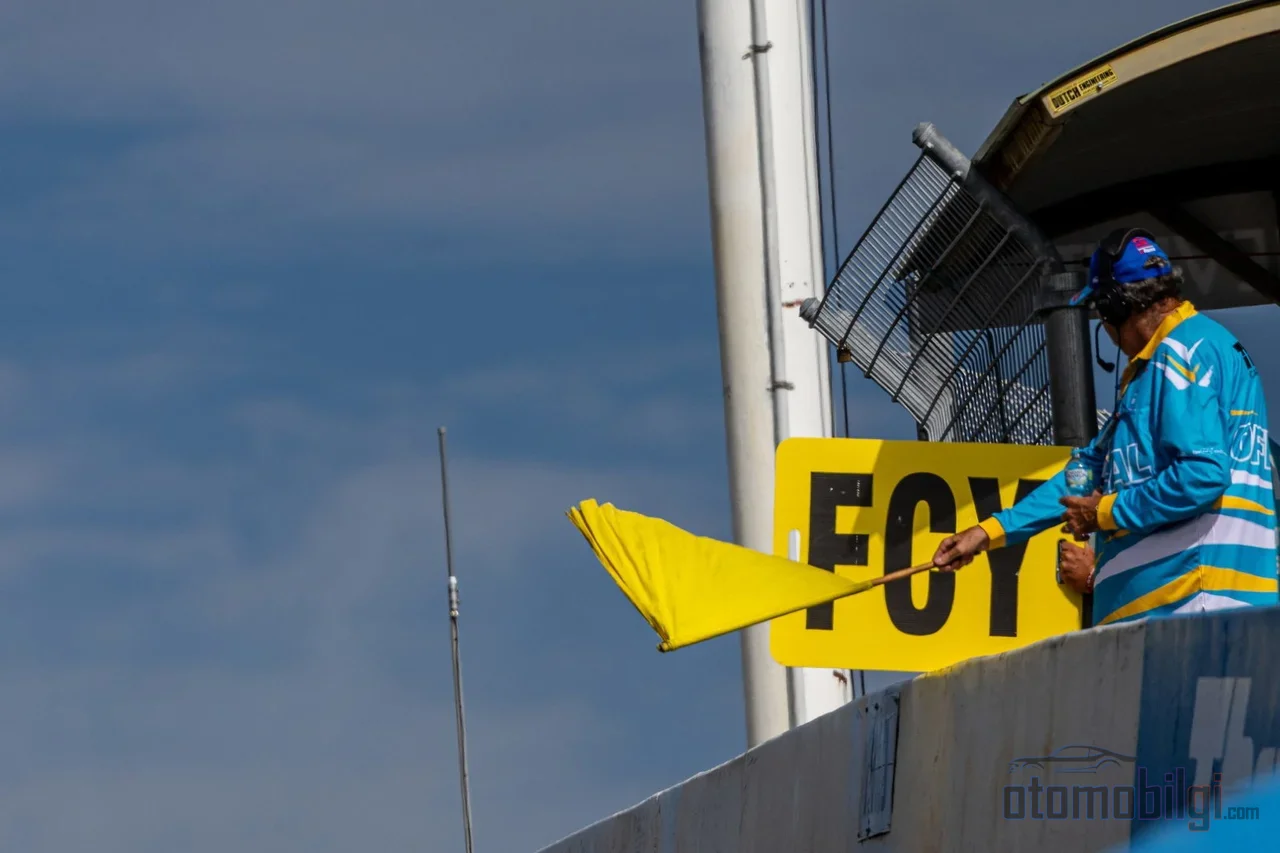
Think about it: there is a slow-moving car or a dangerous situation somewhere on the track, but there is no need for a huge Safety Car to get involved in the race. This is exactly where FCY comes into play. The moment the Race Director makes the declaration, yellow flags waving and FCY boards are seen at all marshal posts. Every driver must reduce their speed to 80 km/h; moreover, this limit also applies to the pit entry and exit lanes.
The rules drivers must follow do not end with speed alone. Cars proceed in a single line, must maintain their distance from the car ahead and behind, and overtaking is strictly prohibited. Drivers driving unnecessarily slowly, erratically, or dangerously are reported to the stewards. In other words, there is no being clever under the yellow flag.
The end of FCY is also tied to a clear procedure: The Race Director sends a message to the timing monitors, green flags are waved at all posts, and the race returns to normal without restriction, regardless of the cars' grid positions. There is another interesting detail: every lap completed during FCY is added to the race's maximum lap count. In other words, time spent under the yellow flag is not counted as "stolen" from the race.
What Is the Difference Between FCY and the Safety Car? Why Is It So Important?
There is one single, critical strategic difference between the two types of neutralization: During a Safety Car period, the gaps between cars are reset, whereas under FCY they are not. While everyone is driving at 80 km/h under FCY, the real difference between the leader and the chasing car is roughly preserved - in fact, a team with good fuel management can even turn this gap to its advantage.
Let me explain with an analogy from daily life: The Safety Car is like a traffic light, cutting everyone off and bringing them back into line together. FCY is like the mandatory walking pace in a school corridor - running is forbidden, but the distances between each other remain exactly the same. Both slow things down, but only one of them reshuffles the running order.
That's why which car race control chooses can also become a subject of debate. Sebastien Buemi criticized the VSC, FCY and Safety Car preferences of WEC race control; because this choice also determines whether the pit lane stays open, and that can directly affect the race result.
How Do Teams Turn FCY into Fuel and Pit Strategy?
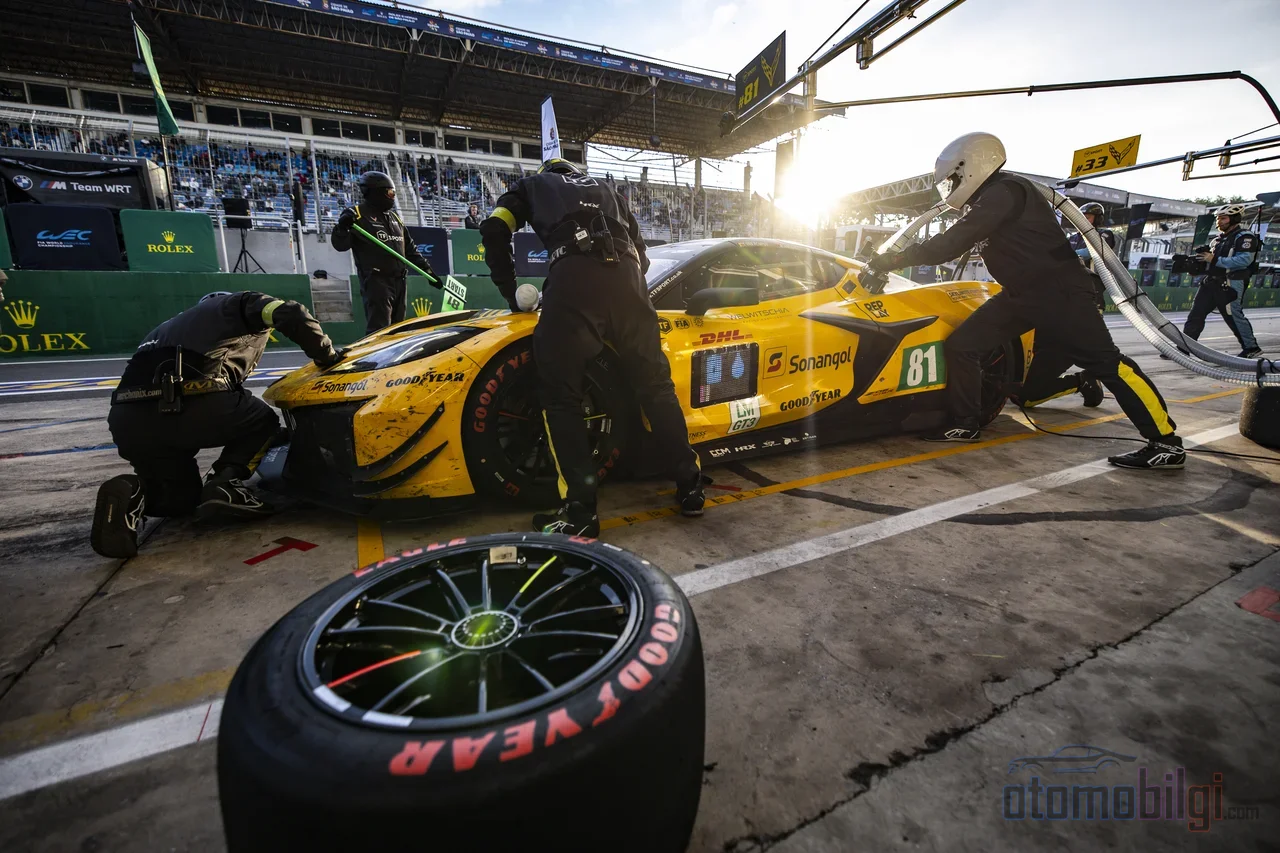
This is where the real intelligence of endurance racing comes to light. A stint usually lasts a full fuel tank or 45-60 minutes. Since cars are already going slowly when FCY is declared, fuel consumption drops, and more than the normal distance can be covered on the same tank. For strategy experts, this is a golden opportunity: trying to go one lap longer by saving fuel, catching the FCY at exactly the right moment, and thereby gaining an extra pit advantage.
The pit window risk is a bonus on top of that. Teams build their plans while taking on the risk of losing significant time if they cannot reach the pits before the yellow flags are lifted. The Race Director also often keeps FCY active for two laps to prevent the pit lane from being clogged with the flow of cars at the first opportunity. Another subtle detail: Under FCY, drive-through or stop-and-go penalties cannot be served - except for those already at pit entry, penalties are postponed until the race restarts. So the yellow flag can change the fate of a penalized driver as well.
As long as the pit lane remained open under FCY, cars that pitted could pass cars on track after crossing Safety Car Line 1, and those exiting the pit exit could pass them up to Safety Car Line 2. It was precisely this rule that created the most hotly debated strategic area for years.
The 2023 Rule Change: Should the Pit Lane Be Closed or Stay Open?
When FCY was introduced to the WEC in 2014, the basic aim was this: to reduce the number of Safety Car interventions per race. But over time a new problem emerged. In the middle of the 2016 season, debate began over cars gaining a significant advantage by pitting at the right moment under FCY. A team with well-timed timing could gain nearly a free lap.
The result was announced in November 2022: From the 2023 season onward, the pit lane would be closed during FCY periods in the WEC and ELMS, and pitting would be prohibited. The official justification for the change was to lessen FCY's impact on race results. In 2023, cars with low fuel or damage were also granted permission for an emergency pit stop for an 5-second emergency refuel or repair. It was also clarified that the pits would remain open during slow zone periods at Le Mans.
So is everyone happy with this? Definitely not. There were team names who thought the pit closure change would make races less exciting by eliminating strategy options; one cited the extremely strict fuel/lap control at Le Mans 2018 as an example of boredom. On the other hand, there were also no shortage of people arguing that FCY makes races more interesting by adding a "variable factor" for teams. The expectation summarized by GR Racing boss Owen Daley was clear: the only proof that the change works will be its application - whether it brings more Safety Cars or more exciting races, only time will tell.
Yellow Flags Made History: Le Mans 2026 and Other Examples
What the rules mean on paper is one thing; what they do on track is another. The freshest example is the 24 Hours of Le Mans on June 14, 2026: In the race where Toyota claimed its sixth victory, a Full Course Yellow changed the course of the race, and leader #12 Cadillac was caught by the FCY speed limit. In a 24-hour marathon, even a single second of distraction can cost this much.
In the same race, the two leading cars completed 355 laps with only a 13-second gap between them. Two cars racing for twenty-four hours finishing with a gap of just a few seconds is the most striking indicator of how much neutralizations can keep a race open.
There are also examples of the deliberate use of the FCY advantage: Nyck de Vries' move at the 6 Hours of Imola was shared as a textbook example of how an FCY period can be strategically exploited. It is also emphasized in official statements that the Safety Car can have a major impact on the outcome of a WEC race and trigger critical strategic decisions for teams. Le Mans also operates a special safety system equipped with three Safety Cars, slow zones, and remote pit stop cameras - meaning the rule mechanism is part of this race's DNA.
The Big Picture in 2026: FCY, the Hidden Player in the Manufacturer War
Let us also evaluate these rules through the window of manufacturer competition. The 2026 WEC calendar has 8 races; distances range between 6, 8, 10, and 24 hours. In Hypercar, seven manufacturers are competing, with Toyota and the Ferrari 499P as the dominant forces. While Toyota claimed its sixth victory at the 2026 Le Mans, Ferrari benefited from Toyota's late-race retirement to open up the championship race at COTA. On the LMGT3 side, Aston Martin, Corvette, Ferrari, McLaren, Mercedes, and others are racing under the two-cars-per-manufacturer rule.
In such a balanced field, FCY and Safety Car windows become factors at least as important as pit stops in determining the fate of a race. If pure speed were everything, endurance racing would be far more predictable; but no one can know when the yellow flags will wave. This uncertainty is the reason team strategists sit excitedly at their computers throughout the night. Isn't this exactly what makes watching races more exciting, in your opinion?
Conclusion: Luck or Strategy?
Although FCY may look like just a safety measure at first glance, it is in fact one of the elements that define the identity of endurance racing. Fuel calculations, pit windows, penalty deferrals and timing decisions - all of them take shape under the shadow of those yellow flags. The pit closure change in 2023 simplified one of the components, but questions such as the choice between VSC, FCY and Safety Car determining the race result remain relevant. In the WEC, the teams that win championships have been the ones that learned not just to be the fastest, but also to be the smartest under yellow flags. And in all likelihood, it will stay that way.
Sources
- Full Course Yellow (FCY) | Motorsports-Regulations.com
- What's new to the WEC in 2023
- Full Course Yellow Procedure Set to Change Next Year
- TOYOTA TAKE ITS SIXTH VICTORY AT LE MANS
- Sebastien Buemi questions WEC race control's VSC/FCY
- Three safety cars, slow zones and pit stop cameras
- WECschool: Safety first at WEC - Full Course Yellow procedures
- Safety Car impact on a FIA WEC race
- Toyota's pain is Ferrari's gain in Texan thriller
- 2026 FIA World Endurance Championship
- The World of WEC: A Beginner's Guide to Endurance Racing
- Everything you need to know about the FIA WEC