Why Is Tire Management Worth Its Weight in Gold in the WEC?
Share This Page
In WEC, tire management is the heart of the strategy that directly determines the race result: teams reduce pit stops with sets designed not to burn tires quickly but to last as long as possible, extend stints, and thus play to win in 6, 8, 10 or even 24-hour races. In F1, the tire degrades and is immediately changed; in endurance racing, being able to hold a single set for one extra lap can sometimes make the difference between a trophy and tears. So how exactly does this work? Let's dive in.
Highlights
- Hypercar cars at the 2026 Le Mans were limited to 14 sets of tires; most teams finished the race with 12 sets completed
- Michelin extended its Hypercar tire supply until 2032 ; Goodyear also holds the same rights in LMGT3
- At the 2026 Imola race, a Toyota completed 105 laps on a single set of Medium tires - a full triple stint
- Changing tires while refueling in WEC is prohibited - pit strategy is built around this rule
- Since 2026, Hypercar tires contain 50% renewable and recycled materials contains
Why Do WEC Tires Require Different Thinking Than F1?
Think of it this way: if an F1 tire is like a single-use coffee cup, a WEC tire is a steel flask. In the FIA World Endurance Championship, tires are designed to provide consistent pace for hours, not to degrade quickly and fall into the Performance Cliff Zone. That's why teams do double, even triple stints - meaning they go through two or three consecutive pit windows on the same tire set.
A rule also comes into play: changing tires while refueling is prohibited. Stop, read that again. This means a team that wants to change tires makes an extra stop or plans its stop according to this rule. This seemingly simple rule turns the entire pit strategy into a puzzle. Fuel windows, tire life, Safety Car probability and driver changes all have to be combined in the same picture.
Compound Choice: The Track Speaks as Much as Temperature
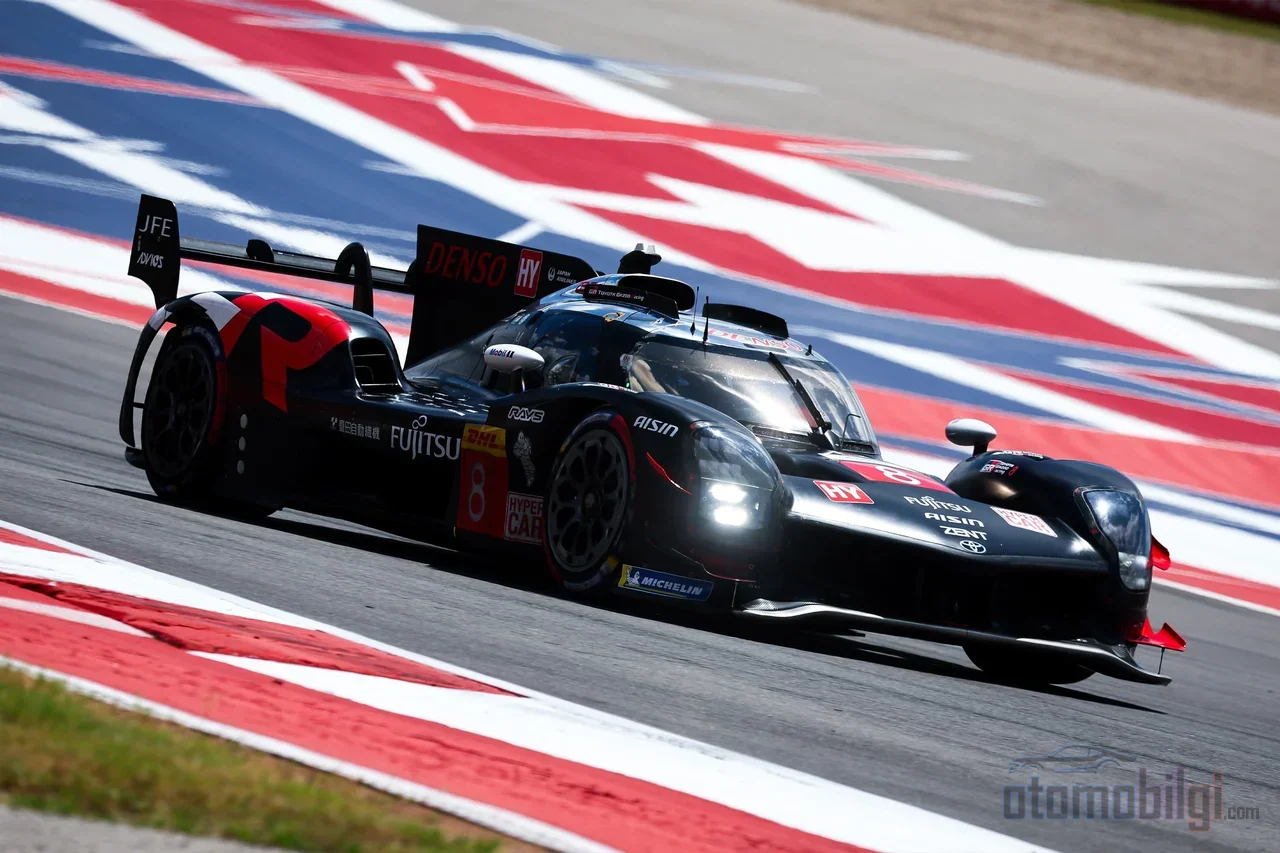
In 2026, Michelin is the sole tire supplier for the Hypercar class; you can lie back and think about it, because this is no small responsibility - 17 cars and 8 manufacturers race on the same tires. Teams are given two dry specifications and one rain tire allowance. Michelin's slick range consists of three compounds: soft, medium and hard. Each is optimized for specific track temperature bands.
- Hard compound: The durability champion on hot asphalt and under high loads
- Medium compound: The joker card of mild conditions, the backbone of most races
- Soft compound: Fast but short-lived, for cool weather and night runs
- Rain tire: The only option on wet surfaces, no limit applies to wet tire allocation
The 2026 Le Mans was like a live lesson of this: the track was at 44°C at the race start and the hard compound was used, it cooled down at night so they switched to softs, and on Sunday afternoon the asphalt rose above 50°C, bringing the hard compound back into play. All three compounds were used in a single race - and it was openly discussed that tire management was one of the decisive factors in Toyota's victory. Isn't that incredible to you? Throughout 24 hours, tire selection proceeded like following a weather report.
Set Limits: Whatever Is Scarce Is Worth Its Weight in Gold
The number of dry tire sets per race is limited, and this limit is as strategic as the race itself. At the 2026 Le Mans, each Hypercar was limited to 14 sets; most teams finished the race with 12 sets, meaning the field used roughly 150 fewer tires compared to 2025. Triple stints became almost standard, and some teams even completed quadruple stints on the same set. Fewer tires, fewer pit stops, less risk - the math speaks for itself.
The different tracks of the same season, however, showed us that strategy doesn't fit a single mold:
- At Imola, the #7 Toyota GR010 Hybrid completed a full triple stint by running 105 laps on a single set of Mediums; while the #8 Toyota won, the brand's 50th WEC victory was celebrated
- At Spa, BMW, due to high-speed loading, changed tires on shorter cycles and took a dominant 1-2 victory with an aggressive pace
- At Interlagos, the left-side tires did double stints while the more loaded right side (especially the right rear) was renewed more frequently - this is exactly what we call an asymmetric strategy
- At COTA, the #50 Ferrari won by mixing the Medium and Hard compounds; because that abrasive asphalt favored fresh tire performance
Here's the golden rule to be learned: maximum tire life doesn't always mean optimal tire strategy. While longevity wins at Le Mans, freshness speaks at tire-consuming tracks like COTA.
Hypercar and LMGT3: Same Discipline, Different Rules
The tire worlds of the two classes diverge considerably. Hypercar cars reach speeds of about 330 km/h and weigh 1,030 kg, while LMGT3 cars cruise at around 300 km/h and are heavier at 1,250 kg. The suppliers are different too: Michelin in Hypercar, Goodyear in LMGT3. At the start of the 2026 season, a major rule change came on the LMGT3 side: an allocation of 6 extra tires for 6- and 8-hour races and 8 for the 10-hour race in Qatar was approved; additionally, the hard compound was removed and 24 tires can be used in a standard 6-hour race. The aim of this is to open up a more flexible testing ground for teams by keeping stint length below roughly 45 minutes.
| Feature | Hypercar | LMGT3 |
|---|---|---|
| Tire supplier | Michelin | Goodyear |
| Number of cars / manufacturers in 2026 | 17 cars / 8 manufacturers | 18 cars / 9 manufacturers |
| Maximum speed | ~330 km/h | ~300 km/h |
| Minimum weight | 1,030 kg | 1,250 kg |
| Dry compounds (2026) | Soft and Hard | Medium only (Hard removed) |
| Typical set life at Le Mans | Triple-quadruple stint | Approximately 4 stints (~40 laps) |
The Le Mans story of LMGT3 is also impressive: in 2026, the series' biggest tire operation took the stage with more than 8,000 tires and more than 120 engineers for 44 cars. Goodyear-shod cars covered a total of 188,747 km; the LMGT3 average of the fastest 100 laps was 1.2 seconds per lap faster than the previous year. A single set carrying an LMP2 rival for 56 laps and 761 km showcases the potential of endurance tires. And good news from the future: the new generation of tires is coming with a 66% sustainable materials target. Meanwhile, Michelin's new Hypercar tire, introduced in 2026, also lowered the race record by about 1 second - so being green is no excuse for being slow.
Why Can a Single Set Change Destiny?
Perhaps the most fascinating part is this: the calculation of whether you can go two stints or three stints on one set can determine how the race will end hours later. One extra pit stop means losing clean air, getting stuck in traffic, and fighting with a classmate. Extending a set by one more stint means redrawing the fuel map, the driver rotation, and even the Safety Car scenarios.
Add the brakes to this: in long endurance races, brake wear is an item of wear that teams constantly monitor, just like tires, because a driver who uses the brakes too much affects both the resistance and the load on the wheel. However, published detailed brake wear data specific to the WEC is limited; so instead of giving precise figures, it would be right to say this: tire management is this series' most measurable and most discussed management item, and the brakes are its silent partner. In Turkish, precise definitions of technical terms like engine knocking are important, but here the real hero is the tire.
Another example from the 2026 season: at Lone Star Le Mans at COTA, the #7 Toyota was forced to pit in the last 10 minutes due to a hydraulic failure, and the #50 Ferrari claimed the reward of its career. The team that set up the tire compound correctly won not from its rival's misfortune but from its own preparation. At the end of the season, Toyota secured the 2026 Hypercar Manufacturers' Championship by finishing 1-2 in the opening 6 Hours of Barcelona - the consistency that marked the season came largely from a strategy desk that made the right tire decision at every track.
Why Can't Fuel and Tires Be Changed at the Same Time?
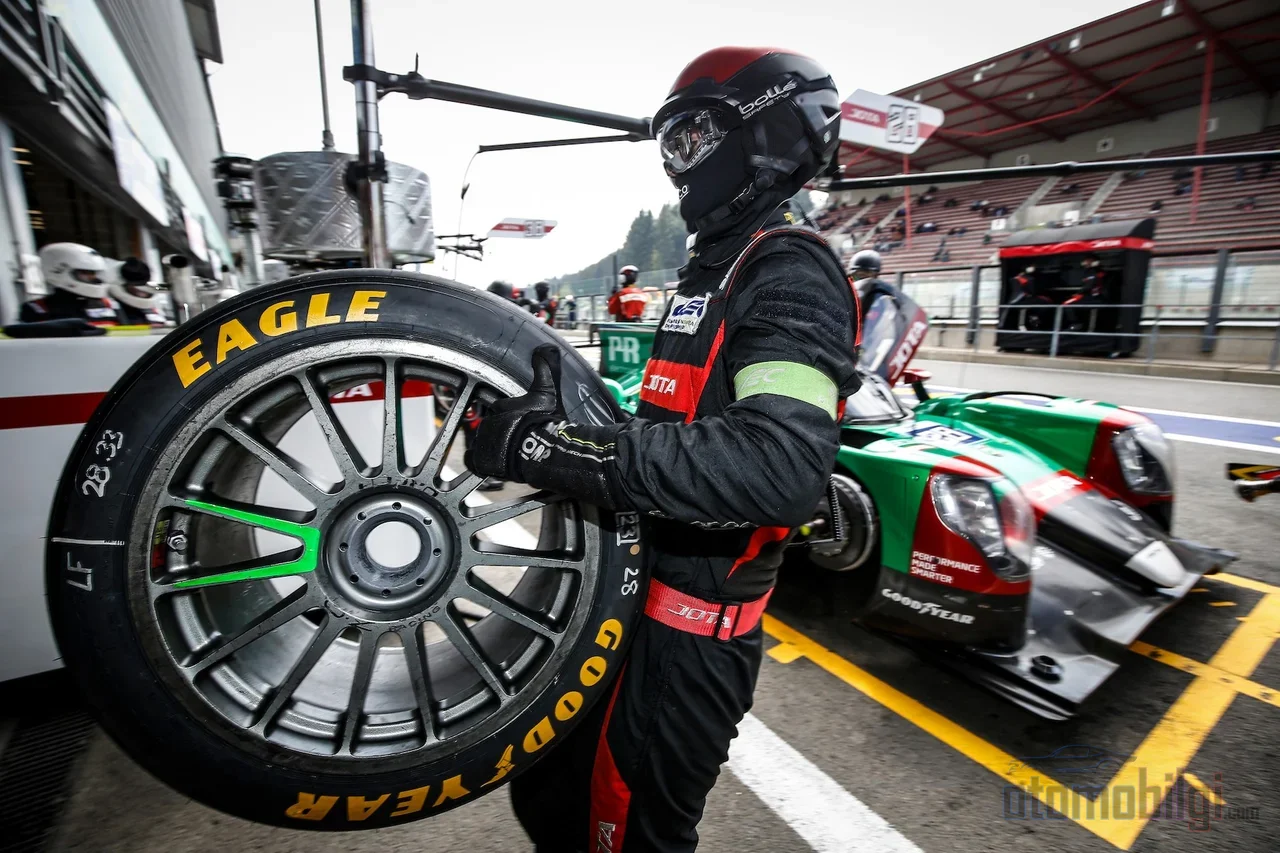
This is one of the most frequently asked questions, and the answer is safety: tire changes are prohibited while fueling is in progress. This turns the pit crew's work into a slow and careful choreography. Teams separate the fuel window from the tire window; in IMSA the crew can change tires while in the WEC it cannot, and only a driver change is possible. The difference seems very small, but it requires rewriting the strategy notebook from scratch.
In short: tire management in WEC is not a tire sector, it's a chess game. Compound choice, set quota, stint length and pit timing are all played on the same board. Next time you watch an endurance race, don't look at the pit lane - look at the stint counter in the corner of the screen, and there you will see on whose name victory is truly written. Which tire decision from this season can you not forget? Don't tell me that 105-lap set at Imola - nobody can beat that.
Sources
- WEC Hypercar & LMGT3 Tyres Explained | Michelin & Goodyear
- Michelin, exclusive tyre supplier for the WEC's Hypercar class
- Michelin designs a greener, more durable Hypercar tyre for 2026
- Genesis Magma Racing's 2026 WEC Season Guide Part 2
- Goodyear Reverts to Medium Tire for All Races in 2026
- What Impact Will The New LMGT3 Tyre Rules Have On The Racing
- Tire changes send LMGT3 into a world of unknowns
- Article 6.5.4 – Tyre Allocation, Test Day Clarification
- Regulations – FIA World Endurance Championship
- Pit Stop Regulations Changed in Updated 2019-20 Regs
- Inside the Goodyear tyre strategy at the 24 Hours of Le Mans