What Happens in 45 Seconds in the WEC Pit Lane?
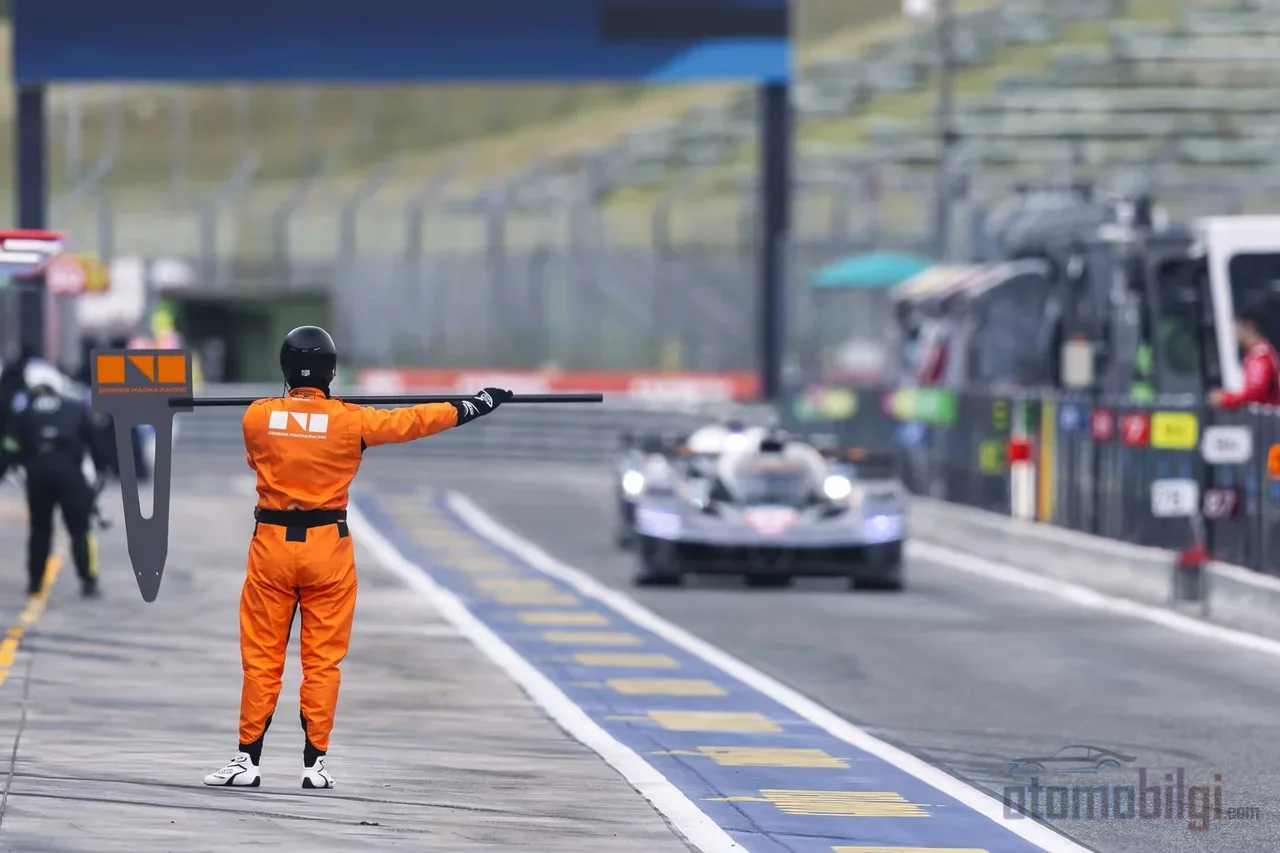
Share This Page
In the WEC pit lane, during that famous stop, the car takes on fuel, all four tires are changed mechanically, the driver is lifted out of the cockpit and a new one is seated, and all of this is usually completed in under 45 seconds. The only thing that actually determines the stop duration is the fuel flow rate; every other operation is choreographed to fit within that time. How? Let's take a look at what goes on inside.
Highlights
- In the WEC there is no minimum pit stop time; everything is planned around the refueling duration
- In a single stop, a crew of up to 11 people can work
- Changing tires while refueling has been allowed since the Super Season
- At Le Mans, a car refuels about 30 times in 24 hours
- Speeding in the pit lane results in a drive-through or stop-and-go penalty
What Happens in 45 Seconds? A Second-by-Second Anatomy of the Stop
First, know this: in the FIA WEC, there is no mandatory minimum stop time like in Formula 1. So instead of a stopwatch, teams face a fuel pump. The duration of the stop is almost entirely determined by the rate at which fuel flows into the tank; in Hypercars, this works out to roughly 25-35 seconds . The team's job is to send the car back on track as soon as the fuel is full.
So what fits into this half minute? The engine stays off (I'll get to that shortly), the driver unclips the harness and climbs out while the windshield is being wiped on one side, tire guns are spinning on the other, the fuel hose is attached, and a new driver is being readied in the cockpit. All at the same time, none of it making the other wait. A team that executes this choreography flawlessly returns to the track with seconds gained; a team that works out of sync in a rush buries the car at the back of the queue.
Driver Change: How Long Can Each One Stay at the Wheel?
The main idea of endurance racing is this: three people share the car. The segment each driver spends on track is called a stint , and stints usually last 45 minutes to 1 hour , meaning they end when a tank of fuel runs out. Each driver is required to complete at least one lap in the race; in other words, passing through the pit lane to count as "driving" doesn't cut it.
There are also time rules: in 6-hour race segments, a driver can stay at the wheel for a maximum of 4 hours , excluding pit time. In Hypercar, there is no separate limit on time in the car during a single stop, but once fatigue and night conditions come into play, teams limit this themselves anyway. Night stints make the equation interesting: keep a tired pilot in, or pit early and bring down a fresh-faced driver with a fuel and tire advantage? Bad timing can sometimes cost a lap.
So why is the engine switched off? For safety, the driver change is done while the engine is off and synchronized with refueling. This minimizes time loss; the engine restarting begins as the fueling operation ends. To use an analogy, it's like the passenger getting off and the passenger boarding meeting at the door at the same time: nobody is waiting for anybody.
Do Fuel and Tires Happen in the Same Stop?
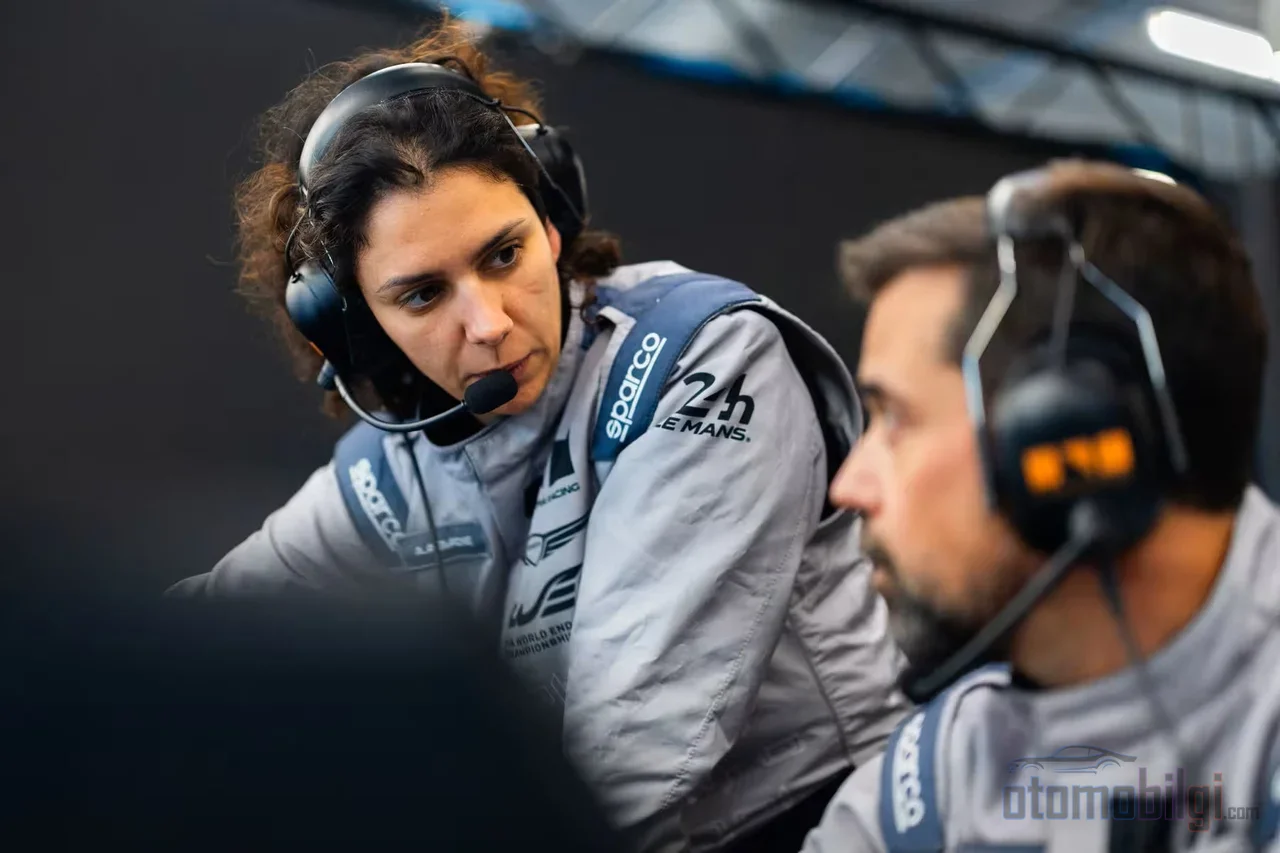
Here's the classic question that sets WEC apart from other series! The answer has two layers: in WEC, tires cannot be changed while the car is refueling; the refueling operation is completed first, then the tires are attended to. Driver changes, however, can be done during refueling, and a specific number of crew members are allowed to clean the windshield. So instead of a "fuel+tires" combination, a "fuel+change+glass" combination is at work.
However, the regulations have changed in the past: Super Season allowed tire changes during refueling; before that, it was completely forbidden. The rule evolved over time into its current form, and teams build their strategies according to the current rules. An interesting detail for comparison lovers: in some GT series, fueling, tire changes, and driver changes can all happen at the same time; WEC, meanwhile, proceeds with a safety-focused, more staged system.
The Pit Crew's 11-Person Legal Limit
In WEC, a maximum of 11 people can work during a stop. Who are they? Let's count quickly:
- 1 car controller
- 1 refueler
- 1 fire extinguisher carrier
- 1 cutoff valve operator
- 1 cockpit assistant
- 4 mechanics
- 2 tire-brake technicians
What's more, only 2 tire guns can be used. As the car enters and exits the pit lane, all crew members must remain behind the safety line, and the engine must be shut off before personnel approach. So there is no army-like setup with dozens of people as in F1; in WEC, everyone has a specific job and no idle time. This turns the job into a race for perfection: fueling up and changing drivers in 30 seconds with 11 people requires serious practice.
Pit Limits, Penalties and BoP: Who Slows Down the Stopwatch?
Speed limit and penalty system
Speeding in the pit lane falls foul of the rules. During race sessions, violations under the limit are usually penalized with a drive-through penalty; more serious overspeed is calculated rounded per kilometer and can turn into a 10-second stop penalty in the stop-and-go area. Under Full Course Yellow, all cars are required to slow to a maximum of 80 km/h ; this adds the risk of a penalty for violations.
The penalty menu consists of three classes: drive-through (entering and exiting the pit lane without stopping), stop-and-go (coming to a complete stop in the pit box and returning to the race), and pit stop time penalty (waiting in the box for a set time before returning to the race). Also, if you see a black flag with an orange circle on it, know that the car has a serious mechanical problem and must make a pit stop and pass inspection.
How does BoP shape pit strategy?
In the Hypercar category, radically different designs from different manufacturers compete, and the balance between them is provided by Balance of Performance, i.e. BoP. The critical point here is this: BoP is not just a matter of "adding weight to the winner." The maximum energy cars can use per stint is determined by BoP, and fuel capacity directly affects the car's range between two pit stops. So if brand A pits every 30 stints while brand B pits every 28 stints, strategists build the entire race accordingly. BoP effectively draws the pit window through fuel figures.
Are Hypercar and LMGT3 Pit Operations Different?
| Feature | Hypercar | LMGT3 |
|---|---|---|
| Class position | WEC's premier class | Close to road cars, the other full-season class |
| Fuel/energy limit | Energy per stint is set by the BoP | Looser tank restriction, pit window is planned based on fuel |
| Refueling time | Approximately 25-35 seconds | Varies by class and tank capacity |
| Tires during refueling | Not allowed | Not allowed |
| Crew limit | Maximum 11 people | Maximum 11 people |
LMP2 is no longer on the full calendar; it enters the WEC calendar only at the 24 Hours of Le Mans. At Le Mans, all 60 cars share the same pit lane, and on a single track Hypercar and GT speeds flow together. This makes pit entries a separate art: a car that cannot find the right gap in traffic loses the race no matter how fast its stop is.
Races Won and Lost in the Pit Lane
Let's talk numbers: at Le Mans a car needs to refuel approximately 30 times in 24 hours. The winning team's goal is to stay under one hour in total across all pit transitions. A team that is frugal by half a second in each of the thirty stops ends the day with a serious advantage. This is exactly why the pit lane is called the "second race track."
Two examples from history: at Fuji, Alpine missed victory by 0.591 seconds and the team explained the reason as not wanting to "sacrifice" one car strategically; in other words, a choice in pit strategy directly determined the outcome. Going further back, from the Le Mans archive, Toyota's defeat by strategy in 2016 and Porsche's advantage based on pit efficiency in 2015 are also examples of the same lesson. At the 2026 6 Hours of COTA, late-race dramas unfolded in both Hypercar and LMGT3; in the modern WEC too, it is often the final stops that draw the result.
At night, things get even more delicate: light is low, reflexes tire, and the crew working in the pit lane is already shaving it fine in a narrow space. Teams manage the race by balancing driver freshness and pit efficiency during night stints; although double or triple stints behind the wheel look advantageous, a tired driver's small mistake can cost the entire night.
A Closing Question: Do You Trust Pit Efficiency?
What I love most about the WEC is this: the fastest car doesn't always win; the team that makes the fewest mistakes wins. Those 45 seconds in the pit lane are like the distilled essence of a race lasting hours. Don't you think this series should be the first example that comes to mind when "pit stop strategy" is mentioned? The next time you watch a WEC race, don't fix your eyes on the stops, but on the 11-person crew in the pit lane; the race's true story is written there.
Sources
- What happens in WEC pitstops? - FIA WEC
- 24 Hours of Le Mans - The lowdown on pit stops (video) - FIA WEC
- Genesis Magma Racing's 2026 WEC Season Guide: Part 2
- 24 Hours of Le Mans: All You Need to Know - Pit Stops and Refuelling
- 24 Hours of Le Mans - All You Need to Know about the Penalty System
- Pit stop tactics: a major factor at the 24 Hours of Le Mans
- Pit Stop Regulations Changed in Updated 2019-20 Regs - Sportscar365
- Alpine lost Fuji WEC victory by 0.591s - Motorsport.com
- BoP Options Available for Changes - Racecar Engineering
- Refuelling Equivalence - FIA WEC technical document
- A look back at three of the best Fuji WEC races - FIA WEC