How Does BoP Work in WEC? The Art of Equalizing Hypercars
Share This Page
In the WEC Hypercar class, Balance of Performance (BoP) is the entire set of weight, power and energy adjustments applied to each car so that race cars built to different designs can compete on a level playing field. The aim is to equalize potential, not results; the driver line-up, strategy and reliability continue to determine the winner. In other words, the system itself hands a trophy to no one, it simply gives everyone a genuine shot at the trophy.
Highlights
- Hypercar minimum weight 1,030 kg, maximum power 500 kW (680 hp).
- The three main pillars of BoP: minimum weight, maximum power, and energy allocation per stint.
- From 2026 onwards BoP tables are no longer shared with the public; they are communicated only to the teams.
- Two different platforms, LMH and LMDh, can race on the same grid thanks to BoP.
- In the 2026 season grid, from Toyota to Genesis eight manufacturers are competing.
How Exactly Does BoP Work: Three Adjustment Levers
Think of it this way: there are five people in a class and all five want to go for a run with backpacks of different capacities. What BoP does is adjust the contents of the backpacks so that no one starts out with an advantage or a disadvantage. In the WEC this adjustment works through three levers: the minimum weight applied to each car, the maximum power controlled by air restrictors and torque sensors, and the amount of energy allowed per pit stop interval, i.e. per stint. Occasionally, the engagement threshold of the hybrid system is also touched.
The best part is this: these adjustments come not from the sky, but from data. Lap times, sector speeds and the telemetry submitted by manufacturers are put on the table. According to Bruno Famin, ACO Deputy General Manager in charge of racing, the final adjustment in weight and power is made specifically for each car and each track. In other words, the balance at Imola does not have to be the same as the balance at Le Mans.
The final adjustment in weight and power is made specifically for each car, each track.
The adjustment amounts are not wild figures like you might think. Sometimes a car's weight is reduced by 15 kilos and brought to 1,033 kg, with power increased by 3 kW. There has even been a case where a model received a 7 kW power increase in the Imola round. These seemingly small touches can determine tens of seconds per lap on track.
LMH and LMDh: Two Different Philosophies, One Balance
The most critical engineering trick of the Hypercar class is actually BoP itself. Because the cars on the grid come from two separate rule sets and, naturally, are not born equal. This is exactly where BoP takes on the role of glue: it compensates for the difference between two-wheel drive and four-wheel drive, aerodynamic performance and center of gravity differences.
| Feature | LMH | LMDh |
|---|---|---|
| Design | The manufacturer designs the entire car | Standard chassis from one of four approved chassis manufacturers |
| Hybrid | Hybrid on the front axle, can be four-wheel drive | Hybrid mandatory at the rear, two-wheel drive |
| Chassis options | The manufacturer's own design | Oreca, Dallara, Multimatic, Ligier |
| Where it races | WEC | Dual eligibility in WEC and IMSA |
| Examples | Toyota, Ferrari, Peugeot, Aston Martin | Porsche, Cadillac, BMW, Alpine |
The numerical framework is also clear: the class's base weight 1,030 kg, and a power cap of 500 kW. With these figures, they lap Le Mans' 13.626-kilometre circuit in about 3.5 minutes . They are not as fast as F1, of course; at Spa an F1 car is some 20-30 seconds ahead. But Hypercars are designed for a job where staying on track and finishing after 24 hours matters as much as speed.
The Big Change of 2026: Not Everything Is Out in the Open Anymore
The 2026 season marks a turning point in BoP history. The FIA and ACO stopped sharing BoP tables with the public this year; the tables are now sent only to the teams concerned. The rationale seems reasonable: to prevent speculation and misinterpretation of the balancing process. But critics say this decision carries the risk of things going the wrong way, because when transparency decreases, the impression of a "secretly managed race" can grow stronger.
The new two-phase system
The new regulation consists of two phases. The first phase covers each car's homologation parameters; that is, the fundamental values entered in the car's registration, which will not change. The second phase is a "rolling" BoP, updated track by track throughout the season. Just before Imola's 2026 opener, a BoP briefing lasting hours was held in the paddock for the press. Managers had also admitted that in the past it was proposed that balancing be "abolished entirely or minimized"; but in the end the system stayed, only the curtain got darker.
Meanwhile, the calendar itself was turbulent: the Qatar 1812 km race was postponed from March to October due to geopolitical tensions, and Imola became the season opener. Qatar and Bahrain were cancelled in July, replaced by the 6 Hours of Barcelona and Monza. Whether we actually have a grid is another matter entirely.
Ferrari's Dominance and the Manufacturers' BoP Battle
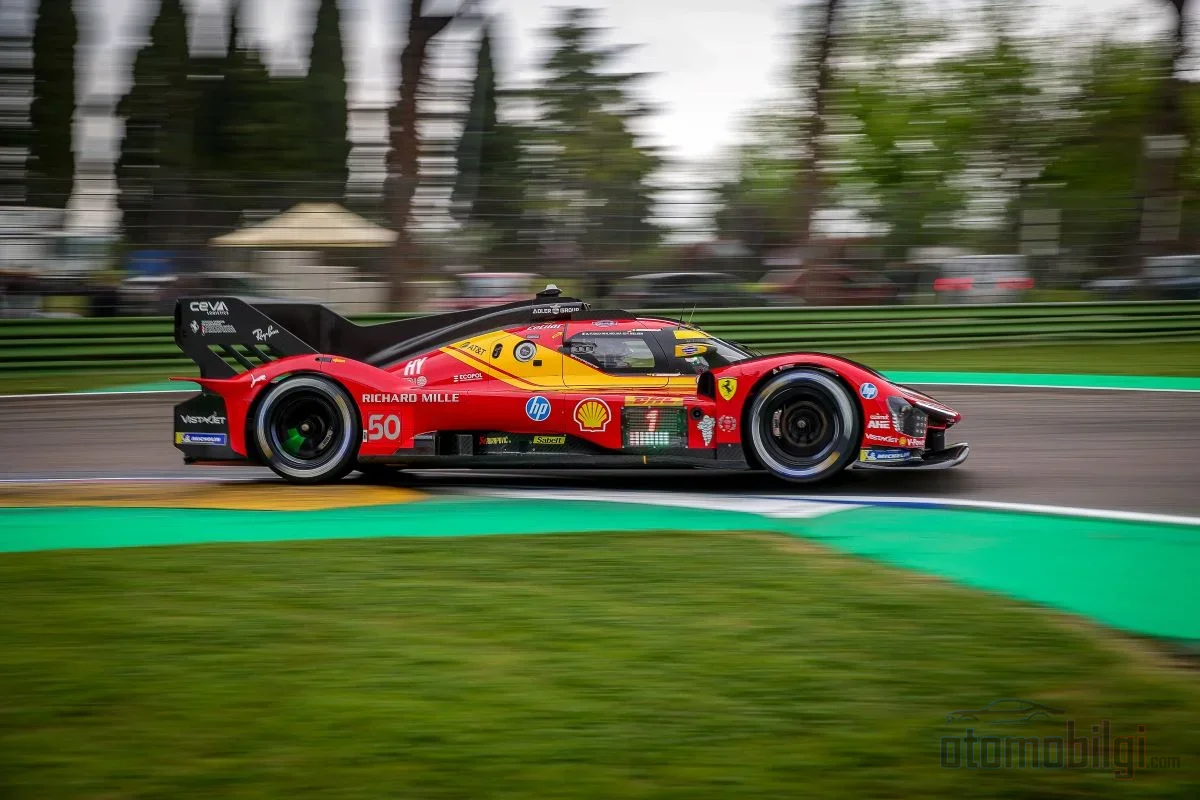
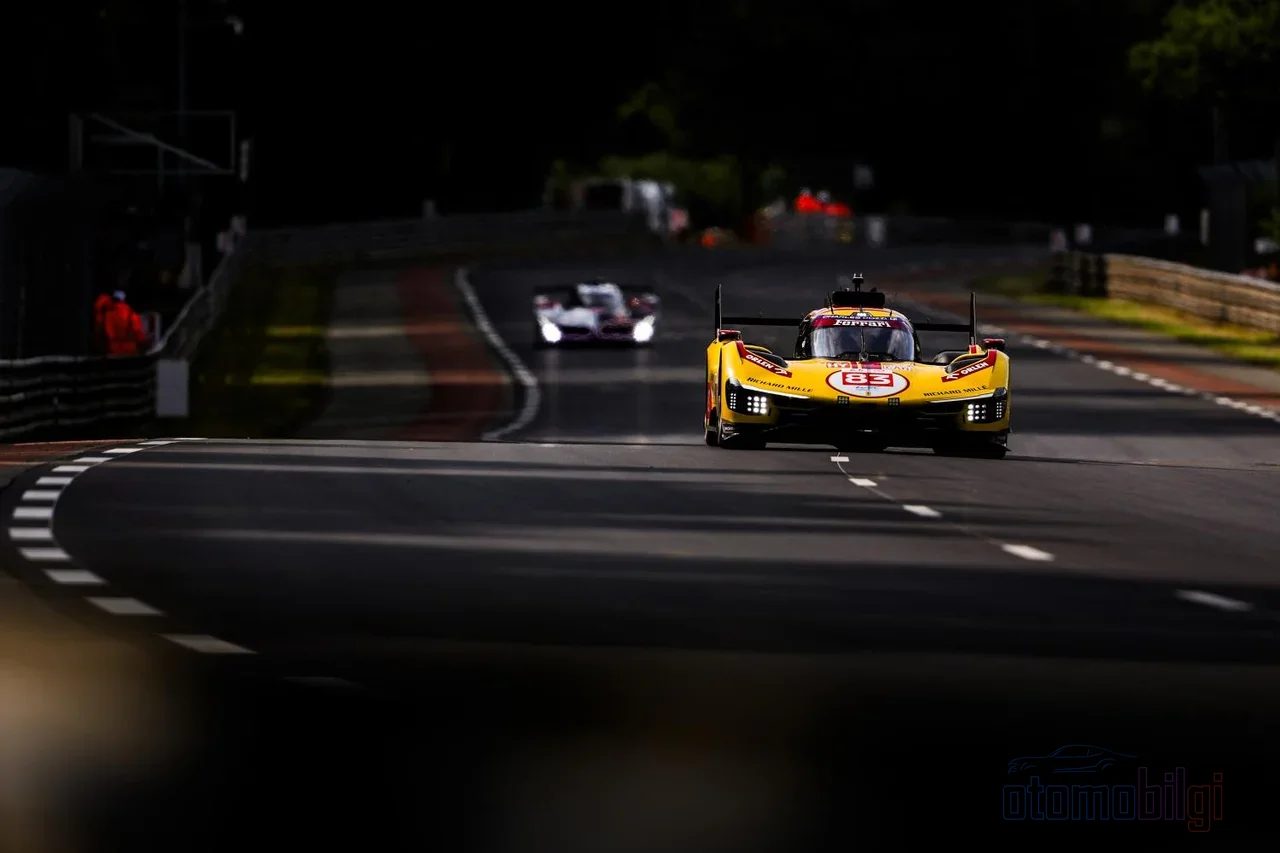
To understand why BoP debates run so hot, just look at 2025. Ferrari 499P won its third consecutive Le Mans victory without making any notable change, and took the WEC championship. Moreover, in Spa qualifying Porsche was 1.4 seconds and Toyota 1.8 seconds behind Ferrari; such a gap between the class's three giants had never been seen before. Ferrari's overwhelming superiority revived the BoP nightmare that had almost faded from public memory.
The managers' answer is classic: adjust. In the Le Mans BoP, LMDh brands received weight increases and power reductions, while the LMH side was glossed over with minimal changes; surprisingly large weight additions were made to the leading cars. In the Spa BoP, Ferrari and Toyota took a "double blow"; seven of the eight Hypercars left the table with weight and power changes. In other words, the picture never stands still; hands and feet are constantly shifting.
The mid-2026 picture is also wild: Toyota started the season on balance by winning at Imola, BMW M Team WRT settled at the top of the manufacturers' standings with a 1-2 victory at Spa, with Toyota second and Ferrari third. In a grid of eight manufacturers - Toyota, Ferrari, Porsche, Cadillac, BMW, Aston Martin, Peugeot, Alpine, and the newcomer with an Oreca chassis, Genesis Magma Racing included - races separated by seconds would be a dream without BoP. Especially if the gap at the end of 24 hours is measured in seconds, that means the equalizer is doing its job.
How Does BoP Differ from GT3's?
BoP is the key not only for Hypercar but also for LMGT3. But the character of the adjustment differs in the two classes. GT3 cars are production-based; that is, since they are derived from road cars, they are already born heavy. In LMGT3, all cars are over 1,340 kg, with some exceeding 1,380 kg. Additionally, driver categorization is decisive: each car must have a Bronze-licensed driver. On the Hypercar side, there is a need for something GT3 does not have: energy allocation per stint. In prototypes, equalizing power alone is not enough; you also need to equalize how far they will go on the same fuel. There is also the track factor: for the remaining stops of the season, the ACO and FIA assign separate values for each track, such as Monza and Fuji, meaning BoP is calculated per track.
Why Is BoP Criticized and Why Is It Still Necessary?
The sandbagging and transparency dilemma
The system's worst side effect has a sweet name: sandbagging. If showing your true pace brings you a weight penalty, hiding your pace in practice sessions becomes the most tempting move. Why would you appear faster than you are? The governing bodies respond to this with mandatory data sharing, but the other side of the coin still stands. In 2026, the hiding of tables deepens this dilemma; some say balancing now works "by the will of the sovereign." The governing bodies even admit the process is not flawless; according to some, the real solution was not BoP but a budget cap, but BoP was chosen because implementing a budget cap is harder.
What Could the Alternative Have Been?
Now let's think the other way around. What would happen without BoP? A three-manufacturer grid where only the biggest spender wins. BoP also significantly lowers development costs; that is why in 2026 even a brand-new marque like Genesis can enter through the door despite the fear of penalties. And remember: the reason two cars that seem to have the same BoP carry the same figures is that they do not share the same history. Balancing is not a snapshot but a constantly updated compass. Can it be perfect? Never. Engine power cannot be split in two, and there is a limit to manually adjusting every track for every car. But in my opinion, eight manufacturers separated by seconds at the end of 24 hours is proof that imperfect balancing is a thousand times better than perfect injustice.
Final Word: Is BoP a Deterrent or a Remedy?
BoP is like a drug that beats at the heart of endurance racing: get the dosage right and the class comes to life, overdo it and the side effects bother everyone. 2026 is a season that both hides this drug's prescription and grows its grid to eight manufacturers. Ferrari's rise, BMW's Spa victory, and Toyota's resistance at Imola show us this: the balancing isn't perfect but the competition is still tight. Do you think hiding the tables will make things easier, or will it inflate the pride of the next BoP crisis? We will get the answer in the season's next 24 hours.
Sources
- Regulations - FIA WEC
- What is "Balance of Performance"?
- 24 Hours of Le Mans - The 2026 Hypercar class preview
- What are EoT and BoP?
- 2026 FIA World Endurance Championship
- Moving target: How the FIA WEC puts BoP to the test
- Hypercar BoP In 2026, What We Do (And Don't) Know About
- WEC Hypercar Class Explained: The Complete 2026 Guide
- What the WEC is risking with its Hypercar balancing measures
- Ferrari steamroller revives a BoP nightmare
- Hypercar BoP Defined for Four Races Including Le Mans
- WEC 2026: What you need to understand about how the BoP works in hypercars
- WEC: All About That BoP