From Hypercar to LMGT3, the WEC Endurance Championship
Share This Page
WEC, the FIA World Endurance Championship, is a long-distance racing series based on class-based and manufacturer competition that spreads the single-race legend of Le Mans across an entire season; since 2012 it has been the pinnacle of international endurance racing with races ranging from 6 to 24 hours. In short: it is a championship not of cars that finish on a Saturday evening, but of cars and teams that endure through the night.
Highlights
- On the 2026 season grid there are 14 manufacturers, 17 Hypercars and 18 LMGT3 cars
- Hypercar: approximately 670 hp, 1,030 kg minimum weight, speeds close to 340 km/h
- At Le Mans, a car refuels approximately 30 times in 24 hours
- Le Mans distributes almost twice the championship points: 50 points to the winner
- Since 2022, all WEC cars have been racing on 100% renewable fuel
What Is WEC and How Does It Work?
The FIA World Endurance Championship was founded in 2012 by the FIA and the Automobile Club de l'Ouest (ACO). It is not entirely an innovation, either: the series is a continuation of the Intercontinental Le Mans Cup, launched by the ACO in 2010, and a revival of the World Sportscar Championship that ended in 1992. In other words, we can call it the modern form of a structure whose roots go very deep.
The idea is simple but polished: races are held in different countries at different lengths throughout a season, and the driver and manufacturer who collect the most points are declared world champions. The races span multiple continents, in countries such as Italy, Belgium, Brazil, the USA, Japan, Qatar and Bahrain. The heart of the season, without question, beats in mid-June in France: the 24 Hours of Le Mans.
What may surprise you most is the unpredictability. In 2025, the Hypercar class produced 7 different winners in 8 races, and even in LMGT3, 6 different names reached victory. The scenario we are used to in F1, where the same team wins every race, is almost never seen here. In my view, this is one of the sweetest aspects of the series.
2026 Calendar: The Journey from Qatar to Bahrain
2026 is the series' 14th season, and the calendar is now well established. The season opens with the 1812 km marathon in Qatar, then continues to Europe and a tour across continents:
- Qatar 1812 Km – March 26–28
- 6 Hours of Imola – April 17–19 (preceded by the official Prologue test on April 14)
- 6 Hours of Spa-Francorchamps – May 9
- 24 Hours of Le Mans – mid-June
- 6 Hours of São Paulo – July 12
- Lone Star Le Mans (COTA, USA) – September 4–6
- 6 Hours of Fuji – September 27
- 8 Hours of Bahrain – November 7
Race lengths also vary according to this pattern: 6 hours at Imola, Spa, Interlagos, COTA and Fuji; 8 hours in Bahrain; 1812 km in Qatar, equivalent to roughly 10 hours; and exactly 24 hours at Le Mans. In a race, you do not make your car the fastest; you build it to withstand 24 hours. This is exactly where the difference begins.
Hypercar and LMGT3: Two Classes, Two Different Worlds
The most frequently asked question about WEC is this: "How do these cars differ from each other?" To answer that, it's best to put the two classes side by side.
Hypercar: The Pinnacle of Prototypes
Hypercar is the flagship class of the series. Here the goal is purpose-built prototypes and professional drivers. The regulations encourage cost-effective solutions by carefully controlling performance; that's why two different concepts can race in the same class: LMH (Le Mans Hypercar) and LMDh. The Hypercar class began in 2021 with the LMH entries of Alpine, Glickenhaus and Toyota; LMDh cars have been able to compete full-time since 2023.
The technical limits are clear: approximately 670 hp, a fixed 1,030 kg minimum weight and a top speed ceiling of around 340 km/h. In addition, since the 2025 season, manufacturers have had to field at least two cars to enter Hypercar. Bronze-rated drivers are banned from racing in this class; drivers are classified by the FIA as Bronze, Silver, Gold and Platinum.
On the 2026 grid, the Hypercar side features Aston Martin, Alpine, BMW, Cadillac, Ferrari, Genesis, Peugeot and Toyota. A small detail, but one I really like: The Aston Martin Valkyrie is the only Hypercar that doesn't use a hybrid system.
LMGT3: The Closest Thing to a Road Car
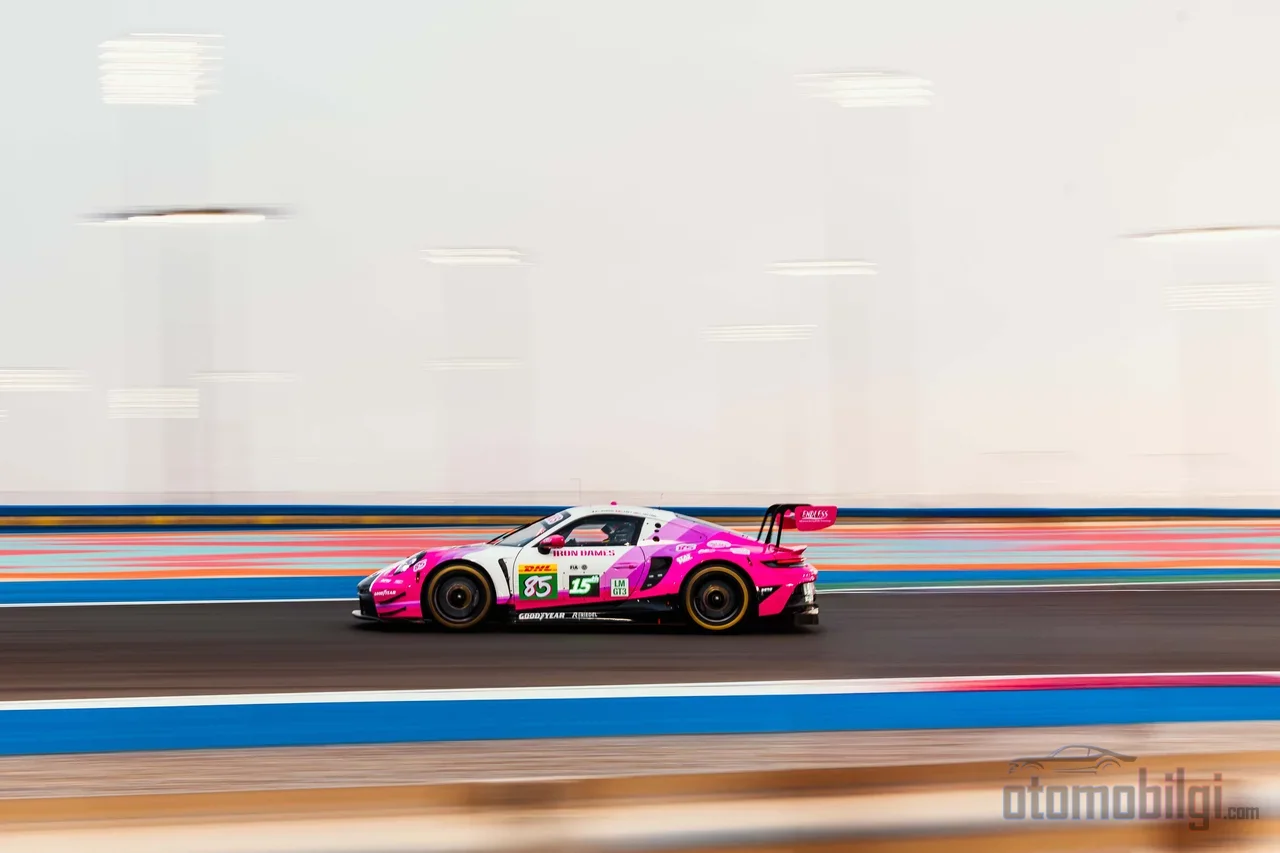
LMGT3 replaced LMGTE in 2024 and is based on the FIA's global GT3 technical platform. So after the spaceship-like prototypes of Hypercar, here you watch GT cars that are much closer to road vehicles. The entry rule is interesting: only established manufacturers producing more than 2,500 passenger vehicles per year can enter this class. The class focuses on privateer teams and Pro-Am line-ups; each crew must have at least one Bronze and one Bronze or Silver-rated driver. The tires come from a single supplier: Goodyear in LMGT3, Michelin in Hypercar.
There is also a success ballast applied in LMGT3: cars that achieve good results carry extra weight (in all races except Le Mans). In other words, frequent winners aren't left off lightly. Each manufacturer can enter a maximum of two LMGT3 cars; entry priority is given to brands that are also present in Hypercar.
| Feature | Hypercar | LMGT3 |
|---|---|---|
| Power | ~670 hp | Lower, road car based |
| Character | Purpose-built prototype | Road car-based GT |
| Tires | Michelin | Goodyear |
| Driver rule | Bronze drivers banned | At least one Bronze required |
| Success ballast | None | Yes (except Le Mans) |
The Manufacturers' Battle: Ferrari, Toyota, Porsche and the Newcomers
In 2026 the grid has 14 manufacturers, equal to the record level: Alpine, Aston Martin, BMW, Cadillac, Corvette, Ferrari, Ford, Genesis, Lexus, McLaren, Mercedes-AMG, Peugeot, Porsche and Toyota. This density is something unseen in endurance racing for years.
Ferrari is currently the benchmark. In 2025 it took its third consecutive Le Mans victory, won the Lusail-Imola-Spa triple and claimed both the Manufacturers' and Drivers' championships. In 2026 it is in the favorite's position with the revised 499P: Giovinazzi/Pier Guidi/Calado in the #51, Molina/Fuoco/Nielsen in the #50, and Kubica/Ye/Hanson in the #83.
Toyota had a tough 2025; their only win came in Bahrain with the trio of Kobayashi/Conway/de Vries. Their answer is ambitious: the new TR010 Hybrid developed with the 'Evo' joker and a 3.5-liter V6 engine. The team name has also changed from TOYOTA GAZOO Racing to TOYOTA Racing. A new adventure is Genesis Magma Racing: the GMR-001 uses a 3.2-liter twin-turbo V8, with Cyril Abiteboul at the head of the project and François-Xavier Demaison in the design team. The driver line-ups are experienced too: Lotterer/Derani/Jaubert and Chatin/Juncadella/Jaminet.
And what about Porsche? There are signals of a departure from the Hypercar program (963); perhaps that is the best proof of how much this class is a revolving door. In the mid-season manufacturers' standings, Toyota is currently 1st, BMW 2nd and Ferrari 3rd. In other words, nobody is comfortable. Endurance Strategy:
Pit Stops, Driver Rotation and the Art of Tires Pit Stop, Driver Rotation and the Art of Tires
In the WEC, you cannot change tires during refueling; driver changes, however, are allowed. This rule shapes strategy fundamentally. An interesting comparison: in IMSA, the crew can change both tires and drivers. At Le Mans, a car refuels roughly 30 times in 24 hours, and every second is worth gold.
Teams can run tires for two or three stints to reduce the number of pit stops; WEC strategy, unlike F1, is based on maximizing tire life. The WEC strategy, unlike F1, is based on maximizing tire life. To give a concrete example, at Le Mans some drivers can complete up to four consecutive stints on a single set of tires - that is, up to 600 km, nearly twice the distance of an F1 race. There is also the driver side: three drivers per car, rotation for fatigue management and performance optimization. In short, we can say it's not "the fastest car wins" but "the one who makes the fewest mistakes and has the best plan wins." I think this is what makes the series so addictive to watch.
Why Is Le Mans So Valuable? Le Mans Neden Bu Kadar Değerli?
The points logic changes according to race length, and Le Mans gets a significant premium:
- 8 and 10-hour races (including Qatar): 38, 27, 23, 18, 15, 12, 9, 6, 3, 2 points
- 8 and 10-hour races (including Qatar): 38, 27, 23, 18, 15, 12, 9, 6, 3, 2 points
- 24 Hours of Le Mans: roughly double - 50, 36, 30, 24, 20, 16, 12, 8, 4, 2 points
11th and beyond receive half points. and vehicles completing the positions after that receive half points. There is also a Hyperpole bonus: in each round, the crew that wins pole position in qualifying collects 1 championship point. The qualifying format has also been running in separate blocks since 2024: After the 12-minute first session, the 10 fastest cars advance to the 10-minute Hyperpole.
Roots: Le Mans from 1923 to Today
The 24 Hours of Le Mans was first run in 1923 and is still the oldest endurance race in active status. Peugeot wrote its name into history by winning on this legendary track in 1992, 1993 and 2009. Toyota won the 2026 running; the series marks its 95th in 2027. 95th edition in 2027, a year described as the point when the Hypercar era reaches full technical maturity.
The technology side is surprisingly green, too. Since 2022, TotalEnergies Excellium Racing 100 has been in use: a 100% renewable fuel containing bio-ethanol and ETBE produced from wine waste, generating at least 65% fewer greenhouse gases compared to conventional fossil fuel. From 2026, the new Michelin Pilot Sport Endurance tires on all Hypercars contain 50% renewable and recycled material; LMGT3 teams, meanwhile, have access to the Goodyear Eagle Medium and wet tires. Even race cars are adapting to the world - and without slowing down.
A Short Glossary for Beginners
- Stint: The section of laps a driver completes back to back; fuel tank or tire life limits a stint.
- Hyperpole: A 10-minute final duel featuring the 10 fastest cars from the first qualifying session.
- Success ballast: Extra weight added to LMGT3 cars that achieve good results; it keeps competition balanced.
- Driver classes: The FIA's Bronze, Silver, Gold and Platinum ratings; they determine who can race in which class.
- Goodyear Wingfoot Award: A special award given to the driver who sets the fastest average lap time in their stints throughout the campaign.
Now I ask you: who are you going to root for this season? The reigning champion Ferrari's continuity, Toyota's Evo move, or Genesis's fairy tale built from scratch? Whichever the answer, it seems you have chosen a great year to start following the WEC with the season opener in Qatar.
Sources
- What is the WEC ?
- FIA World Endurance Championship
- 2026 FIA WEC calendar builds on stability of recent seasons
- FIA WEC - Official website of the World Endurance Championship
- Lone Star Le Mans 2026: Schedule, News & Start List
- Regulations
- Le Mans Car Classes - Hypercar, LMP2, LMGT3
- What is a Le Mans Hypercar? Entries, rules and specs
- ABOUT | 2025 | WEC
- 2026 FIA World Endurance Championship
- Genesis Magma Racing's 2026 WEC Season Guide
- 2026 FIA WEC Provisional Entry List (PDF)
- Pit stop tactics: a major factor at the 24 Hours of Le Mans
- WEC Regulations - TotalEnergies
- 2026 standings
- Everything you need to know about the FIA WEC
- WEC Hypercar & LMGT3 Tyres Explained