Formula 1 Drivers Who Lost Their Seats Are Moving to WEC
Share This Page
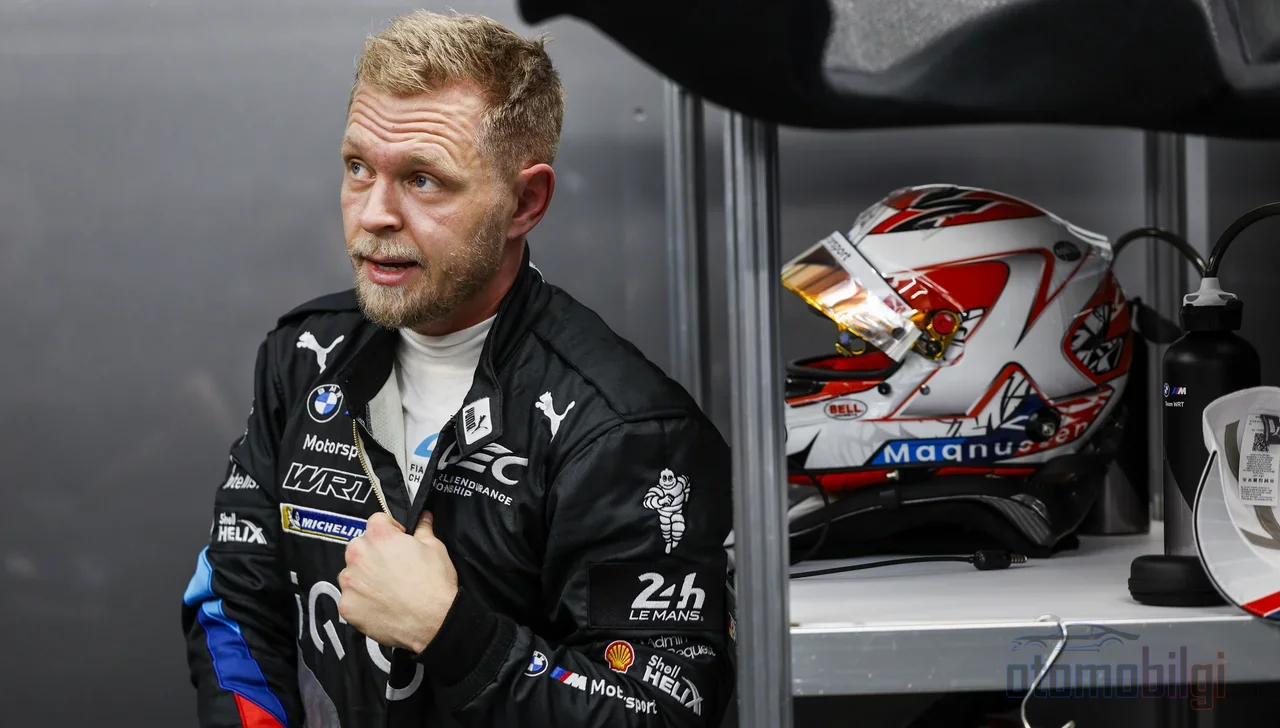
Most star drivers who lost their Formula 1 seat or left of their own accord continue their careers in the WEC, i.e. the World Endurance Championship. The reason is simple: Hypercar cockpits offer top-level competition, a long race rhythm, three-driver teamwork, and a career that can last far longer than F1. Dozens of names, from Kevin Magnussen to Antonio Giovinazzi, have followed this path, and most have no regrets.
Highlights
- At the 2026 Le Mans, 16 former F1 drivers raced on the grid
- The 2026 WEC has a record line-up with 14 manufacturers
- Antonio Giovinazzi became the 2025 Hypercar champion with Ferrari
- At Le Mans, each driver has 4-5 stints, meaning hours of uninterrupted duty
- Logan Sargeant is making his debut in LMGT3 in 2026
Why Do Former F1 Drivers Race in WEC Hypercar?
In my opinion, the question should be turned completely around: Why should a driver who was kicked out of F1 sit around and be sad? The world's biggest manufacturers - Ferrari, Toyota, Porsche, Cadillac, Peugeot and many more - offer genuinely competitive cockpits in the Hypercar class without taking shortcuts. There are 14 manufacturers on the 2026 grid; Names like Genesis, Lexus and Ford are only just starting to take their places. That means incredible demand in the driver market.
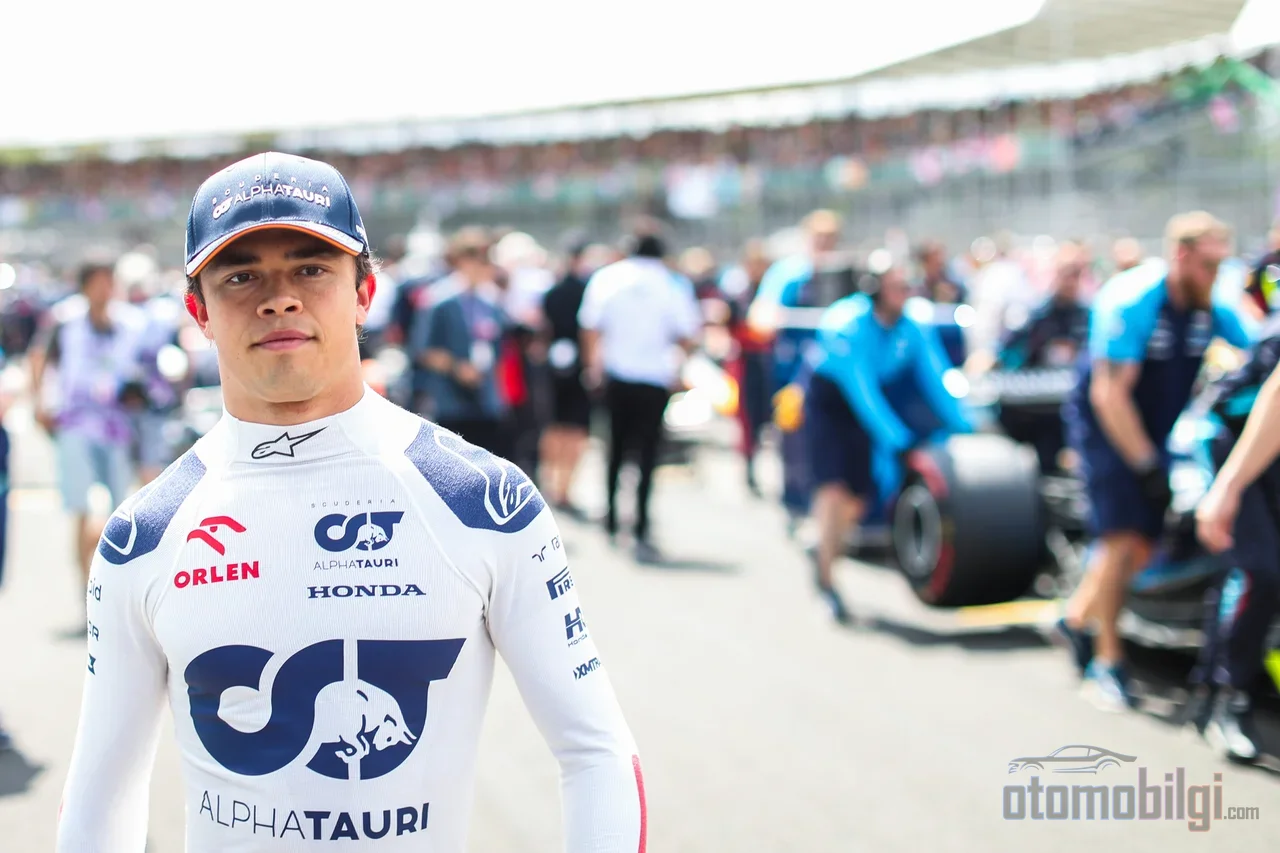
There are also concrete examples. Kevin Magnussen, Nyck de Vries, Logan Sargeant and Antonio Giovinazzi all moved to the WEC after losing their F1 seats in recent years. Giovinazzi's story is especially nice: He came up through Ferrari's young driver academy, was included in the line-up when Ferrari's Hypercar adventure began, and in 2025 reached the championship with the Italian team. In other words, a driver who could not fully show his potential in F1 can rise to the very top in endurance racing. It makes you think: it turns out that door was not really closed after all.
And then there are those going the other way. It is claimed that Fernando Alonso is considering leaving F1 at the end of 2026 and returning to the WEC with Aston Martin's Hypercar program - the fact that he is 45 and still at the center of these discussions says something on its own. For Mick Schumacher, meanwhile, the collapse of the Cadillac F1 deal was a development that also weakened his Hypercar seat chances. Seats are limited, competition is fierce.
Three Drivers, One Car: How Does the Stint Logic Work?
In F1, the car belongs to one person, period. In the WEC, however, a 6-hour race is shared among three drivers. Each driver's turn behind the wheel is called a "stint", and a stint usually lasts until the fuel in the tank runs out. At Le Mans, things get even bigger: On the 13.6-kilometer lap, stints can reach 2-3 hours depending on fuel and weather conditions, with 4-5 stints per driver. To use a simple analogy: If F1 is a sprint race, the WEC is not an idle test - it is more like the smartest-run version of a marathon.
The biggest cultural difference here is not ego, but teamwork. Pit stops can take up to five minutes, and in those five minutes there is a driver change, refueling, and repairs if needed. A mistake you make may have to be compensated for by your teammate, and their clean lap could turn into your championship points. In F1, you can say "I won"; here you say "we won," and according to some drivers, that is a far more satisfying kind of victory.
This system also has a rules side: In Hypercar, Bronze-class (the lowest experience grade) drivers are banned, but in LMGT3 each crew must include at least one Bronze and one Bronze/Silver driver. In other words, the lower class keeps a door open for amateur and part-time racers. Former F1 names, meanwhile, are mostly classified as Platinum or Gold - top-level drivers who have succeeded in organizations like F1 match exactly these grades.
F1 or WEC? The Difference in Rhythm, Focus, and Mental Load
An F1 race can last up to two hours, and during that time a single mistake can prove costly. It demands focus that is lightning fast without being wall-numbing boring - and physically, it is no trivial matter either; there is even an academic review showing that F1 drivers are among the racers with the highest grip strength. So what about endurance?
The test of endurance is different: mental resilience. You need to calibrate your dose of stress and adrenaline correctly and stay sharp for hours. Just think - at Le Mans, some drivers can complete four consecutive stints on a single set of tires, roughly 600 kilometers. That distance is exactly twice an F1 Grand Prix! Moreover, using those tires without wearing them beyond one stint adds a tactical depth that does not exist in F1.
On the fairness side, a different mechanism is at work: Balance of Performance, that is, balancing the performance of different manufacturers' cars. While in F1 the best-funded team usually runs up front, in WEC the BoP keeps the brands extremely close to each other coming out of a corner. In short, it is a system designed to let driver skill shine through more. If we add that the 2025 Hypercar season produced 7 different winners in 8 races, you understand just how serious this unpredictability is - and honestly, it works in our favor as spectators too!
So what about talent? Can the two disciplines really be compared?
Let's think about it this way: The question "Is a WEC driver as talented as an F1 driver?" is like weighing two different sports on the same scale. The first studies examining the psychological skills of F1/F2 drivers reveal that Formula 1 drivers display superior concentration - there is no dispute about that. But what is measured in endurance is different: pace management, a care we might call tire affection, concentration during night hours, and the ability to stay on your feet for a long time without making mistakes. While some say "those who are average in F1 go to WEC," the other side rightly says this: the demands of the two disciplines are different, so this is a matter of recognition, not ranking.
Career Extension: A Second Peak After 30
In F1 there are only twenty seats, but talented young drivers in droves show up at the door every year. In WRC, the picture is much more welcoming. Hypercar cockpits offer the chance to continue competing at the top level after F1, and the 2026 Hypercar grid features dozens of former F1 drivers - even at Portimao alone, a full dozen former F1 names competed. There are also those running dual programs; some drivers race in both other series and endurance, staying sharp all year round.
The 2026 driver moves also show this appeal: Jack Aitken moved to the #38 Cadillac after Jenson Button's retirement. Nick Cassidy joined Peugeot, António Félix da Costa and Victor Martins moved to Alpine, and Daniel Juncadella transferred to newcomer Genesis. In the #7 Toyota, Kamui Kobayashi, Mike Conway and Nyck de Vries continue. The Italian giant Ferrari, meanwhile, did not touch its winning lineup: In the #51, Giovinazzi, Pier Guidi and Calado; in the #50, Molina, Fuoco and Nielsen remained unchanged.
| Race | Duration / Distance | Points for the Winner |
|---|---|---|
| Imola, Spa, Interlagos, COTA, Fuji | 6 hours | 25 |
| Bahrain | 8 hours | 38 |
| Qatar (Qatar 1812 km) | Approximately 10 hours | 38 |
| 24 Hours of Le Mans | 24 hours | 50 |
This points table actually summarizes the spirit of the WEC: the season is spread across not a single race, but an entire story. Hyperpole awards an extra 1 point for pole position, but the real reward is still standing after 24 hours.
The WEC format: Hypercar, LMGT3 and the Record Number of Manufacturers
Let's briefly recall: The WEC is a championship founded in 2012 by the FIA and the Automobile Club de l'Ouest, consisting of races ranging from 6 to 24 hours. There are two main classes. Hypercar is the top tier - LMH or LMDh prototypes with professional drivers. LMGT3, which replaced LMGTE in 2024, is the class for production-based GTs: run on Goodyear tires, with private teams in the majority and Pro-Am lineups.
The 2026 calendar is also legendary: Imola, Spa, Interlagos, COTA, Fuji, Qatar, Bahrain and, of course, Le Mans in mid-June. The season started at the end of March with the 1812-kilometer opener in Qatar. This diversity is a separate advantage for drivers too - racing at the world's most varied circuits is a rare line on a CV.
Looking to the future, the picture becomes even more exciting: Genesis Magma Racing makes its Hypercar debut this year with the GMR-001, McLaren will join with United Autosports in 2027, and Logan Sargeant is planning a full Hypercar season with Ford in 2027. Porsche withdrew from Hypercar in 2026 but stayed in LMGT3 - meaning the balance is constantly shifting even between classes. Right now, Toyota leads the Hypercar Drivers' Championship: with the #8 car, the trio of Buemi, Hartley and Hirakawa leads, and in the Manufacturers' standings Toyota is ahead of BMW and Ferrari. Sébastien Buemi's 100th WEC race - becoming the first driver to reach that milestone - is one of the pleasant notes of this season.
Conclusion: Doors Not Closing, but Reopening
This driver traffic flowing from F1 to the WEC is not a story of decline - quite the opposite. Endurance racing has now become the center not only of post-F1 careers, but for some, of their main goals. Three-driver stints, a strategy battle lasting hours, realistic competition balanced by BoP, and a 14-manufacturer grid... These are the things that draw drivers in and lock spectators to their screens. Which name do you think will one day be the most talked-about in a Hypercar cockpit? In my opinion, that day is not far off at all.
Sources
- What is the WEC? - FIAWEC
- FIA World Endurance Championship - Wikipedia
- 2026 FIA World Endurance Championship - Wikipedia
- Points System - FIAWEC
- Everything you need to know about the FIA World Endurance Championship - The Athletic
- All the ex-F1 drivers taking part in the 2026 Le Mans 24 Hours - Formula1.com
- Everything we know about tense WEC driver market - The Race
- 3 Unique Things About Endurance Racing - Circuit of The Americas
- FIA WEC 2026 entry list revealed - 24h-lemans.com
- Formula 1 drivers demonstrate superior concentration - PMC
- How Endurance Racing Works - HowStuffWorks
- Alonso weighs quitting F1 for a WEC return with Aston Martin - Autonext