Night Shifts and Fuel Savings: How Victory Is Planned in WEC?
Share This Page
In the WEC, victory goes not to the fastest car but to the best-managed one: the outcome of the race is determined by driver stints, fuel saving, tire life, pit stop timing, and the risks taken during the night hours. In short, in endurance racing, the helm turns at the engineers' table.
Highlights
- A stint typically lasts one tank of fuel: roughly 45 minutes to 1 hour
- Each car runs with a maximum of three drivers in rotation; a single driver may not exceed 14 hours
- At Le Mans, a car refuels roughly 30 times in 24 hours
- A pit stop under the safety car can gain you 10-12 seconds compared to a green flag stop
- Hypercar tires can be used for two or three stints
Why Does the Racing Logic Work Differently in the WEC?
In most racing series the goal is clear: to cover a set distance as fast as possible. The WEC says exactly the opposite. Here a fixed duration is given, and the winner is the car that covers the longest distance within that time. So the question is not "how fast?" but "how consistent over 24 hours?" The races range from 6 to 24 hours, and the pinnacle of the series is Le Mans, part of motorsport's Triple Crown. In 2026 there were two categories on the grid, Hypercar and LMGT3, and a full 14 manufacturers including Toyota.
The natural consequence of this format is this: setting one blistering lap is of no use at all. What matters is working out in advance, at the table, the strategy that will get the car to the finish line both fast and intact. And it all makes sense. Look, think of this balance with an analogy from everyday life: in a marathon, the man who runs the first kilometer faster than everyone doesn't win; the one who manages his pulse best does. The WEC is the same, just a 24-hour marathon.
Driver Stints: The Stint Concept and the Change Schedule
In endurance racing, a "stint" is the name given to the period during which the car runs through one tank of fuel. In practice this usually lasts 45 minutes to 1 hour At most three drivers take turns at the wheel in each car, and driver changes are usually timed to coincide with refueling; that is, roughly every 2-3 stints, about once every 2 hours.
So how do engineers plan these changes? Not randomly. In Hypercar, a driver's total time at the wheel is limited by a certain upper cap, so who stays on duty in which time slot is calculated in advance. For the night hours, experienced, cool-headed pilots are generally preferred, while the most dynamic drivers are brought in at first light. In other words, there is no simply taking turns in the car; there is a shift schedule written hour by hour in the team's head. Also, Bronze category drivers are not permitted in the Hypercar class; this class is entirely a battle of professional pilots.
Fuel Saving: Winning by Looking Slow
Here is endurance racing's most paradoxical sentence: sometimes lifting off the throttle puts you ahead. Why? Because in Hypercars, fuel and energy consumption is measured via a virtual tank; a sensor beside the car detects it when fuel is added, and the energy budget is updated accordingly. So every car has an energy limit it can spend over the course of the race, and whoever manages that budget badly slams into the wall mid-race.
The best-known weapon in the drivers' hands is "lift-and-coast": releasing the throttle early before entering a corner and letting the car slow itself. Add short and early gear shifts to that, and the tank's lifeline stretches, allowing an unnecessary pit stop to be skipped. Some drivers also use tricks like tucking in behind the car ahead in traffic to reduce air resistance; the aim is always the same: to make the most of every last drop of fuel while maintaining the pace.
But be careful - there is a balance here. Fuel saving only pays off if it is done gradually and consistently from the start of a stint to the end, not all at once over the race. Refueling too early costs valuable seconds, while waiting too long carries the risk of ending the race in the middle of the track. In short races, saving barely makes any difference, but in long races it can determine the winner. Fuel is more critical than tires; because there is no limit to changing tires, but running out of fuel admits no forgiveness.
There is also a lesser-known side: the fuel itself is a matter of strategy. With long-lasting racing fuels, beyond the octane number, issues such as the fuel's stability under heat, the risk of vapor lock, and long-term detonation resistance are taken into account. Fuel sprayed on a hot afternoon at the track does not always behave the same as fuel in the cool of the night.
Tire Management: A Completely Different Game from F1
In F1, the tire is chosen for per-lap performance and changed quickly. In the WEC, the name of the game is maximizing tire life. To reduce the number of pit stops, teams can use the same tire set for two, even three stints. Every pit stop saved means time gained. In the Hypercar class there is a single tire supplier: Michelin's Pilot Sport tires, with a renewable and recycled material content in the 30-45 percent range. On the LMGT3 side, Goodyear rubber is turning, and the manufacturer's expectation is that even if tire allocation rules change, management will remain a key strategic factor.
From the driver's point of view, things get even more interesting. The tire has an ideal operating window; if the driver manages to keep the tire in that window, they get maximum grip with minimal wear. The driver who pushes the window - extracting the last drop of performance in every corner - ends up wearing out the tire after five stints, and the team pays for it with an extra stop as a penalty. In short, in endurance racing it is not the one who sets the fastest lap who is praised, but the one who treats their tires with the most care.
Pit Stop Timing and the Safety Car Queue
A car at Le Mans takes on fuel roughly 30 times over 24 hours. You are surprised when you hear that number, but the real issue is not the number of stops, it is when the stops are made. Every second counts, and the engineers on the pit wall are constantly calculating "now, or one lap later?" An interesting detail: at Le Mans there is a minimum refueling time, and the driver is only allowed to buckle up in the later minutes of the stop; that is why stops are planned completely differently from other series.
The real tactical gold mine is the safety car. A car that pits under the green flag cannot make up the time it lost while the track was slow. But when the safety car comes out, pitting in the first few laps before the queue forms can gain you roughly 10-12 seconds compared to a green flag stop. Of course, making that call requires looking at tire wear, fuel levels, and the overall picture of the race; sticking to the back of the queue like glue is one strategy, putting in laps out on track is another.
Night Shift: How Does Strategy Change in the Dark?
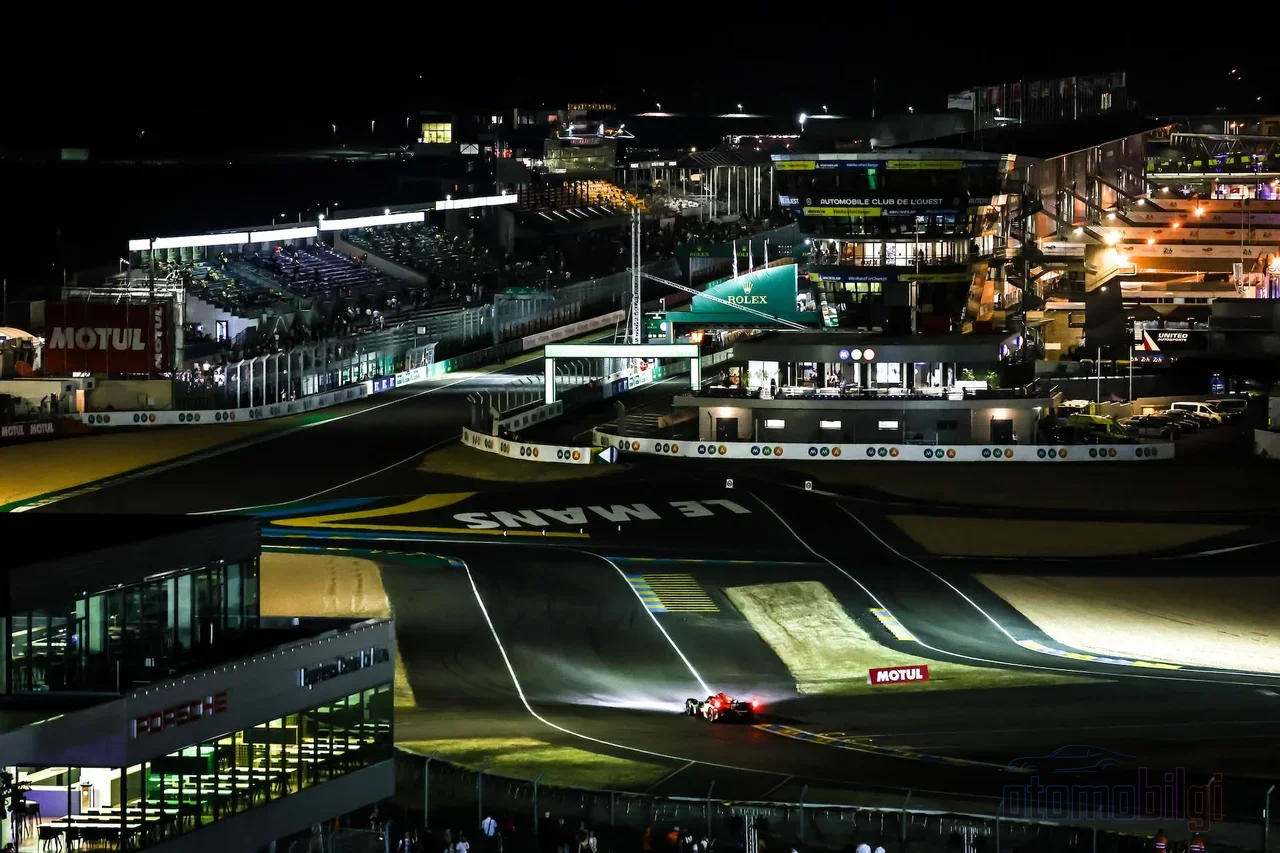
The night portion of Le Mans is the reason this sport is called "endurance." A track seen by daylight turns into a corridor carved up by headlight beams at night. Official broadcasts do not shy away from describing the night hours as "pure chaos"; as the day's warm asphalt cools, tire windows shift, visibility drops, and the margin for error goes to zero. A team losing a car at night means 24 hours of effort evaporating in a few seconds.
Night strategy is shaped accordingly. Some teams minimize risk during the dark hours and protect their position, while bold teams wait for rivals' mistakes and see the night as a chance to open up a gap. Pit stops demand extra care at night; because a lap lost at night is very hard to make up at the morning green flag. Teams factor the day-night cycle in advance, building their shift schedules, fuel budgets, and tire plans around it. In short, night is half the race and the cruelest exam for strategy.
The Strategic Approaches of Ferrari, Toyota, and Sauber
The 2026 season offered the most vivid examples of these strategy battles. Ferrari started the season as the favorite with a car judged to have better options in drag and downforce than its rivals; but its advantage was tested throughout the entire season. Toyota arrived with a very different Hypercar from last year and showed its seriousness by winning at Imola. In a race where the two Toyotas led, the way the team played it carefully, managing the gap in the face of Ferrari's fast closure, also raised the question of where team strategy ended.
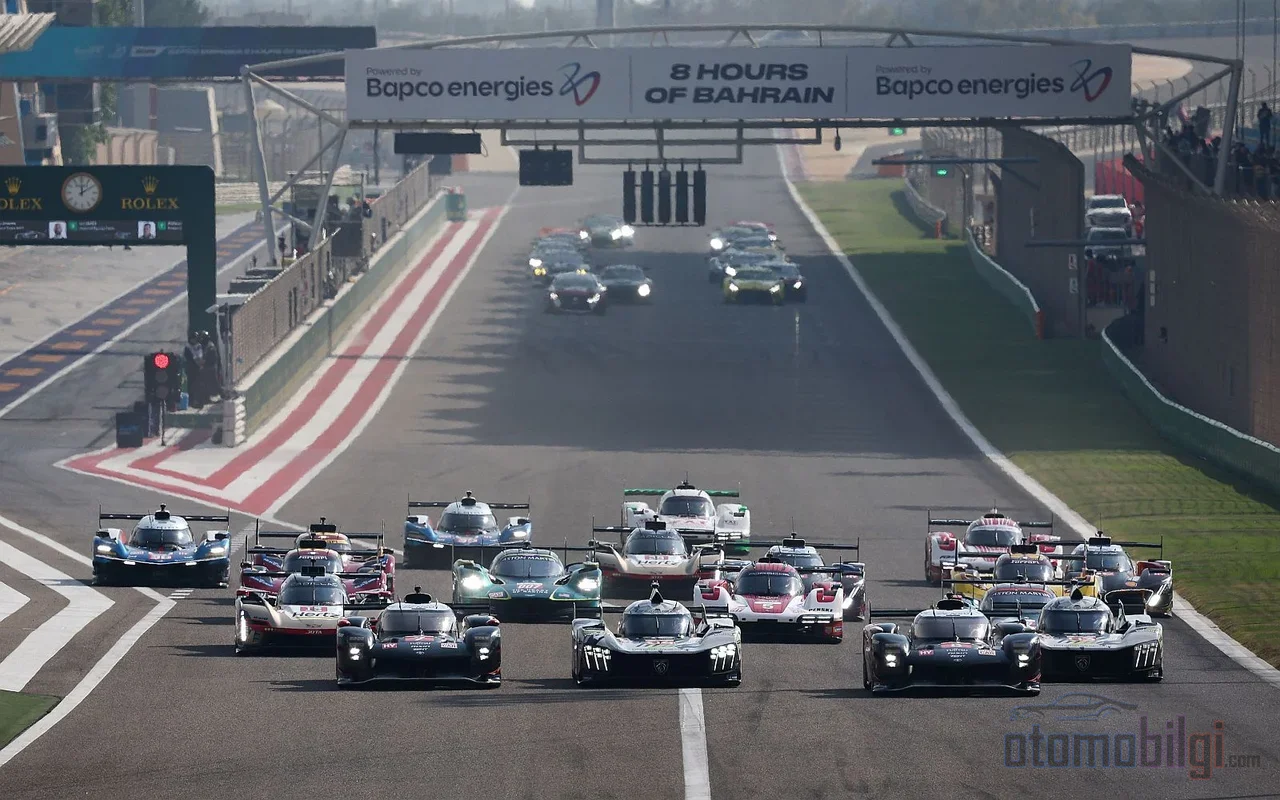
The picture on the grid shows how each approach is a strategic choice:
| Manufacturer | 2026 Status | Strategic Focus |
|---|---|---|
| Ferrari | Season favorite | Converting aerodynamic advantage into pace |
| Toyota | Imola race winner with the new car | Gap management and team play |
| Genesis Magma Racing | New entrant to the WEC | Change and pit optimization |
| Porsche | Split from the Hypercar class | Focus shifted to other series |
Even strategy guides for a new entrant team emphasize this: driver changes, tire management, fuel management, and optimizing pit stop timing come before car speed. 18 Hypercars raced at the 2026 Le Mans; in that crowd, traffic management becomes a strategic discipline in its own right.
Final Word: The Winner Is Decided at the Pit Wall
Next time you watch the WEC, don't look at the lap times-look at the pit wall board and the driver change schedules. Why did they pit now, why are they lift-and-coasting, why isn't there a surprise change at night? When you see the answers, the race turns into a completely different viewing experience. Because in this sport, the road to victory lies not on the track, but in a strategy map drawn hours in advance. Which do you think is harder: keeping the car running for 24 hours, or steering it toward the right decisions at the right times?
Sources
- Dive into the heart of Le Mans strategy with new FIAWEC+ features
- Regulations - FIA WEC
- Pit stop tactics: a major factor at the 24 Hours of Le Mans
- 2026 24 Hours of Le Mans Scrutineering: Ferrari and Toyota ready to lock horns
- The World of WEC: A Beginner's Guide to Endurance Racing
- WEC - Toyota Racing
- Genesis Magma Racing's 2026 WEC Season Guide Part 2
- Ferrari's Dominance Faces Test in 2026 WEC Season
- How virtual energy has become a defining principle in hypercar racing
- Michelin, exclusive tire supplier for the WEC's Hypercar class
- WEC Hypercar & LMGT3 Tyres Explained
- Mastering Lift and Coast
- Choosing the Right Fuel for Endurance Racing
- Safety Car Strategy: When to Pit and When to Stay Out