Ferrari, Toyota and Porsche: Behind the Scenes of the WEC Hypercar Battle
Share This Page
The WEC Hypercar class is the fastest and most expensive category of the FIA World Endurance Championship: a class where purpose-built prototypes, designed from scratch for racing, battle each other almost like a club race despite being from different brands, thanks to a balancing system called Balance of Performance. This three-way battle between Ferrari, Toyota and Porsche is won as much by the engineering and strategy off the track as by the minutes spent on it. Now let's look behind the curtain of this battle, at what's really going on - trust me, there's far more than what you see in the race.
Highlights
- Ferrari, with the 499P in 2023, won at Le Mans after 50 years the overall classification and signed off three consecutive victories.
- In 2026, 8 manufacturers are racing in the Hypercar class; McLaren and Ford are joining in 2027.
- The 2024 Le Mans finish: the gap between Ferrari and Toyota was just 14.2 seconds - incredibly small for a 24-hour race.
- At Le Mans, points are doubled; that's why the championship is often decided there.
- A Hypercar refuels about 30 times in 24 hours, and every pit stop is a mathematical move.
What Exactly Are the WEC and the Hypercar Class?
WEC, as the name suggests, is an endurance racing series: multiple vehicle classes race at the same time, on the same track. At the very top is Hypercar - the real speed monsters of the track. Below them is the LMGT3 class, derived from road-legal GT3 cars. So in a single race you're watching both flying prototypes and GT cars that resemble what you might see on the street. Quite a feast, isn't it?
The beauty of the Hypercar class is this: two different technical concepts can race under the same rules. One is LMH (Le Mans Hypercar), the other LMDh prototypes. So manufacturers bring their own ideas, while the rules pull them all onto common ground. The result? The elegance of the Ferrari 499P, Toyota's discipline and Cadillac's brute power all meet in the same pool.
Balance of Performance: The Hidden Hand That Levels Everyone
So how do cars with different designs race fairly? The answer: Balance of Performance, or BoP for short. Let me give you a simple analogy: imagine a man with a backpack entering a footrace, putting rocks in his pack for some competitors and none for others so that everyone can finish at the same time. BoP does the same thing: it equalizes performance by applying adjustments such as weight and engine power to the cars. That's why cars designed with different philosophies can post lap times as close as possible.
How Does BoP Work in 2026?
In 2026, the system has two stages: first, each car's homologation parameters are set, then a "sliding" BoP is in effect throughout the season - fuel consumption and drivetrain components are also taken into account. The rules aim for a more "light-touch" balance; in other words, a calmer system is targeted instead of endless micro-adjustments.
But here's the interesting part: from 2026 onward, BoP data is no longer disclosed. The first balancing is done during homologation, and then evaluation continues at the track with real performance, fuel and tire data. Guess what - the debate this has sparked is huge: manufacturers argue the system may be unfair, and it's said some brands are even considering withdrawing. Among fans, claims are also circulating that mid-season BoP changes gave Ferrari an advantage - these are not verified facts, but they show how sensitive a topic BoP is for this series. Still, when you think of finishes like the 14-second one at the 2024 Le Mans, you have to admit the system has raised the quality of racing. If the gap after 24 hours is 14 seconds, BoP must be doing something right.
Ferrari: The Comeback After 50 Years
Remember 2023. Ferrari, 499P returned to Le Mans and came back victorious in its very first year. What's more, this was the brand's first overall class win since 1965 - a full 50 years later. The #51 car was driven by Alessandro Pier Guidi, James Calado and Antonio Giovinazzi. This was also Ferrari's tenth victory at Le Mans; history was rewritten.
And things didn't end there. In 2024, the gap with Toyota's GR010 Hybrid was only 14.221 seconds - one of the closest finishes in race history. In 2025, Ferrari clinched its third consecutive Le Mans victory; along with the season-opening triple at Lusail, Imola and Spa, it won both the Manufacturers' and Drivers' World Championships. The revised 499P was practically the reference car throughout the season.
The 2026 lineup is also packed: the same Giovinazzi/Pier Guidi/Calado trio in the #51, Molina/Fuoco/Nielsen in the #50, and Kubica/Ye/Hanson in the #83. This series came to an end at the 2026 Le Mans: after a late battle with Toyota, BMW and Cadillac, Toyota ended Ferrari's consecutive winning streak and took the trophy back. So this war never stops - nobody stays on the throne permanently.
Toyota: The Tough School of Reliability
If they described Toyota in two words: reliability and discipline. GR010 Hybrid has become synonymous with endurance; like Ferrari, it uses hybrid electric front boost, but its philosophy is a bit more of a "runs like clockwork" style. In 2024, it took its fourth consecutive Hypercar Manufacturers' title - so guess who it had captivated before Ferrari's rise.
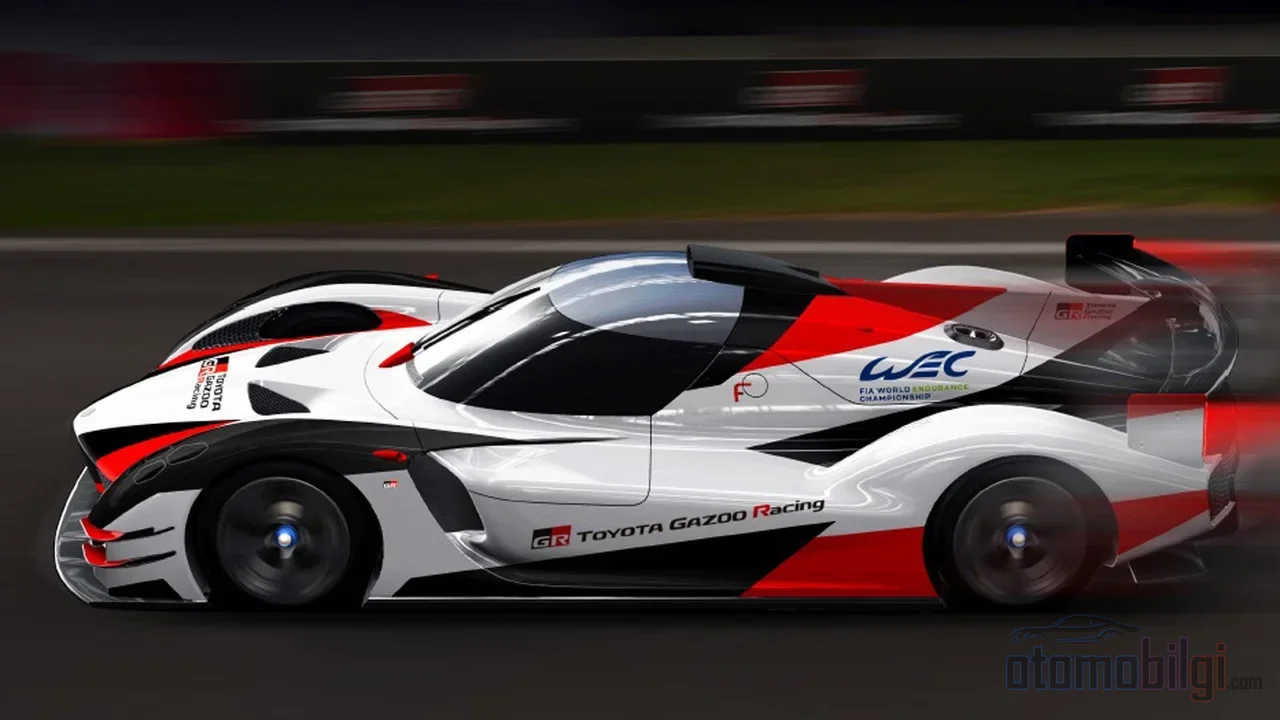
But 2025 was tough for Toyota: the GR010 Hybrid's only victory came at the season finale in Bahrain (with the Kobayashi/Conway/de Vries trio), and that victory was also the year's only podium. That's exactly why 2026 is so important: using its technical "Evo" joker, Toyota is fielding the new TR010 Hybrid. The existing 3.5-liter V6 engine is retained, a red-heavy new livery is adopted, and the team's name changes from TOYOTA GAZOO Racing to TOYOTA RACING. And as you can see, the move paid off: Toyota reclaimed the Le Mans championship, and the #7 car (Kobayashi, Conway, de Vries) saw the flag after 381 laps. This went down as the brand's sixth victory at Le Mans.
Porsche and the Remaining Warriors
Porsche's story is a bit bittersweet. 963 was one of the tough competitors - it was among the names completing the podium behind Toyota and Ferrari in the 2025 Le Mans Hypercar Manufacturers' Championship. Moreover, on the LMGT3 side Porsche knows no defeat: in 2024 with Manthey PureRxcing and in 2025 with Manthey 1st Phorm, using the 911 GT3 R, it captured both LMGT3 titles. Officially the king of the GT side.
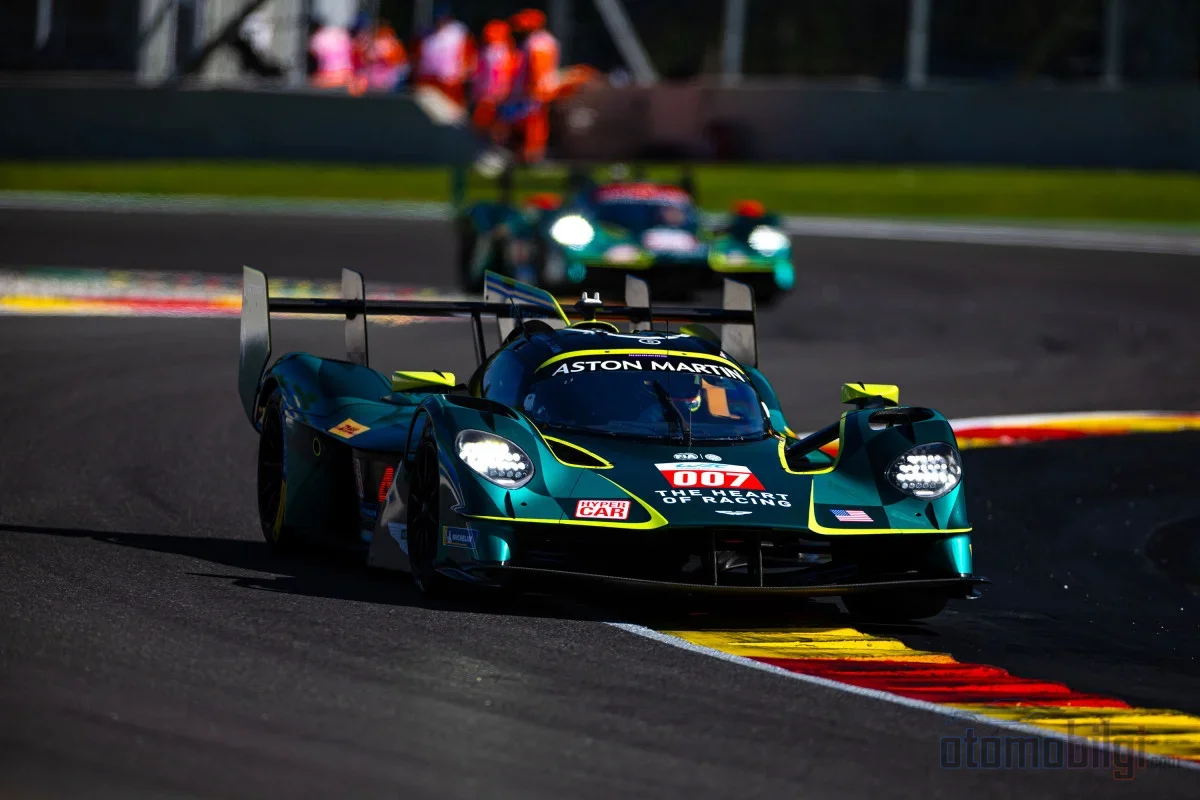
But ahead of the 2026 Hypercar season, Porsche announced it would withdraw from the category; the 963 is still racing in other series. So while a giant exits through the grid door, newcomers enter through the other door. Because the 2026 Hypercar grid is truly packed: Alpine (A424), Aston Martin (Valkyrie V12), BMW (M Hybrid V8), Cadillac (V-Series R), Ferrari (499P), Genesis (GMR-001), Peugeot (9X8) and Toyota (TR010) - a full 8 manufacturers. Genesis Magma Racing is entering its first season, McLaren joins Hypercar in 2027, and Ford returns the same year. Cadillac took its first victory in the series at Interlagos in 2025 and claimed three poles at Le Mans, Interlagos and Fuji; Alpine celebrated its first win at Fuji, in the WEC's 100th race. At the 2026 Le Mans, 18 Hypercars competed and it is said that a grid of 42 cars is possible if the manufacturer influx continues.
Points System and the Championship Balance
How is the champion decided in endurance racing? The points system is classic, but Le Mans has a twist: in 6-hour races the winner takes 25 points followed by 18, 15, 12, 10... Each round, the team taking pole position in Hyperpole is awarded 1 extra championship point. The really critical part is this: at the 24 Hours of Le Mans, points are doubled. In other words, the longest and most brutal race of the season is also where the championship is most talked about.
The 2026 calendar also keeps the championship race burning: in the final rounds a total of 104 points plus additional pole points are distributed across America, Asia and Europe. In other words, everything stays open until the end. Mid-season, Toyota led the manufacturers' standings with 169 points; it caught a hat-trick of three victories, Ferrari trailed by 33 points and Porsche was 15 points behind it. But since the complete points tables have not yet been finalized, it is hard to say how the final stop of the championship race will turn out - that is, after all, the magic of this series.
Endurance Is Won Off the Track: Pit Stop Strategy
Now let's get to the main point: why is an endurance race won in the engineering off the track? The most tangible form of the answer is the pit stop. Over 24 hours, the cars take on fuel roughly 30 times . Each stop averages around 55-65 seconds very different from F1's 2-second show, because in the WEC refueling and tire changes cannot be done at the same time. Every pit stop you call a "dull moment" on television is actually a math problem that the team engineers calculated weeks in advance.
Pit stops are not just refueling; they are timed to hold position or overtake a rival. When fuel is taken, on which lap the pit is entered, when the rival's window opens... all are pre-calculated moves. And don't forget that pit stops actually start long before entering the pits: you are in the car, calculating fuel consumption, tracking tire wear, managing engine temperature. Every second counts.
The Race Is Actually an Engineering Race
Every component in a Hypercar is designed around speed, efficiency, reliability, and durability. The Ferrari 499P, Porsche 963, and Toyota GR010/TR010 are examples of this philosophy. At the 2025 Le Mans test day, Toyota was the fastest, but there were fully 6 manufacturers in the top 10 - Alpine and Porsche were on the list with 2 cars each. This is proof of how balanced this class is. In legendary seasons, the winner was not always the fastest car; it was the car that kept up with the 24 hours and best managed its own consumption and durability. The situation is the same today: the trophy can be lost because of a sensor failing at midnight or a pit strategy delayed by one second. That's why the engineers are as much heroes as the drivers on track.
Why Is This Three-Way Battle So Compelling?
Ferrari's passion, Toyota's discipline, Porsche's engineering legacy... and now new warriors like Alpine, Cadillac, BMW, and Genesis joining in. Although BoP debates continue, the 14-second finish of 2024, Ferrari's 2025 hat-trick, and Toyota's return in 2026 show that this class is exactly what we want: nobody wins easily, nobody gives up easily. With McLaren and Ford joining in 2027, the battle will heat up even more.
Who do you think will be champion this year? Can Ferrari recover again, will Toyota's Evo move continue the streak, or will a new name on the grid spring a surprise? Let's meet in the comments - because discussing is as much a sport as watching an endurance race.
Sources
- What is the WEC? - FIA WEC
- Points System - FIA WEC
- 14 Manufacturers - FIA WEC
- Formidable Ferrari completes Le Mans Hypercar hat-trick - FIA WEC
- 2023 24 Hours of Le Mans - A historic tenth win for Ferrari - 24h-lemans.com
- What is "Balance of Performance"? - 24h-lemans.com
- The Toyota GR010 Hybrid under the microscope - 24h-lemans.com
- Pit stop tactics: a major factor at the 24 Hours of Le Mans - 24h-lemans.com
- WEC to stop publishing BoP figures in 2026 - Motorsport.com
- Moving target: How the FIA WEC puts BoP to the test - Racer
- WEC's bold 2026 plan could actually work - The Race
- Toyota reclaim Le Mans crown to end Ferrari streak - BBC Sport
- WEC Hints 42-Car Grid Possible Amid Manufacturer Influx - Sportscar365
- Genesis Magma Racing's 2026 WEC season guide part 3: Pit stops - Genesis Newsroom
- Le Mans Pit Stops Capture the True Magic of Endurance Racing - The Drive
- Le Mans Hypercar - Wikipedia