Legendary Seasons in WEC History: Championships Lost at the Finish Line
Share This Page
WEC's legendary seasons are those where the championship slipped away on the final lap, even in the final seconds; or where a breakdown reversed fate in a matter of minutes. Races in the World Endurance Championship last for hours, but history is usually written in the last five minutes. From the 2016 Le Mans disaster to Porsche's fairytale victory and Ferrari's 2023 debut, on this page we tell the series' most dramatic seasons.
Highlights
- 2016 Le Mans: Toyota #5 lost the lead in the final lap due to a technical failure; Porsche won.
- 2018: Toyota, with the TS050 HYBRID took its first Le Mans victory on its 20th attempt.
- 2015 and 2017: The Bamber, Webber, Hartley and Bernhard era brought two world championships to Porsche.
- 2023: Ferrari 499P won on its debut in the 100th year of Le Mans.
- Points are doubled at Le Mans - a single race can decide a season.
First the Basics: What Kind of Championship Is WEC?
Let me explain briefly: WEC is a world championship where cars need to be not only fast but also durable and smartly managed. In Formula 1, 90 minutes is enough; here cars stay on track for 6, 8, even 24 hours. A maximum of three drivers per car is allowed, and the race is divided into driving blocks called stints. Drivers usually do several stints in a row before switching, meaning the person in the cockpit is also part of the strategy.
Today there are two main classes: Hypercar at the top, and below it LMGT3, which replaced the old GTE in 2024. On the Hypercar side, power is limited to 500 kW, with a minimum weight of around 1,030 kg. The points system is simple but effective: the top 10 receive 25, 18, 15, 12, 10, 8, 6, 4, 2 and 1 points. The critical detail is this: points are doubled at the 24 Hours of Le Mans. So the season's longest race is also its heaviest word. One bad day can carry off an entire season - or conversely, a single brilliant night can bring the championship. That is why WEC's legendary seasons are always so dramatic.
2016 Le Mans: The Disaster of Six Minutes
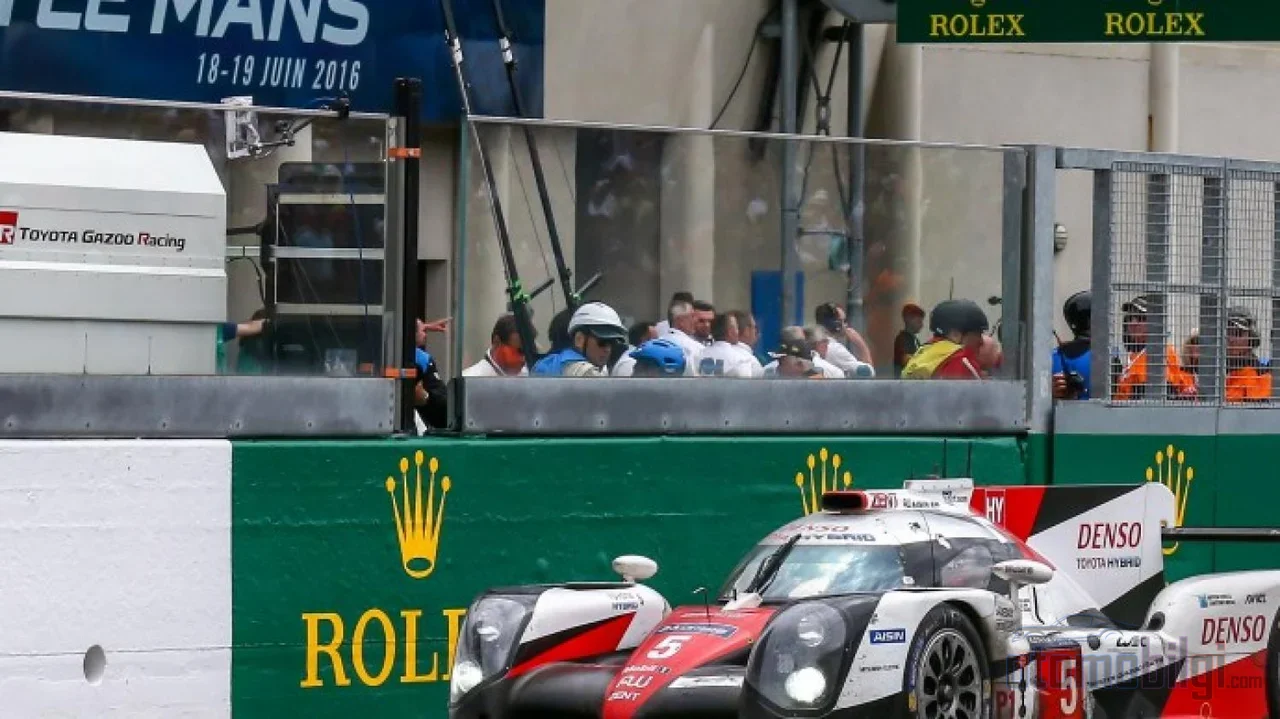
I'm going to tell you a story that is truly hard to believe. June 19, 2016, the 84th 24 Hours of Le Mans. Toyota #5 - with Buemi, Davidson and Nakajima in the cockpit - was 30 seconds ahead in the final hours of the race. All they needed to do to win was keep circulating. Porsche #2 (Dumas/Jani/Lieb) was pushing at the limit on every lap. Team principal Andreas Seidl's words are still remembered: "Losing a race like this on the final lap in this way would not even suit your worst enemy... We had to put pressure on Toyota and we went at maximum speed throughout the entire race."
Then fate spoke. In the final five minutes of the race the #5 Toyota slowed and stopped on the last straight before entering the final lap. The cause was a fault in the air line connector between the turbo and the cooler: turbo control had been lost. The team restored the power by changing the control parameters, but could not complete the final lap within the six minutes the regulations required. The car crossed the finish line in 2nd place - but it was not classified and scored no points. Porsche #2 won, Toyota #6 (Sarrazin/Conway/Kobayashi) finished 2nd, and Audi #8 3rd. It was Porsche's 18th overall victory, its second year in a row. About 263,000 spectators watched the race on site, and most of them never forgot the silence on that last straight.
A 30-second gap within one hour turned to vapor because of a single connector. According to the ACO's technical explanation, this failure was unrelated to the Spa engine problems in the earlier races of the season; a further investigation was conducted to determine the exact cause. So neither a wheel nor an engine explosion - just a simple air line component. You see the proof of endurance racing exactly here: over 24 hours, every small part is tested with the same weight as the championship itself.
Toyota's Curve of Fate: From Disaster to the Thunderclap of the First Victory
The 2016 disaster did not break Toyota, but it was not easy either. In 2017 they came with three TS050s: Kobayashi took pole with a lap record, but in the 8th hour the #8's front motor failed, in the 10th hour the leader #7 stopped with a clutch failure at night, and #9 was eliminated in a collision. After repairs, only the #8 could return to the track and finished 8th. Sometimes you think this series really puts a team to the test.
In 2018, however, everything changed. The TS050 achieved a major reduction in fuel consumption, the two Toyotas locked out the front row of the grid, and the #8 - with Nakajima, Buemi, and Alonso, who joined that year - won Toyota's long-awaited first Le Mans victory. Nakajima became the first Japanese driver to win in a Japanese-built car. In 2019 they again finished 1-2, and the same trio became WEC drivers' champions; Nakajima thus went down in history as the first Japanese world champion in a circuit racing series.
2020 was the TS050's final Le Mans. Kobayashi took his fourth consecutive pole, but the #7 suffered an exhaust failure after the 12th hour and lost 30 minutes of repairs. The #8, despite suffering a puncture itself, overtook the rivals ahead and won; Buemi and Nakajima took their third consecutive Le Mans victory, and Toyota brought home the teams' championship. The car that stopped in 2016 was, four years later, on the top step of the championship podium. In which other series would you find a comeback story like this?
Porsche's Golden Lineup: Bamber, Webber, Hartley and Bernhard
Against Toyota's pain, we should also take Porsche's peak era seriously. Mark Webber, Brendon Hartley and Timo Bernhard won the 2015 FIA World Endurance Drivers' Championship. That year's Le Mans is a separate story: Porsche's unexpected winning "third car entry" is remembered as one of the most exciting races of the era. In the first victory, Nico Hülkenberg, Nick Tandy and Earl Bamber were at the wheel - yes, the same Bamber won Le Mans twice.
The truly magical lineup came together in 2017: by then, Bamber, Bernhard and Hartley had accumulated twelve race victories as the most successful long-distance drivers in WEC history, and they took their first world championships together. Best of all: at the 2017 Le Mans, the two of them described winning after a failure when they thought their chances of victory were over as almost a fairy tale. In other words, even the champions of that season saw the victory as a gift of fate. Hartley and Bamber were inducted into the FIA Hall of Fame in 2020 - this generation's traces are still in the series' memory.
Do you know what this era taught us? A legendary season doesn't always consist of a single great victory. Sometimes consistency stacked up over several years, the right decisions in night races, and seconds in pit stops elevate a generation to the "legendary" label.
Ferrari 499P: 2023's Flawless Entrance
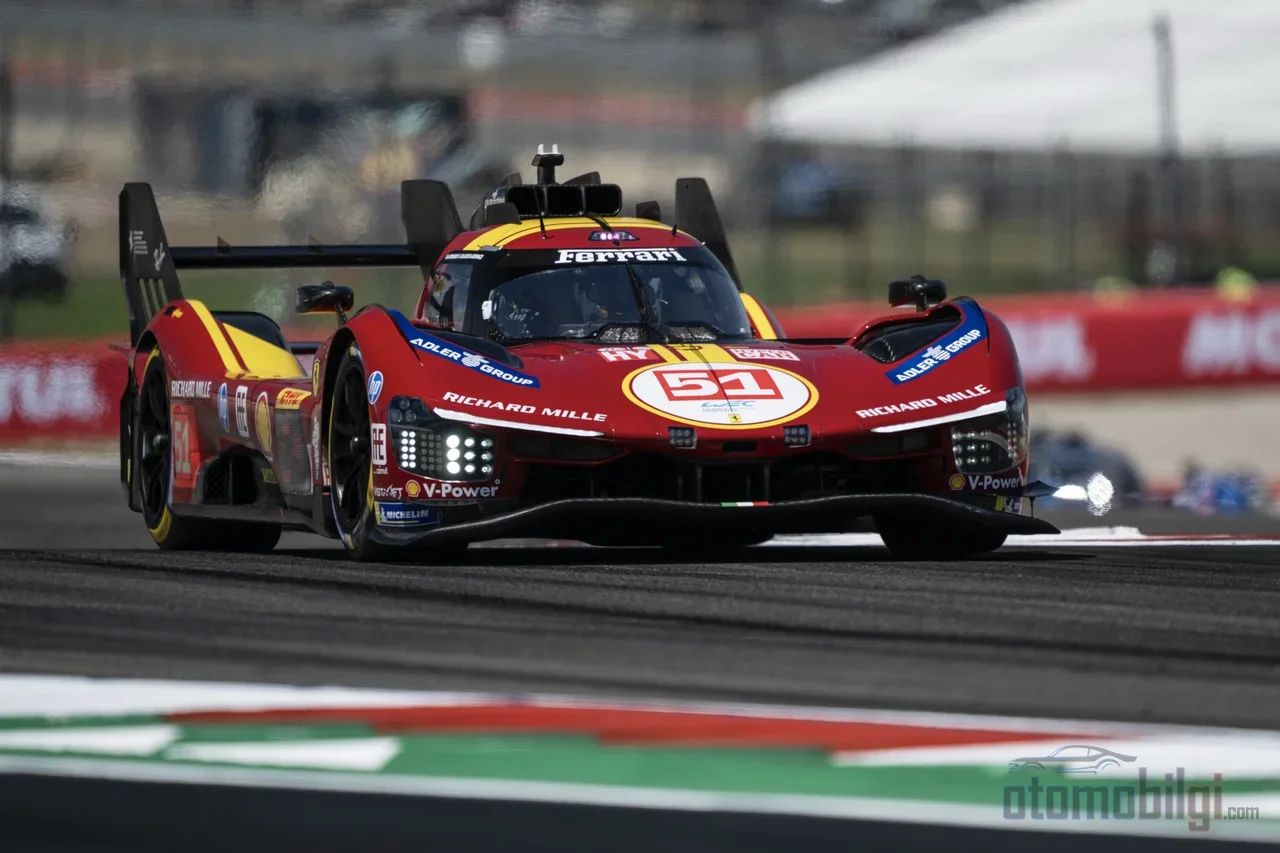
Now it's time for the freshest legend. Ferrari returned to the top class after an interval of roughly 50 years with the Hypercar era, and do you know what kind of an entrance - sorry, what kind of an entry it made with this return? The 499P, made its debut at the first race of 2023 at Sebring, and that same year, at the 100th edition of Le Mans, won the race on its first outing. Antonio Giovinazzi, Alessandro Pier Guidi and James Calado were at the wheel. Winning in the first year of a return at a once-in-a-century special race - even screenwriters couldn't write that.
Technically, the 499P is an interesting beast: a 3.0-liter twin-turbo V6 and hybrid system; total power cannot exceed 950 hp, with engine power at most 681 hp. Its rivals are in the same regulation book: the Porsche 963 uses a 4.6-liter twin-turbo V8 and hybrid. That year, the #50 and #51 cars collected five more podiums, showing it was no coincidence. Even today, the debate continues: with three Le Mans victories and a championship, has the 499P entered the ranks of history's legendary prototypes? I ask you: isn't the debut victory in the 100th year enough?
This entrance also outlined the framework of today's competition. The Porsche 963 became a rival battling Ferrari and Toyota head-on for both championships. Toyota, meanwhile, updated its Hypercar for 2026 and changed its familiar name: GR010 Hybrid, is now TR010 Hybrid on the track. Moreover, the new car has an electric motor on the front axle like the Ferrari 499P - providing all-wheel-drive advantage above a certain speed threshold. For 2026, Genesis Magma Racing's GMR-001 has also joined; the Hypercar class has never been this crowded.
How Do These Stories Shape Today's Competition?
I think the biggest legacy of 2016 is this: teams now prepare their final lap scenarios knowing full well what can happen. The six-minute rule, the car slowing on the final straight, the lost points - all of these are now on the agenda of strategy meetings. Even at the 2026 6 Hours of COTA, a development in the last 15 minutes decided the winner of the round. In other words, the series is repeating itself; the drama never ends.
Endurance strategy always asks the same question: when to be aggressive, when to be patient? Fuel saving techniques can extend a stint distance and can even eliminate a pit stop entirely. Tire management, double and triple stints, pit stop timing - every corner, every braking maneuver is a calculation. Throughout the season, the points table takes shape around Le Mans' double points. Even the calendar is growing: for 2027, a nine-round official calendar has been announced; the Prologue will be held in Qatar on March 21-22, and the season opener will be the 1812 km of Qatar on March 25-27. The 24 Hours of Le Mans will take place on June 12-13.
A final thought from me: endurance racing, I believe, is more a genre of drama than a sport. Because it has characters - the Toyota that stopped in 2016, the Toyota that won in 2018, Bamber and Hartley who didn't believe in fairy tales but managed to win, and the 499P taking the stage in its centenary year. Every season is a new act, and the finish line always decides fate at the last moment. Who do you think the next great final lap drama will be written for?
Sources
- The History of TOYOTA at Le Mans 2016-2020 - Toyota Gazoo Racing
- The #5 Toyota's breakdown in the last lap explained - 24h-lemans.com
- Le Mans: 18th overall win for Porsche - Porsche Newsroom
- Bamber, Bernhard and Hartley are the new long-distance champions - Porsche Newsroom
- Webber, Hartley and Bernhard crowned champions - FIA WEC
- Earl Bamber - Wikipedia
- Bamber, Hartley Doubted "Fairytale" Win Was Possible - Sportscar365
- Hartley and Bamber inducted into FIA Hall of Fame - NZ Performance Car
- Ferrari 499P wins on debut at 24 Hours of Le Mans - Ferrari.com
- Ferrari 499P - Wikipedia
- Ferrari 499P LMH technical analysis - RaceCar Engineering
- WEC Regulations - TotalEnergies
- FIA WEC class guide - Racer Magazine Racerpedia
- Genesis Magma Racing's 2026 WEC Season Guide - Genesis Newsroom
- FIA WEC reveals nine-round 2027 calendar - FIA WEC
- Why Toyota updated its Hypercar for 2026 - RaceCar Engineering
- Drama in final minutes of WEC's six-hour race at COTA - RaceFans