Why Do Three Drivers Take Turns in a WEC Car?
Share This Page
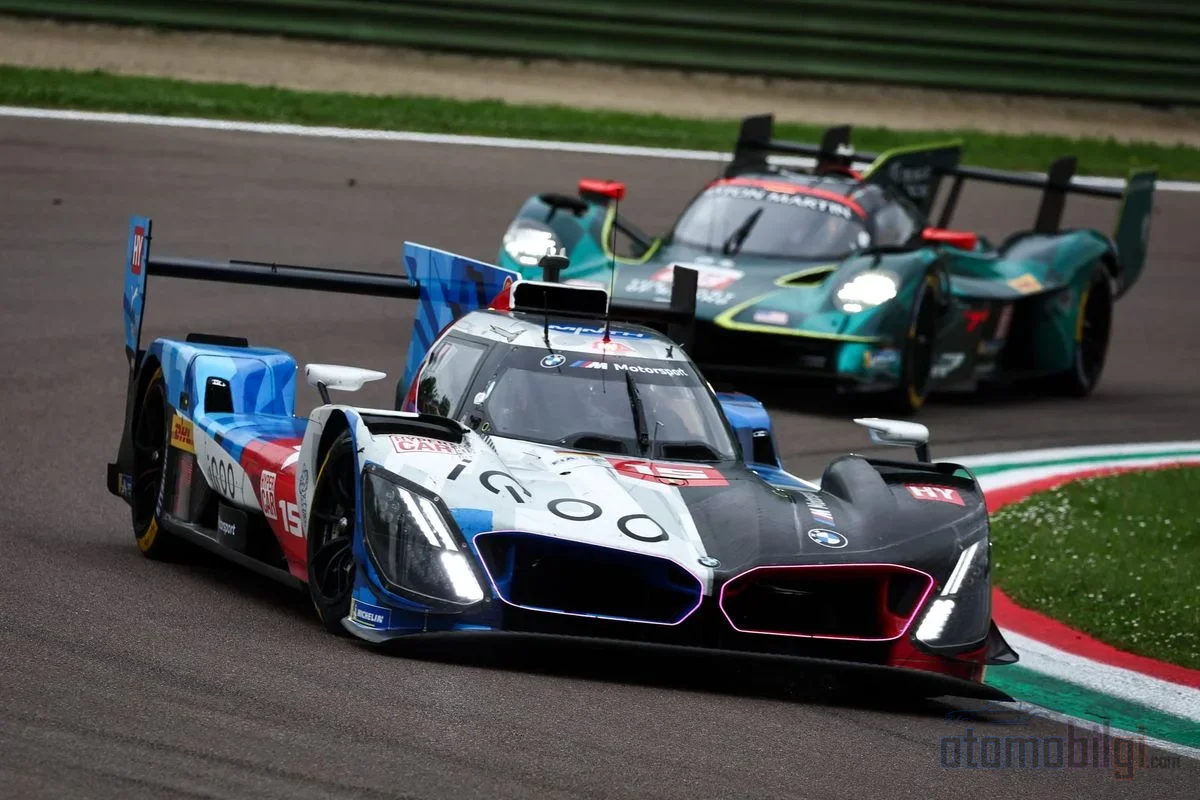
In the Hypercar class in WEC three, in LMGT3 two or three pilots rotate; because no single driver can safely complete races lasting 6 to 24 hours, both physically and mentally. Drivers score points together in the standings, share the car according to a shift plan, and the FIA's Platinum-Gold-Silver-Bronze rating system determines the lineup. So the three helmets you see in that cockpit are three parts of a single championship battle.
Highlights
- Bronze drivers are not allowed in Hypercar lineups; every car races with three drivers .
- In LMGT3, the lineup must include at least one Bronze and one Bronze/Silver driver.
- At the 24 Hours of Le Mans, first place earns 50 points ; the three drivers in the same car share these points equally.
- Pole position earns +1 point at every race.
- At Le Mans, an LMGT3 driver managed consecutive stints with a single tire set for up to 600 km .
Why Is There More Than One Driver in a Car?
Think about it: in a normal race you sit down and get out two hours later. But what if the race lasts 24 hours ? There's the night, fatigue, weight loss, a body whose sleep pattern has collapsed. An endurance race as a whole is long and punishing enough to exceed a single human's reflex and concentration capacity. That's why the use of multiple drivers became a necessity years ago with the birth of endurance racing; today it is the rule itself.
So how many people are allowed? In Hypercar, every car races with three drivers as you'll also see in the official entry lists. In LMGT3, the lineup consists of two or three people. And here's the interesting part: in LMGT3, the lineup is required to include at least one Bronze driver and another Bronze or Silver driver. In other words, the amateur driver category is part of the soul of this class. In Hypercar, it's the exact opposite: Bronze-rated drivers are not allowed at all; only Silver, Gold, and Platinum drivers can sit in the cockpit.
Let's also add that the rules are still being discussed. Since the majority of the calendar consists of 6-8 hour races, whether to require three drivers in all races in Hypercar was on the series' agenda. In the official 2026 provisional entry list, however, all Hypercar entries are listed with three drivers.
Platinum, Gold, Silver, Bronze: How Does the FIA Driver Rating Work?
What determines which cars a driver can share, and with whom, is the FIA's driver categorization system. Think of it like a school report card, but the grades are given based on talent and career:
- Platinum: The top category; the most experienced and fastest drivers, proven in pinnacle races like F1 or the 24 Hours of Le Mans.
- Gold: World-class drivers; names that shine frequently in prestigious races.
- Silver: Drivers with serious experience or rising young talent; a level with room for development.
- Bronze: Usually less experienced drivers, considered amateurs.
Categorization is handled by a dedicated FIA committee. When making a decision, it looks at the driver's age and career record; in subsequent seasons, it can be adjusted based on race pace. So don't assume the license stays fixed forever. There have been significant moves for the 2026 season as well: Joel Sturm, Morris Schuring, and Esteban Masson were upgraded from Silver to Gold, while Alessandro Balzan, Townsend Bell, and Michelle Gatting were temporarily downgraded from Gold to Silver. These kinds of changes make squad planning the biggest pre-season headache for teams, because a single rating change can upend an entire lineup composition.
There Are Rules Even in Qualifying
Class ratings come into play not only in the race but also in qualifying. WEC qualifying consists of two blocks: first a 12-minute session, then a 10-minute Hyperpole featuring the fastest drivers. Pole position also brings 1 championship point . In LMGT3, since 2025, the Bronze driver is required to take part in qualifying, and the Silver driver in Hyperpole. In other words, a car shared in the cockpit requires a division of roles among drivers even in qualifying.
How Are Driving Stints Planned? Stint Logic
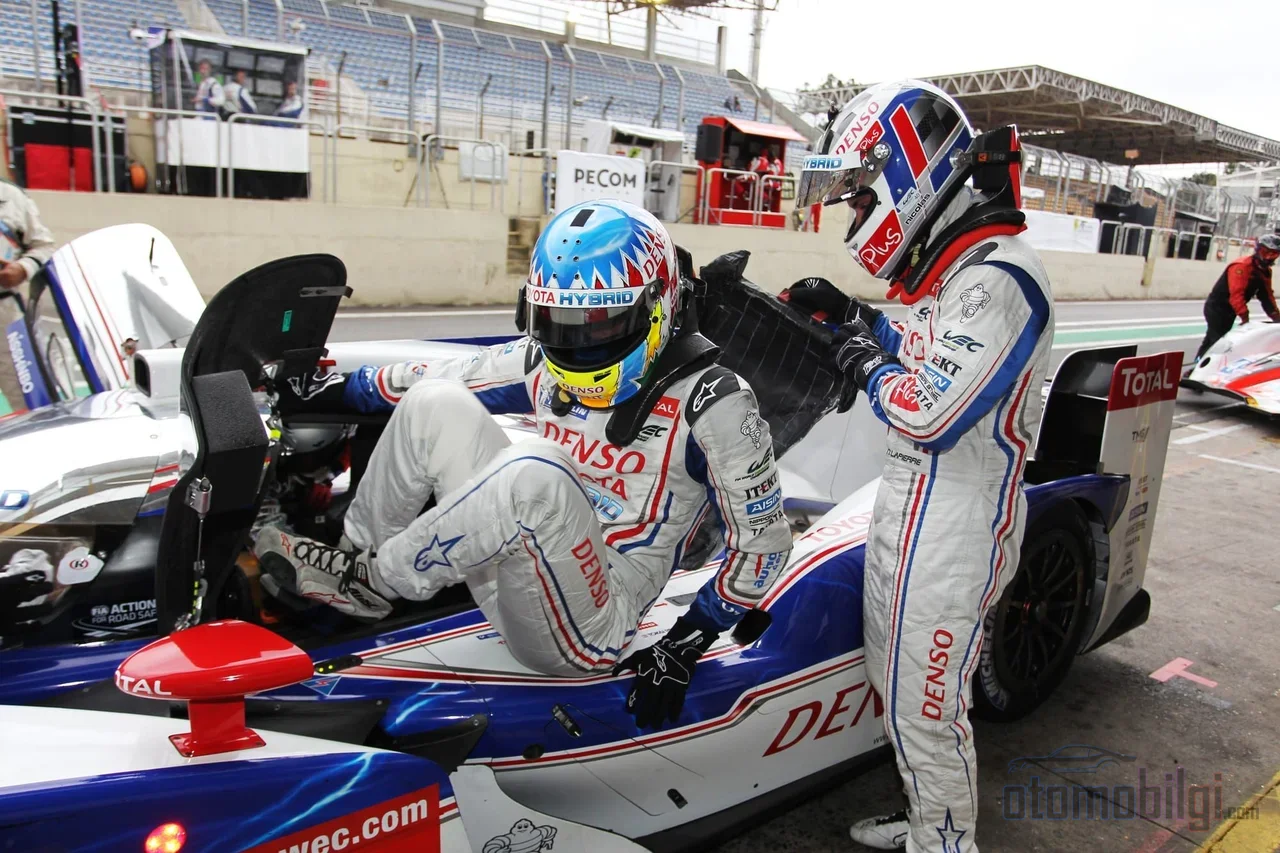
While one driver is behind the wheel, what do the other two do? They rest, eat, review telemetry, and prepare for their next stints. The rhythm of the rotation in the car is largely determined by fuel tank life: when the fuel runs out, the car pits, tires are changed, fuel is added, and the driver change is completed during the pit stop. Think of it like a relay race; you pit to swap hands.
Drivers typically run the car for 2-4 consecutive stints; although the shift plan is drawn up before the race, it can be changed during the race depending on safety cars, weather conditions, and strategy. Some teams turn the plan into a weapon: putting pressure on a driver with double or even triple stints can be used as a way to catch the rival during the pit cycle.
To see what these numbers actually mean, look at Le Mans. There, some pilots in LMGT3 cars managed up to four consecutive stints on a single set of tires; that's roughly 600 km, about twice the distance of an F1 Grand Prix. The winning car completed a record 341 laps in total. Now imagine splitting that among three people: each shift alone is like a sprint race.
24 Hours at Le Mans: The Toll on Body and Mind
While watching Le Mans, it's easy to forget that although the cars are racing at speed, it demands the discipline of a silent marathon runner amid the bustle of an industrial zone. There is a common observation among drivers: the 24 Hours of Le Mans is now more mentally and physically demanding than ever. The cars have gotten faster, traffic management has become more complex, and a single mistake can wipe out all 24 hours of effort.
The physical side is very clear: when a pilot arrives for the third stint, blocks lasting 90 minutes to 3 hours each come one after another while they battle exhaustion and dehydration. Cabin temperature, G-forces, and the night shift schedule push the body far beyond an ordinary race weekend. But what about the mental side? It is important to know that recovery is not just about muscles - especially for drivers who leave the results dissatisfied, mental recovery is just as critical as the physical one. Heading into the next stint with a mind replaying a mistake over and over is never easy.
That is exactly why the rest plan matters as much as the cockpit hierarchy. A team that puts the right driver in the car at the right moment can catch its rival in the dead of night.
Three Drivers, One Trophy: How Are Points Shared?
The championship side is the sweetest part of it all: drivers sharing the same car receive the same points in the championship and are listed together in the standings. So if Ferrari's legendary #51 trio of Pier Guidi, Calado, and Giovinazzi wins a race, all three pocket the winner's points. It does not matter who drove more laps or who took pole; the championship standings work like a joint account.
The points scale varies according to race duration. The table below is actually the answer to how much load rests on the shoulders of three drivers:
| Race Format | Points for a Win |
|---|---|
| 6-hour race | 25 points (25-18-15-12-10-8-6-4-2-1) |
| 8-10 hour race (or 1812 km) | 38 points (38-27-23-18-15-12-9-6-3-2) |
| 24 Hours of Le Mans | 50 points (50-36-30-24-20-16-12-8-4-2) |
Pole position adds an extra 1 point per round; a small coin, but worth its weight in gold for those chasing the title at the end of the season. While cars collect points in their own class championship, in the world cup run on a manufacturers' basis, if a team enters more than one car, all of them can accumulate points separately and compete directly. In other words, your teammate can also be your biggest rival.
The State of Three-Driver Lineups on the 2026 Grid
The 2026 season paints a picture of just how mature this three-driver lineup system has become. The series was founded in 2012 by the FIA and ACO, and this year there is a record 14 manufacturers in Hypercar: Alpine, Aston Martin, BMW, Cadillac, Corvette, Ferrari, Ford, newcomer Genesis, Lexus, McLaren, Mercedes-AMG, Peugeot, Porsche, and Toyota. The calendar visits Italy, Belgium, Brazil, the USA, Japan, Qatar, and Bahrain, with a break at Le Mans in mid-June.
The lineup examples describe one by one how the cockpit hierarchy works. In Ferrari, the Pier Guidi/Calado/Giovinazzi trio in #51 and Fuoco/Molina/Nielsen in #50 remain unchanged; at Toyota, Conway/Kobayashi/de Vries in #7 and Buemi/Hartley/Hirakawa in #8 continue into their fifth season. BMW WRT has the lineups of Magnussen/Marciello/Vanthoor and the duo of Frijns/Rast/van der Linde. The most exciting is Genesis Magma Racing: in its first season, it is on the grid with the trios of Lotterer/Derani/Jaubert in #17 and Jaminet/Chatin/Juncadella in #19.
The 2025 season also showed why this series is so addictive: in Hypercar, 8 races produced 7 different winners, and LMGT3 had 6 different winners. Ferrari claimed its third consecutive Le Mans victory in 2025 while taking both the Manufacturers' and Drivers' championships. In 2026, the grid dropped to 35 full-season entries; the entire reduction is in Hypercar and stems from Porsche's withdrawal. On the technical side, the Aston Martin Valkyrie remains the only Hypercar not using a hybrid system; meanwhile, Toyota is switching to the TR010 Hybrid for 2026 with a technical "Evo" joker.
Frequently Asked Questions: What You Wonder About Lineup Rules
Are there amateur drivers in Hypercar?
No. Bronze-rated drivers cannot race in Hypercar; that class's cockpit is open only to Silver, Gold and Platinum drivers. Amateur participation is guaranteed by LMGT3's rules.
How do drivers in the same car split the points?
They don't split them - both receive the full points. They are listed together on a single line in the standings; the championship runs like a joint account.
Who determines driver ratings?
A dedicated FIA committee; it looks at age, career record and race pace. Ratings are updated between seasons, with promotions and demotions affecting every lineup plan.
Three Helmets in the Cockpit, One Goal on the Track
WEC's three-driver format is not a luxury but the mathematics of endurance racing: you cannot divide 24 hours among a single person, which is why the shift plan, rating rules and shared points system form an interlocking whole. Next time you watch a helmet change at a pit stop, take a look at this: the driver handing over the wheel is not someone leaving the car and the points behind, but a link in a chain taking all of it over. Which team do you think will rotate its trio best this season?
Sources
- What is the WEC? - FIAWEC
- FIA WEC 2026 Provisional Entry List
- Regulations - FIA World Endurance Championship
- FIA Driver Categorisation
- WEC Weighing Up Three-Driver Mandate for All Races
- Several Leading Silver, Bronze Drivers Get FIA Rating Upgrades
- The dilemma surrounding WEC driver crews
- Why do sports car teams have multiple drivers?
- Genesis Magma Racing's 2026 WEC Season Guide
- WEC Guide 2025 - Iron Dames
- When the 24 Hours of Le Mans turns into a sprint for drivers
- The Physical and Mental Challenges Behind Conquering Le Mans
- Le Manzzz: How Do Endurance Drivers Sleep?
- FIA WEC Rules Explained
- 2026 FIA WEC 24 Hours of Le Mans Provisional Entry List V1