How Does a WEC Season Work? Eight Rounds from Prologue to Finale
Share This Page
A WEC season is not just a single race night: the calendar that starts in Qatar in March travels across five continents before closing in Bahrain in November, managing two classes and five separate championships. In short, the World Endurance Championship is an eight-round endurance marathon stretching from spring to winter - and here is how that marathon works, step by step.
Highlights
- The 2026 calendar covers eight rounds and 5 continents ; seven of the half-rounds are time-limited, only Qatar is distance-based.
- The points system scales with race duration: the winner of a 6-hour race gets 25 points, and at Le Mans 50 points.
- Two classes, Hypercar and LMGT3, with a total of 5 championship titles.
- The Prologue, the official pre-season test, was moved to Imola in 2026 due to a calendar change.
- In 2025, seven of the eight Hypercar races were won by different cars.
It's Not a Sprint Race: Why You Need to Understand an Entire Season?
You can't just watch a single market race like F1 and move on here. The real story in WEC is the calendar itself: eight rounds stretching from March to November, each of different length, on a different continent, and approached with a different strategy. The series has been organized by the FIA and the Automobile Club de l'Ouest since 2012, and 2026 is the series' 14th season.
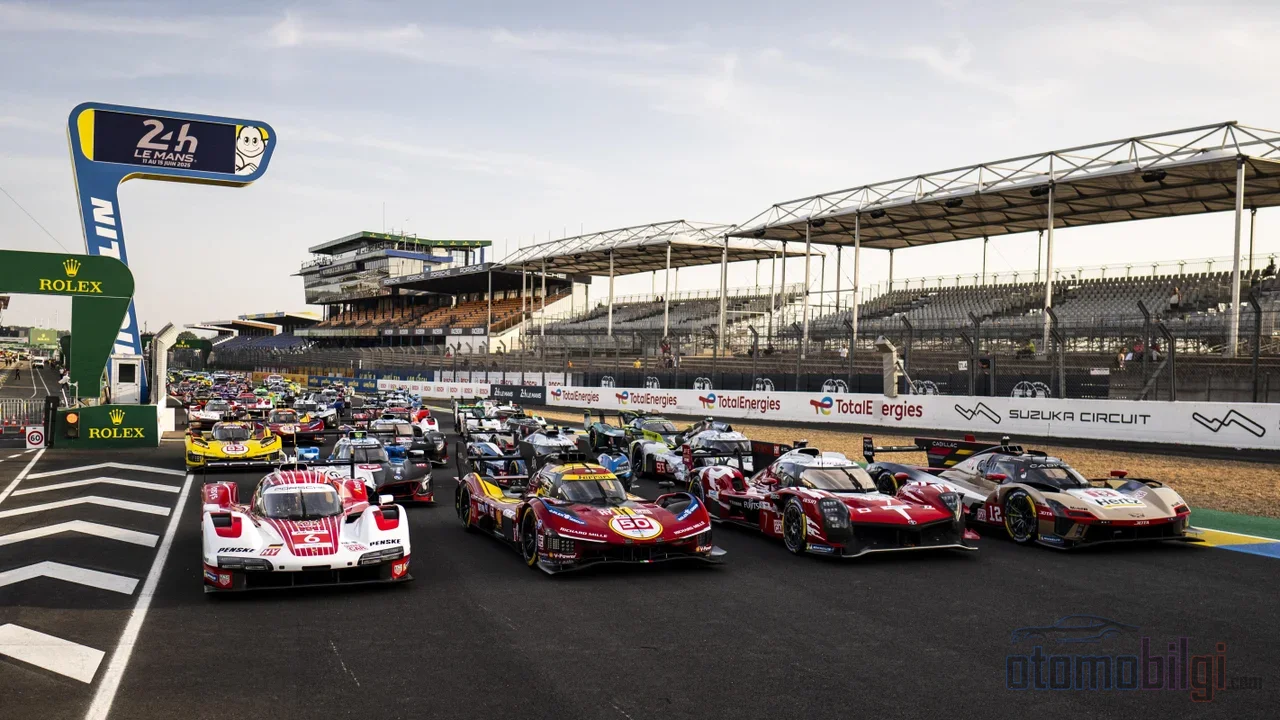
The grid is also quite a crowd: 17 Hypercar and 18 LMGT3 cars, with 14 manufacturers in total. The top class, Hypercar, races for overall victory, while LMGT3 is the stage for private teams and Pro-Am lineups with GT3-based cars. So in a single race, two separate worlds are running at once - one playing for glory, the other for its own title. For someone coming from F1, the first surprise usually starts right here.
Prologue: The Official Pre-Season Test
The season actually begins before the first race. The Prologue is a pre-season group test where teams run all their cars on the same circuit under official conditions. Think of it like a practice exam before the real test: teams try setups, work on tires, check systems; but no one collects points. According to the original plan, the 2026 Prologue was to be held at Qatar's Lusail circuit on March 22-23.
Then the plan changed. With the Qatar round being postponed due to the conflict in the Middle East, the Prologue was on April 14, 2026 moved to Imola, and the season opener was held with the 6-hour race at Imola. It was said that Ferrari showed a fast image on the test day - but standing out in the Prologue doesn't guarantee the championship; it only shows you hold good cards when you sit down at the table. The rest takes eight rounds.
2026 Calendar: Eight Rounds, Five Continents
Once you see the calendar, the scale of the thing settles in. For the third consecutive season, the series visits Europe, North America, South America, Asia-Pacific, and the Middle East. Here is the flow of the 2026 calendar (including Qatar's postponement):
- Prologue: Imola, April 14 (originally Qatar, March 22-23)
- Round 1: 6 Hours of Imola, April 17-19
- Round 2: 6 Hours of Spa-Francorchamps, May 7-9
- Round 3: 24 Hours of Le Mans, June 10-14
- Round 4: 6 Hours of São Paulo, July 10-12
- Round 5: Lone Star Le Mans (Austin, USA), September 4-6
- Round 6: Fuji 6 Hours, September 25-27
- Round 7: Bahrain 8 Hours, November 5-7
- Round 8: Qatar 1812 Km, October 22-24, postponed to the end of October
If you've noticed, the names can be confusing: the race in Austin is called "Lone Star Le Mans" but it is of course not the real Le Mans; it's just a name paying tribute to those classics. The actual 24 Hours of Le Manshas been run at the Circuit de la Sarthe since 1923 and is the longest, oldest and most prestigious race on the calendar. The winner is the car that covers the greatest distance within 24 hours.
Why do the race formats differ from each other?
Seven of the eight rounds are time-limited: there are 6-hour, 8-hour and 24-hour options. The only distance-based exception is the 335-lap Qatar 1812 Km - in that race the target is distance, not time; moreover, there is also a 10-hour upper time limit. This difference completely changes the strategy: in a time-based race everyone burns off their load in the final minutes, while in a distance-based race lap calculation dominates.
Touring Five Continents: The Invisible Burden of Logistics
The circuits look like dots on a map, but each round means transporting dozens of vehicles, a spare parts warehouse, pit equipment and hundreds of staff from one continent to another. The series has delegated this job to DHL; the task is to consolidate the shipments of multiple manufacturers and teams into a single package and offer cargo solutions tailored to the calendar. Considering the autumn route stretching from São Paulo to Austin, then to Fuji and on to Bahrain, I can say that it resembles organizing a giant migrant camp more than a race event.
This geography also affects the calendar. The organizers have made it clear that in recent years they have chosen stability over expansion: the eighth round was added in 2024 and the structure has been preserved ever since. Stability keeps costs low and provides manufacturers with global visibility. Against the finale in the Middle East, the idea of closing the season in Europe (for example in Barcelona and Monza) is also being discussed among fans - but the official 2026 calendar still includes Bahrain. It is best to call such rumors "planned."
How does the calendar shape manufacturers' strategies?
A fixed calendar ensures that manufacturers' development budgets and test plans are determined from the start of the year. Porsche withdrawing from WEC factory participation in 2026 to focus on IMSA, and Genesis's luxury brand Genesis Magma Racing entering with two GMR-001 Hypercars (with André Lotterer and Pipo Derani on the roster), are the latest examples of this balancing game. Porsche chose to remain on the scene as a customer team in LMGT3 through Manthey Racing. In other words, the calendar explains not only the race days but also which brand is playing where and why.
How Does a Race Weekend Work?
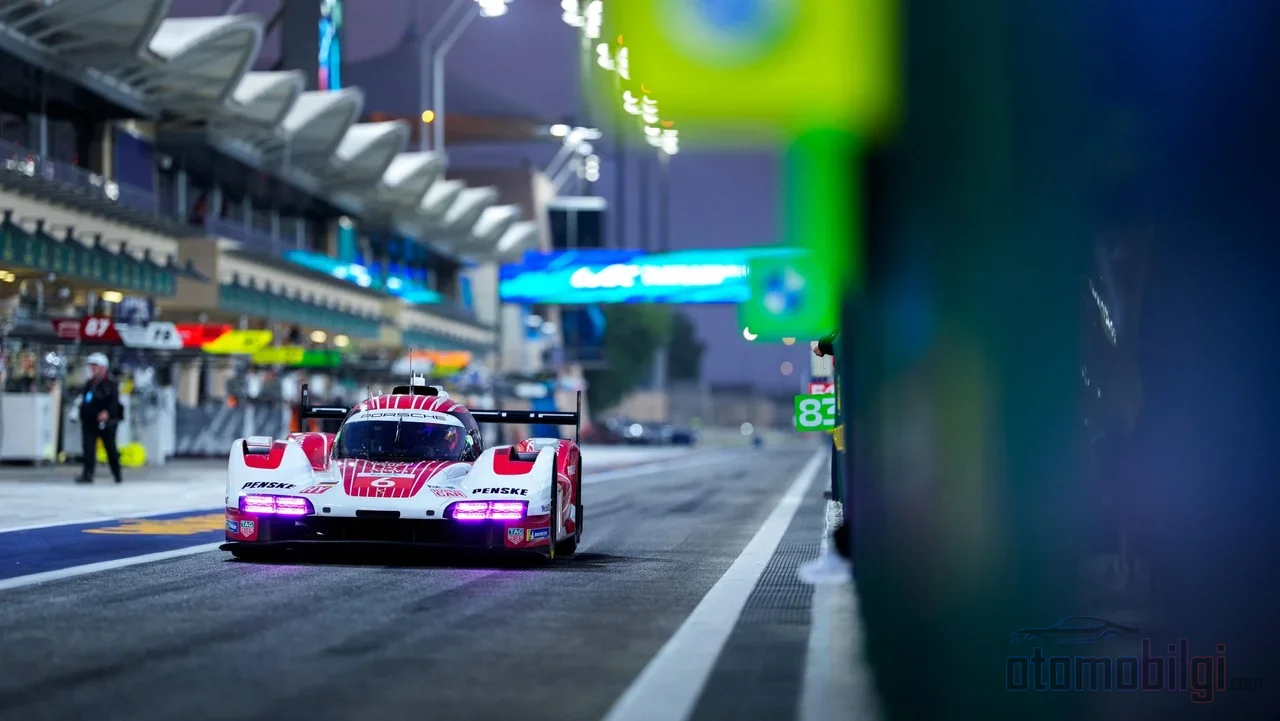
Each round typically spans three days. Throughout Friday and Saturday, 3 free practice sessions (90 minutes each) are run. Then comes qualifying: 12-minute classic qualifying laps, followed by a 10-minute Hyperpole featuring the 10 fastest cars. There is an approximately 15-minute warm-up session before the race, and then the main show begins.
The two-stage qualifying format has been in use since 2023, and there are points here too: the team and drivers who take pole position in the Hyperpole are awarded 1 extra point . In LMGT3, only Bronze category drivers can take part in qualifying - a natural result of the class's amateur-professional mixed structure. Although the details may seem small, championships can be lost by a single point in the standings at the end of the season; Ferrari's battle to secure their titles in Bahrain in 2025 right up to the last moment is proof of this.
Points System: Why Does a Long Race Award More Points?
Here is one of the cleverest details of the series. In the WEC, points are scaled according to the length of the race - just like a longer climbing route being worth more points. The table makes everything clear:
| Race type | Winner | Second | Third | Tenth |
|---|---|---|---|---|
| 6-hour race | 25 | 18 | 15 | 1 |
| 8-10 hours and 1812 km | 38 | 27 | 23 | 2 |
| 24 Hours of Le Mans | 50 | 36 | 30 | 2 |
So winning at Le Mans awards twice as many points as winning a normal 6-hour race. Long rounds, including the Qatar 1812 Km, are calculated with a 1.5x multiplier. This means a single bad result doesn't end the season, but the big races determine fate. A championship is not built on a single victory, but on consistency throughout the season.
How are the five separate titles distributed?
In total, five championships are covered: the Drivers' and Manufacturers' Championship in Hypercar, and the FIA World Cup for Hypercar Teams for customer teams; in LMGT3, the Drivers' and Teams' Trophy. Additionally, in LMGT3, the Goodyear Wingfoot Award is given to the driver with the fastest average lap time throughout the season. One more subtle rule: in the manufacturers' championship, if a manufacturer-entered brand has more than one car, only the highest-finishing car scores points; the World Cup is ranked on a car-by-car basis. Ferrari taking the World Cup in 2025 with both the championship car and the No. 83 is a fine example of this distinction.
How Does the Season Finale Take Shape?
The Bahrain 8 Hours in November is the traditional final stop - and with a long-term agreement, it will remain in this position for years to come. By the time the finale arrives, the points table is often extremely tight; in 2025, Ferrari won both the Manufacturers' and Drivers' Championship precisely at this Bahrain finale, after a battle full of tension until the very end. The championship car, the Ferrari AF Corse 499P No. 51; while in LMGT3, the Manthey 1st Phorm No. 92 remained at the top with back-to-back double championships.
But the real story is this: in the 2025 Hypercar season, out of eight races there were seven different winners output, and six different teams also won in LMGT3. In other words, nothing is certain in the WEC until the finale. The biggest equalizer behind this is the BoP system, which balances the performance differences in the Hypercar class through factors such as weight and power; but from 2026 onward, the FIA and ACO have decided to no longer publish BoP tables - the aim is to prevent speculation, while critics have transparency concerns. Prediction has become harder, and surprises have increased.
What does the picture say on the spectator side?
Don't worry, it's not just the teams following this marathon: across eight rounds in the 2025 season, there were more than 750,000 spectators in the grandstands. The Le Mans weekend alone is a festival; but knowing that the stands are also full in São Paulo or Fuji makes the series feel truly global.
Frequently Asked Questions
- How many races are there in the WEC? Eight rounds in 2026; one of them (Qatar) is distance-based, the others are time-based.
- Which classes are racing? Hypercar (LMH/LMDh prototypes, professional drivers only) and LMGT3 (GT3-based, Pro-Am crews). At Le Mans, a limited number of LMP2 cars also take part.
- Why are the races so long? The endurance philosophy: the car, driver, and strategy are tested for their resilience over 6-24 hours. At Le Mans, the winner is the car that covers the most distance in 24 hours.
- Does pole position earn points? Yes, in every round there is 1 extra point for the Hyperpole winner.
- What fuel and tires are used? 100% sustainable fuel across the entire series; Michelin tires in Hypercar, Goodyear tires in LMGT3.
In short: watching a WEC season is not like watching a single match, it's like following a series for eight months. Gather the clues at the Prologue, keep the tempo at Imola and Spa, hold your breath at Le Mans, then travel across five continents and settle in for the final scene in Bahrain. Which of these eight rounds would you watch first? My answer is obvious - being in front of the screen at sunset at Sarthe in June is something else.
Sources
- 2026 FIA WEC calendar builds on stability of recent seasons
- Points System
- What is the WEC ?
- Dates confirmed for rescheduled Qatar 1812 Km and FIA WEC Prologue
- Beginner's Guide to WEC
- 2026 FIA World Endurance Championship
- 24 Hours of Le Mans
- Motorsports Unwrapped: Everything you need to know about the FIA WEC
- FIA WEC and DHL extend successful global logistics partnership
- Porsche factory team fights for the WEC title at the season finale
- WEC: stage set for title battles in Bahrain's grand finale