Habits That Prematurely Wear Out a Turbocharged Engine
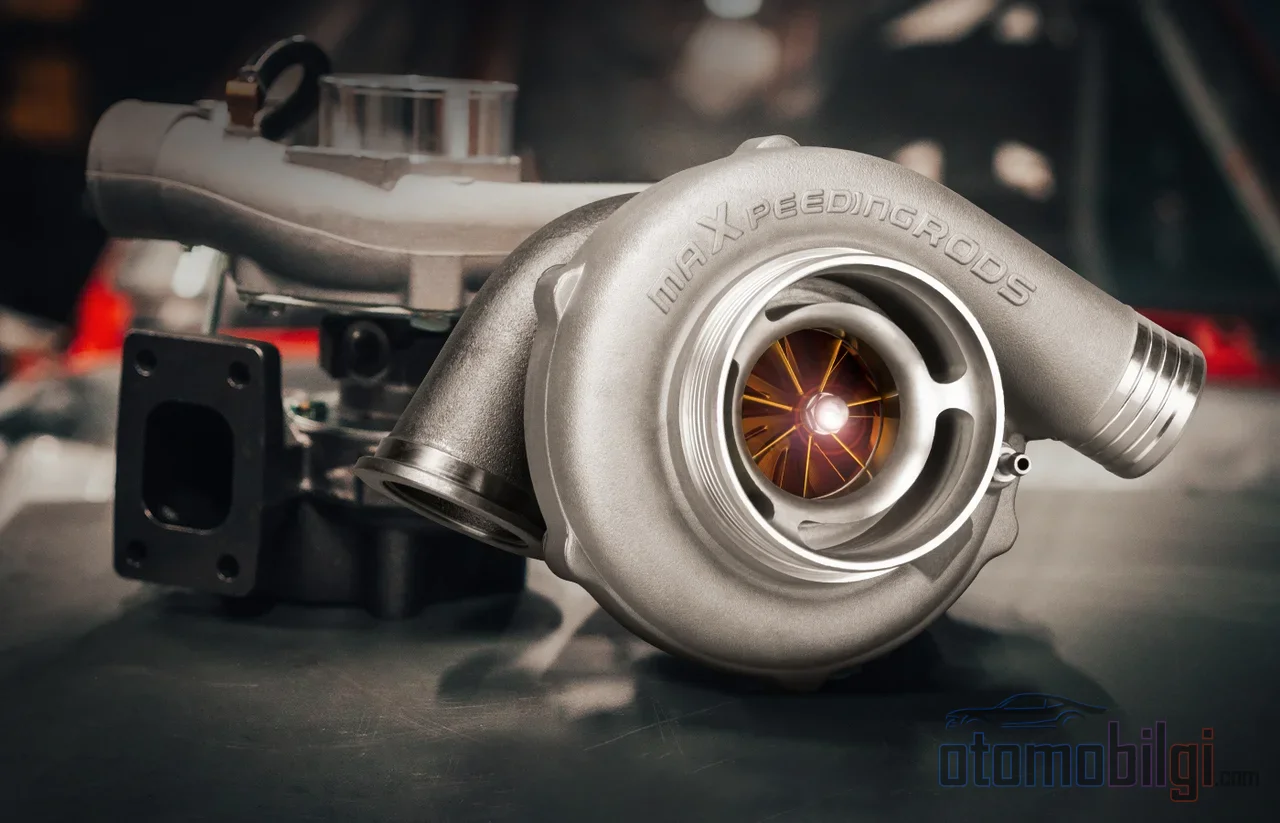
A turbocharged engine, when used correctly, is a far more efficient unit than its naturally aspirated petrol counterpart; but when fed the wrong habits, it is a system that quietly shortens its own lifespan. The difference lies in the small choices you make every day that never appear in technical brochures: shutting the engine off immediately upon arrival, flooring the throttle on a cold engine, and planning oil changes according to the manufacturer's longest interval. This guide explains the maintenance and usage rules specific to the dynamics of turbocharged and supercharged engines, backed by measurable data.
Why the Turbo Wants to Cool Down Before Shut-Off: What Happens in the Center Housing?
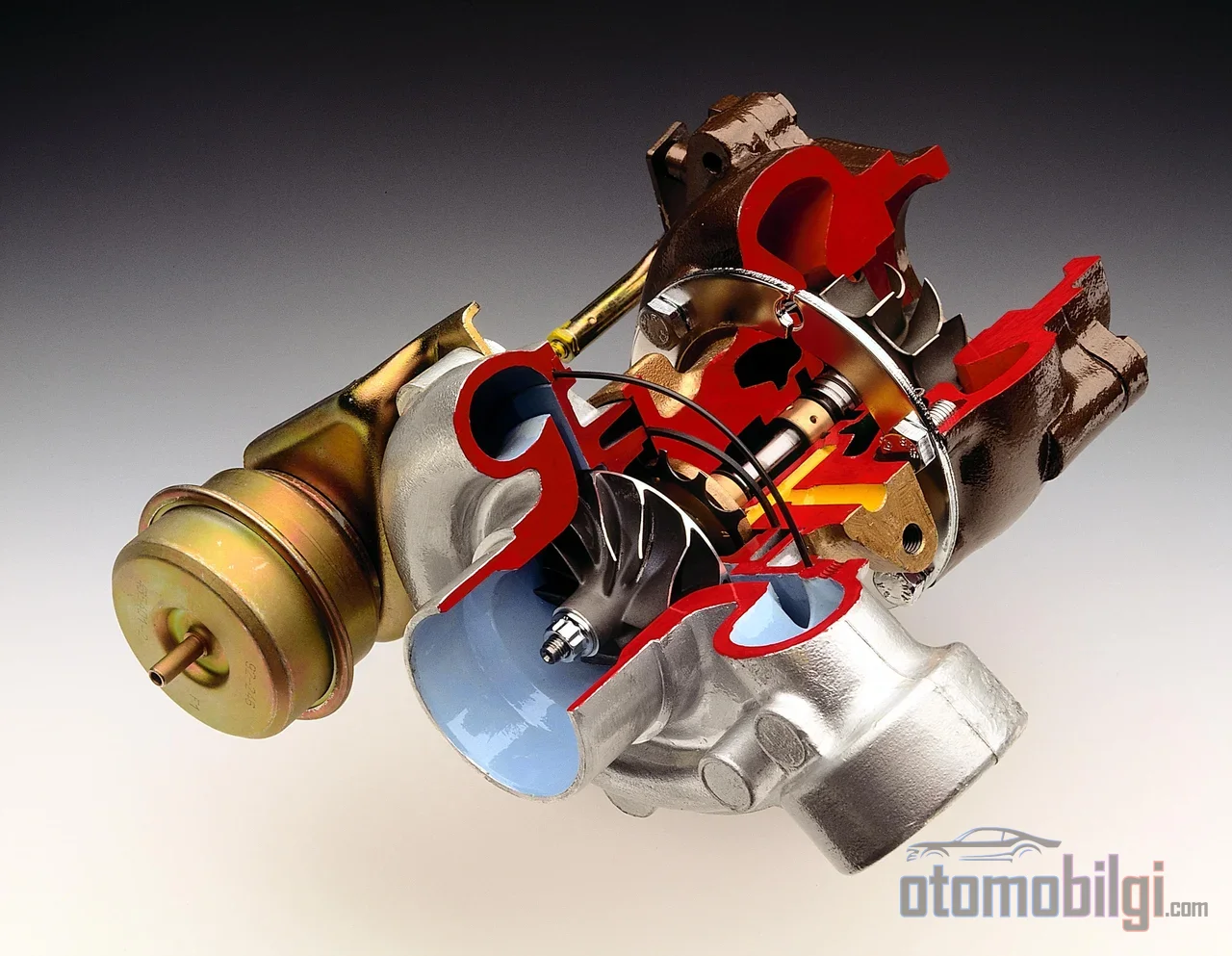
The turbo's central shaft rotates between 150,000 and 350,000 RPM depending on engine load. This shaft spins on a thin film of oil; the oil performs both lubrication and cooling at the same time. This is where the problem begins: exhaust gases can reach up to 950 °C, and the turbo center housing (CHRA) can remain above 450 °F (approximately 230 °C) even after the engine has stopped.
The moment you shut off the engine, the oil flow is cut off as well. The oil trapped in the center housing then encounters residual heat and undergoes thermal degradation; this is known as oil coking, meaning it leaves hard carbon deposits. The deposits first erode the bearing journals, then narrow the oil feed channels. When a channel becomes blocked, the turbo can no longer lubricate itself and failure follows shortly. So the single biggest event determining turbo life is usually not a mechanical failure, but the hot shut-off habit repeated hundreds of times.
Key Takeaways
- The turbo's central shaft rotates between 150,000–350,000 RPM; center housing temperature can remain above 230 °C.
- After aggressive driving, 60 seconds of idling is sufficient; after heavy loads and steep climbs, 120–180 seconds.
- In modern daily use, thanks to water-cooled housings and full synthetic oil, idling after normal city driving is not required.
- In supercharged engines, changing the sump oil at short intervals such as 4,800 km is the most widely accepted best practice.
- High revving on a cold engine is the single biggest source of engine wear.
How Long Should You Wait? Cool-Down Time by Driving Style
Idle time is not a fixed rule; it is a function of heat load. Here is a table that works in practice:
| Driving condition | Recommended idle time |
|---|---|
| Normal city use | Not needed, can be shut off directly |
| Gentle highway cruising | 15–30 seconds |
| Aggressive driving | 60 seconds |
| Heavy towing or steep climbs | 120–180 seconds |
| Going straight from the highway to a gas station | 60 seconds |
We should also clarify the classic debate here. The old-school rule of waiting three minutes under all conditions has softened in the face of modern engineering: a water-cooled center housing and thermal siphon continue passive coolant circulation after the engine is shut off; and full synthetic oils of API SP / ILSAC GF-6 grade are markedly more thermally stable than conventional oils. As a result, shutting off without idling under normal load is now safe; after heavy load or sustained boost, waiting is still mandatory. Thermal siphoning is effective at preventing coking under medium load, but on its own it is not sufficient under heavy and sustained boost.
Should you buy a turbo timer?
For a modern daily driver, a turbo timer, i.e. an automatic idle device, is unnecessary; the driver can already manage the schedule above at a single glance. However, in a vehicle that uses a large oil-cooled turbo, is modified, or frequently carries heavy loads, the device does have a function: it automatically completes the correct cool-down time even if the driver forgets.
Two Neglected Maintenance Items in Supercharged Engines
Supercharged engines do not demand shutdown discipline the way turbos do, but they have their own quiet maintenance obligations. The first is the oil in the sump: since the supercharger operates with bearings and gears fed by engine oil, changing the sump oil at 4,800 km intervals is recommended as best practice. The second is the supercharger oil change, whose existence most owners are not even aware of; this oil protects the precision bearings and gear set spinning at high rpm. In addition, periodic inspection of the supercharger's drive gear and fan side should be kept as a separate line item in the maintenance schedule, along with belt tension. And one more note on the turbo side: when oil accumulation is seen in the turbo hose, replacing the hose alone is not enough; the engine oil level, intake line, and intercooler must be examined together.
Oil Selection and Change Interval: Is the Manufacturer's Schedule Sufficient for Every Scenario?
In forced-induction engines, oxidation accelerates as oil temperature rises; the oil darkens, its flow becomes restricted, and the thin oil film weakens at precisely the moment it is needed most. Manufacturers generally set the oil change interval at 16,000 km or more; this is a schedule calibrated to a normal load profile. In performance-oriented use, most owners prefer changes at 4,800-8,000 km or once a year; in high-power builds at the 800 whp level, the interval needs to be shortened even further. The short interval is not an expensive indulgence but a mathematical balancing act: since oil life shortens exponentially at high temperatures, the schedule that follows heat load rather than mileage is the one that protects the turbo. Choosing a quality oil in the full synthetic class, specially formulated for turbo engines, is the other half of this equation.
Pressure Line and Intercooler Leaks: Early Diagnosis Checklist
Every connection that carries pressurized air between the turbo and the engine is a potential leak that can loosen or crack over time. A leak means that the pressure produced by the compressor escapes before reaching the engine; since the ECU cannot see the boost it expects, the fuel and timing strategy is disrupted. When diagnosed early, this fault is solved by replacing a clamp or hose; if neglected, unnecessary load is placed on the turbo and the cost multiplies. Symptoms to look for:
- Noticeable power loss and slowing acceleration
- Increased fuel consumption
- Whistling or hissing noise during acceleration
- Inconsistent boost, spreading turbo lag
- Black smoke from the exhaust
- Check engine light and limp mode in case of a serious leak
Since modern turbo engines continuously monitor boost pressure, a significant leak usually announces itself with a fault code and a warning light. On the diesel side, the picture is a bit different: excessive smoke, frequent particulate filter regeneration, rising exhaust temperature and declining fuel economy are typical heralds of boost loss. Visually inspecting hoses and intercooler connections is worth adding to the schedule as a five-minute routine at every oil change.
Cold Start and High Revs: The Moments That Really Wear Out an Engine
A significant portion of engine wear occurs at the moment of cold starting; while the oil waits at the bottom of the sump it has not yet reached the upper parts, and all friction surfaces, including the turbo, are unprotected for a few seconds. The correct routine is simple: idling between 30 seconds and 2 minutes, followed by gentle driving that does not exceed the 1,800-2,000 RPM band. This circulates the oil and completes the warm-up with the engine's own load, i.e. in the gentlest way possible. Aggressive acceleration immediately after a cold start carries a serious risk of damage under poor lubrication conditions, and when this mistake is repeated, damage is almost inevitable.
A counterintuitive warning concerns extended idle warm-up: warming up the engine by letting it run in place for minutes is actually an inefficient habit that is harmful in the long run; constantly extended idling is not sensible on the way to the gas station, nor in the garage. A short idle plus gentle driving is the validated middle ground between the two extremes.
Low-Octane Fuel and Knock: The Hidden Bill of a Cheap Fill-Up
Forced-induction engines operate with high compression ratios and boost pressure; the pressure and temperature inside the cylinder are significantly higher compared to a naturally aspirated engine. In this environment, low-octane fuel can ignite on its own before the moment of ignition; this is called knock. When the ECU detects knock, it retards the ignition timing and changes the boost strategy; the result is a loss of performance and, in the long run, excessive thermal stress inside the cylinder. In an engine climbing under high load at low revs, the chance of auto-ignition increases even further, because the end gas remains under high pressure and temperature for a long time; this is exactly the phenomenon studied in the literature as low-speed pre-ignition and super-knock.
It is necessary not to miss the measure here: high-octane fuel suppresses knock, that is certain; but the octane number is a measure of knock resistance, it does not improve lubrication to the turbo, and it does not by itself extend the turbo's mechanical life. The right approach is never to go below the manufacturer's recommended minimum octane, and especially not to compromise on fuel quality before prolonged loads under high boost.
A Short List for Using a Turbocharged Engine Trouble-Free for Years
All the findings on this page fit into an engineer's checklist like this:
- 60-180 seconds of idling after aggressive driving or heavy load; not needed in normal city use.
- Full synthetic oil, shortened change interval (approximately 4,800-8,000 km).
- In a supercharged vehicle, crankcase oil at short intervals, and supercharger oil never skipped.
- Inspection of the pressure lines and intercooler connections at every oil change.
- 30 seconds to 2 minutes of idling on a cold engine, then smooth driving below 2,000 RPM.
- Fuel preference never dropping below the manufacturer's octane recommendation.
None of these is a heavy burden in terms of time or money; yet they directly determine the lifespan of one of the most expensive components of a turbocharged engine. Hot shutdowns, cold load-ups, and the oil schedule - when you fix these three variables, a turbocharged engine can deliver hundreds of thousands of kilometers just as trouble-free as its naturally aspirated counterpart, if not more.
Sources
- Do Turbos Need to Cool Down Before Switching Off? The Real Answer
- PETRONAS Lubricants Asia - Facebook post
- Suggestions for Proper Engine Maintenance - SuperchargersOnline
- Most Supercharger Owners Don't Know This Maintenance - Autoscope Car Care
- Selecting the Proper Lube Service Interval - Mighty Auto Parts
- How to Diagnose an Intercooler Turbo System Boost Leak - Pasarić
- Boost Leak Symptoms - PartCatalog
- Boost Leak Symptoms - Diesel Power Products
- 5 Mistakes That Are Destroying Your Turbocharged Engine - Slashgear
- The Best Fuel for Turbocharged and Supercharged Cars - Sunoco Race Fuels