When Should the Timing Belt Be Replaced, and What Happens If It Breaks?
Share This Page
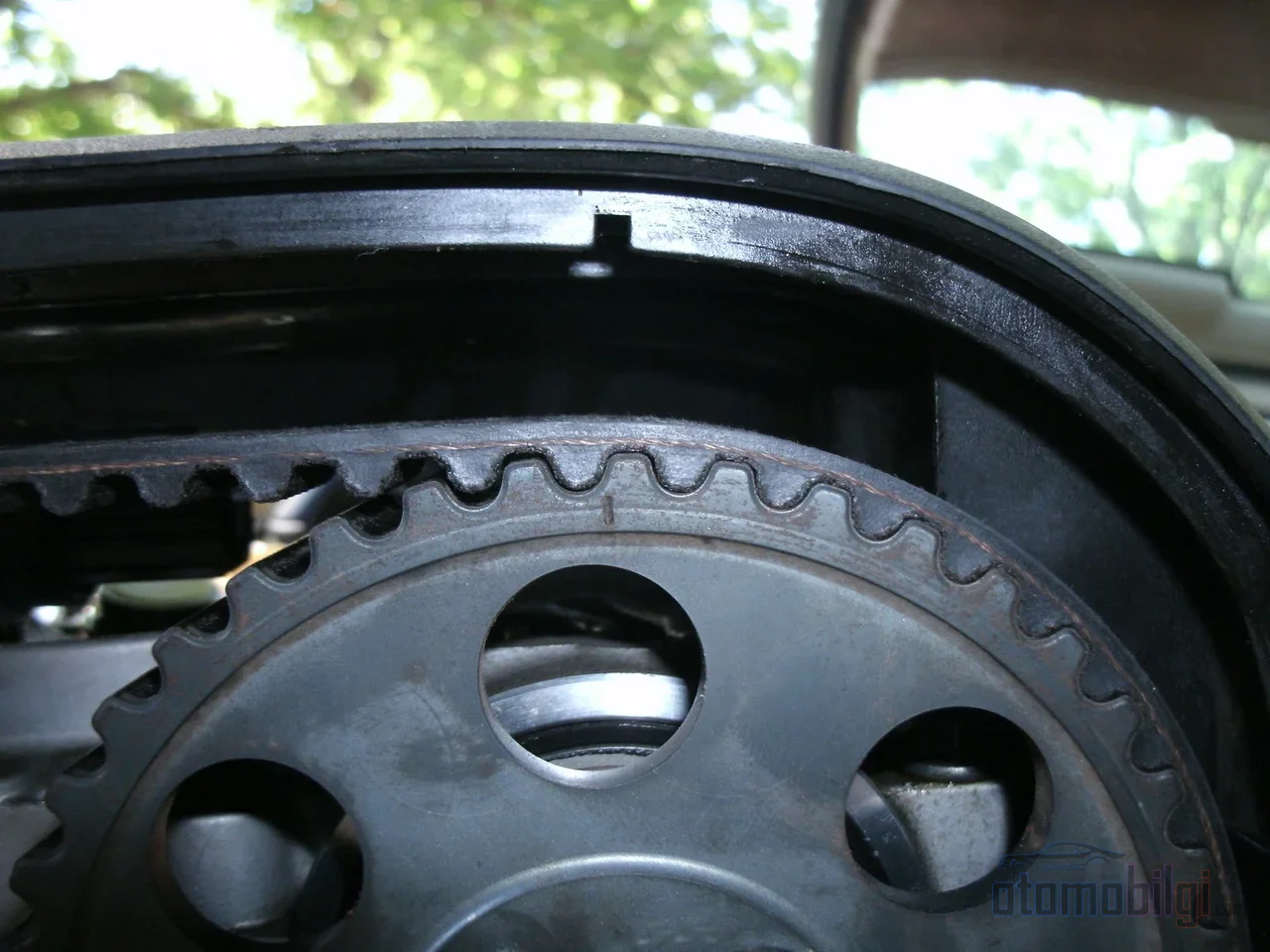
The timing belt is a rubber component that synchronizes the engine's crankshaft with the camshaft on a one-to-one basis; it ensures that the valves and pistons move without colliding with each other. The replacement time for the belt is generally within the range of 96,000-160,000 km or 5-7 years, and it should be replaced as soon as whichever limit comes first is reached. When the belt snaps, the timing is completely disrupted; in interference engines, this results in bent valves, damaged pistons, and cylinder head damage.
Key Highlights
- Most manufacturers recommend replacement at 96,000-160,000 km or 5-7 years; whichever comes first.
- Older-generation belts last roughly 65,000-95,000 km, while modern belts can reach 130,000-160,000 km.
- Planned replacement costs most vehicles between $400-$1,400; repairs after a breakage can climb to $2,500-$6,500.
- Standard car insurance does not cover engine failures caused by wear.
- In engines with timing chains, the replacement interval is much longer, but they are not entirely maintenance-free either.
What Does a Timing Belt Do, and Why Is It So Critical?
Inside the engine, two main shafts rotate: the crankshaft that moves the pistons and the camshaft that opens and closes the valves. The timing belt connects these two within a specific timing sequence; a valve must open fully, and be closed when the piston is exactly at top dead center. If this harmony is disrupted, the two sides collide, and the result is the concrete form of just how serious an engine failure can be: bent valves, damaged pistons, and in some engines, a destroyed cylinder head.
I have been in this business for thirty years; it has never lost its distinction of being the most frequently overlooked item on timing maintenance lists. Oil, filters, and brake pads are on everyone's agenda, but the belt slips people's minds because it is not visible. Yet the belt itself sits in a completely enclosed position within the engine; you cannot reliably see internal wear from the outside. This turns it into an item that cannot be managed with the logic of "I'll take a look and replace it if necessary."
When Should a Timing Belt Be Replaced: Mileage or Years?
The short answer: both. The majority of manufacturers recommend replacement at 60,000-100,000 miles, roughly 96,000-160,000 km, or 5-7 years; whichever limit is reached first is the one that applies. The belt is a rubber material and ages even without accumulating mileage: the rubber hardens, the fibers within it weaken, and the tension decreases. A vehicle sitting in the garage and taken out only a few times a month is not exempt from this process either. Therefore, in rarely used vehicles, age becomes more decisive than mileage.
There is also a reason why the figures span such a wide range: belt technology has evolved over the years. While older-generation belts last approximately 40,000-60,000 miles (65,000-95,000 km), modern belts can generally reach around 80,000-100,000 miles (130,000-160,000 km). The interval in the manufacturer's manual also varies by make and model; which is why the most reliable approach is to go by the figure in your own vehicle's maintenance manual. Hitting the common denominator of 60,000-100,000 miles / 5-7 years offers a reasonable framework for those without access to the manual.
A Belt That Can Age Even If You Don't Reach the Mileage
In the past, vehicles were used at simpler intervals; today, traffic, short-distance trips and constant stop-and-go driving have changed the belt's aging pattern. This is exactly why age has become as important as mileage, and in some cases even more important. Age-related deterioration is invisible from the outside; if the belt has passed its fifth year and is the original one, it is worth having it inspected regardless of the mileage.
There is also the engine type factor. meaning the pistons keep moving up and down while the valves freeze in random positions. the damage caused when the belt snaps is usually more severe than in their gasoline equivalents. If you drive a diesel vehicle, it is advisable to be a bit more rigorous with the replacement schedule. In some applications, time-based replacement is extended to 7-10 years, but those of us who have been through the trenches, like myself, prefer to move the replacement forward rather than age the belt and take the risk; the cost of the difference pales next to the cost of a snap.
Early Warning Signs: Ticking, Misfiring, Cracking
The belt does its job for years without giving any sign; which is why waiting for symptoms does not count as a maintenance strategy. Still, certain changes in sound and behavior from the engine can be signs that the belt is about to fail. The following should be watched for:
- A recurring ticking or clicking sound from the engine, especially if it becomes constant at idle.
- Squealing or chirping noises; the classic herald of a loose or damaged belt.
- Engine misfiring and rough idle; this can indicate that the timing has started to slip.
- Hard starting and smoke from the exhaust after starting.
- Oil leakage around the timing cover; leaking oil rapidly degrades the belt's rubber.
The subtlety here is this: these symptoms usually appear late. By design, the belt has no gradual warning system; by the time symptoms appear, internal damage may have already begun. On forums, some tell of the belt snapping without any warning at all, while others were saved by hearing a ticking sound. The right reading is to treat these sounds and behaviors as an early reminder, not as a sign to wait out the belt's final days.
What Happens to the Engine If the Belt Snaps?
The moment the belt snaps, the engine stops abruptly and power is completely cut; the vehicle is stranded in the middle of traffic. But the real event happens not at the roadside, but inside the engine. When the belt snaps, the crankshaft continues turning with its rotational momentum, but the camshaft stops; that is, while the pistons keep moving up and down due to inertia, the valves freeze in a random position. Most modern engines are interference, that is, collision-type designs calculated precisely for this scenario: the piston strikes the exposed valve. The result is bent valves, damaged pistons and, in some cases, a destroyed cylinder head - in practice, total engine failure.
The only exception to this fate is the belt snapping while, by chance, all valves are closed; in rare cases, around 5% of breakage incidents, the engine survives without damage. The extent of the damage depends more on the engine type and the timing at the moment of breakage than on speed. In other words, the "I was driving slowly, it won't hurt" calculation doesn't hold; this is a risk indicator tied to the engine's geometry, not a speed indicator.
Cost Table: Planned Replacement and Post-Breakage Repair
Money always speaks plainly. Although a planned replacement job varies depending on the kit contents and the vehicle, it paints roughly the following picture:
| Procedure | Approximate Cost |
|---|---|
| Belt kit parts (on their own) | $100–350 |
| Planned replacement, most vehicles (kit + labor) | $400–1,400 |
| Complete job including water pump, tensioner, and pulleys | $900–1,800+ |
| Example: 2026 Honda Odyssey | $1,168–1,470 |
| Example: 2026 Honda HR-V | $409–919 |
| Post-breakage repair on an interference engine | $2,500–6,500 |
Since the labor on most engines requires partially disassembling the engine, it is almost always the right decision to replace the water pump, tensioner, pulleys, and gaskets along with the belt. The labor for these parts largely overlaps with that of the belt; having them done individually later means the engine has to be taken apart and reassembled a second time, at significant extra cost. Then there is the nature of cheap offers: an incomplete kit or rushed workmanship comes back a few months later as a new problem. A planned, complete replacement is cheaper than a post-breakage repair under every circumstance.
Does Insurance Cover This Expense?
The short part: it does not. Standard vehicle insurance does not cover mechanical failures arising from poor maintenance, overheating, or insufficient lubrication. The replacement of wear-prone parts like the belt does not fall within the insurer's scope; insurance only comes into play if a covered risk defined in the policy (such as a collision or fire) causes the failure. Timing maintenance is therefore entirely the vehicle owner's preventive responsibility. This is the final line to factor in when reading the cost table: expecting a single cent from insurance on top of the breakage's $2,500–6,500 bill is not realistic.
Is a Timing Chain Different? The Situation in Chain-Driven Engines
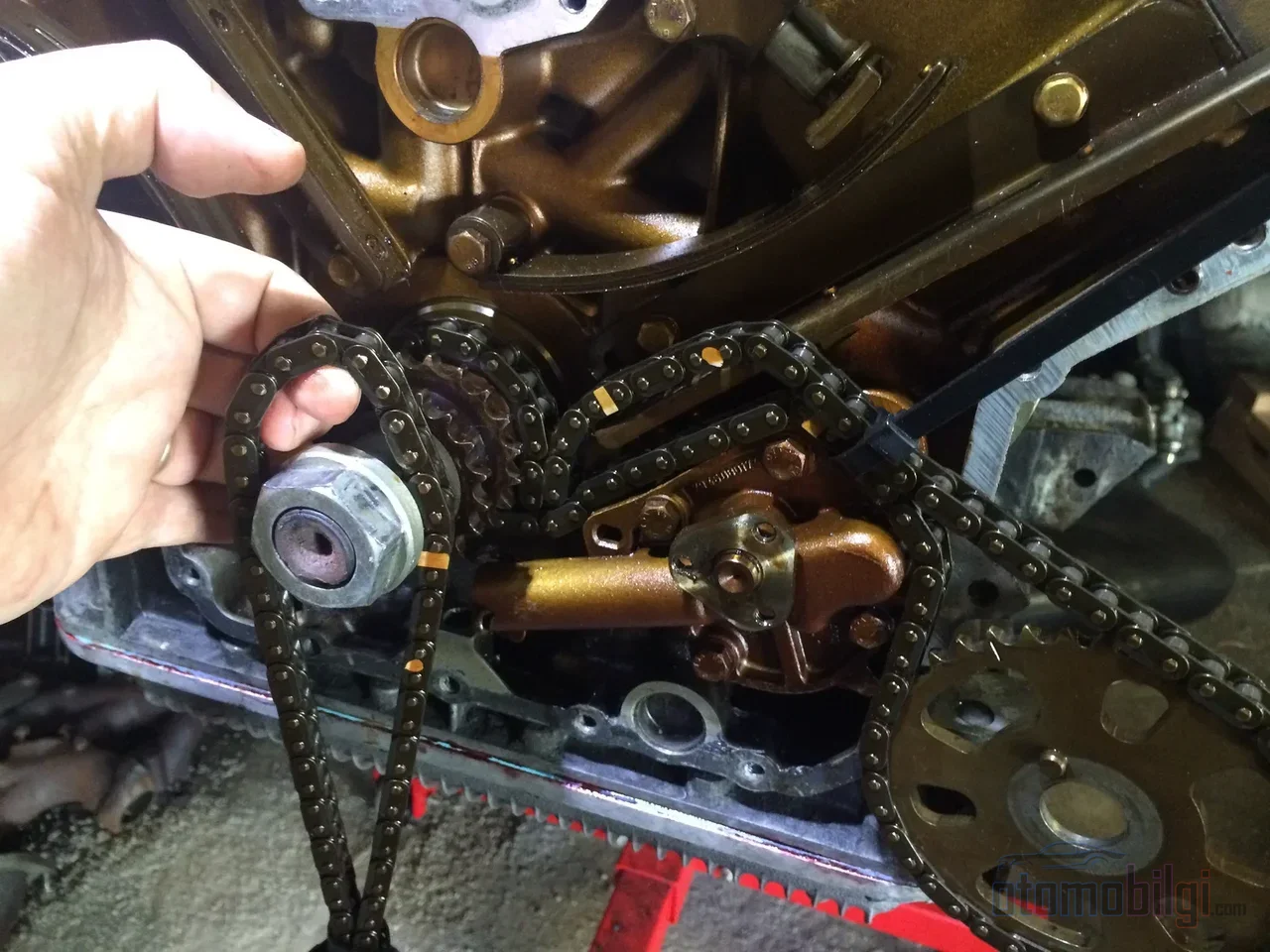
The fundamental difference between the belt and the chain is in the material: the belt is rubber and has a limited lifespan; the chain is metal and is generally designed to last as long as the vehicle itself. Chains can serve even beyond the 150,000–200,000-mile mark. This is not enough to say "chain-driven engines are maintenance-free"; the chain can also stretch, its tensioner can fail, and it can be damaged if lubrication deteriorates. Moreover, when a chain failure is repaired, it usually costs more than a belt; having to come out from deeper inside the engine is its natural price.
The warning signs to watch for in chain-driven engines also form a list of their own: rattling or knocking noise from the engine during cold starts, hesitation, check engine light, fluctuating idle, and increased power loss in low-mileage use. In high-mileage vehicles, a cold-start rattle that becomes frequent beyond 160,000 km indicates that the chain is approaching the end of its service life. When the chain loses timing and jumps a tooth, a loud screech is heard and the engine may stall; in other words, a different scenario from a belt but carrying a similar risk of the same outcome.
A Practical Maintenance Plan
If we must reduce all of this to a plan you can follow on your own:
- In your belt-driven vehicle, track the mileage and age together; replace at the 96,000-160,000 km or 5-7 years band, whichever comes first.
- An original-belt vehicle that has turned five years old should be inspected regardless of mileage.
- Have the replacement done as a complete kit: including the tensioner, pulleys, and on most engines the water pump.
- See a service center without waiting for symptoms like rattling, screeching, hesitation, or hard starting; these are early warnings, not guarantees.
- In chain-driven vehicles, take the cold-start rattle seriously and never skip engine oil changes; the chain's lifespan is directly related to lubrication.
That is the essence of timing maintenance: a belt does not warn you before it goes, which is why the replacement schedule is the driver's job. Over the years, the customers who learned the most expensive lessons were always the ones who said "let's go a bit longer"; planned replacement is the cheapest insurance for engine therapy - and precisely the item that the actual insurance does not cover.
Sources
- The Ultimate Guide To Car Timing Belt Replacement
- Guide to timing belt replacements
- What maintenance is required on my timing belt?
- When Is The Best Time To Replace Your Timing Belt?
- How Often Should You Replace the Timing Belt
- Timing Belt vs. Timing Chain: What's the Difference?
- What's the Difference Between Timing Belts & Timing Chains?
- What Happens When a Timing Belt Breaks While Driving?
- How Did This Engine Survive a Broken Timing Belt?
- Timing Belt Symptoms & Replacement Cost
- How Much Does a Timing Belt Replacement Cost in 2026?
- Timing Belt Replacement Cost: Complete 2026 Guide
- Timing Belt Replacement Cost (2026)
- 2026 Honda Odyssey Timing Belt Replacement Cost
- 2026 Honda HR-V Timing Belt Replacement Prices
- Does Car Insurance Cover Engine Failure?
- Does Car Insurance Cover Mechanical Problems?
- 5 warning signs it's time to replace the timing belt
- Timing Belt Failure Symptoms
- Early Warning Signs of a Failing Timing Chain
- Engine Rattle on Startup? It Could Be Your Timing Chain