Engine Life Myths: Common Misconceptions About Warming Up, Additives, and Flushing

Share This Page
This page examines one by one the four most common engine maintenance myths among Turkish drivers: prolonged idle warming, adding additives at every oil change, mandatory injector cleaning at specific mileage, and the belief that high-octane fuel benefits every engine. Under each heading you will find the origin of the mistake, the truth, and which parts these habits end up costing in the long run. In short, all the information you need to quit the habits that wear your vehicle down prematurely is right here.
Highlights
- In modern engines, waiting 5-10 seconds before driving off calmly to warm up is sufficient.
- At cold idle, the engine runs above 1,200 rpm and lubrication is completed in 20-30 seconds. is completed.
- The balanced formula of quality engine oil risks degradation with every additive added.
- Injector cleaning is only necessary for clogged or faulty injectors; there is no fixed km interval.
- If the manufacturer recommends 95 octane, 98 or 100 octane provides no extra protection.
How many minutes should a car idle to warm up in winter?
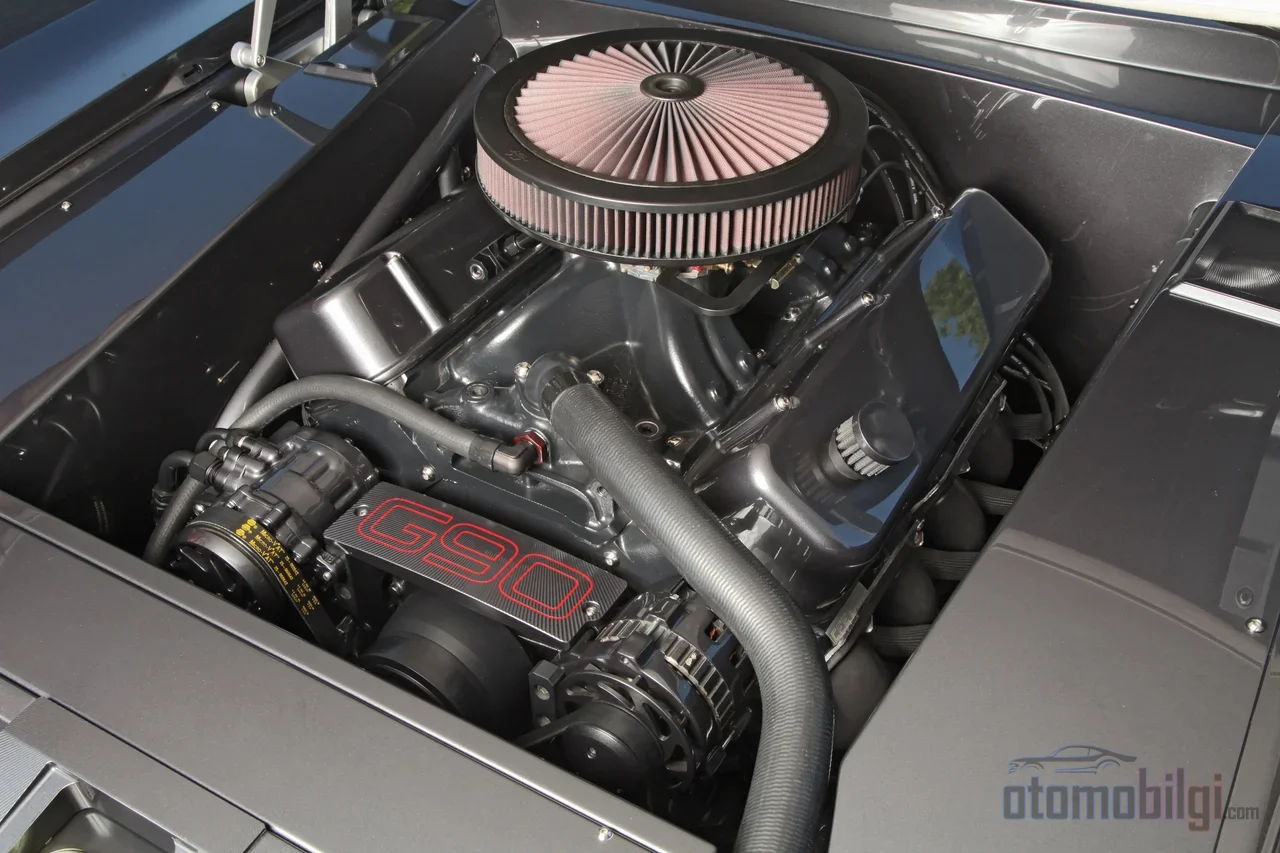
For a modern engine, the answer is clear: almost never. After starting the engine, waiting just about as long as it takes to fasten your seatbelt, roughly 5-10 seconds is enough before setting off. The engine's real warm-up is completed while driving. Prolonged idling delays the vehicle from reaching operating temperature, causes unnecessary fuel consumption and soot buildup in gasoline engines, and increases the soot load on the particulate filter in diesels.
Where does the myth come from?
This habit dates back to the era of carbureted engines. Since carbureted engines lacked sensors to balance the air-fuel mixture, idling was necessary to keep the engine from stalling. In modern fuel-injected cars, however, sensors that pump more fuel into the combustion chamber to compensate for cold air are active. In other words, the engine manages itself without you waiting.
Why does idling wear out the engine?
The paradox is this: at cold idle the engine runs on a rich mixture, and this mixture "washes" the cylinder walls, causing fuel to mix into the oil, resulting in the thinning known as fuel dilution. Prolonged idling also moves oil away from the cylinders and pistons, whereas the oil's job is to protect these parts. Cold-idle rpm is already above 1,200 rpm and lubrication is completed within 20-30 seconds. One more point: idling burns more fuel than driving. What it takes for the engine to last its first 200,000 miles (about 320,000 km) is regular maintenance and a short lubrication waiting period - not a long warming session to hit that target.
The correct procedure is simple: a short wait, then calm driving at low-to-medium revs. Avoid high revs until the temperature gauge returns to normal. The engine warms up faster under light load than at idle; calm driving protects both the engine and your wallet.
A separate note for diesels
Because diesel engines use compression ignition, they are harder to start in cold weather; glow plugs step in at this point to provide pre-heating. In older diesels, waiting about 30 seconds after switching on the ignition is enough, while in newer models only 6-8 seconds is needed - the glow system activates automatically when the door is opened. In petrol engines, warming up before driving is practically unnecessary.
Is it mandatory to add an additive with every oil change?
It is not mandatory; in most cases quite the opposite. The common belief is this: anything added to a high-quality, well-balanced motor oil formula can disrupt that formula. Motor oil is already a mixture balanced in laboratory conditions of viscosity modifiers, detergents, corrosion inhibitors, and anti-wear components. Randomly adding additives on top means disturbing this carefully measured balance.
There is also a trap in practice: if an additive is used before the soot inside the engine is cleaned out, the soot can turn into sludge and produce worse results. In other words, an additive poured in with a "cleaning" claim can backfire in a dirty engine. The belief that "additives are only necessary for new engines" is also wrong; in fact, old and worn engines may need more support to maintain tight tolerances. However, this support begins with choosing oil in manufacturer-approved specifications, not with off-the-shelf additives.
Practical rule of thumb
- If you are using quality oil with the correct specification, there is no need for routine additive supplementation.
- Additive use is not recommended in new vehicles.
- Additive manufacturers' marketing content emphasizes benefits; independent mechanic communities, on the other hand, point out the risk of disrupting the formula. The point where they meet: unless there is a specific problem, don't touch it.
- The real requirement is not to skip oil and oil filter changes. Manufacturers require oil and filter changes regardless of mileage in vehicles that have not driven 15,000 km per year.
Should injector cleaning be done at specific mileages?
There is no such thing as "periodic maintenance" for a properly functioning injector. Although service centers recommend it frequently, periodic injector cleaning that is not aimed at fixing an existing problem is most likely unnecessary. Quality gasolines already contain detergent compounds; therefore, if fuel quality is good, very frequent cleaning or even any cleaning at all may not be necessary.
The real topic comes up with injectors showing fault symptoms: misfiring, rough idling, declining fuel economy, unstable revs, and hard starting. If one of these symptoms is present, cleaning gains meaning as a treatment; otherwise, it is not a scheduled maintenance item. On the diesel side, there are sources recommending cleaning every 20,000-30,000 km; it is worth considering that this recommendation may have a commercial background - if there are no symptoms, don't rush.
If you are going to use an additive-based cleaner
Tank-additive cleaners can help maintain balanced operation under light to moderate contamination. There are two conditions for use: follow the manufacturer's dosage instructions and do not apply the product to a completely empty tank. Concentrated product poured into a half-full or full tank does not achieve the desired dilution.
Does high-octane fuel benefit every engine?
No. The octane number is not a measure of fuel quality or energy value; it is a measure of its resistance to knocking - the fuel igniting spontaneously and prematurely inside the cylinder. That is why the benefit equation ends at the engine, not at the pump: if your engine is high-compression or performance-oriented, high octane is required; if the manufacturer recommends 95 octane for a low-compression engine, every liter of 98 or 100 octane purchased is practically money thrown away. Because high-octane fuel is harder to ignite, it may not burn completely in a low-compression engine.
There is also an important reverse rule: if the manufacturer calls for high octane, using low octane can cause knocking and engine damage. Knocking means uncontrolled and premature ignition; it is a real threat to pistons and valves. In summary: in fuel selection, it is not the absolute value but the engine's design specification that is decisive. For 97 octane to offer an advantage, the engine must have been designed to run on this fuel.
Decision table: what does each myth cost?
| Belief | Correct practice | The price of the mistake |
|---|---|---|
| Long idle warm-up | Wait 5-10 seconds, warm up with gentle driving | Fuel waste, soot, DPF load in diesels |
| Additives at every oil change | Quality oil with the correct specification | Disrupting the balanced formulation, sludge risk |
| Periodic injector cleaning is a must | Cleaning only if there is a symptom | Unnecessary expense; risk with overuse |
| High octane benefits every engine | Follow the manufacturer's specification | Money wasted on an engine recommended for 95 |
| Low octane will do | Non-compliance in an engine that requires high octane | Knocking and engine damage |
Four habits to replace the myths
What these myths have in common is that they are done with good intentions yet harm the engine. The habits to put in their place are measurable and simple: a short wait and a gentle warm-up drive; a timely oil change with oil of the correct specification; listening for fault symptoms and avoiding unnecessary procedures; and loyalty to the manufacturer's fuel specification. The rest of the longevity calendar is completed by classic maintenance items - standard spark plugs at approximately 30,000 km, iridium/platinum spark plugs 60,000-100,000 km, and the timing belt, depending on the model, in the 60,000-120,000 km range, usually replaced together with the water pump. A timing belt not replaced on time breaks; this is the most expensive omission on the list. Abandoning the myths and returning to the schedule is the shortest path to years of trouble-free engine operation.
Sources
- Is It Necessary to Warm Up the Engine in Cold Weather? - Toyota Blog
- Is It Necessary to Warm Up a Vehicle Before Driving? | Indy Auto Man
- You Might Be Causing Damage While Trying to Warm Up Your Engine! - Reset Garaj
- Should You Warm Up Your Car By Idling? - Motor1
- Are Oil Additives Necessary? - Rislone
- Engine Oil Additives and Their Effects - Rowe Oil
- Engine oil additives - Reddit r/MechanicAdvice
- Do Fuel Injectors Need Periodic Cleaning? - Cars.com
- How to Use Injector Cleaner? - Opet Fuchs
- What Is the Octane Number of Gasoline? - Petrolofisi
- Should You Use High-Octane Gasoline? - Kosy
- Using lower-octane petrol may damage engine - The Straits Times
- Jeep Periodic Maintenance Schedule - Jeep Türkiye
- When and at What Mileage Should Periodic Maintenance Be Done? - AES Garage