How Can a Track Host MotoGP?
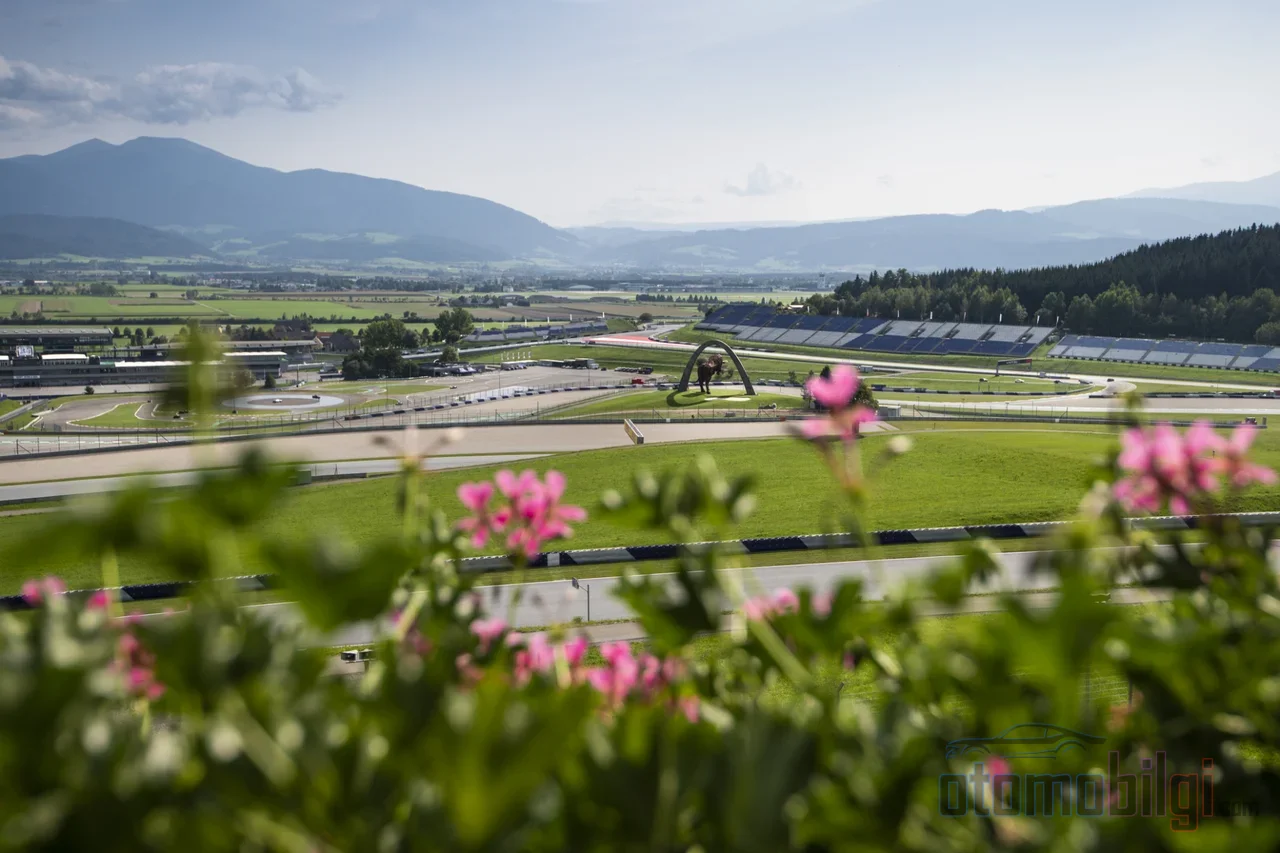
During a race weekend, MotoGP bikes fly down the straights at over 350 km/h - have you ever wondered whether everything around the track, from the barriers to the gravel traps and even the safety cameras, is there by chance? Whenever I watch a spectator incident, one question comes to mind: How did these tracks get into this business in the first place? Who measured, who approved, who inspected? Because a track making it onto the MotoGP calendar isn't a matter of showing up at the door and saying "let's hold a race." It means a long, tedious, and ruthless bureaucratic journey - one that, in the end, saves lives.
So on this page, we're not going to tell the history of iconic corners. Instead, we'll talk about something lesser-known but far more interesting: a track's "entrance exam" for MotoGP. In other words, FIM homologation and all the safety requirements that come with it. If you're ready, let's begin.
What Is FIM Homologation and Why Is It the Gateway to Everything?
First, let's meet the players. MotoGP's official rulebook is called the "FIM Grand Prix World Championship Regulations," and the enforcement of these rules is overseen by the sport's governing body, the FIM - the Fédération Internationale de Motocyclisme (International Motorcycling Federation). The FIM has a specific document in hand for tracks: "Standards for Circuits." The purpose of this document is stated very clearly - FIM inspectors use exactly this standard for track homologation, that is, the official approval process.
Think of homologation this way: it's like a vehicle having to pass inspection before it can go out on the road. A track is also a "structure," and it can only host world championship bikes if it proves it meets certain standards. The fact that the championship regulations define a responsible official for every aspect of safety - including track inspection and homologation - shows that this is not chance, but the system itself.
But here's the interesting part: it's not a one-time exam. Whenever it deems necessary, the FIM can inspect any track at any time and order all the measures required for compliance. Short-term track licenses are also issued - for a few years or even for a single event. So we could say that approval is not a "lifetime membership card" but a subscription that expires. A small note: the clearest reading of track licensing and inspection logic comes from other branches of circuit racing; MotoGP's own regulations adapt these principles to the grand prix world.
The Clauses of the Track Exam: Surface, Run-off, and Air Fence
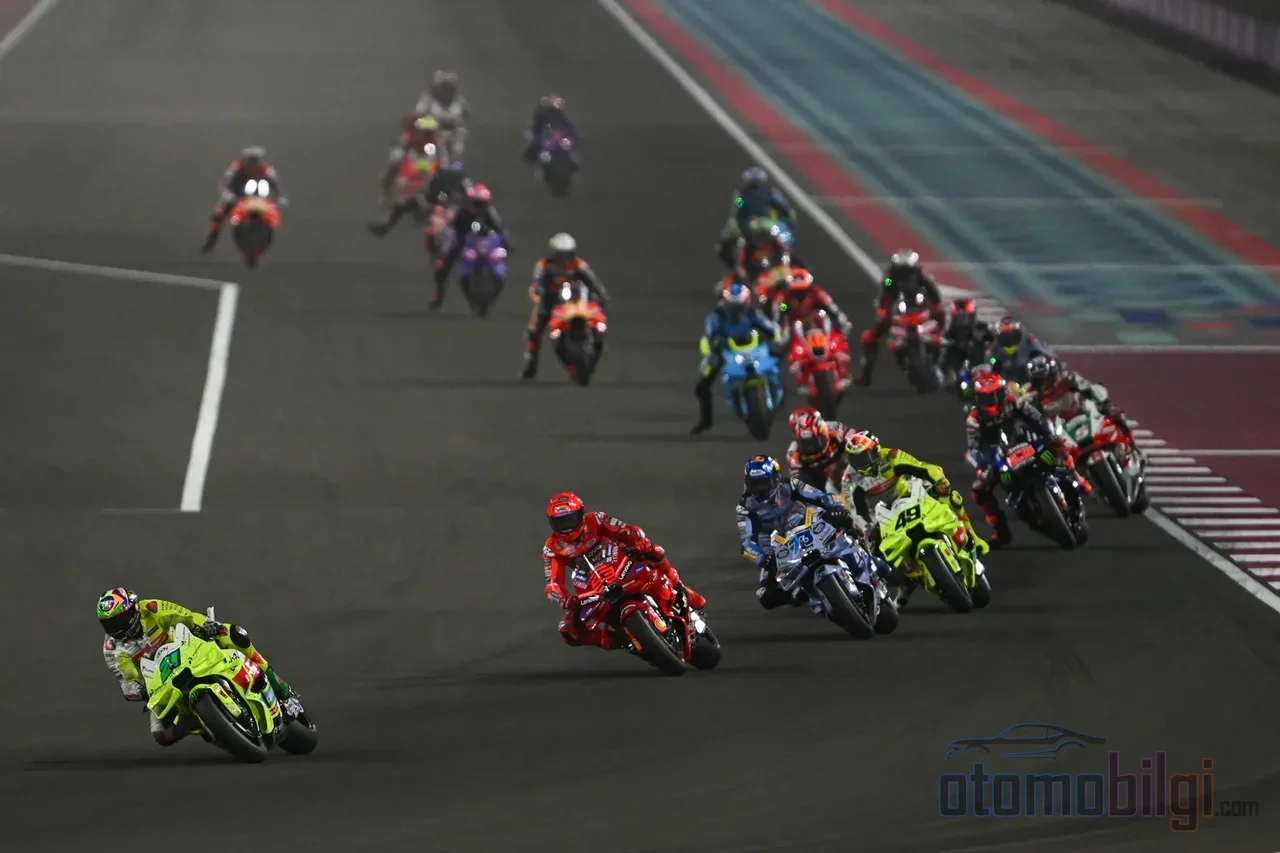
So what is the inspector actually looking at? The first clause may look like the simplest, but it's one of the most critical: the track surface must be as even as possible and suitable for safe racing at high speeds. Think about it - on a motorcycle traveling at 300 km/h, every pothole and every broken piece of asphalt from the wheel is transmitted directly into the rider's body. Unlike in a car, there's no seat to sit in and wait it out.
The second major issue is what happens if you run off the track: run-off areas. These are the wide asphalt or gravel areas outside the track limits - a "safety buffer" zone that gradually absorbs energy in case a rider falls or a motorcycle is flung out. The third item is air fences, meaning inflatable soft collision barriers placed at specific points. These are used mostly in the run-off areas of corners where maneuvering space is limited; they don't need to be placed on every centimeter of the track. In other words, the system is intelligently designed: the toughest protection at the point where the risk is highest.
Highlights
- Track approval is given by the FIM; inspectors use the official "Standards for Circuits" document.
- CCTV footage recorded at new circuits is kept accessible to Race Direction and the FIM for at least 6 months.
- At permanent circuits, the last inspection is recommended to be carried out at most 90 days before the first FIM event.
- In MotoGP, the track's medical homologation is also a separate requirement.
- At the Goiania circuit, the asphalt was completely renewed for the FIM Grade A standard.
The list continues with more detailed items. Among FIM Europe's safety regulation updates are provisions concerning run-off areas, new types of kerb definitions, and the establishment of application criteria for anti-slip paints used on circuits. Yes, even paints have a criterion - because for a tire sliding in a corner, the difference in grip between asphalt and paint is a vital detail.
The Unseen Requirements: Medical Approval, Cameras, and the 90-Day Rule
Track safety is not just about asphalt and barriers. MotoGP regulations also provide for the track's "medical homologation": an FIM representative is tasked with carrying out medical inspections and making recommendations when necessary. The 2021 regulations also require that personnel meeting the track's medical homologation be present. In other words, the track also has a "health report" - the mapping of the fastest ambulance, the closest medical base, and the most accurate response protocol. We never think about this while watching the race, but that's exactly why not thinking about it is a good thing.
There is also the camera side of things. According to the FIM's additional recommendations document for new circuits, footage recorded by safety cameras must be kept accessible to Race Direction and the FIM for at least 6 months after the event ends. Why? Because understanding how an incident unfolded determines what the next track and the next rule will look like. No records, no learning.
Timing also matters. According to the FIM's update of track standards, at permanent circuits the last inspection is recommended to be carried out at most 90 days before the first FIM event. There is no "let's take a quick look" a week before the race - because if the inspection reveals a deficiency, there must be time to fix it.
How Do New Tracks Enter the Calendar? Lessons from Brazil and Adelaide
Now let's look at how this system works in the field. The freshest example is Brazil: The Autódromo Internacional Ayrton Senna in Goiania was added to the calendar in December 2024, but serious problems soon followed, raising questions about how solid the homologation process really is. Work on the track continued until January - the asphalt was completely renewed to reach FIM Grade A standard, and improvements were made to the facilities. Following these problems, Marc Márquez endorsed the FIM's track approval process. The gist of the story is this: getting on the calendar is not a single step; even after approval, sleeves are rolled up to meet the standard. Brazil is back on the calendar after a 22-year absence - and that return did not come free.
Another striking example is Adelaide. The 2027 calendar was revised with two new venues: a track in Argentina and a street circuit in Adelaide, Australia - in November. When you hear "street circuit," this immediately comes to mind: there are no huge run-off areas! Buildings, gratings, sidewalks... That is exactly why Adelaide's story matters: the track will use its F1-era layout, but with various modifications to meet modern motorcycle racing safety standards. And MotoGP riders have confirmed that the Adelaide street circuit meets safety standards for its 2027 debut. So a street circuit can enter MotoGP - but at the price of the track being converted to these rules from end to end.
Looking at the calendar as a whole, the picture becomes even clearer. The 2027 season has been announced at 22 races, stretching from Thailand in March to Valencia in November. Meanwhile, there was also a small shift: the Qatar GP was postponed to 6-8 November 2026, which also affected the Portuguese GP at Portimão. Every year the calendar is a jigsaw puzzle; each piece finds its place according to homologation requirements and the state of the world. It is said that Dorna has many new tracks wanting to enter the calendar from outside Europe - there are also news and rumors circulating about tracks in China and Vietnam. It is frequently noted that as the championship grows, venue selection focuses on tracks that balance excitement with strong safety standards.
Why Do Classic Tracks Fall Off the Calendar?
Here is the ruthless side of the system: past fame does not mean exemption from today's exam. A track's return to MotoGP can be blocked due to safety concerns and the lack of adequate FIM track homologation. In its permanent content, there are names that fans miss, saying "bring that track back" - but the governing body's eyes are not on history books, they are on current inspection reports.
There is also a philosophical clash between the two disciplines: the view that F1's tendency to add asphalt run-off areas off the track can pose greater risks for motorcycles is often debated. An asphalt escape area is perfect for a car - the tires grip, the vehicle slows down. But for a motorcycle the situation is different; the nature of the surface where the rider will come to a sliding stop is an entirely different calculation. The same track faces two different safety exams for the two disciplines. In track safety discussions, suggestions are also circulating such as maintaining a minimum 2-meter clearance around the entire track and carefully designing the transition between the racing line and the run-off area - these views coming from social media may not be official rules, but they show how seriously enthusiasts grasp the subject. All of these rule details lie between the lines of the track's homologation file.
The Conditions That Allow a Track to Enter MotoGP - Short Answer
So okay, what's the clear one-paragraph answer? Here it is: For a track to enter the MotoGP calendar, it must pass homologation according to the FIM's "Standards for Circuits" document, have qualified medical staff completing the medical homologation, offer sufficient run-off areas at corner exits and air fence barriers at risky points, have smooth asphalt suitable for safe racing at high speeds, install CCTV systems with records kept for at least 6 months, and, in the case of permanent circuits, complete the final inspection no later than 90 days before the first event. Approval is not a one-time thing; The FIM can re-inspect the track at any time it wishes and issue short-term licenses. Even street circuits can make it onto the calendar by meeting these conditions - Adelaide for 2027 is a living example of this.
My favorite part is this: thanks to this system, every race we watch runs on top of a safety net with dozens of inspectors, documents, and corrections behind it that no one ever sees. Next time the cameras tremble on a straight, you now know - the fact that track is even standing there is a success story in itself. Which track do you think will knock on the door in the next round of examinations?
Sources
- 2023 FIM standards for Track Racing circuits - Fim-Moto
- General Section - Fim-Moto
- Additional recommendations for new circuits requiring an FIM
- 2021 FIM Grand Prix World Championship Regulations
- FIM 2025 MotoGP World Championship Regulations
- MotoGP adds two new circuits in calendar shake-up for 2027 (Times of Malta)
- Adelaide Street Circuit Meets MotoGP Safety Standards
- Marc Márquez endorsed the FIM's track approval process (trf1.net)
- MotoGP safety: Life-saving elements at the circuits (boxrepsol.com)
- Circuit safety design (dit.sa.gov.au)