Jorge Lorenzo and the Yamaha YZR-M1: A Perfect Match
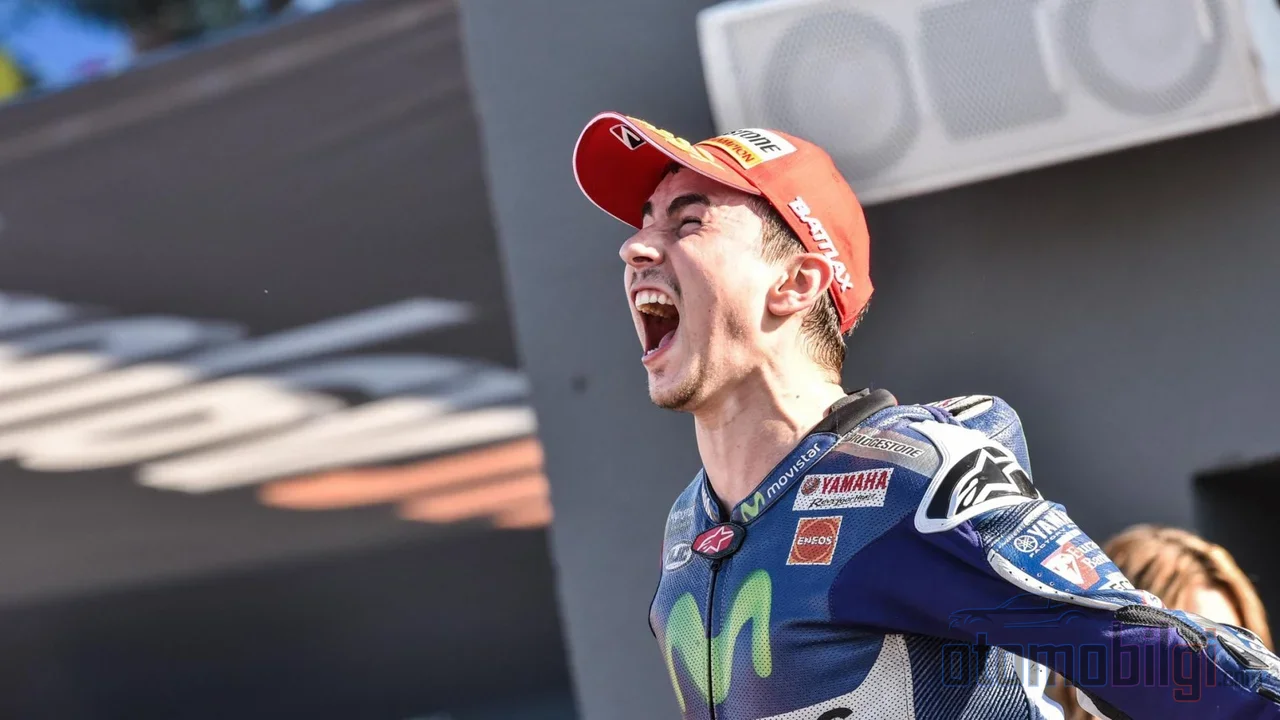
Imagine you're teammates in the same garage, with the same motorcycle, alongside the most famous rider in the world. He fills the room, the cameras point at him, and you're just on the other half of the garage. What would you do? Jorge Lorenzo's answer went down in history: for three years in a row, no one could stop him. But the interesting part is, the story of the rider who won this trilogy isn't a story of "speed through the gate"; it's a story of patience, rhythm and composure.
2010, 2011 and 2012... Wait, wasn't Stoner the champion in 2011? Yes, he was. So let's clarify the title together: The claim of Lorenzo's three consecutive championships tells a legend in calendar terms, not in class terms. Here's what actually happened: He won his first MotoGP championship in 2010, finished 2011 second, and took the cup back in 2012. In three seasons: two championships, one runner-up finish, and a consistency between them that was simply insane. So where did this consistency come from? Let's get started.
From Mallorca to the Summit of MotoGP: Who Is Lorenzo?
Jorge Lorenzo Guerrero was born on May 4, 1987, in Palma de Mallorca. In the smaller classes, he practically flew: he won back-to-back world championships in 250cc in 2006 and 2007. The 2007 season was particularly crazy: he converted all 9 of his pole positions into wins and finished as champion with 312 points. In other words, he started first 9 times and won 9 times. Think of it like studying for an exam: you took 9 subjects and aced all 9 of them.
In 2008, he stepped up to MotoGP with the Yamaha factory team and surprised everyone by winning in Portugal in his debut season; he finished the championship fourth and was named Rookie of the Year. But the real bombshell had been dropped on July 25, 2007: Yamaha announced Lorenzo as Valentino Rossi's teammate. Yes, the garage neighbor of nine-time world champion Rossi. This detail will be the key to everything that followed.
Highlights
- Lorenzo became MotoGP champion three times: in 2010, 2012 and 2015.
- He completed the 2010 season with 383 points, breaking the all-time points record for that era.
- In 2012, he clinched the championship at Phillip Island, finishing second behind Stoner.
- He completed the trilogy with the Yamaha YZR-M1: an 1,000 cc inline four-cylinder with 240+ horsepower.
- His premier class career: 203 races, 47 wins, 114 podiums.
2010: The Championship Year That Started with a Broken Bone
The story of his first championship didn't begin exactly as it was born. Before the season, he broke two bones in his hand in a pocket bike accident and missed most of the tests. When he opened the season in Qatar, he was still not in full form, but he finished second right behind Rossi. Then his moment came: Rossi broke his leg at Mugello, and the championship picture changed in an instant.
And here Lorenzo showed exactly that famous composure of his. In the stretch from Jerez to Le Mans, he pulled himself together, focusing on avoiding mistakes and staying calm. He won four of the first six races and built a 47-point advantage in the championship. Up to Brno, he won five of the six races. If you remember, when Lorenzo entered MotoGP he was known as a rider who crashed often and took big risks. Then came 2010, the season that shattered that image. In his own words, a rider known for crashing being this consistent was proof in itself.
383 Points and a Record
He sealed the championship on October 10 at Sepang, finishing third behind Rossi and Dovizioso. But better yet: He won the season finale at Valencia, ending the year with 383 points and breaking the all-time points record for that era. He dedicated his championship to Shoya Tomizawa, who lost his life in an accident that year, and when he returned to Mallorca he was greeted by thousands of people in Palma.
Of course, the criticism came too. Rossi was injured, and Pedrosa was also struggling with injuries; some felt the title was worth less. Lorenzo's answer was ironic: he argued that the legends of the past were not on that grid either, and a championship is still a championship. Even Mick Doohan, with a rather measured take on the matter, said the best rider wins.
2011: An In-Between Season Worth Its Weight in Gold
The second title did not come this time, but 2011 was one of the seasons that revealed Lorenzo's character best. He started the season with four podiums in the first five races; he won the Spanish GP by roughly twenty seconds after Stoner and Rossi collided with each other. Twenty seconds - in MotoGP, that is several worlds apart.
Then the hard days began. He crashed at the British GP on a wet track, recovered mid-season and won at Mugello and Misano. But the truly critical moment came during the warm-up laps of the Australian GP: he crashed and lost the tip of the fourth finger on his left hand. He had surgery in Melbourne but missed the rest of the season. Stoner, who won that race, clinched the championship; the cancellation of the Malaysian GP after Marco Simoncelli's death also shaped the picture. Lorenzo finished the championship second. A runner-up finish squeezed between two world titles: the most painful yet most instructive season of his career.
2012: A Trilogy Completed with Flawless Rhythm
2012 was Lorenzo's masterpiece. He took pole position in Qatar and the race win the following evening; he finished second at Jerez and Estoril, and won Le Mans and Catalunya. The gap over Stoner reached 20 points. Before the British GP he signed a new contract with Yamaha through the end of 2014, and won the race ahead of Stoner to extend the gap to 25 points. Speed records kept coming one after another: he took pole position with a new record in Czech GP qualifying.
The season's only major crash happened at Assen: he was brought down by contact caused by Alvaro Bautista. But even that changed nothing. He finished second at Sachsenring and took the season's fifth win at Mugello. He finally sealed the championship at Phillip Island, finishing second behind Stoner. Stoner's crash at Indianapolis and the ankle injury that made him miss three races also made the job easier, but what told the real story was not his rivals' injuries - it was Lorenzo's statistics: There was not a single race all season, apart from Assen, where he failed to finish first or second.
YZR-M1: Lorenzo's Weapon
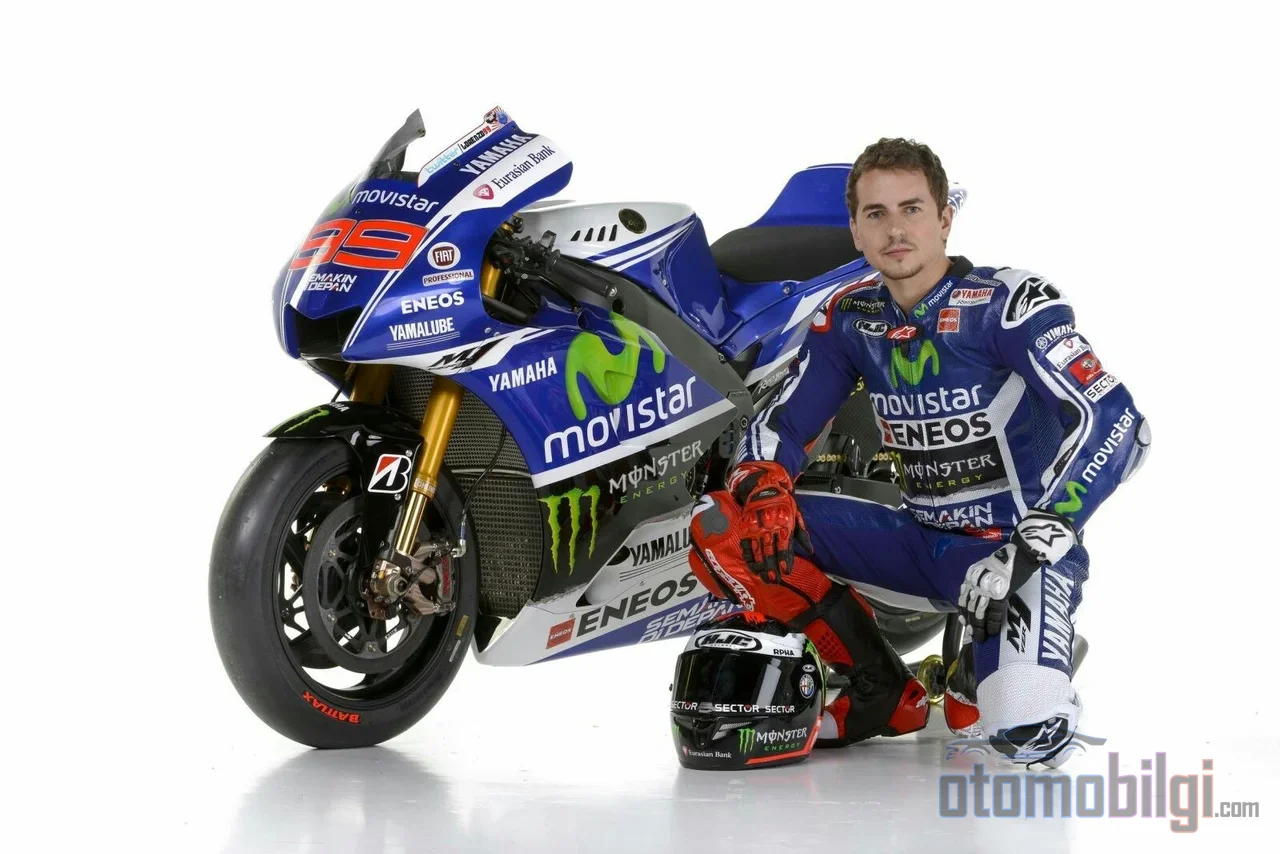
The other half of this trilogy was the motorcycle itself. The Yamaha YZR-M1, the factory's flagship that replaced the legendary YZR500 in 2002. The version with which Lorenzo won his 2012 title was one of the first machines of the 1,000 cc era, after the switch back from 800cc.
| Specification | 2012 Yamaha YZR-M1 |
|---|---|
| Engine | Liquid-cooled, 4-stroke, inline 4-cylinder |
| Displacement | 1,000 cc |
| Power | 240+ horsepower (over 176 kW) |
| Transmission | 6-speed |
| Chassis | Aluminum twin-spar |
| Valvetrain | DOHC, 4 valves |
| Fuel system | Fuel injection |
This is proof that the motorcycle won not only with engine power, but with its harmony with the rider. Lorenzo's riding style was silky smooth: he never flogged the motorcycle, waited for everything to be set up just right, and preserved his tires until the end of the race. He was a rider who grew stronger in the final stages of races and loved running the motorcycle on low fuel; first-lap pace was one of his greatest weapons. What made him unique was the similarity of his lap times, meaning he completed nearly every lap with almost the same stopwatch reading.
The Garage War in Rossi's Shadow
Now for the most famous part: his relationship with Rossi. The pair's relationship started mostly amicably, but when Lorenzo won the championship in 2010, the atmosphere between them hardened. Rossi's dominance at Yamaha had been broken, and the garage had split in two. The numbers also show the magnitude of the rivalry: in the seven years they spent together, Lorenzo amassed 30 pole positions and 35 wins at the Qatar GP; Rossi had 15 pole positions and 26 wins. Their duels at the 2009 Catalunya GP are still remembered among the battles that went down in history.
This was less a feud, and more about two giants having to breathe under the same roof. Lorenzo managed to emerge from this pressure with back-to-back championships and a runner-up finish, and after Rossi left, he became the face of Yamaha.
So How Did Lorenzo Win This Trilogy?
The short answer: composure, rhythm, and perfect technical harmony with Yamaha. Lorenzo took his first title in 2010 with a record-breaking 383 points, finished second in 2011 despite losing part of a finger, and in 2012 completed the trilogy by finishing first or second in every race except Assen. He did it by managing a 240+ horsepower prototype motorcycle as if he were winding a watch, without ever panicking. In short, Lorenzo was fast, but his real deadly weapon was consistency: while his rivals crashed, he was banking points.
Legacy and Frequently Asked Questions
Lorenzo's career total is as follows: five world championships (2010, 2012, 2015 MotoGP; 2006, 2007 250cc), 203 premier class race starts, 47 wins, 114 podiums, 43 pole positions and 2899 points. Fifth on the all-time wins list, third on the podiums list. In 2022 he was inducted into the MotoGP Hall of Fame as an official legend. After his career, he joined Yamaha's test team and said his goal was for a Yamaha rider to become champion.
Frequently Asked Questions
- In which years did Lorenzo win the MotoGP championship? In 2010, 2012 and 2015.
- Which motorcycle did he win his first championship with? With the Yamaha YZR-M1.
- Was he enemies with Rossi? The rivalry intensified after 2010, but initially their relationship was more of a friendly contest.
- Why couldn't he win in 2011? Stoner's dominance throughout the season, the finger injury in Australia and the cancellation of the Malaysian GP were decisive.
- Where was the 2012 title declared? At Phillip Island, finishing second behind Stoner.
- How does the MotoGP points system work? The first 15 riders in the race score points: first place gets 25, second 20, third 16, and so on, decreasing progressively. There were no Sprint races in Lorenzo's era; the Sprint was added starting in 2023 and awards points starting from 12 to the first 9 riders.
Lorenzo's story reminds us of one thing: it is not the rider who sets the fastest lap who becomes champion, but the one who reaches the podium every week. The Mallorca kid's three-year streak is one of the sport's finest lessons.
Sources
- Jorge Lorenzo - Wikipedia
- Lorenzo Interview - Racing Information
- Jorge Lorenzo - MotoGP Riders
- 2012 YZR-M1 (0WT3) - Yamaha Communication Plaza
- 2012 Yamaha YZR-M1 MotoGP bike - bikesales.com.au
- Analyzing Jorge Lorenzo's 2012 MotoGP Championship - MotoMatters
- Rossi vs. Lorenzo: Tension builds between Yamaha teammates - Fox Sports
- What is the MotoGP Points System? - MotoGP.com