How Did Valentino Rossi Win His Nine Championships?
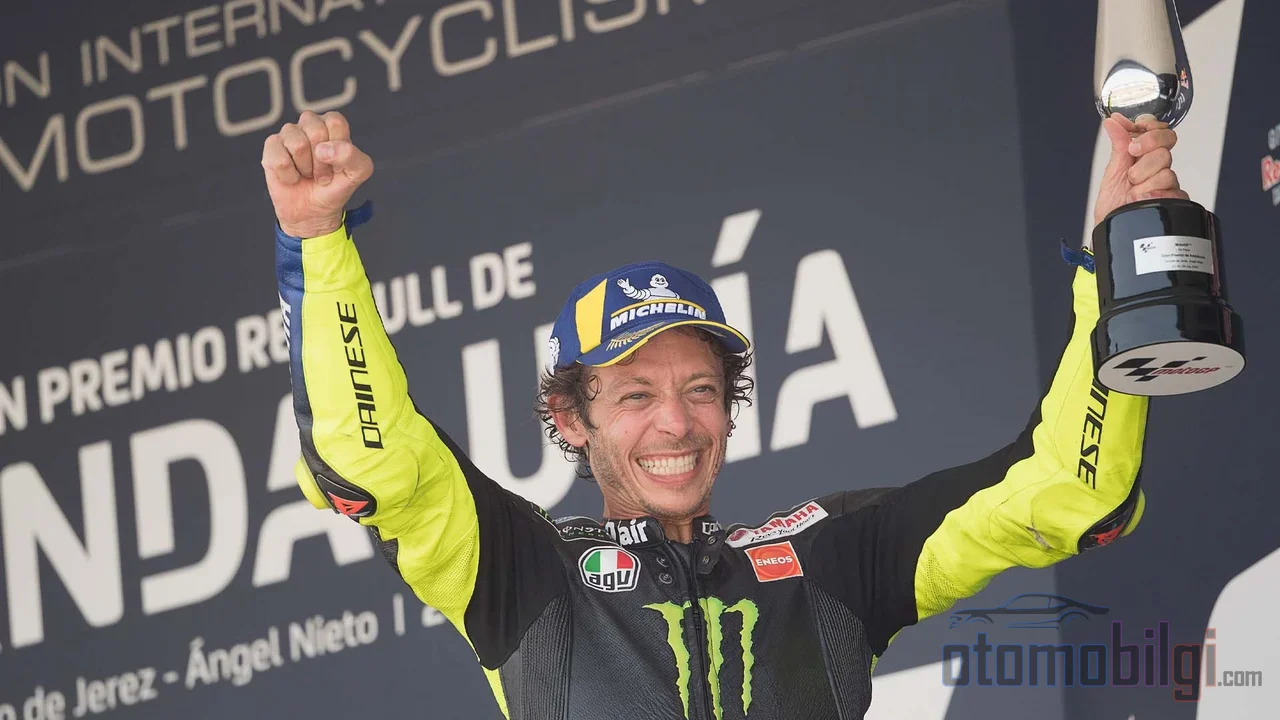
Imagine you have the best motorcycle in the world, you're winning championships back to back, and then one day you leave that bike and move to a team that hasn't brought anyone a championship in 12 years. Crazy? For Valentino Rossi, quite the opposite: the biggest move of his career. So how did this man win his nine world championships, on which motorcycle, and against which rivals? If you're ready, let's begin - because this story can't be told with numbers alone.
Rossi's championship history looks like a simple list at first glance: 1997, 1999, 2001, 2002, 2003, 2004, 2005, 2008, 2009. But behind every line of that list lies a completely different motorcycle, a completely different rival, and a completely different story. This journey from 125cc to MotoGP, from Aprilia to Honda, and from Honda to Yamaha, is one of the most complete careers in Grand Prix history.
First, A Quick Profile: Who Is The Doctor?
Valentino Rossi was born on February 16, 1979, in Urbino, Italy; his family moved to Tavullia during his childhood. His father Graziano Rossi was a former motorcycle racer - so the throttle came into his hands very early, almost like destiny. In 1996, at just 17 years old, he began his Grand Prix career in the 125cc class.
His nickname is The Doctor. A nine-time Grand Prix World Champion, Rossi won seven of those nine titles in the premier 500cc/MotoGP class (2001, 2002, 2003, 2004, 2005, 2008, 2009) and two in the lower classes (1997 125cc, 1999 250cc). Moreover, he is the only rider in history to win the 125, 250, 500, and MotoGP classes all as champion. He ended his career at the end of the 2021 season; the same year he entered the MotoGP Hall of Fame as a "Legend", and his number 46 was retired from MotoGP at the 2022 Italian GP.
Highlights
- Nine world championships: 2 in lower classes + 7 in the premier class
- 115 GP wins and 235 podiums throughout his career; 89 wins in the premier class
- The only rider in history to win 125, 250, 500, and MotoGP
- In 2004, he switched from Honda to Yamaha and won his first race: consecutive wins with different manufacturers
- The only road racer to compete in more than 400 Grand Prix races
Nine Championships at a Glance
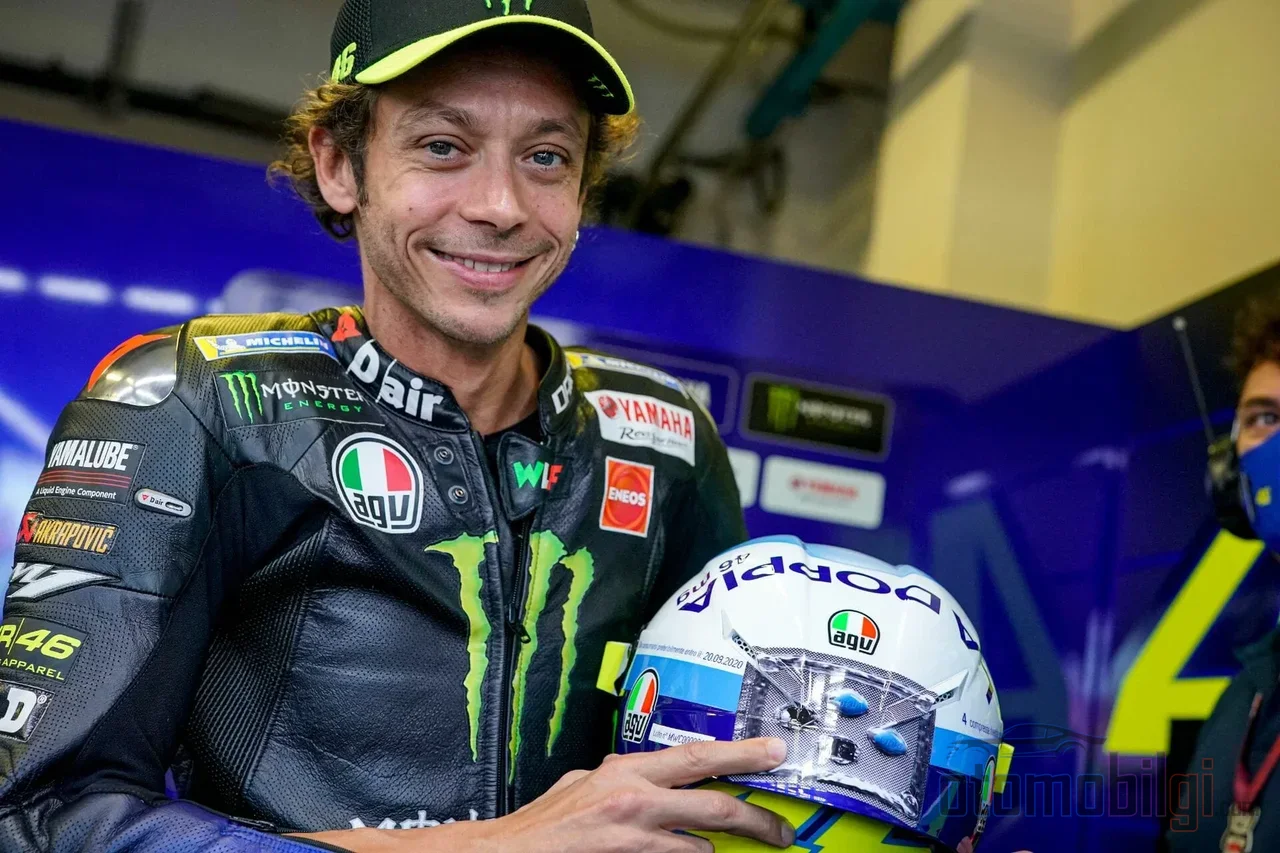
Before going further, let's put the map on the table. Each of Rossi's titles - in which class, with which manufacturer, and with how many wins?
| Year | Class | Manufacturer | Highlight |
|---|---|---|---|
| 1997 | 125cc | Aprilia | Winning 11 of 15 races |
| 1999 | 250cc | Aprilia | Title clinched in Rio |
| 2001 | 500cc | Honda | 106 points ahead of Biaggi |
| 2002 | MotoGP | Honda | Done with 4 races left in the season |
| 2003 | MotoGP | Honda | The Gibernau rivalry |
| 2004 | MotoGP | Yamaha | Victory in the first race |
| 2005 | MotoGP | Yamaha | 367 points, 5 consecutive wins |
| 2008 | MotoGP | Yamaha | The Lorenzo teammate era began |
| 2009 | MotoGP | Yamaha | Ninth and final title |
1997: First Title in 125cc - Dressed as Robin Hood
Rossi started in 1996 with the AGV team on an Aprilia RS125R. Took his first podium at the Austrian GP, and his first pole position and first victory at the Czech Republic GP (Brno); finished his first season ninth with 111 points. Not a bad start, but no one was prepared for what would happen in 1997.
Moving to the Nastro Azzurro Aprilia team, Rossi became champion with 321 points, winning 11 of 15 races; the title was officially sealed with a third place at Brno. The victory celebrations were a show in their own right - he even dressed up as Robin Hood at one point. So yes, the showmanship was there from day one.
1999: 250cc - The Capirossi Door Opens
Moving up to 250cc in 1998 on the Aprilia RS250, Rossi took his first victory at the 1998 Dutch TT and finished the season second with 201 points. Who was the champion? His teammate Loris Capirossi - the gap was only 23 points. So even before moving up to the top class, Rossi was learning by losing to the very best.
In 1999 he became the sole rider of the official Aprilia GP team and sealed the 250cc championship in Rio de Janeiro with 309 points. Two lower classes done; next up was the very summit of Grand Prix racing.
2001: 500cc - Doohan's Protégé at the Top
When he moved to 500cc with Honda in 2000, he had a very special advisor at his side: the retired five-time 500cc champion Mick Doohan was working as Rossi's personal mentor. He took his first victory at Donington Park in July and finished the season second with 209 points (the champion was Kenny Roberts Jr.). was). A year later, everything changed.
In 2001 he took 11 victories and finished off the podium only three times; he won his first 500cc title with 325 points, a full 106 points ahead of the season's main rival Max Biaggi. It was Rossi who left his mark on the closing of the era dominated by two-stroke engines.
2002-2003: The Birth of MotoGP and the Honda Years
2002: The First Champion of a New Era
2002 was the first season of the new four-stroke era under the name MotoGP. While many riders struggled to adapt to the new motorcycles, Rossi started things off by winning the season opener in Japan on a wet track; he took pole position in all of the first five races. He closed the season with 11 victories and secured the title in Rio de Janeiro, four races before the end of the season.
2003: Duels with Gibernau
In 2003 the rising Sete Gibernau became a serious threat; the season opener in Japan was overshadowed by the death of Daijiro Kato. He lost the German GP to Gibernau by just 0.060 seconds - it was one of the most closely fought moments of the season. But the Australian GP was a pure Rossi manifesto: despite receiving a 10-second penalty, he finished the race more than 15 seconds ahead of the entire field. The title was sealed in Malaysia with two races to go; the victory in Valencia was his last with Honda.
And it was precisely at this point that the most surprising twist of the story took place.
From Honda to Yamaha: The Transfer That Broke a 12-Year Silence
At the end of 2003, Rossi left Honda. The reason? A contract dispute and a deteriorating relationship with Honda Racing Corporation - Rossi felt he was not getting the respect he deserved. Mid-season Ducati rumors had emerged, but Rossi rejected the offer due to both Ducati's competitiveness at the time and their mindset. In the end, a two-year Yamaha contract was signed; the reported amount exceeded 12 million US dollars - money no manufacturer, including Honda, was willing to pay.
Think about it: a rider who had been world champion five times was moving to a Yamaha everyone considered "unexpected". Up to that point, Yamaha was a team that had not won a championship for 12 years. Was it a risk? Of course. But Rossi had something to prove.
2004-2005: The "More Man Than Motorcycle" Years
2004: Victory in the First Race
The season opener was the South African (Welkom) GP. Rossi takes pole position and, after a fierce battle with Max Biaggi, comes out the winner. Thus he becomes the first rider to win consecutive races with different manufacturers - on his very first attempt with Yamaha. What happened next? The 23-race podium streak ended with fourth-place finishes in Spain and France, and Rossi responded with three consecutive victories in Italy, Catalonia and the Netherlands. Although there was another crash in Qatar, the season was completed with consecutive wins in Malaysia, Australia and Valencia: the championship with 304 points, with Gibernau trailing at 257 and Biaggi at 217 points. The title was mathematically sealed on October 17, 2004 at Phillip Island.
Commentators summed up this transition in a single sentence: more man than motorcycle. In other words, what made the difference was not only the machine, but the person riding it.
2005: The Most Dominant Season
The 2005 season opener began with a controversial victory in Spain, colliding with Gibernau's Gresini Honda on the final lap. Then came five consecutive victories from China to the Netherlands, a pole position-victory double in the rain in England, and an overtake on Gibernau on the final lap in Germany... The season's only missed podium came in Japan with a passing collision with Marco Melandri. The numbers tell it all: 11 wins, 367 points, exactly 147 points ahead of second-place Melandri; the title was secured at Sepang with four races to spare.
2006-2007: The Slump and New Rivals
After the peak came difficult years. In 2006, a contest with Nicky Hayden ended with a title lost to Hayden by a 5-point margin after Rossi finished 13th in the final in Valencia - Rossi described his own performance as a disaster. In 2007, the stage belonged to Casey Stoner's Ducati; Rossi's that season is remembered as a "scattered" year.
But when Rossi himself was asked, the names he pointed to as his toughest rivals were interesting: Casey Stoner, followed by Sete Gibernau. The Rossi-Stoner rivalry's fierce passing battles also included moments that ended in Stoner crashing; so this was not just a battle of speed, but a battle of limits.
2008-2009: The Last Two Titles, with Lorenzo
In 2008, Jorge Lorenzo joined Rossi at Yamaha. The intra-team rivalry, initially friendly, quickly turned into one of the most fiercely contested duels in Grand Prix. Rossi entered the 2008 season as the favorite and closed it with the championship; and in 2009 came his ninth and final title. The Rossi-Lorenzo battle at the 2009 Assen race is remembered as a race that even the losing side considers one of the most striking duels in MotoGP history. In the race where he won his ninth title, Rossi had come from behind and taken the lead in the opening laps; his closest rival was Lorenzo.
The Ducati Adventure: The Bitter Chapter in the Novel of Nine Championships
The 2010 season was a year without a broken leg and without a title defense. Afterwards Rossi moved from Yamaha to the Ducati factory team and went two full seasons without winning a single race - just 3 podiums across two seasons. After the Qatar GP, when he finished 10th one evening, an assessment was made in which he openly admitted he could not keep riding this motorcycle. Even Kevin Schwantz said he was surprised that Rossi could not master the Desmosedici.
Rossi later described the Ducati period as a very difficult experience; but despite these two fruitless years, he stated he felt sadness at parting because he had worked with very good people on the team. Ducati executive Paolo Ciabatti, for his part, said that the Rossi era left deep wounds on the team and that the road to subsequent championships was not easy. In 2013 Rossi returned to Yamaha.
The Final Act: The Return to Yamaha and Farewell
In his second period at Yamaha, Rossi finished second three times in a row, in 2014, 2015 and 2016. The most realistic chance for a 10th title was 2015: he led for most of the season but finished exactly 5 points behind his teammate Jorge Lorenzo. His last victory came at the 2017 Dutch TT, at age 38; 2017 was his last season reaching 200 points. His next three Yamaha seasons passed without a win; in 2021 he moved to Petronas SRT and retired at the end of the season.
The overall picture? A 25-year career, 432 Grand Prix, 115 wins, 9 world championships. 89 victories and 199 podiums in the premier class; 235 podiums across all classes. 372 MotoGP starts, 55 pole positions, 76 fastest laps. The only road racer to compete in more than 400 Grands Prix. His career is like a vast bridge spanning from the two-stroke era of the 1990s to the four-stroke MotoGP age of the 21st century.
So How Did Rossi Win His Nine Championships? Short Answer
Rossi won his nine championships with three different manufacturers, in three different classes, against four different generations of rivals: with Aprilia in 125cc (1997) and 250cc (1999), with Honda in 500cc and MotoGP (2001-2003), with Yamaha in MotoGP (2004, 2005, 2008, 2009). Each title had its own scenario - a 106-point gap to Biaggi, duels with Gibernau decided by 0.060 seconds, victory in his very first race with Yamaha, an intra-team war with Lorenzo.
The most critical move was undoubtedly the switch from Honda to Yamaha in 2004. It had already been proven back then: what made Rossi Rossi was not the motorcycle beneath him, but what he could make it do. Nine championships are, in fact, precisely the story of this.