How Did Casey Stoner Win the Championship with Ducati?
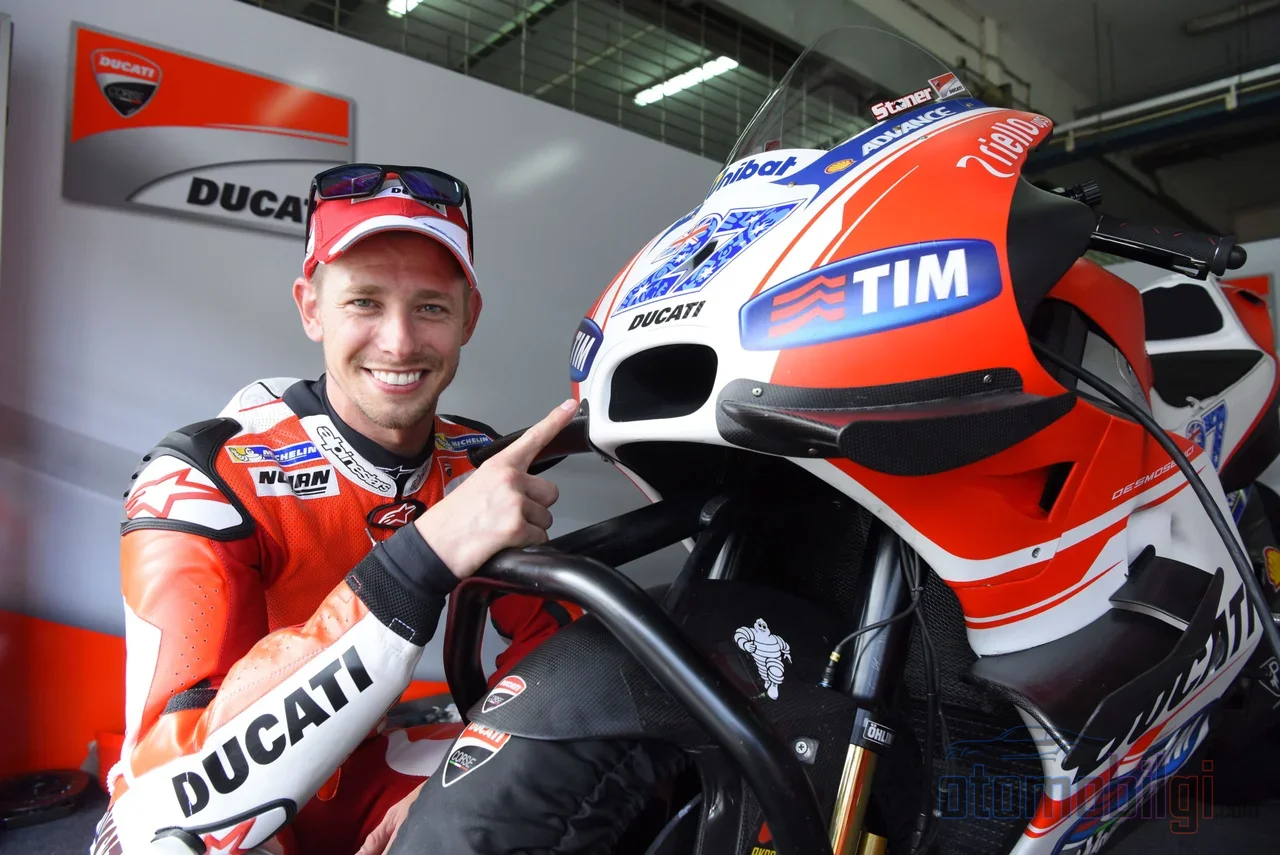
Consider a motorcycle: At the start of 2007, hardly anyone gave it a chance at the championship. Its rider was only 21 years old, a soft-spoken Australian. By the end of the season, this duo had left giants like Valentino Rossi and Yamaha behind by 125 points, having passed the greatest test in Ducati's history. This is a story that sits right in the middle of the legendary line drawn by Agostini and Doohan, and it has never been repeated since. So how did Casey Stoner win the MotoGP championship with Ducati? Let's tell it from the beginning.
After Agostini and Doohan: A New Name in the Line of Legends
Looking at the history of MotoGP (that's what it was called at the time; before that it was 500cc), some names always stand at the top: Giacomo Agostini, the man of records with 15 world championships, 122 GP wins and 159 podiums; followed by Mick Doohan, who dominated the nineties with five consecutive championships. In the shadow of these two names, there is an interesting picture in the victory rankings: Casey Stoner, with 38 wins, ranks sixth on the 500cc–MotoGP career wins list - just above Mike Hailwood's 37 and below Jorge Lorenzo's 47. So even with a short ten-year career, he managed to write his name into the list of legends.
But what truly makes Stoner special is not the numbers, but a single fact: The only riders' championship Ducati has won in the premier class came through his hands. After the Italian manufacturer entered MotoGP, this title arrived at the door in just four years, in Stoner's first year at Ducati - and it has never been repeated since that day. What do you make of that detail? Italy's most passionate brand has not been able to reach for that trophy again for a full 19 years.
Highlights
- Stoner won the 2007 MotoGP championship with 10 wins from 18 races.
- Desmosedici GP7: 799 cc, 200+ hp, top speed of 310+ km/h, 148 kg dry weight.
- The championship was mathematically secured at Motegi on September 23, 2007.
- That year, Ducati won both the riders' and constructors' championships - its first MotoGP titles.
- After Ducati, Stoner took his second championship with Honda in 2011.
The 800 cc Rule Changed, and Ducati Was Ready Just in Time
The most important hero behind the scenes of the 2007 season was a technical rule change. MotoGP management lowered the engine displacement limit from 990 cc to 800 cc. This meant developing a new engine for every team - like the exam questions changing completely overnight. While some teams struggled to adapt to the new formula, Ducati responded to this transition practically leaping, with its new Desmosedici version.
The result was the Desmosedici GP7, and the figures are still impressive: Over 200 horsepower from the 799 cc engine, a top speed exceeding 310 km/h, and a dry weight of just 148 kilograms. Just imagine: the power of a super sports car in a machine one-tenth of its weight. On the straights, this meant everyone ahead of you would rapidly grow and shrink in your mirrors. Young Stoner, who moved to the factory team in place of Loris Capirossi, brought his trumps with him when he sat on the seat of this machine.
The Tire War: Was the Bridgestone Decision the Key to the Championship?
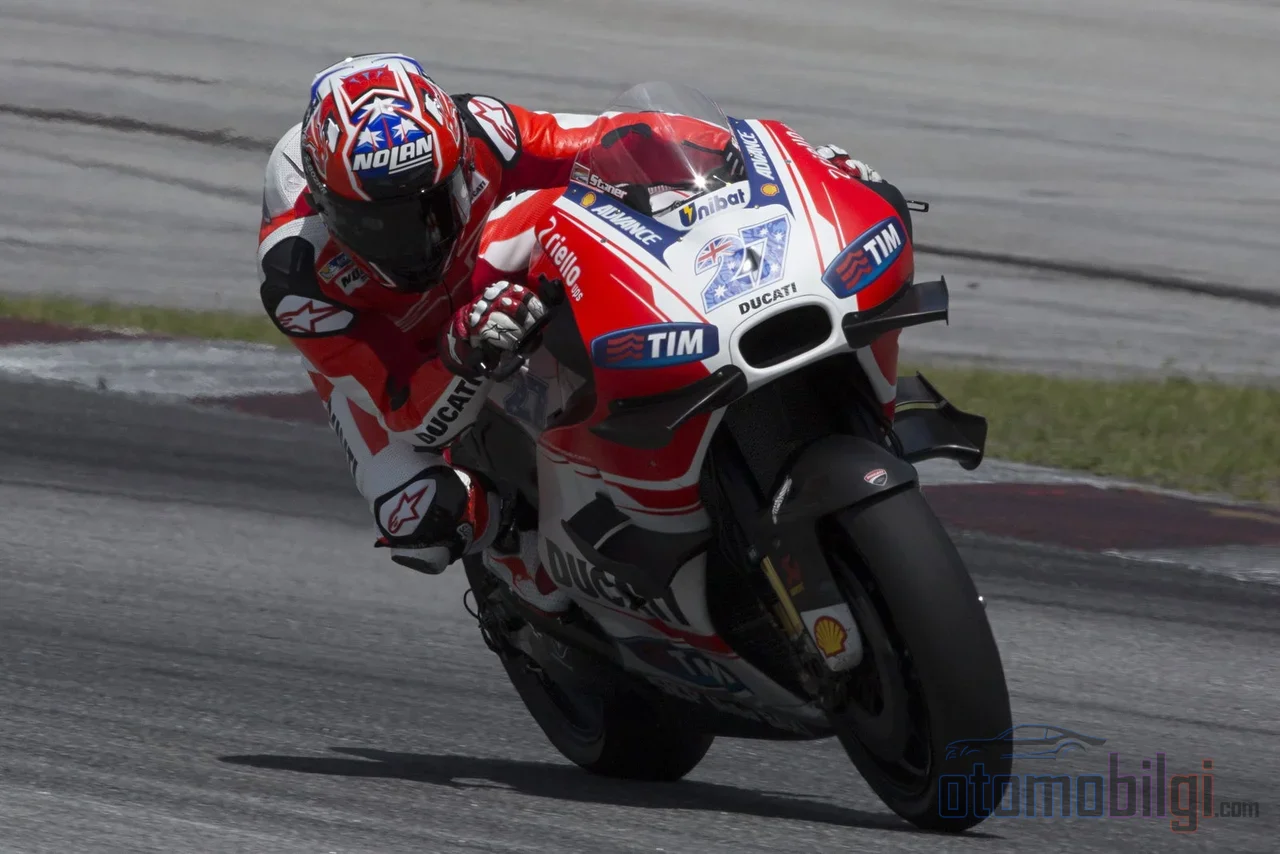
Behind the scenes of 2007, there was a factor as critical as the engine, perhaps even more so: the tires. Ducati had made a bold move before the season, switching to Bridgestone tires instead of Michelin. This was by no means a small decision; Michelin was the choice of the majority of the grid at that time, and the Bridgestone camp was only just beginning to gain trust. So Ducati was in the position of a team trying a lesser-known path, and that risk was rewarded throughout the season.
At the end of the season, the picture was striking: Motorcycles on Bridgestone tires won 10 of the 18 races, while motorcycles on Michelin tires won 5. The championship at Motegi was such an emotional moment for the Bridgestone camp that the company's boss Hiroshi Yamada recounted years later in his memoirs that he could not hold back his tears. There is another interesting detail: In Yamada's memoirs, a bad turning point for Bridgestone was a tire blowout at around 320 km/h on the Mugello straight in 2004. The 2007 success was like the exact opposite of that dark day, a closing of the circle.
So was it the tires that decided it, or the motorcycle? And this is exactly where the debate begins. While some say the real architect of the title was the switch to Bridgestone, the Bridgestone side emphasizes that Ducati had dared to work with them as early as 2004. Stoner himself, years later, made an odd but candid assessment of the motorcycle: He said that the GP7 was not actually truly superior in any area, but that it did the job for him. In other words, the secret of the machine was not dominance in a single area, but the balance of the whole.
A Season Against Rossi: 10 Wins and 125 Points
The beauty of 2007 was that it was not a one-sided victory parade. At the season opener, Stoner won the first race, but Rossi was right behind him, and for most of the season the two names went head to head. What happened in Catalonia explains what I mean: Stoner won the race, but Rossi's gap was only 0.069 seconds. It was like winning a football match with a last-second goal - a roaring crowd, machines holding their breath.
Afterwards, the pace of the Ducati-Bridgestone duo gradually wore down the Yamaha-Michelin duo. Stoner closed the season with 10 wins and 4 podiums; he left his rival Dani Pedrosa 125 points behind, and Rossi even further back. The championship was mathematically secured on September 23, 2007, at the rain-soaked Japanese GP at Twin Ring Motegi: Stoner finished sixth, while Rossi could only manage 13th. . That day's rain had been a development long awaited with concern on the tire front - the Bridgestone camp admitted that when they realized it was over, the day was partly on their side, with a bit of luck as well.
This duo's story continued in 2008 as well, and the Rossi-Stoner battle at the US GP at Laguna Seca is still considered one of the greatest races in history today: the two riders were roughly 1 second per lap faster than everyone else, and Rossi finished the race 27 seconds ahead of Stoner. So this rivalry (because it is a rivalry, nothing more) has moments etched into history - but 2007 was Stoner's year, unquestionably.
2008-2010: Defense, Fatigue, and a Decision
Letting go of the championship handlebar is not easier than winning it. Stoner defended the title in 2008 but finished second in the championship due to mistakes and Rossi's pressure. Then came the most dramatic period of the season in 2009: despite having made a good start, he was forced to miss three races due to chronic fatigue syndrome. In 2010, Ducati could no longer keep up with the pace of Yamaha and Honda. This situation showed that a change was now necessary for both the rider and the team.
Stoner moved to the factory Repsol Honda team for 2011 and, in his first year - exactly four years after Ducati - won his second MotoGP championship. This title was seen as the strongest proof that what he had achieved with Ducati was no fluke; two championships, with two different manufacturers. That is something only a few people in history have managed to accomplish.
So Why Did He Retire at 27?
Here is the most burning question of the story. Stoner announced his retirement decision in May 2012, revealing he would leave at the end of the season, and bid farewell to MotoGP before turning 27. Among his reasons, health problems and injuries that would not heal stood out; indeed, the 2009 chronic fatigue syndrome was like a long lawsuit his body had filed against this sport. A statement he gave years ago is also very meaningful in hindsight today: he had said he did not think about having a long career, and that he would not be racing in his thirties. Between 2013 and 2015, and with Ducati from 2016 to 2018, he never strayed far from the tracks, working as a test rider; in fact, Marc Márquez's statement that he did not want him at Honda in 2015 was talked about in MotoGP circles for a long time. Today he still lives with chronic fatigue syndrome and continues to make statements on the subject.
Why Is Ducati's Championship Still Unique? (The 2026 Table)
The short answer to this question seems simple: the rivals learned very quickly. In 2008, Yamaha and Honda began to respond to Ducati's move; by 2010, Ducati had fallen well away from the competition. On the rider side, it is not easy to find a name like Stoner, who had an almost telepathic connection with the machine - the GP7's balanced but demanding character was not a motorcycle anyone could ride.
The 2026 season also shows how alive this question still is. Ducati is, so to speak, going through a painful period this year: Aprilia was ahead in the first three rounds of the season, while Marc Márquez is only in fifth place with the GP26, and the team sees that the Desmosedici's advantage in rear tire management has melted away against the rivals' front-end development. Team boss Gigi Dall'Igna emphasizes that they struggled more than was necessary in the USA, and that because the competition is so fierce, the riders have to work extremely hard to deliver their best performance. On the Márquez side, there is an interesting confession: he makes the assessment that the problem is not the motorcycle, but his own failure to properly manage the aggressive tire condition in the opening laps. His teammate Di Giannantonio, meanwhile, points to front-end weakness under braking - so the machine-versus-rider debate remains just as current, an exact repeat of the subject that has been discussed since 2007. Meanwhile, the 2026 title race is buzzing along with only a 24-point gap among five riders; in the later weeks of the season, we also witnessed a day when all 22 full-time riders raced in the same lap, following Toprak Razgatlioglu missing the season.
How Did Casey Stoner Win the MotoGP Championship with Ducati? Short Answer
If you need a clear answer to the question in the title, here it is: In 2007, right in the middle of the 800 cc rule transition, Stoner got on the GP7, which was designed precisely for that formula, stayed one step ahead of his rivals thanks to Ducati's bold Bridgestone tire choice, and by winning 10 of 18 races, he left his closest rival of the season behind by 125 points. There is no single magic factor; a rule change, a fast motorcycle, the right tire decision, and a genius who could ride it all came together at once.
Perhaps that is why that championship is so precious. The motorcycle seemed inadequate to many, but there was someone sitting on it with a childlike passion. The fact that Ducati's only riders' championship in its history has remained unbroken for nineteen years is, in my view, the finest proof that it cannot be explained by the machine alone. Who do you think will reach for that trophy again? I wait excitedly in front of the screen every season - just like a young rider finishing sixth in the rain at Motegi surprising everyone.
Sources
- Desmosedici GP 07 - Ducati Heritage
- Motegi MotoGP reaction: Bridgestone delight at Casey Stoner's MotoGP title - MCN
- 2007 Grand Prix motorcycle racing season - Wikipedia
- Casey Stoner - MotoGP Riders
- Casey Stoner announces he will retire from MotoGP at end of season - The Guardian
- Casey Stoner, a MotoGP legend - FIM
- Stoner Wins His Fourth MotoGP Race Of The Season At Catalunya - Roadracing World
- Casey Stoner reflects on 2007 Ducati dominator - Crash.net
- Why the Márquez magic no longer works on the Ducati in 2026 - AutoHebdo
- Five riders, 24 points: MotoGP's 2026 title race - MotoGP.com