Honda's MotoGP Crisis: Why Is the RC213V Falling Behind?
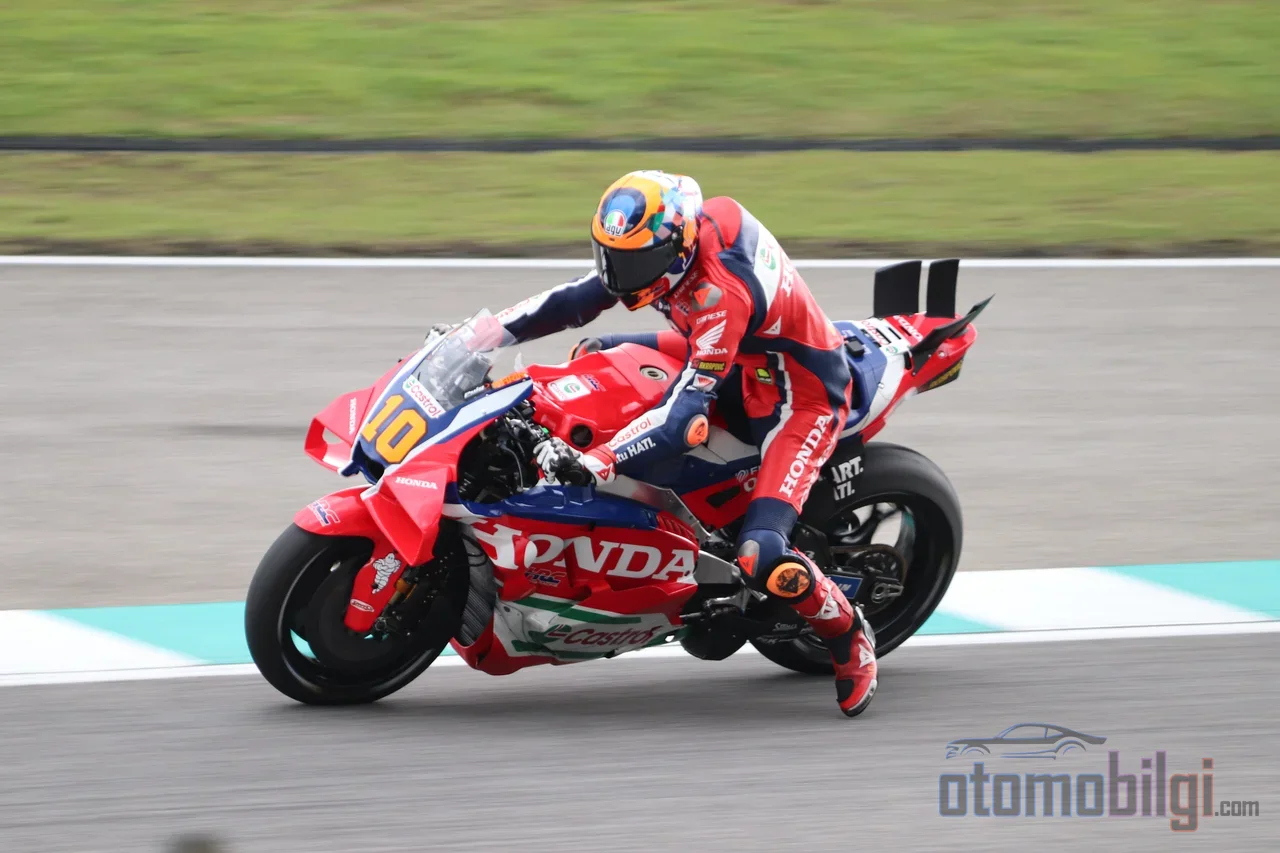
Just imagine: When Honda, one of the most winning manufacturers in MotoGP history, celebrated its sixth consecutive riders' championship in 2019, nobody was even asking "when will this end?" Three years later, the same brand had dropped to sixth place in the constructors' standings. So how did the RC213V, a prototype that won 85 race victories, 86 pole positions and a full seven constructors' championships, turn into a mid-pack motorcycle that - if you've read this far - you'd rightly call "still" struggling? The story doesn't come down to a single reason; it rests on a chain stretching from engine philosophy to the loss of riders, to how the rules played out. Let's go through the turning points one by one.
The Golden Age: What Kind of Legend Was the RC213V?
The RC213V is a prototype that Honda Racing Corporation (HRC) engineers developed from scratch for the 2012 season. Its predecessor RC212V carried the 212 in its name because it was the second factory engine of the 21st century; it was the second factory engine of the century. 213 was the third. The 2012 rules limited engines to 1,000 cc, a maximum of four cylinders and an 81 mm cylinder bore, and Honda did very clever work within those limits.
The most critical move was widening the cylinder angle from 75.5 degrees to 90 degrees. This wide V-angle made the transition to 1,000 cc possible without raising the center of gravity; it also eliminated the need for a balance shaft, meaning the motorcycle gained both packaging space and weight savings. This 999 cc, 90-degree V4, liquid-cooled engine produces roughly 280 PS of power, and the motorcycle can reach speeds of up to 363 km/h. The numbers are the engine, but the RC213V is really a complete engineering manifesto.
The results? In 2012, Repsol Honda riders won 12 of the 18 races. In 2013, rookie Marc Márquez, coming from Moto2, became champion in his first season, and more followed: riders' championships in 2013, 2014, 2016, 2017, 2018 and 2019, and in those same years the constructors' championship most often went into Honda's pocket as well. The overall tally: seven constructors' championships and 85 race victories.
Highlights
- Between 2012 and 2019, the RC213V won the constructors' championship 7 times and took 85 race victories.
- In 2020-2022, Honda could only manage 5th, 4th and 6th in the constructors' standings.
- The core problem is not raw power, but the inability to put that power to the ground.
- In 2025, concessions were upgraded from Rank D to C, then in 2026 Honda returned to Rank D again.
- For 2027, the 850 cc prototype was tested at Sepang.
When and Why Did the Engine Start to Stall?
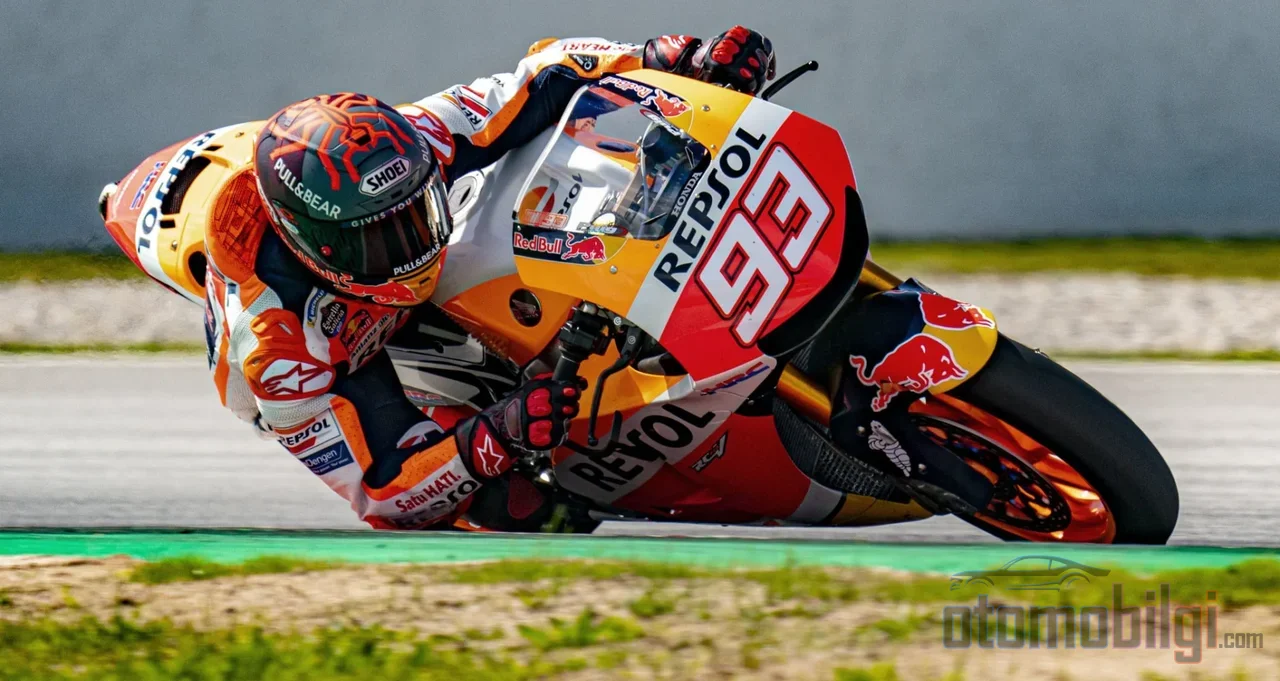
This is where things get interesting, because the RC213V's problem is not, as most people assume, a "weak engine." Dani Pedrosa summarized the problem clearly years ago: the motorcycle was strong in fourth, fifth and sixth gears; that is, it wasn't lacking horsepower. The real trouble came in acceleration and corner exits - that is, while transferring power to the rear wheel.
Honda was aware of this and played with the firing order. Having discovered in 1992 that evenly spaced firing was unsuitable for traction, the brand had turned to an irregular firing order known as big bang; the 2012 RC213V, however, came out with an arrangement described as a screamer. When shared electronics came into play in 2016, Honda changed direction again: it tried to improve traction by using a heavier, reverse-rotation crankshaft. By 2019, all manufacturers had reached the same conclusion. So did Honda find the right path? Partially. But the path it found was no longer enough.
You can think of the 2016 electronics revolution as a parenthesis: suddenly everyone was racing with the same brain, and Honda's advantage in electronics melted away. Then 2020 came.
2020-2022: The Chronology of the Collapse
In 2020, two things blew up at the same time. The first was Márquez's serious injury; the second was Ducati winning the manufacturers' championship three years in a row (2020, 2021, 2022) with the Desmosedici. In those same three years, Honda could only manage fifth, fourth and sixth in the manufacturers' standings. It was exactly in this period that the debate flared up over how much of the domination of the 2010s rested on the motorcycle and how much on Márquez's extraordinary talent; the injury exposed the fact that the motorcycle's development had stalled.
Honda's response was radical: rebuilding the engine from scratch for 2022. Project manager Takeo Yokoyama explained that they made this decision because of the traction problems experienced at the rear wheel in the previous two years, and that they rebuilt the entire motorcycle around the new engine. Almost everything had changed except the V4 configuration and the firing order. So did it work? Not in the first year. Pol Espargaró said the motorcycle had no strong point, while test rider Stefan Bradl complained about unacceptable heat problems. Riders lost the front tire and crashed when approaching the limit; the motorcycle was not only slow, but also inconsistent.
Why Was Márquez's Departure So Devastating?
In 2023, the biggest blow came: after 11 years and six championships, Marc Márquez announced with a short press release that he was leaving Honda, and in 2024 he went to Gresini Racing, alongside his brother; from there he moved to the Ducati factory team. He seemed to summarize what came after with this sentence: if he had stayed at Honda, he would have quit racing. In other words, the departure was not a choice, but a necessity.
For Honda, the size of the loss was not just about points. An almost impossible void remained in place of a rider like Márquez; because he was not only a winner, but someone who masked the motorcycle's hidden flaws with the exceptional talent he carried on his shoulders. When he left, the true face of the RC213V, that is, its identity as a mid-pack motorcycle, appeared in all its nakedness.
The Concession System: Help or Hindrance for Honda?
Now let's come to the rules of the game, because Honda's last three years are incomprehensible without this system. The concession system is a tiered structure that grants extra development rights to manufacturers struggling in MotoGP: brands in the lower ranks earn more private testing, in-season engine development, and wildcard entry rights; as they succeed, these advantages diminish.
Honda spent 2023-2024 in the bottom tier, Rank D, and made intensive use of these rights. 2025, however, turned out to be a surprising season: Luca Marini's seventh-place finish in one race carried Honda from Rank D to Rank C. Sounds good, right? Here's the twist: moving up also took away some advantages. Private tests and the right to develop the engine mid-season were lost; moreover, because of the podiums taken at the end of the season, Honda came within one point of the top-tier threshold, tightening its position even further for 2026. After the mid-season evaluation, Honda returned to Rank D for 2026; meaning that as it struggles to improve its performance, it is trapped in a cycle where its development opportunities keep shrinking. It's like pedaling a bicycle to the top of the hill and, once exhausted, having to ride back down to build up speed again.
The 2026 Package and the 850 cc Future
But what about hope? There is hope, and plenty of it. Honda unveiled the 2026 RC213V with an online launch ahead of the pre-season tests at Sepang; the motorcycle features numerous chassis upgrades and revisions, and the engineers are searching for balance. The momentum of development seen in the 2025 season is no lie: Johann Zarco won a race, Joan Mir scored two podiums in 2026, and the mid-season aerodynamic and engine upgrades significantly transformed the motorcycle's competitiveness. By HRC's own statement, major progress has been made and the goal is to win it back.
Behind the curtain, however, lies a much bigger project: in 2027, MotoGP is moving to 850 cc engines, reduced aerodynamics, and the removal of ride-height devices. Honda got an early start on this new era as the second manufacturer after KTM to test its 850 cc prototype on track; the prototype tested by Nakagami drew attention in the rainy Sepang session and in the subsequent Mugello test. The concession system will also continue in the new era, and the counter will be reset; meaning the board will be dealt again.
Structural Changes at HRC
The wind isn't blowing favorably off the track either: the restructuring of Honda's MotoGP unit continues, and R&D chief Hikaru Tsukamoto has been transferred to another role. For 2027, Diogo Moreira is joining the factory team. Meanwhile, the 2026 season passes in the middle ground for Honda: in a year where Aprilia started strong and Ducati struggled, Honda is making progress. The fact that eleven teams have signed contracts through 2031 is also proof that no one is giving up.
So Why Is the RC213V Behind? The Short Answer
Let's wrap it up, because there is a one-sentence answer to the question: the RC213V's problem is not a lack of power, but its inability to put that power down through the tire and onto the road; this weakness was masked for years by Márquez's talent, and came to light with his departure and Ducati's structural superiority. Honda accepted this and set about rebuilding the motorcycle from scratch in 2022, tested using its concession rights, and in 2025-2026 reaped the first fruits (a win, podiums, a Rank jump).
Will Honda come back? The Honda of the early '90s and early 2000s was even more dominant than today's Ducati; this brand hasn't forgotten what it means to be at the top. The RC213V, with its 2026 package and 850 cc prototype, is a motorcycle whose character has changed, three years into a major transformation. The engineers' expectation is clear: this motorcycle's time to deliver results has come. Zarco's victory and Mir's podiums are the first glimmers; the real test is what kind of legacy Honda will leave in the new era born from another regulation change.
| Feature | Value |
|---|---|
| Engine | 999 cc, 90° V4, liquid-cooled, DOHC, 16 valves |
| Power | Approximately 280 PS (185 kW) |
| Top speed | 363 km/h |
| Dry weight | 160 kg |
| Wheelbase | 1,435 mm |
| Fuel capacity | 20 L (2014 and later) |
Sources
- Honda RC213V - Wikipedia
- RC213V | Honda Technology | Honda Global
- MotoGP: Pedrosa reveals the Honda RC213V's issues - Cycle World
- MotoGP: Honda still struggling with engine problems - Bikes Republic
- Has Honda identified the main issues with the bike? - r/motogp
- An assessment of Honda's development efforts - doctorengine