V4 or Inline-4 in MotoGP Engines?
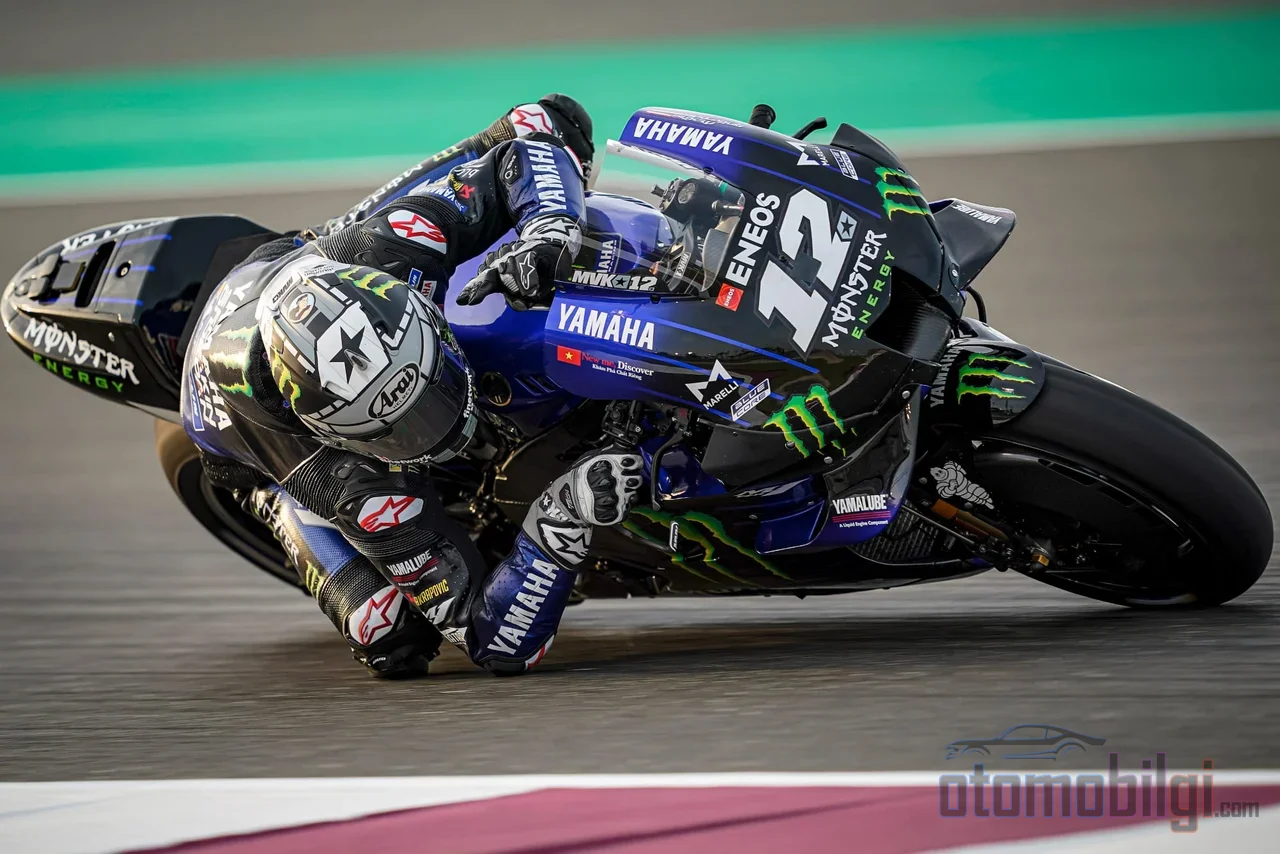
Just think about it: two motorcycles, same category, everything from the fuel tank to the tires is remarkably close - yet in corners they display completely different characters. One carves a V line and attacks hard at the apex, the other traces a wide U, gliding as if it had slipped. The difference is the shape of the engine block: are the four cylinders arranged in a V form, or inline? This question was the most delicious technical debate in MotoGP paddocks for years, and in 2026 it officially became history: Yamaha moved to the V4, and there is no longer an inline-four engine on the grid. So why was this transition so difficult, is the V4 really superior in every area, and how have the 2027 rules changed the game? Let's dig in.
Highlights
- Yamaha switched to a V4 engine in 2026; the era of the inline-four engine in MotoGP has come to an end.
- Yamaha's new V4-powered YZR-M1 was unveiled at Misano.
- The V4's short crank boosts power, while the inline-4's long crank provides cornering dominance.
- As of 2020, the Ducati and Honda V4s had won 44 of the last 50 races.
- In 2027, engine capacity drops to 850cc.
V4 or Inline-4? The Fundamental Difference Between the Two Engines
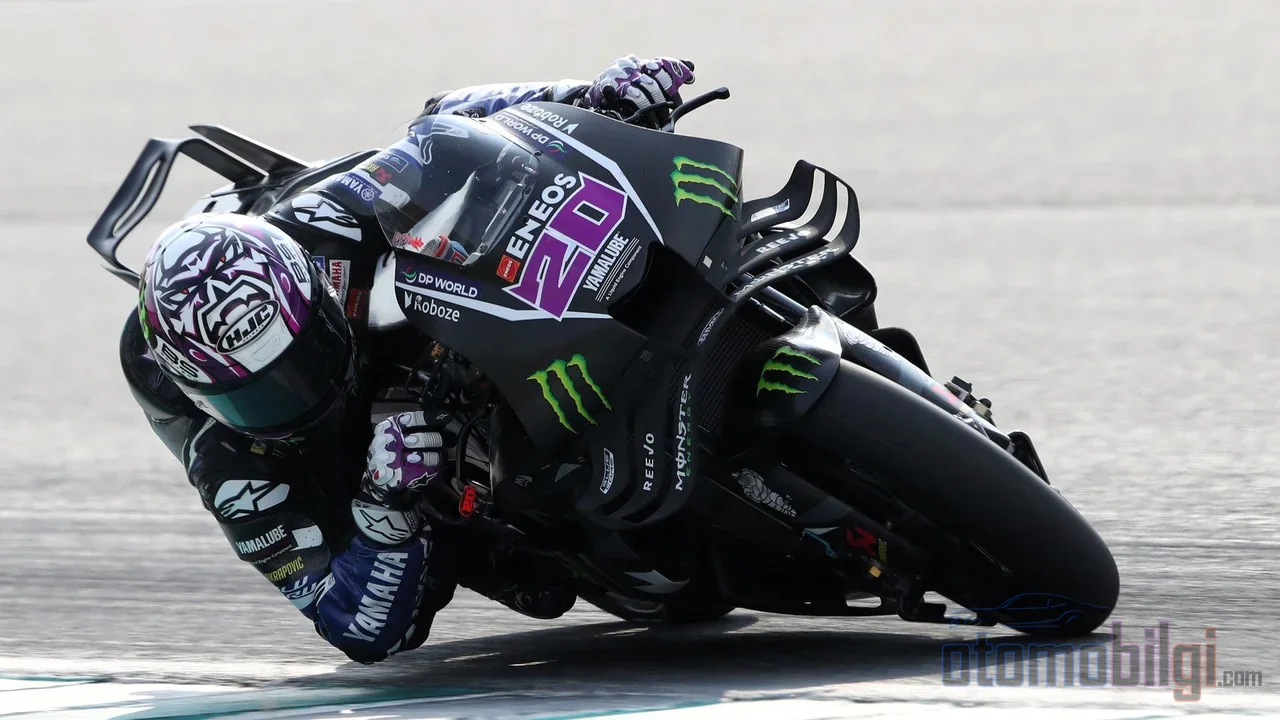
It all comes down to the length of the crankshaft. In an inline-four (referred to as I4 or inline-4 in English sources), the cylinders are arranged side by side in a single row; the crank is therefore long and slender. In a V4, the cylinders open out in two rows at a V angle; the crank is short, thick, and sits on fewer main bearings. Let me give you a simple analogy: the inline-4's crank is like a long stick, while the V4's crank is a short and chunky cylinder. Which one is easier to spin? The short one, of course. That's where half the secret of the V4's power lies.
Yamaha's inline-4 crank has five main bearings - one at each end, and one between each pair of cylinders. In the V4, that number is only three. Fewer bearings mean less friction and a more rigid structure; this allows the engine to rev more tightly and reliably at higher rpm. A 1000cc MotoGP engine breathes up to 300 liters of air per second at 18,000 rpm; the V4's compact crankcase handles this massive flow better than the inline-4. To sum it up in one sentence: The V4 produces more horsepower, while the inline-4 offers better maneuverability.
Moment of Inertia: Why Does One Tremble While the Other Sails Through Calmly?
Now let's get into the physics, because that's where the real mechanical difference lies. A long crank has a high moment of inertia; meaning it is hard to start and stop spinning, much like turning a heavy hoop. This often turns into an advantage: when the rear tire begins to slide, the long crank doesn't react harshly, and the motorcycle naturally straightens itself up to maintain balance. That's why the inline-4 passionately holds its line through corners, turns better in phases without braking or throttle, and grips better over bumps. A former Yamaha engineer's confession is worthy of being written into technical textbooks: the corner line comes from the engine, not the chassis.
The V4's short crank rotates easily around the longitudinal axis, so the bike takes on a more twitchy and more difficult character. When it slides sideways while the throttle is open, the rider's hands have a much harder time holding on compared to an inline-4. Of course, it pays off too: faster response, a more aggressive throttle response. This is exactly why riders like Johann Zarco and Jorge Lorenzo struggled when switching from inline-4 to V4 - it's not the engine's character that changes, but the engine's physical reflexes.
And there's a twist: if the inline-4 has too much inertia, the engine becomes "lazy," slowing down corner entry and direction changes. That's why designers establish the balance by bringing the crank weight as close to the center as possible. Engine design is truly an art of scales.
Two Racing Lines: U or V?
This architectural difference isn't just on paper; it's visible on the track. The inline-4 rider enters corners with a wide U-shaped line: sweeping through at high speed without ever breaking his line, and he must release the brakes early at corner exit to avoid losing speed. The V4 rider, on the other hand, draws a V line: turning tight and aggressive in the middle of the corner, gaining an advantage in braking since he can brake all the way to the apex, and the moment he exits the corner, he immediately opens the throttle and unleashes the horsepower. In other words, the V4 is an engine that speaks "after the corner," while the inline-4 is an engine that speaks "inside the corner."
So why couldn't the inline-4 achieve victory despite this riding style? Passing the V4 on the straights is far easier than passing it inside a corner - but MotoGP rarely gives you a clean track. Constant traffic, constant tire management, constant loss of time. That's the logic behind why Yamaha and Suzuki's inline-4s could never consistently beat the V4s.
History: Why Did Yamaha Insist on the Inline-4 for a Decade?
There were two reasons behind Yamaha's determination: superiority in cornering speed and freedom in chassis design. Since the inline-4 engine is a shorter and more compact package than the V4, it gave chassis engineers incredible freedom in placing the center of mass wherever they wanted - forward, backward, up, or down. The 990cc liquid-cooled inline-4 of the YZR-M1, developed in 2005 during the final years of the high-displacement MotoGP era, was the engine beating at the heart of Valentino Rossi's legendary seasons. Even in Rossi's era, while Yamaha and Suzuki were two manufacturers loyal to the inline-4, Honda and Ducati had moved to the V4 camp; Rossi himself had said that when the time came, he might have to consider Yamaha's V4 option - and he ultimately turned out to be right.
The real drama becomes clear with the Cycle World analysis: the inline-4 Yamaha had actually recently started producing more power. Power wasn't the problem; the real issue was the lack of rear tire grip. In other words, by changing the engine, Yamaha wanted to touch the root of the performance problem: weight distribution. As Jack Miller also emphasized, due to the fundamental differences in weight distribution, Yamaha needed to make a sharp turn for this transition. Not a soft evolution, but a revolution in mindset.
Vibration, Cooling and Electronics Management: The Hidden Effects of Configuration
Engine layout isn't just about power and handling. On the vibration front, Honda's V5 engines (yes, there was a time with five cylinders, the RC211V) were theoretically not exposed to primary vibration and clutch judder - proof of the balanced character of V layouts. The V4's compact and narrow structure also gives engineers extra room in fairing design, airflow, radiator placement and mass center positioning; in modern MotoGP's aerodynamic race, this is a big asset.
On the electronics side, both architectures use the same basic tools: traction control, which prevents excessive rear wheel spin, is one of MotoGP's most fundamental electronic features. Torque character also comes into play here: as of 2023, MotoGP engines produce roughly 120 Nm of peak torque, and reducing torque reduces wheelies, that is, front wheel lift. To control the V4's aggressive torque delivery, the electronics work harder; the inline-4's smooth delivery, on the other hand, naturally soothes itself to some extent.
| Feature | Inline-4 | V4 |
|---|---|---|
| Crankshaft | Long, five main bearings | Short, rigid, three main bearings |
| Power | Less horsepower | More horsepower |
| Maneuvering | Superior cornering line | A more difficult character |
| Riding line | Wide U, sweeping | Narrow V, aggressive |
| Braking | Releases the brakes early | Brakes all the way to the apex |
| Layout | Compact, freedom for the mass center | Narrow body, aerodynamic domain |
The 2027 Rules: The 850cc Decision That Spells the End of the Inline-4
The end of the road is here: in 2027, maximum engine capacity drops to 850cc. MotoGP technical rules allow a maximum of four cylinders, and there is no direct ban on engine configuration - meaning Yamaha could have kept the inline-4 on paper if it wanted. But the requirements of the new 850cc regulations make the V4 practically almost mandatory: squeezing power from a smaller capacity is made possible by the short, rigid crankshaft's compact crankcase. Even if Yamaha wanted to stay with the inline-4, the rules are pushing it toward the V4.
That's why Yamaha's 2026 transition is not a matter of following a trend, but a preemptive move. With the unveiling of the V4-powered YZR-M1 at Misano, every manufacturer on the grid - Ducati, Honda, KTM, Aprilia, Yamaha - has gathered in the same architectural camp. Thus closed the inline-four engine's half-century-plus adventure in MotoGP. A somewhat melancholy but, from an engineering standpoint, inevitable ending.
Is the V4 Really Superior in Every Area? About the Conclusion
This is the most crucial question of the debate. First, let's honestly state the opposing view: there are voices who deny that there is a pure cornering speed difference based on engine design, arguing that the V4s' superiority comes not only from engine layout; but from the combination of many factors including chassis architecture, rider skill and tire design. In other words, there is no "V4 = automatic championship" formula. But mainstream engineering opinion clearly explains the inline-4's handling advantage through crankshaft inertia moment, and the results on the track speak for themselves: As of 2020, Ducati and Honda V4s had won 44 of the last 50 MotoGP races - the numbers may have been updated, but the trend is clear.
This is where the clear 40-60 word answer is given: The V4, thanks to its short and rigid crankshaft, delivers more power and better braking-exit performance; the inline-4, with the inertia of its long crank, used to offer better maneuvering and cornering lines. Since the 2027 850cc rules practically make the compact V4 mandatory, MotoGP has become, for the first time in history, a series with a single engine architecture. The winner is clear - but engine enthusiasts will miss the inline-4's sweeping cornering line.
Sources
- Why inline-four MotoGP bikes handle better than V4 MotoGP bikes - Motor Sport Magazine
- Why are MotoGP V4s faster than inline-4s? - Motor Sport Magazine
- Will the V4 YZR-M1 Solve Yamaha's MotoGP Problems? - Cycle World
- Jack Miller explains "the way it works with V4 vs Inline" in MotoGP - Crash.net
- Rossi: Yamaha may have to consider V4 engine switch - Motorsport.com
- What is MotoGP™ Engine Displacement? - MotoGP.com
- What Electronics Are Used in MotoGP Bikes? - MotoGP.com
- Item-by-Item Breakdown of Technical Evolutions in MotoGP - Honda Global
- MotoGP in 2023 - Race Engine Technology
- Yamaha: V4 Engine Use in the 850cc MotoGP Era - trf1.net